
Table of Contents
How Do Franchises Work in Modern Business
Many prospective business owners view franchising as simply buying a business-in-a-box. They see the brand, the logo, and the product, and assume that’s the extent of the purchase. This view misses the most vital component of a successful franchise: the partnership.
A truly elite franchise is not a static transaction. It is a dynamic, evolving relationship where the franchisor’s most valuable asset is its commitment to the franchisee’s growth.
The brand is the starting point, but the robust systems, continuous innovation, and unwavering support are what create lasting value and profitability.

A Founder’s Perspective on the Franchise Business Model
When I set out to build the CoolVu franchise, my goal was to create a model that transcended the simple licensing of a name. I wanted to build a strategic alliance with each and every owner. My experience taught me that the biggest challenge for any entrepreneur, especially an experienced one, is not the lack of ambition but the sheer operational weight of building and refining systems from scratch.
The modern franchise model, when executed correctly, solves this. It is a framework where the franchisor invests heavily in creating, testing, and perfecting the operational playbook. This includes everything from marketing strategies and sales processes to technology platforms and supply chain management. This allows you, the franchisee, to sidestep years of costly trial and error and focus your energy on execution and local growth. It’s not about buying a job, it’s about leveraging a proven system to build a scalable asset.
Defining the Core Partnership: Roles of the Franchisor and Franchisee
Understanding this partnership begins with clearly defining the roles. This division of labor is designed for maximum efficiency, allowing each party to focus on what they do best.
The franchisor’s primary role is to build and maintain the engine of the business. This includes:
- Developing and refining the core business model and service offerings.
- Providing comprehensive initial training and ongoing education.
- Creating national marketing campaigns and providing local marketing tools.
- Managing the technology infrastructure, from CRMs to booking systems.
- Securing national supply chain agreements to ensure quality and pricing.
- Offering continuous operational and technical support.
The franchisee’s primary role is to take that powerful engine and drive it to success in their local market. This involves:
- Mastering and executing the franchisor’s proven systems.
- Building a local team and fostering a strong company culture.
- Driving local sales and marketing efforts using the provided tools.
- Delivering exceptional customer service to build a stellar local reputation.
- Providing valuable feedback to the franchisor to help improve the system for everyone.
This is not a top-down hierarchy. It is a symbiotic relationship where the franchisor provides the blueprint and the tools, and the franchisee provides the local expertise and execution that bring the brand to life.
Moving from Solo Entrepreneur to Strategic Partner
For experienced entrepreneurs, the biggest mental shift is moving from being a solo creator to a strategic partner. You are accustomed to having your hands on every lever and making every decision from the ground up. The thought of adopting someone else’s system can feel like a loss of control.
This is an opportunity to reframe that thinking. This is not about giving up autonomy, it is about strategically choosing your battles. By partnering with a strong franchisor, you are consciously trading the immense burden of system creation for the power of a refined, market-tested model. Your entrepreneurial drive does not disappear. Instead, it gets channeled into more impactful activities like leadership, local market development, and strategic growth, all while being supported by a framework built for success. You are leveraging a powerful platform to amplify your own skills, not diminish them.
The Legal Blueprint: Understanding the FDD and Franchise Agreement
The strength and transparency of a franchise partnership are formally documented in two key legal documents: the Franchise Disclosure Document (FDD) and the Franchise Agreement.
Far from being intimidating obstacles, these documents are the essential blueprint for your potential new venture.
They are designed to provide clarity and protect both you and the franchisor by laying out all expectations, obligations, and commitments in black and white.

What is the Franchise Disclosure Document (FDD)?
The Franchise Disclosure Document, or FDD, is a comprehensive legal document that a franchisor must provide to a prospective franchisee before any agreement is signed. Its sole purpose is to provide you with the detailed information needed to make an informed decision. Think of it as the franchisor’s complete resume. A well-constructed FDD is a sign of a transparent and confident franchisor. It contains 23 distinct sections, known as “Items,” that cover everything from the franchisor’s financial health and litigation history to the specific fees you will pay and the support you will receive.
Decoding Key Sections
While you should review the entire FDD with an attorney, a few key sections offer a window into the core of the partnership.
- Territory Rights (Item 12): This section defines your operating area. A strong franchisor will provide a protected or even exclusive territory, meaning they will not place another franchise within that zone. This is critical, as it ensures you are building your business without competition from your own brand.
- Franchisor’s Obligations (Item 11): This is perhaps the most important section for validating a franchisor’s commitment. Here, they must detail the assistance, training, and support they are legally obligated to provide. A thin Item 11 is a major red flag. A robust Item 11, like CoolVu’s, details everything from initial training programs and site selection assistance to the specific advertising programs and ongoing support you will receive.
- Brand Standards (Item 11 & others): The FDD will outline the rules and standards you must follow regarding branding, service delivery, and operations. For an experienced entrepreneur, this may feel restrictive, but it is a vital protective measure. These standards ensure consistency across the network, which protects the brand’s reputation and the value of your own investment.
The Franchise Agreement Explained
After you have reviewed the FDD and decided to move forward, you will be presented with the Franchise Agreement. While the FDD is a disclosure document, the Franchise Agreement is the binding legal contract that formalizes your partnership. This agreement turns the information from the FDD into a set of legally enforceable promises between you and the franchisor. It is the final, written expression of the relationship, codifying the franchisor’s promise of support and your commitment to executing the system.
The Financial Engine: Fees, Royalties, and Your Initial Investment
When evaluating a franchise, it’s natural to focus first on the numbers. The initial fee, ongoing royalties, and total investment are the tangible costs of entry. In a well-structured financial model, these figures are not just expenses, they are strategic investments into the partnership, pooling resources to build a stronger brand for everyone.
The Initial Franchise Fee: Investing in a Proven System
The initial franchise fee is your key to the front door. It’s the one-time payment that grants you access to the business model, the brand name, and the entire operational playbook the franchisor has spent years and significant capital developing. Think of it as bypassing the most challenging and risk-laden phase of starting a business from scratch. This fee typically covers:
- The license to use the brand’s trademark and intellectual property.
- Comprehensive initial training for you and your key staff.
- Access to the confidential operations manual, the A-to-Z guide for running the business.
- Support with site selection, lease negotiation, and initial marketing strategy.
Viewing this as a simple cost misunderstands its value. It is the price of admission to a system designed to accelerate your path to profitability.
Understanding Royalty Fees: Fuel for Ongoing Support
If the initial fee gets you in the door, royalty fees are what keep the lights on for the entire system and fuel its growth. These ongoing payments, typically a percentage of your gross revenue, are the lifeblood of the franchisor’s support infrastructure. In a strong franchise system, these funds are reinvested directly into the network to provide continuous support, funding critical functions like:
- A dedicated corporate support team for day-to-day operational questions.
- National marketing and brand-building campaigns.
- Continuous research and development for new products and services.
- Upgrades to system-wide technology, like booking software and CRM platforms.
When you pay a royalty, you are contributing to a shared pool of resources that gives you a competitive advantage you could never afford as an independent operator.
Calculating Your Total Initial Investment
The franchise fee is only one piece of the financial puzzle. A transparent franchisor will help you understand the full scope of your initial investment, detailed in Item 7 of the FDD.
This total figure provides a realistic budget for getting your business open and operational. Beyond the fee, your total investment almost always includes costs for equipment, initial inventory, a branded vehicle, insurance, and licenses.
It also includes working capital, a cash reserve to cover expenses like payroll and rent during the initial ramp-up period before your business becomes cash-flow positive.

The Engine of Success: Why Ongoing Support is the Critical Differentiator
While the financial structure is the framework, the ongoing support system is the high-octane fuel that drives long-term success. The initial playbook gets you to the starting line, but the continuous partnership helps you win the race. A commitment to robust, continuous support is the single most critical factor in a franchisee’s success.
Beyond the Initial Playbook: The Value of Continuous Training
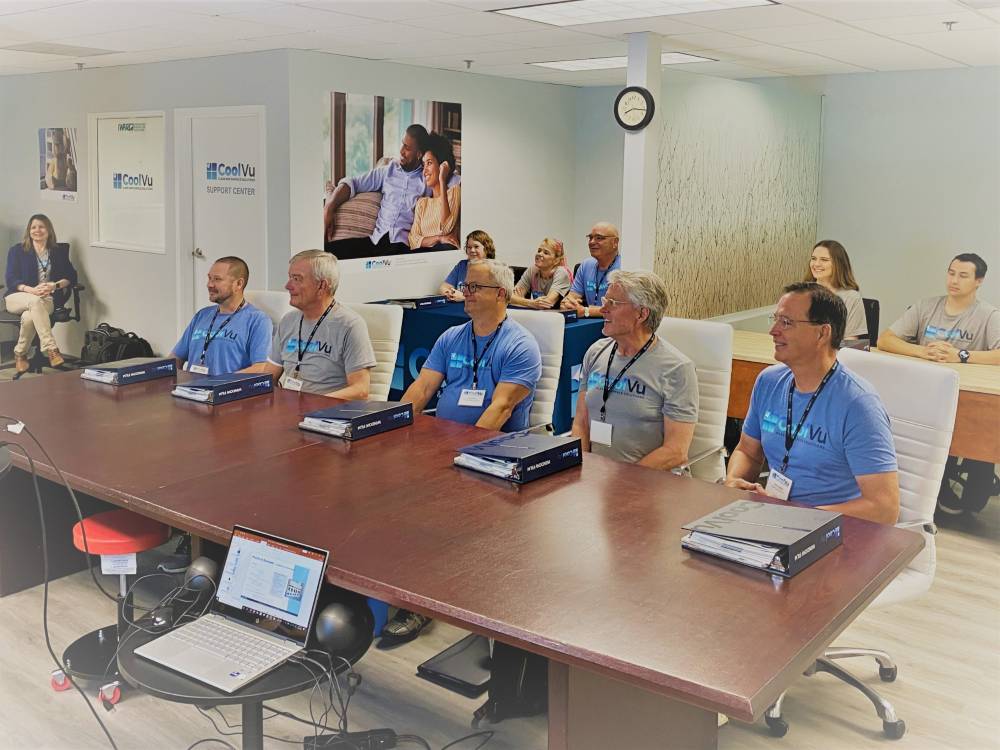
Any franchise can hand you a binder and call it training. A true partner provides continuous education to keep you ahead of the curve.
This includes introducing new products, advanced training on sales and marketing, and mastering new software tools and operational efficiencies.
At CoolVu, we are constantly innovating with new surface films and architectural finishes.
Our ongoing training ensures every franchisee is not just competent, but an expert in the latest solutions we bring to market.
Streamlining Integration for the Experienced Entrepreneur
If you’re an experienced business owner, your concern is likely different. How quickly and efficiently can you integrate this new operation without it becoming an all-consuming burden? This is where a superior franchise system proves its worth. It provides a turnkey operational framework that you can plug into. Imagine starting a new venture where the website, CRM, lead generation funnels, and marketing materials are already built and optimized. That is the kind of streamlined integration that respects your time and accelerates your return on investment.
How a Robust Support System Minimizes Operational Burdens
An independent business owner has to do everything. You are the CEO, the marketing department, the head of procurement, and the IT help desk. A robust franchise support system lifts that weight by centralizing key functions at the corporate level. This support structure acts as your outsourced team of experts, handling tasks like:
- National Marketing: Driving brand awareness and generating leads that are passed directly to you.
- Supplier Management: Negotiating national pricing and managing vendor relationships.
- Technology Management: Maintaining and updating the business software that powers your operation.
- A Dedicated Help Desk: Providing immediate answers and troubleshooting for daily questions.
This allows you to offload major operational headaches and focus on managing your team, serving your customers, and growing your local business.
Is a Franchise Partnership Right for You?
After evaluating a franchise system, the next critical step is an honest self-evaluation. The partnership’s success depends just as much on the franchisee’s mindset as it does on the franchisor’s systems.
For the Aspiring Entrepreneur: Are You Prepared to Execute a Proven Model?
For those new to business ownership, the appeal of a franchise is its structure. This comes with a fundamental requirement: the willingness to follow a proven system. The most successful new franchisees are dedicated executors. The core question to ask is, “Am I coachable and ready to trust a playbook that has already worked for others?” Resisting the system or constantly trying to reinvent the wheel undermines the very reason you chose a franchise.
For the Experienced Business Owner: Will This System Accelerate Your Growth?
If you are an experienced entrepreneur, your question is different: “Will this franchise system act as a force multiplier for my existing skills?” A superior franchise provides a fully integrated system that bolts onto your business acumen. Instead of spending months developing marketing funnels or sourcing suppliers, you can plug into a machine that is already running at scale. The right franchise partnership allows you to focus on high-level strategy and local execution while the franchisor handles the heavy lifting of system-wide research, national marketing, and logistics. It streamlines integration and minimizes operational drag, allowing you to achieve growth more efficiently.
Conclusion: The Partnership as Your Launchpad for Success
As we’ve explored the mechanics of a franchise system, a clear theme emerges. The real value for an entrepreneur, especially one who values their time and resources, is the operational framework and support that powers the business. This is the difference between buying a job and investing in a scalable enterprise.
A superior franchise model provides comprehensive training, proven marketing systems, integrated technology, and a culture of collaborative support. Many people ask how do franchises work, and the answer lies in this partnership dynamic. You are not just acquiring a license to use a name, you are entering a long-term strategic alliance. The product is the vehicle, but the partnership is the engine that drives it forward.
This is precisely our philosophy at CoolVu. We built our franchise model on the belief that our primary role is to provide a robust platform that empowers our partners. We handle the national brand building, develop the technology, and refine the marketing funnels so you can dedicate your energy to executing a proven plan in your local market.
Your journey into franchising is a process of due diligence. The goal is to find an opportunity where the business model, the culture, and the support structure align perfectly with your goals. When you review a Franchise Disclosure Document, look closely at the franchisor’s obligations. When you speak with existing franchisees, ask them specifically about the quality of support they receive. Most importantly, when you engage with a franchisor, pay attention to whether they feel like a vendor selling a product or a partner invested in your future.
Frequently Asked Questions
What is the difference between a franchise fee and royalty fees?
The initial franchise fee is a one-time, upfront payment that grants you the license to use the brand’s name, intellectual property, and business systems. It also typically covers your initial training. Royalty fees are ongoing payments, usually a percentage of your revenue, that fund the franchisor’s continuous support, including marketing, R&D, and technology.
Do I need direct industry experience to become a franchisee?
Not always. A strong franchise system is designed to teach you the business. Qualities like leadership, management skills, and a commitment to following the system are often more important than prior industry-specific experience. The franchisor provides the comprehensive training needed to make you an expert.
How much control do I have as a franchisee?
As a franchisee, you are an independent business owner responsible for your own day-to-day operations, hiring, local marketing, and customer service. However, you must operate within the brand standards and systems established by the franchisor. This ensures brand consistency, which protects the value of every franchisee’s investment.
What is the most important part of a Franchise Disclosure Document (FDD)?
While the entire document is important, Item 11, “Franchisor’s Assistance, Advertising, Computer Systems, and Training,” is especially critical. This section legally outlines the specific support the franchisor is obligated to provide. A detailed and robust Item 11 is a strong indicator of a supportive and committed franchise partner.
More Interesting Posts: