Table of Contents
How to Start a Profitable Window Tinting Business
Window tinting business opportunities are expanding rapidly as the global window film market size accelerates toward an estimated $16.56 billion by 2030, creating substantial entry points for entrepreneurs at every investment level. The entire automotive aftermarket continues to grow, with window film representing one of the most accessible and profitable segments for entrepreneurs looking to increase profits and build a scalable business in a growing industry with a strong future.
This guide covers franchise opportunities, independent startup options, mobile service versus fixed location models, and detailed target market analysis spanning automotive, residential, and commercial sectors. Whether you’re an experienced automotive professional looking to expand your existing business or an entrepreneur seeking a proven system with strong profit margins, this content addresses the practical considerations for entering the window tinting industry in 2026.
Direct answer: Window tinting business opportunities range from $50,000 mobile startups to $469,950+ franchise investments, with average annual revenues spanning $150,000 for solo mobile operators to $883,270+ for established franchise units, depending on your chosen business model and market focus.
By the end of this guide, you will understand:
- The three primary business models and their investment requirements
- Realistic revenue potential and profit margins across service types
- Startup costs and essential equipment for each approach
- Target market segments and how to attract customers effectively
- Common challenges and actionable solutions for new operators
Understanding Window Tinting Business Models
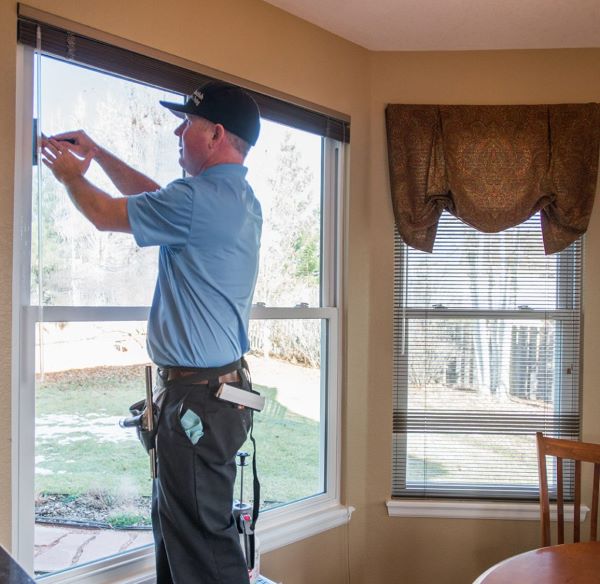
The window tinting business offers three primary approaches that align with different entrepreneur profiles, risk tolerances, and capital availability. Your choice of business model fundamentally shapes startup costs, day to day operations, growth trajectory, and long-term profit potential.
Franchise vs Independent Operations
A window tinting franchise provides a proven system with established brand recognition, comprehensive training, and ongoing operational support. Tint World®, a leading auto styling franchise, demonstrates the revenue potential: average annual revenue per franchise unit reaches approximately $883,270, with median figures around $704,447. Franchise owners benefit from an 80% gross profit margin and average EBITDA of approximately $252,500—roughly 29% of revenue.
The investment for a Tint World franchise ranges from $289,950 to $469,950, plus a franchise fee of approximately $49,950. New franchisees pay royalty and marketing fees of 6% each on gross sales. Breakeven typically occurs within 12 months under proper operations. The franchise agreement provides structured support that reduces the learning curve, though it limits complete creative control over your own business.
Independent startup advantages include lower initial costs, complete decision-making authority, flexibility in service offerings, and no ongoing royalty payments. However, independent operators must build their brand from scratch, establish supplier relationships, develop training programs, and create their own systems and software for hiring, scheduling, and quality control. Success requires stronger entrepreneurial skills and a longer timeline to establish market presence.
Mobile vs Fixed Location Services
Mobile service operations represent the lowest barrier to entry in the tinting business. Startup costs typically range from $50,000 to $75,000, covering a reliable service vehicle ($20,000-$35,000), quality tools, film inventory, and basic branding. Mobile operators enjoy profit margins between 50% and 80%, minimal fixed overhead, flexible scheduling, and direct customer relationships.
A fixed window tint shop requires higher initial investment—typically $100,000 to $200,000—for commercial lease, facility buildout, equipment (including cutting plotters at $10,000-$20,000+), utilities, insurance, and staffing. However, a dedicated location enables larger commercial and residential jobs, accommodates walk-in traffic, supports team growth, and creates capacity for technical specialty films that require controlled installation environments.
Many successful operators combine both approaches: mobile service for automotive and smaller residential jobs while maintaining a shop location for commercial installations, film cutting, and complex architectural projects.
Service Specializations
Automotive window tint remains the most familiar entry point with consistent demand. Pricing ranges from $250-$400 for sedans, $300-$500 for SUVs and trucks, and $600+ for luxury vehicles using premium ceramic films. Material costs per vehicle typically run $20-$40, creating exceptional gross margins that attract customers seeking both comfort and style.
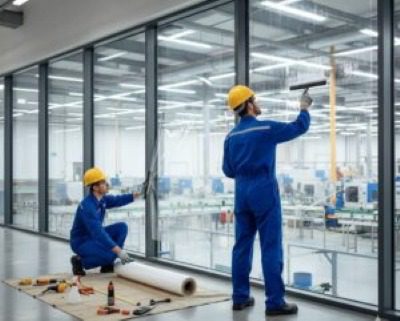
Residential and commercial window film installations offer larger project values but different operational demands. Commercial jobs often involve hundreds to thousands of square feet, with installed costs between $4.50 and $7.75 per square foot for standard low-E or solar control films—with difficult installations pushing toward $10 per square foot or more. These high demand services require specialized training, safety certifications, and relationships with property managers, architects, and building owners.
Additional specializations include safety and security films for blast resistance, decorative films for privacy and branding, and marine or RV applications. Each niche demands different expertise, tools, and marketing approaches—but diversification across specializations reduces seasonal fluctuation and expands revenue streams.
Understanding market size and growth trends helps entrepreneurs decide which specializations offer the strongest opportunities for their target location.
Market Opportunity and Revenue Potential
Building on the business model foundation, specific market data reveals why window tinting represents a compelling opportunity for entrepreneurs seeking high-margin service businesses with multiple growth pathways.
Industry Growth Statistics
The window film market demonstrates robust expansion across all major segments. Fortune Business Insights places the global market at approximately $2.56 billion in 2025, growing to $4.52 billion by 2034 at a 6.5% CAGR. Grand View Research offers broader estimates—$11.25 billion in 2024 expanding to $16.56 billion by 2030—reflecting different segment definitions that include architectural retrofit applications.
Regional distribution shows Asia Pacific dominating with 40-45% market share, while North America holds 30-35%. Within North America, the automotive aftermarket continues steady growth, with the accessories market and accessories subset for window films expanding alongside demand for energy efficiency solutions.
Key growth drivers include:
- Stricter building energy codes requiring solar control solutions
- Rising consumer awareness of UV protection and interior comfort
- Increasing electric vehicle adoption creating demand for heat rejection
- Commercial retrofit mandates for existing building stock
Target Market Segments
Automotive clients represent the most accessible customer base. Individual vehicle owners (sedans, SUVs, luxury cars), fleet operators, ride-share drivers, and car dealerships all generate consistent demand. Selling points include interior comfort, UV protection, privacy, style enhancement, and preserved resale value. The accessories market for vehicles continues expanding as consumers prioritize personalization.
Residential customers include energy-conscious homeowners seeking reduced cooling costs, families wanting privacy without sacrificing natural light, and homeowners protecting furniture and flooring from UV damage. Climate extremes—both hot and cold regions—drive highest demand for residential film installations.
Commercial prospects span office buildings, retail stores, healthcare facilities, hospitality venues, schools, and government buildings. Motivations include energy code compliance, glare reduction for employee comfort, safety requirements (hurricane zones, blast protection), and aesthetic branding. Commercial contracts typically involve longer sales cycles but larger project values and potential for recurring relationships.
Profit Margins and Revenue Streams
Material costs in automotive tinting typically represent just 15% of job revenue. For a $350 sedan installation, film cost runs approximately $25-$35, leaving substantial gross margin after labor. This cost structure supports gross margins of 70-85% for efficient operators focused on quality and throughput.
Premium film offerings create significant upselling opportunities. Ceramic and infrared-rejecting films command 40-60% higher prices than standard dyed options—with proportionally lower increases in material cost. Customers increasingly research film performance online, creating demand for high-performance options when properly presented.
Supplemental revenue streams include:
- Film removal and replacement services ($1.50+ per square foot)
- Paint protection film installation (related skill set, premium pricing)
- Recurring commercial maintenance contracts
- Related services: detailing, coatings, performance parts installation
Seasonal patterns vary by segment. Automotive demand stays relatively consistent but may dip during severe weather. Residential and commercial work fluctuates with construction cycles and regulatory deadlines for rebate programs.
Understanding investment requirements helps entrepreneurs create realistic financial projections and secure appropriate working capital.
Getting Started: Investment Requirements and Setup Process
With market potential established, specific investment levels and implementation steps become critical for entrepreneurs ready to launch their window tinting business.
Initial Investment Breakdown
Investment requirements vary substantially based on your chosen business model and growth ambitions:
- Mobile startup ($50,000-$75,000): Reliable service vehicle, quality installation tools, initial film inventory, basic branding, insurance, and working capital for first few months of operations. Lowest risk entry point with flexibility to scale.
- Small shop setup ($100,000-$200,000): Commercial lease, facility buildout (ventilation, lighting, controlled environment), cutting equipment, display samples, signage, initial staffing, and operating reserves. Enables larger jobs and walk-in traffic.
- Full-service franchise ($290,000-$470,000): Includes franchise fee, buildout to brand standards, required equipment, initial inventory, comprehensive training, and launch marketing. Provides proven system, leadership team support, and established brand recognition.
- Multi-location operation ($500,000+): Multiple vehicles, larger facility, team of technicians, specialized equipment for commercial and architectural work, and expanded insurance coverage. Requires experienced management and implementing systems for consistent quality across locations.
Training investment typically adds $1,500-$5,000 per technician. Professional certification from manufacturers like 3M ($1,399+ for safety/security film training) or Avery Dennison ($1,099 for architectural film courses) establishes credibility and ensures proper installation techniques that minimize film waste.

Business Model Comparison
| Criterion | Mobile Operation | Independent Shop | Franchise |
|---|---|---|---|
| Initial Investment | $50,000-$75,000 | $100,000-$200,000 | $290,000-$470,000 |
| Monthly Overhead | $2,000-$4,000 | $8,000-$15,000 | $12,000-$20,000 |
| Revenue Potential | $150,000-$300,000/year | $250,000-$500,000/year | $700,000-$1,000,000/year |
| Support Level | Self-directed | Self-directed | Comprehensive operational support |
Entrepreneurs should choose based on risk tolerance, available capital, and growth goals. Mobile operations suit those testing the market with limited capital. Independent shops work for experienced professionals wanting full control. Franchises fit investors seeking faster ramp-up with reduced operational uncertainty.
A well-optimized Google Business Profile becomes essential regardless of model—local search visibility directly impacts your ability to attract customers in a competitive service industry.
Common Challenges and Solutions
Understanding typical obstacles helps new window tinting business owners prepare effective responses before problems derail progress.
Competition and Market Saturation
Many markets feature multiple established tint shops and low-cost competitors. Avoid price competition that erodes profit margins. Instead, differentiate through premium film options (ceramic, spectrally selective), exceptional customer service, professional certifications, comprehensive warranties, and specialization in underserved segments like commercial or safety films. Build company culture around quality and expertise rather than volume at low margins.
Technical Skills and Training Requirements
Poor installations create bubbles, peeling, and customer disputes—destroying reputation and profitability. Invest in professional training from established manufacturers (3M, XPEL, film suppliers) or franchise systems. Budget $2,000-$5,000 for comprehensive certification. Practice on vehicles you own before taking customer work. Develop quality control processes and document techniques that succeed in your local climate conditions.
Legal Compliance and Licensing
Window tint laws vary dramatically by state. Visible Light Transmission (VLT) requirements differ for front side windows, rear windows, and windshields—with violations resulting in fines and forced removal that damage customer relationships. Research your state’s specific regulations at resources like WindowTintLaw.com before promising any tint level. Obtain appropriate business licenses, contractor registrations where required, and secure general liability insurance with minimum $1 million coverage. Commercial work may require additional certifications for safety/security film installations.
Supply Chain and Cash Flow Management
Film prices fluctuate with raw material costs. Premium ceramic and low-E films carry higher costs and potential supply constraints. Establish relationships with multiple distributors to ensure availability. Maintain 3-6 months of working capital to handle slow periods, equipment repairs, and inventory purchases without cash flow stress.
Strategic preparation and realistic expectations position new operators for long-term success in this growing industry.
Conclusion and Next Steps
Window tinting business opportunities offer multiple pathways to profitability in 2026, from lean mobile operations earning $150,000+ annually to franchise units generating $800,000+ with comprehensive support systems. The window film market continues expanding as energy efficiency mandates, consumer comfort demands, and automotive personalization trends drive sustained growth across all segments.
Success requires matching your investment capacity and entrepreneurial experience to the appropriate business model, then executing with focus on quality, customer service, and operational efficiency.
Immediate action steps:
- Assess local market competition—visit existing tint shops, review online presence, identify underserved segments
- Determine your preferred business model based on capital availability and risk tolerance
- Research franchise options (Tint World®, CoolVu®) or contact independent supplier networks for equipment and film sourcing
- Secure initial funding through business loans, personal investment, or partnership arrangements
- Complete professional training before accepting customer work
Related exploration topics: Paint protection film creates natural service expansion for automotive-focused shops. Commercial solar film specialization serves growing demand for building energy retrofits. Automotive detailing and ceramic coating services complement window tinting with shared customer bases and facility requirements.
If you’re exploring Window Tinting Business Opportunities, CoolVu offers a proven franchise model in the growing window film industry. Visit their website to learn how this business combines strong support, recurring revenue potential, and a scalable path to long-term success.
Frequently Asked Questions
How much money can you make owning a window tinting business?
Revenue varies substantially by business model. Mobile operators typically generate $150,000-$300,000 annually. Independent shops with established customer bases reach $250,000-$500,000. Franchise units like Tint World® average approximately $883,270 in annual revenue, with EBITDA margins around 29%. Profit depends on volume, service mix, operational efficiency, and local market conditions.
What are the startup costs for a window tinting business in 2026?
Mobile startups require $50,000-$75,000 covering vehicle, tools, inventory, and initial operating expenses. Fixed location shops need $100,000-$200,000 for lease, buildout, equipment, and working capital. Full-service franchises range from $290,000-$470,000 including franchise fees, facility requirements, and comprehensive training.
Do you need experience to start a window tinting business?
Prior experience helps but isn’t mandatory. Professional training programs from 3M, film manufacturers, or franchise systems provide comprehensive instruction over 2-5 days at costs of $1,000-$2,000+. Practice installations build competence before accepting customer work. Franchise models include extensive training as part of the investment, reducing the learning curve for new franchisees.
Is a window tinting franchise worth the investment compared to starting independently?
Franchises provide brand recognition, proven systems, operational support, and faster ramp-up—typically reaching breakeven within 12 months. However, ongoing royalty and marketing fees (often 6% each) reduce margins compared to independent operations. Independent operators retain more profit per job but face longer timelines establishing brand presence and systems. Choose based on your entrepreneurial experience, capital availability, and preference for structure versus autonomy.
What licenses and permits are required for a window tinting business?
Requirements vary by location but typically include general business license, sales tax permit, and liability insurance. Some states require contractor licensing for commercial or residential work. Research VLT laws in your state to ensure compliance—violations result in fines and customer disputes. Professional certifications from film manufacturers, while not legally required, establish credibility and may be necessary for commercial contracts.
How long does it take to become profitable in the window tinting industry?
Mobile operations can reach profitability within 3-6 months with consistent customer acquisition and efficient operations. Fixed location shops typically require 6-12 months to cover overhead and generate sustainable profit. Franchise units average approximately 12 months to breakeven under proper management. Profitability timeline depends heavily on marketing effectiveness, service quality, local competition, and operational efficiency.