This guide covers the full scope of architectural privacy solutions for franchise systems, from the materials and technologies available to the business model behind delivering them at scale. Whether you manage multiple locations and need consistent privacy upgrades or you are evaluating franchise ownership in this niche, the sections below walk through what matters most in 2026.
Table of Contents
What Architectural Privacy Solutions Mean for Franchise Owners in 2026
Core Architectural Privacy Solutions for Franchise Interiors
Designing to Add Privacy While Protecting Brand Standards
How an Architectural Privacy Solutions Franchise Operates
FAQs About Architectural Privacy Solutions for Franchises
What Architectural Privacy Solutions Mean for Franchise Owners in 2026
Architectural privacy solutions refer to the building finishes and technologies that control visibility, light, and branding across glass and interior surfaces. These include solar control window films, decorative frosted or patterned glass films, smart switchable films that go from clear to opaque on demand, security films, and architectural surface finishes for walls, doors, and millwork. Rather than relying on blinds, curtains, or solid walls, these products let franchise owners add privacy while preserving the open, light-filled layouts that customers prefer.
Privacy requirements have shifted in 2026. Telehealth consultations happen in wellness and medspa franchise locations where patients expect visual confidentiality. Boutique fitness studios need semi-private zones for personal training without sacrificing the energy of open group spaces. Quick-service restaurants now protect digital touchpoints, which are critical for customer interactions at franchises, by shielding self-order kiosks and mobile POS stations from outside sightlines. Franchise organizations often struggle with technology uniformity and support; privacy solutions face the same challenge, where every location needs the same level of discretion but faces different sun angles, street traffic, and local building codes.
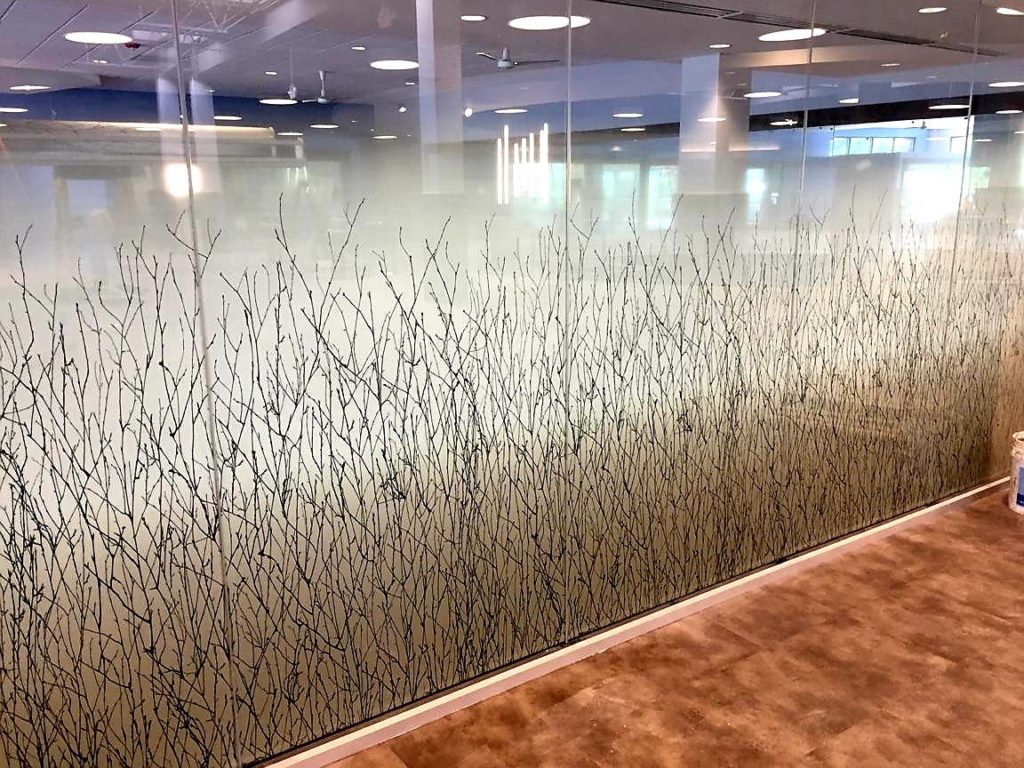
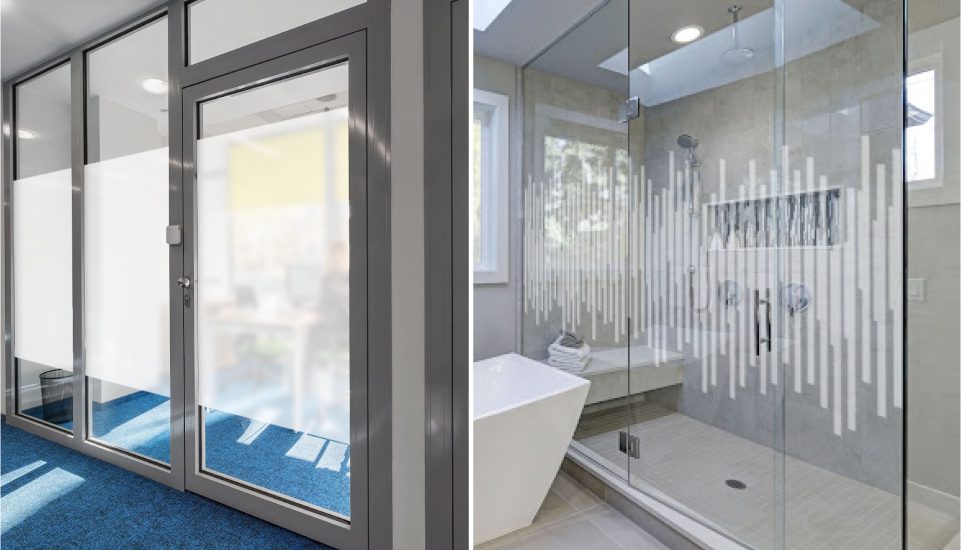
The key insight for franchise owners is that architectural elements can improve privacy while adding aesthetic appeal. Privacy does not have to mean dark, closed-off rooms. A gradient frost on conference room glass, for instance, blocks views below eye level while letting daylight stream through the upper pane. Wall graphics in brand colors transform a plain corridor into both a wayfinding tool and a visual screen for back-of-house operations. When done well, privacy becomes part of the interior design rather than an afterthought bolted onto it.
Key benefits of architectural privacy solutions across a franchise system:
- Brand consistency: uniform film types, colors, and patterns specified in a design book so every location looks and feels the same
- Energy efficiency: solar control films can reduce cooling costs by rejecting up to 60% of total solar energy, cutting HVAC load without replacing windows
- Security: safety and security films tested to ANSI Z97.1 and CPSC 16 CFR 1201 standards help glass resist forced entry, vandalism, and accidental impact
- ADA and code compliance: manifestation bands and frosted zones meet safety glazing and accessibility requirements for large glass panels
- Better guest experience: less glare, more comfort, and the confidence that private conversations stay private
Consider a multi-state medspa franchise rolling out 30 new locations over 18 months. Each clinic has floor-to-ceiling glass between treatment rooms and the reception corridor. Installing gradient frosted film at a standardized 72-inch height from the floor, similar to the approach used at New York Presbyterian Hospital, gives patients privacy during procedures while keeping the lobby bright and welcoming. A boutique fitness chain with studios in six states faces a different challenge: west-facing storefronts that blast afternoon sun onto treadmill screens. A bronze-toned solar film specified system-wide solves the glare problem, reduces cooling costs, and creates a uniform curb appeal. In both cases, franchise owners add privacy across multiple locations without blocking the natural light that draws customers in.
Core Architectural Privacy Solutions for Franchise Interiors
The architectural privacy solutions market serves retail storefronts, restaurants, medical clinics, corporate offices, schools, government buildings, and residential properties. For franchise environments, the priority is consistency: every location needs the same look, the same performance, and the same installation quality, regardless of local climate or building type. Below is a breakdown of the core solutions.
Solar control and privacy window film
Solar control films are the workhorse of franchise privacy projects. They manage four variables at once: visible light transmission (VLT), solar heat gain, UV exposure, and glare. A film with 25% VLT, for example, rejects roughly 60% of total solar energy and blocks 99% of UV radiation, which protects interior furnishings from fading while giving occupants daytime privacy from passersby. Higher VLT films (40-60%) let in more daylight but provide less screening, so selection depends on orientation, climate, and the privacy threshold the franchise needs.
One detail that catches franchise owners off guard: reflective films provide strong daytime privacy when the sun is bright outside, but at night, with interior lights on, the effect reverses and people outside can see in. Dual-reflective films reduce this issue. For locations that need 24-hour privacy, like 24-hour gyms or late-night restaurants, opaque lower bands or smart film may be the better choice.
Decorative and frosted glass films
Decorative films serve double duty as privacy tools and brand reinforcement. Gradient frosts are popular in healthcare and wellness franchises, where a feathered frost pattern on exam room glass blocks sightlines at seated and standing height while leaving the top third of the glass clear. This technique supports HIPAA-sensitive spaces without creating a claustrophobic feel.
Branded graphics printed on frosted film bring franchise identity into the privacy solution itself. A repeating monogram or pattern at reception, a brand-color accent stripe on office partitions, or a custom motif on entry doors all reinforce the brand while screening sensitive areas like cash wraps, consultation desks, and staff workstations.
Smart and switchable films
PDLC (polymer dispersed liquid crystal) films switch from transparent to opaque when an electrical current is applied. Baptist Health in South Miami retrofitted lab and clinical office windows with switchable privacy film to provide instant privacy without replacing the glass. The National Library of Medicine used the same technology on interior partitions where rooms shift between collaborative and confidential use throughout the day.
For franchises, smart film is ideal in conference rooms, executive offices, and high-end treatment rooms where privacy needs change hour to hour. Advanced technology solutions like these enhance privacy control in luxury residences as well, where homeowners want floor-to-ceiling glass that turns opaque for bedrooms or bathrooms at the touch of a button. The upfront cost is higher than static film, but prices have dropped as manufacturing scales, and the flexibility eliminates the need for blinds, shades, or mechanical systems.
Architectural surface finishes
Privacy is not limited to glass. Vinyl wraps, laminates, and textured finishes for walls, doors, and millwork create opaque barriers that also refresh tired interiors. Realistic wood, stone, and textile patterns replace dated surfaces without major construction, and they meet the cleanability and durability standards that food-service and healthcare brands require. In franchise rollouts, surface finishes standardized by color and texture keep every location aligned with brand standards while concealing back-of-house areas, utility closets, and storage from customer view.
Security and safety films
Thicker films (8-mil, 12-mil, or heavier) paired with glass retention attachment systems help storefronts resist break-ins, smash-and-grab incidents, and accidental impact. These films are tested under ANSI Z97.1 for safety glazing and CPSC 16 CFR 1201 for human impact resistance. Street-level retail units, 24-hour gyms, schools, and municipal buildings are the primary use cases.
Private focus pods are also part of the architectural privacy solutions market; these enclosed workspaces within open floor plans use a combination of acoustic panels (which absorb sound to improve speech privacy and reduce distractions), frosted glass walls, and surface finishes to create quiet zones. The demand for acoustic management is driven by open-plan offices and remote work models, making pods a growing product category for co-working and corporate franchise concepts.
Typical franchise use cases by location zone:
- Storefronts and entry glass: solar control film, branded decorative film, security film
- Back-of-house corridors and offices: frosted or gradient privacy film, surface finishes
- Consultation and treatment rooms: smart switchable film, full-frost film, acoustic solutions
- Drive-thru windows: anti-glare film, security film
- Conference rooms and executive offices: smart film, decorative frosted film
Each of these solutions can be customized by color, opacity, and pattern, giving designers the ability to add privacy without compromising the franchise design guide.
Designing to Add Privacy While Protecting Brand Standards
Franchise owners operate within strict brand standards that dictate color palettes, signage placement, lighting, and material finishes. At the same time, local conditions create privacy demands that the corporate design book may not anticipate. A location in Phoenix with west-facing glass needs aggressive solar control. A clinic in a dense urban market needs full visual screening of patient check-in areas. A co-working franchise in a mixed-use building must satisfy landlord requirements for exterior glass reflectivity. The tension between consistent execution of brand identity and local adaptation is real, and privacy solutions sit at the center of it.
Franchisors can improve customer experiences with uniform technology solutions, and the same logic applies to privacy. The solution is to integrate privacy specifications into the corporate design package itself. This means defining approved film types with specific VLT ranges, color tones, and performance metrics (SHGC, UV rejection percentage) in the brand book. It means creating printable artwork libraries with pre-approved decorative patterns, logo placements, and gradient heights. And it means documenting installation details, including edge treatments, mounting methods, and glass compatibility requirements, so every franchisee and every installer follows the same playbook.
The collaboration workflow between a privacy solutions provider and a franchisor’s design team typically starts with a review of the brand book and material palettes. Sightline diagrams map which interior zones need screening: where customers can see into staff areas, where mobile POS devices enhance customer interactions but also display transaction data, where consultation rooms border public corridors. Logo usage rules, color tolerances, and finish types (matte versus gloss) are confirmed before any film is cut or surface finish ordered.
Concrete examples make the process clearer. A national dental franchise specifies a single frosted band height of 42 inches from the floor on all operatory glass, giving patients in the chair privacy while keeping the space open above. A quick-service restaurant chain mandates a common bronze-tint solar film for every western-facing storefront in its system, solving glare without creating visual inconsistency from one store to the next. A wellness brand incorporates its signature leaf motif into decorative film patterns at every reception zone, so the brand reads through the privacy solution itself.
Compliance and performance requirements shape film selection as much as aesthetics do. Building codes updated under 2024-2026 energy standards (based on the International Energy Conservation Code) set maximum SHGC values for glazing; solar films can help existing buildings meet these thresholds without full window replacement. Safety glazing codes require tempered or filmed glass in hazardous locations like doors and sidelights. Landlord criteria in multi-tenant retail centers often cap exterior reflectivity, which rules out mirror-finish films. Compliance with building codes and standards is essential in architectural privacy projects, and specifying the wrong product risks code violations or voided glass warranties.
CommercialArch has supported over 100 Crumbl locations in California by helping franchises adapt to local building requirements, including permitting and code compliance for interior buildouts. That kind of location-by-location adaptation, within a standardized framework, is what makes multi-unit privacy rollouts work.
Design principles for franchise privacy projects:
- Preserve natural light: use the highest VLT film that still meets the privacy threshold; reserve opaque solutions for zones that truly need them
- Protect critical sightlines: screen POS areas, staff workstations, and consultation rooms; keep customer-facing zones open and inviting
- Avoid cluttered graphics: one pattern or motif per glass surface; simplicity reads as quality
- Plan for maintenance and replacement: films degrade at edges over time; specify products with field-replaceable sections rather than full-panel replacements
- Test before committing: install samples on one glass panel before rolling out across the system
Privacy strategies differ by franchise type. Co-working concepts need quiet zones and private focus pods with acoustic treatment. Medical and dental groups need discrete check-in and operatory screening that supports HIPAA compliance. Wellness boutiques and salons need semi-private treatment zones that still feel part of the larger space, not walled off from it. Strategic layout enhances privacy in luxury homes as well, where a residential franchise client might want screening for a home office, a spa bathroom, or a private courtyard. Private courtyards provide serene outdoor spaces for relaxation, and glass walls facing those spaces can benefit from switchable film that preserves the view when privacy is not needed. Outbuildings like guest houses on luxury properties present similar opportunities, where the franchise owner serving residential clients can cross-sell privacy, solar control, and decorative solutions in a single project, tapping into the broader home decor franchise demand for stylish window and glass treatments.
How an Architectural Privacy Solutions Franchise Operates
An architectural privacy solutions franchise is a home-based window tinting and surface enhancement business. There is no retail storefront. Franchise owners travel to customer sites with tools, materials, and samples, then consult, measure, and install on location. The model serves both residential and commercial clients, but the highest-value contracts tend to come from multi-unit franchise accounts that need system-wide upgrades across 5, 20, or 50 locations.
The typical client mix in 2026 breaks into four segments. Single-family homeowners want UV protection, glare reduction, and privacy from street-level sightlines. Property managers need uniform film across tenant suites or common areas. Small business owners, from restaurants to retail boutiques, need storefront privacy, branding, or security film. And regional franchise owners with multiple locations need standardized privacy and design upgrades that align with corporate brand standards, delivered on a coordinated timeline without disrupting live operations.
Step-by-step project process for a franchise client:
The engagement starts with a discovery call to understand the scope: how many locations, what privacy problems exist, and what brand specifications apply. Next comes a site survey at the first location, where the team measures glass areas, documents orientation and sun exposure, identifies glazing types (annealed, tempered, double-pane), and reviews existing lighting conditions. Design and material mockups follow; sample films and patterns are applied to a test pane so the client sees the result before committing. A pilot installation at one location lets both parties confirm that the product, the process, and the look meet expectations. Then the multi-site rollout begins, with coordinated scheduling, consistent materials, and quality checks at every location.
Fast deployment of technology solutions reduces downtime in franchises, and the same principle applies to privacy installations. Scheduling is built around the client’s operating hours. Retail and restaurant locations often require nighttime or weekend installs so customer traffic is not affected. Coordinated crews across cities, consistent pricing locked in at the contract level, and centralized communication for regional managers keep the rollout on track.
Franchising architectural privacy solutions provides access to established supply chains and training backed by an experienced CoolVu franchise leadership and support team. New franchise owners receive technical training in film installation for every product category: solar, decorative, safety, smart film, and surface finishes. Sales and estimating systems, CRM and quoting software, and marketing assets targeting franchise and B2B decision-makers are all part of the support package. Independent franchise locations benefit from shared knowledge and training from a central franchisor, which accelerates the learning curve for owners who may be new to the construction or design industry.
PlanFirst™ offers ongoing training and marketing support for franchisees, and platforms like Stratix provide fast support and authorized repairs for franchisees managing technology-dependent service operations. Franchisees can access a one-stop shop for technology solutions with Stratix, which matters when coordinating estimating software, CRM, and mobile tools across a growing territory.
Territory structure gives each franchise owner a protected geographic area, preventing overlap with other owners in the same system. Lead-generation programs feed national account opportunities into the network, and ongoing coaching helps owners navigate the sales cycle for large-scale franchise rollouts.
Key advantages for franchise owners in this model mirror what many top service franchises in the window and glass industry offer:
- Low overhead: home-based operations eliminate retail lease costs and fixed staffing for a storefront
- Recurring revenue: the franchise model can create recurring revenue through maintenance and reconfiguration services, since films and finishes need refreshing every 5 to 15 years depending on product and exposure
- Cross-selling: a single client relationship can generate projects across privacy, energy efficiency, decorative branding, and security film
- Flexibility: owners set their own schedules, scale crews as demand grows, and choose their mix of residential and commercial work
- Access to diverse markets: the same skills serve healthcare, retail, hospitality, education, government, and residential clients
Standardization of products and processes is key for replicating architectural privacy solutions across locations, and the franchise model builds that standardization into its DNA. Materials ordering is centralized to lock in pricing and ensure batch consistency across jobs. Installation procedures are documented step by step so every project meets the same quality bar regardless of which crew handles it.
FAQs About Architectural Privacy Solutions for Franchises
These questions come from two audiences: franchise system operators looking for privacy solutions across their locations, and individuals exploring franchise ownership in this space. The answers below address both.
How do architectural privacy solutions differ from basic window tinting?
Basic window tinting typically involves applying an off-the-shelf solar film to reduce glare or heat. Architectural privacy solutions go further by combining solar control, decorative films, security films, smart glass, and surface finishes into a coordinated system that addresses privacy, branding, safety, and energy performance together. The distinction matters for franchise environments because each product is specified to match interior design goals and brand standards. Custom patterns, gradients, color-matched tones, and performance specifications validated across many locations replace the one-size-fits-all approach of basic tinting.
Can I add privacy without making my franchise location feel dark or closed off?
Yes. Light frosts transmit most visible light while scattering it enough to block direct views. Gradient patterns keep the upper portion of glass completely clear, so ceilings and sky remain visible and rooms feel open. Subtle tints in the 40-60% VLT range reduce glare without noticeably darkening the space. At New York Presbyterian Hospital, designers used a feathered frost band covering the lower 72 inches of lobby glass to protect patient privacy while preserving full daylight above that line. Designers can perform basic daylight and glare assessments before installation so the result feels welcoming, not cave-like, which is especially important in retail and hospitality franchises where the space itself is part of the customer experience.
How long do privacy films and architectural finishes typically last?
Commercial-grade solar and decorative window films carry warranties of 10 to 15 years, with actual lifespan tied to glass type, sun exposure, and whether the film is installed on interior or exterior surfaces (interior lasts longer). Architectural surface finishes, including vinyl wraps and laminates on walls and millwork, last 7 to 10 years under normal franchise traffic. High-traffic zones like door edges and checkout counters may need refreshing at the 4 to 5 year mark. This predictable maintenance cycle creates repeat business for franchise owners offering these services and gives their clients a manageable budgeting timeline.
What does it cost to add privacy solutions across multiple franchise locations?
Pricing is calculated per square foot and varies by product type. Standard solar control film typically runs $8 to $20 per square foot installed. Custom printed decorative graphics land in the $20 to $40 range. Switchable smart film, which requires electrical wiring and control integration, can reach $40 to $80 or more per square foot. Multi-location franchises typically negotiate standardized pricing and phased rollouts to spread cost across quarters. Many projects demonstrate ROI through reduced cooling costs (solar control films can cut HVAC load measurably), fewer interior fade replacements, and increased customer satisfaction from comfortable, well-lit, private spaces.
Do privacy solutions help with compliance and risk management?
Correctly specified films support safety glazing codes (ANSI Z97.1, CPSC 16 CFR 1201) and can improve a building’s resistance to forced entry, wind-borne debris, and accidental human impact. In healthcare and professional office franchises, frosted or smart films reduce sightlines into screens and patient documents, supporting HIPAA and PCI compliance. Security films paired with structural attachment systems hold shattered glass in place, which matters for street-front retail locations vulnerable to smash-and-grab incidents. Choosing films that meet local code and landlord requirements avoids violations and protects glass warranties.
What kind of support does an architectural privacy solutions franchise owner receive?
New franchise owners go through technical training covering every product category: solar film, decorative film, safety film, smart switchable film, and surface finishes for walls and millwork, supported by the same programs outlined in CoolVu’s franchise FAQ on costs, training, and territories. They receive marketing materials aimed at franchise brands and B2B decision-makers, estimating templates, installation best practices, and CRM tools for managing quotes and projects. Ongoing coaching focuses on commercial sales cycles, multi-site rollout logistics, and growing a career in a niche with strong recurring revenue. New owners are guided through their first projects, including multi-site franchise engagements, so they can confidently serve both local homeowners and larger regional or national accounts.
Why Choose Our Architectural Privacy Solutions Franchise
CoolVu combines window film, decorative graphics, architectural surface finishes, and smart privacy glass into a single offering. That combination is what separates this franchise from companies that only do tinting or only do graphics. A franchise system client gets one point of contact for solar control on storefronts, branded frost on conference rooms, surface refinishing in corridors, and switchable film in executive offices, all specified to match their brand and rolled out on a coordinated schedule.
For prospective franchise owners, the model starts with low fixed costs: home-based operations, no retail lease, and a total initial investment range of $58,000 to $97,000 with a $20,000 franchise fee, closely aligned with the CoolVu window film franchise investment structure. Technical and sales training covers every product category. Protected territories prevent competition with other owners in the same system. And access to national and regional multi-unit accounts means the pipeline includes projects with 10, 20, or 50 locations, not just one-off residential jobs.
For franchise system clients who partner with a local CoolVu owner, the advantage is a provider who understands brand standards, carries consistent materials, and delivers uniform quality across every location. Response times are fast because the owner is local. Communication is direct because there is a single point of contact who knows the project history.
- Expertise in energy efficiency, security film, and decorative solutions for diverse markets
- Proven multi-location rollout processes built on standardized products and installation procedures
- Strong vendor relationships and centralized procurement that lock in pricing and material consistency
- Commitment to long-term maintenance partnerships with predictable refresh cycles
- On-site consultations, mockups, and samples before any commitment; transparent pricing; clean installation practices that minimize disruption to live businesses
CoolVu’s net unit count grew from zero to approximately 81 franchise locations between 2021 and 2023, backed by franchisee reviews highlighting support and growth potential. That growth reflects the opportunity in this niche: franchise owners, designers, and facility managers are actively looking for providers who can deliver architectural privacy solutions with the consistency and quality their brands demand.
Take the Next Step
If you manage franchise locations and need privacy, solar control, or decorative solutions across your system, request a site visit or virtual consultation. The process starts with a review of your storefronts, interior glass, and surface privacy needs, followed by mockups and samples so you see the result before committing.
If you are exploring franchise ownership in this space, schedule a discovery call to review territory availability, investment details, and what daily life looks like as an architectural privacy solutions franchise owner, or walk through how to become a CoolVu franchise owner step by step. Consultations typically include a discussion of your resources, your community, and the market opportunity in your area.
Response times are fast. Initial conversations cover your current spaces, interior design and brand standards, and recommendations to enhance privacy with minimal disruption.
Thoughtful architectural privacy solutions transform how people experience both homes and franchise spaces. Whether you want to grow a business in this niche or upgrade the locations you already manage, the next step is a conversation. Contact CoolVu to get started.