
Table of Contents
Why Building Services Are Booming in 2026
Understanding the Building Services Business Opportunity
Core Categories of Building Services (and Where the Profits Are)
Trade-Based Building Services: Plumbing, Electrical, and HVAC
Surface and Finish Services: Painting, Flooring, and Modern Surface Solutions
Why Building Services Are Booming in 2026
Building services occupy the space between full-scale construction projects and everyday property upkeep. They include everything from plumbing repairs and electrical upgrades to window film installation, post-construction cleaning, and architectural surface refinishing. This middle ground generates constant demand across residential and commercial properties because buildings always need maintenance, improvement, and adaptation.
The numbers tell a compelling story. The global construction market is projected to reach $14.4 trillion by 2030, and construction spending in the U.S. exceeded $2 trillion in 2023. Urbanization continues to accelerate across Sun Belt metros, and retrofit and renovation spending has climbed steadily since 2020. The building services industry offers numerous business opportunities due to aging infrastructure that requires ongoing maintenance and upgrades.
This article breaks down specific building services business opportunities-from plumbing and electrical to modern surface solutions-with realistic startup costs, profit drivers, and growth strategies. You will learn where the margins actually are, how to validate demand before investing, and how offerings like energy-efficient window film and architectural finishes fit into a profitable construction related business portfolio.
CoolVu serves as one example of a modern, low-overhead building services franchise focused on window film, tinting, decorative graphics, and architectural surface finishes. We will reference this model throughout as a concrete illustration of how today’s surface and finish businesses operate.
Understanding the Building Services Business Opportunity
A building services business opportunity differs from a general construction business in one critical way: it focuses on ongoing services-repairs, retrofits, enhancements, maintenance-rather than ground-up construction. You are not building shells. You are keeping buildings functional, efficient, safe, and attractive.
Building services plug into every phase of the construction project lifecycle. During pre-construction, estimation and planning firms support budgeting and scheduling. During the active build, trade contractors, construction site management teams, and surface specialists execute the work. After completion, post construction cleaning services ensure sites are move-in ready, and maintenance services keep everything running for years to come.
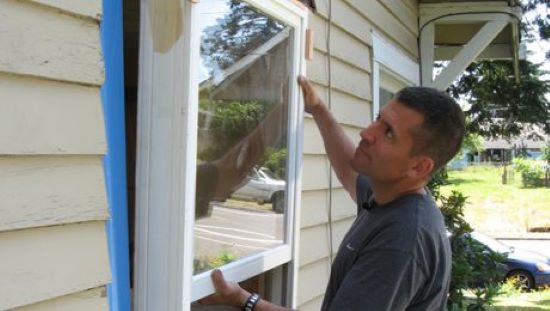
Consider a few concrete examples. A plumbing business that adds annual maintenance plans to its core repair work creates predictable recurring revenue. A construction cleaning business specializing in post-construction cleanup for condo towers fills a niche that general contractors rarely handle themselves. A window film installer improving energy performance in 1980s office buildings taps into the retrofit wave driven by rising utility costs and code changes.
Building services tend to be more resilient than cyclical new-build work. Recurring property maintenance, code-mandated upgrades, and insurance-driven improvements like security film after break-ins generate demand regardless of the broader economic cycle. And the capital intensity is far lower: a construction equipment rental operation might require $800,000 or more, while a home-based service franchise like CoolVu can launch for roughly $68,000 to $108,000, and a handyman or estimation side business can start for under $25,000.
Core Categories of Building Services (and Where the Profits Are)
Profitable construction business models in building services tend to fall into several repeatable categories. Understanding where each one sits helps aspiring business owners match their skills, capital, and local market to the right service offering.
- Trade-based services (plumbing, electrical, HVAC): Serve homeowners, property managers, developers, and government agencies. Revenue is a mix of project-based emergency calls and recurring contract-driven maintenance. Ticket sizes range from $150 for a service call to $18,000+ for a full repipe.
- Surface and finish services (painting business, window film, architectural finishes, floor maintenance): Serve residential and commercial clients with quick-turnaround projects. Ticket sizes typically range from $500 for a residential tinting job to $25,000 for commercial architectural wraps.
- Exterior and site services (landscaping business, paving, fencing, roofing): Serve homeowners, HOAs, and commercial developers. Revenue is seasonal but repeatable, with ticket sizes from $2,000 for basic landscaping to $150,000 for hardscaping.
- Equipment and materials (construction supply company, construction equipment rental): Serve general contractors and construction firms. High capital requirements, but central to local construction ecosystems.
- Professional and administrative services (construction management, estimation, administrative support): Serve developers, investors, and construction companies. Revenue comes from retainers, project fees, or hourly billing with minimal physical labor.
Many commercial clients compare multiple bids for contracts in the building services sector, which means differentiation-through speed, quality, or specialized services-matters more than price alone. Recurring revenue streams are common in facility maintenance and service contracts, making certain categories especially attractive for long-term stability.
CoolVu fits as a hybrid in the surface and finish category, serving both residential and commercial building services with recurring upgrade and retrofit work across window film, decorative graphics, and architectural finishes.
Trade-Based Building Services: Plumbing, Electrical, and HVAC
Licensed trades remain the backbone of construction related businesses, with strong barriers to entry and consistent demand. There is a growing demand for skilled tradespeople in the building services industry, which keeps pricing healthy for those who enter these fields.
Plumbing business: Starting a plumbing business requires an average startup cost of $1,500 to $30,000, depending on whether you lease or buy a van, invest in specialty tools like drain cameras and jetters, and carry inventory. Revenue comes from emergency calls, bathroom and kitchen renovations, repipes, and increasingly from green plumbing solutions like low-flow fixtures and graywater systems. A solo operator in a metro area can typically handle 3–5 service calls per day. If you want to own your own plumbing business, expect Year 1 revenue in the $100,000–$180,000 range for a well-marketed solo operation.
Electrical contracting business: Common services driving growth include panel upgrades, EV charger installations, smart home rough-ins, and integration with solar panel installation and battery storage systems. Licensing requirements vary by state, but most require journeyman or master electrician credentials. Startup costs for a solo residential electrical contracting business generally run $20,000–$50,000.
HVAC services: HVAC services are essential for commercial and residential buildings, and the shift toward high-efficiency heat pumps and indoor air quality upgrades since 2020 has expanded the market. Service agreements provide recurring revenue, and required certifications like EPA Section 608 for refrigerant handling create a meaningful barrier to entry that protects margins.
A carpentry business startup cost ranges from $10,000 to $50,000, and the average startup cost for a drywall contracting business is $3,000 to $7,000-both adjacent trades worth considering if you have the skills.
Surface and Finish Services: Painting, Flooring, and Modern Surface Solutions
Surface and finish work often has lower startup costs and quicker sales cycles than licensed trades, making these attractive first businesses or add-ons for an existing construction business.
Painting business: A painting business startup cost ranges from $2,000 to $35,000 depending on scale and whether you start with residential or commercial clients. Painting services can include interior and exterior work, and offering color consultation can enhance a painting business’s value by positioning you as an advisor rather than just labor. Clean, quick work can turn one-time clients into regulars who call back for every room, rental turnover, or exterior refresh. A painting business can scale to include niche opportunities like cabinet painting, eco-friendly coatings, or commercial repainting with night and weekend crews-exterior painting services for apartment complexes, for example, consistently generate $5,000–$15,000 per project.
Floor maintenance: Hardwood refinishing, tile and grout restoration, epoxy floor coatings, and regular commercial maintenance contracts offer solid margins. Commercial clients often sign annual contracts, providing predictable cash flow.
Window film and architectural finishes: This is the modern, high-margin corner of the surface category. Energy-saving window tinting, privacy and security films, decorative wall graphics, and architectural surface wraps that mimic wood, stone, or metal can transform spaces without full material replacement.
A CoolVu franchisee operates in this space with a low-overhead, home-based business model, working from a protected territory using a small crew or solo setup. Franchisees serve both B2C homeowners and B2B clients-office buildings, retail, healthcare-with repeatable installation processes and an average job invoice around $2,701.
Exterior and Site-Focused Building Services
Exterior services are crucial for curb appeal, safety, and asset protection, with strong repeat business and seasonal patterns that experienced operators learn to manage.
Landscaping businesses can start with an investment of $5,000 to $50,000. Core services include mowing, planting, irrigation, and hardscaping. Landscape contractors may offer services like mowing and irrigation alongside design-build projects. Landscaping can include features like outdoor living areas and gardens, and sustainable landscaping techniques attract environmentally conscious clients who are willing to pay premium pricing for native plant designs and water-efficient systems. Landscaping services can enhance outdoor spaces for new builds, connecting a landscaping business to construction firms and developers as a reliable referral source.
Roofing services generate income through leak repairs, re-roofing, coatings, and inspection programs. Annual inspection contracts create recurring revenue, and collaboration with solar panel installation teams opens an adjacent revenue stream without requiring new licensing.
Fencing and paving businesses serve both residential and commercial clients. Permitting and HOA approval processes add complexity, but permeable pavements and security fencing can justify premium pricing. Sprinkler system installation is another logical add-on for exterior-focused businesses.
Exterior work complements building envelope services like window film and roofing insulation-together, these create whole-building energy efficiency solutions that property managers and commercial clients increasingly demand.
Equipment and Materials: Supply Companies and Construction Equipment Rental
While these businesses usually require higher capital, they sit at the center of local construction ecosystems and can scale significantly once established.
Startup costs for a construction supply business range from $100,000 to $500,000. Typical product categories include lumber, fasteners, roofing supplies, safety gear, and construction materials of all types. Concrete is the most widely used man-made material in the world, and the cement and concrete supply business is crucial for construction projects of every scale. Concrete restoration and maintenance is often more cost-effective than total replacement, creating a recurring service opportunity for suppliers who also offer delivery services and technical guidance. A cement manufacturing plant sits at the high end of capital investment but serves as the backbone of raw materials supply.
Construction equipment rental startup costs range from $200,000 to over $1 million for a meaningful fleet. Many contractors prefer renting equipment to reduce capital expenditures, and rental profits come from daily, weekly, or monthly fees. Regular maintenance is essential to avoid equipment downtime that eats into margins. Target customers include general contractors and DIY homebuilders. Equipment types range from mini excavators and boom lifts to scaffolding and compactors, and equipment sales of older fleet units provide additional revenue.
Smaller operators can start lean by specializing-only aerial lifts, or only concrete tools-or by operating as a broker connecting owners and renters. Service businesses like CoolVu interface with these suppliers when sourcing lifts for high-rise glass film projects or partnering with local yards for referral exchanges to secure storage space for materials.
Administrative, Estimation, and Construction Management Services
Not all profitable construction related businesses require physical labor. Many are knowledge- and process-driven, making them ideal for people with construction industry experience but limited interest in field work.
Construction estimation services require $5,000 to $25,000 to start. Cost estimators analyze data for project time, financing, materials, and labor to produce reliable budgets. Skilled estimators must be experienced, knowledgeable, and methodical, and proficiency in construction software is essential for cost estimators working on commercial construction projects. Accurate estimates help clients avoid unexpected costs and delays-this is the value proposition that justifies premium fees. Tools like On-Screen Takeoff and Procore are standard in the field.
Construction project management firms coordinate builds without performing physical labor, managing bids, schedules, safety, and payment draws for investors and developers. Fees typically run 5–15% of project cost or monthly retainers. Construction management requires strong organizational and communication skills, and construction management software streamlines project tracking and communication across teams. Construction site management ensures project coordination and efficiency, which is why developers are willing to pay for experienced oversight. Efficient project management and project management software together allow smaller firms to handle larger scopes.
Administrative services for construction companies include scheduling and paperwork management-permit processing, bookkeeping, bid preparation-as a home-based, low-overhead business opportunity. Service franchises like CoolVu combine hands-on installation with centralized support, reducing the individual owner’s administrative burden compared to traditional independent contractors.
Energy Efficiency and Green Building Services
Rising energy costs since 2022, combined with U.S. federal incentives like the 25C residential tax credit and 179D commercial deduction, have created a strong market for renewable energy solutions and efficiency retrofits. Federal tax credits can cover up to 30% of energy-efficient upgrades, making the math attractive for property owners.
Green building and retrofitting specialists offer energy audits, attic insulation, spray foam, air sealing, smart thermostats, and solar panel installation as complementary services. Green buildings can reduce energy consumption by 30-50%, and green buildings utilize renewable energy and conserve water-outcomes that appeal to both environmentally conscious clients and those simply looking for cost savings on utility bills. LEED certification enhances building resale value and reduces operational costs, giving commercial property owners a financial incentive beyond monthly energy savings.
Window film and tinting factor directly into these energy savings. Government evaluations have found that low-E window film can reduce HVAC energy consumption by approximately 29% in perimeter zones with single-pane clear glass. For CoolVu franchisees, this data point becomes a selling tool: measurable savings that deliver ROI within 2–4 years depending on climate and electricity costs.
Certifications matter here. BPI, RESNET, and NABCEP for solar help qualify contractors for rebates and build trust with property managers and building owners seeking verified results.
Home remodeling startup costs range from $5,000 to $25,000, and home renovation services are in high demand for kitchen and bathroom upgrades. A licensed contractor is typically required for larger remodeling projects, but home remodeling can include smart home technology and sustainable materials that command premium pricing without requiring heavy construction equipment.
Niche and Innovative Building Services Niches in 2026
Niche specialization can command higher margins than generic contracting when aligned with real local demand. The construction industry offers plenty of room for innovative construction business ideas beyond the traditional trades.
Several profitable construction business ideas stand out in 2026:
- Tiny home and ADU construction (300–800 sq ft units): Growing demand in high-cost metros where zoning changes now allow accessory dwelling units on single-family lots.
- Modular and prefab home assembly: Faster timelines and controlled costs appeal to developers and homeowners alike.
- Construction photography and videography: Builders need professional documentation for marketing, insurance, and dispute resolution.
- Drone inspections: Thermal imaging and visual inspection for roofing, facades, and hard-to-reach areas, reducing safety risk and improving speed.
- Smart home system integration: Wiring, programming, and configuring connected devices during residential construction or renovation.
Some of these niches pair well with surface and glass work. A luxury outdoor living project might bundle patio hardscaping, outdoor kitchens, and privacy or glare-control window films on adjacent interiors. Digital construction services-3D modeling support, virtual walk-throughs, and AI-assisted scheduling-are emerging B2B opportunities in the construction world.
The key is to look for gaps in your local market. If no one in your area specializes in decorative architectural surface wraps or offering specialized services for healthcare facility privacy upgrades, that gap is your opportunity. Don’t chase trends without validation-find what local construction professionals and property managers actually struggle to source.
Startup Costs and Funding Options for Building Services Businesses
Startup costs vary widely across building services business opportunities. Here is a realistic breakdown by capital level:
| Business Type | Startup Cost Range |
|---|---|
| Drywall contracting | $3,000–$7,000 |
| Painting business | $2,000–$35,000 |
| Plumbing business (solo) | $1,500–$30,000 |
| Post-construction cleaning | $5,000–$25,000 |
| Landscaping business | $5,000–$50,000 |
| CoolVu franchise (total investment) | $68,000–$108,000 |
| Construction supply company | $100,000–$500,000 |
| Construction equipment rental | $200,000–$1,000,000+ |
Typical expense categories that get underestimated include working capital (60–90 days of operating expenses), marketing costs, general liability insurance, vehicle purchase and depreciation, licensing, and software subscriptions.
Realistic funding paths for aspiring business owners include personal savings, SBA 7(a) loans (which cover franchises), equipment financing, home-equity lines of credit, and franchisor in-house financing where available. CoolVu, for example, offers in-house financing for qualified candidates and reduced franchise fees for veterans, first responders, women, and minorities.
Build a 3–6 month cash reserve to handle delayed client payments, slow seasons, or unexpected equipment repairs. Labor costs will be your largest ongoing expense once you hire, so plan for that from day one rather than being surprised by payroll tax and worker’s compensation obligations.

Validating Your Building Services Niche Before You Invest
Starting a construction business based solely on passion is risky. Market demand must come first. Before you commit capital, validate that people in your area will actually pay for what you plan to offer.
Start with search data. Look at Google search volume for local keywords like “plumbing repair [your city],” “window tinting near me,” “post construction cleaning [your city],” and “landscaping business [your city].” Tools like Google Keyword Planner give you monthly search volume estimates that indicate active demand. Search engine optimization starts with understanding what people are already searching for.
Talk to 15–20 local stakeholders before launching. Reach out to general contractors, property managers, real estate agents, and facility managers. Ask a simple question: what services are hardest to find quickly and reliably in this market? The answers will surprise you-and they will be more accurate than any industry report.
Consider running small paid test campaigns through Google Ads or Facebook for 2–4 weeks to gauge inquiries. Even before fully launching, you can set up a simple landing page describing your service and measure how many people request quotes.
Choose one primary niche plus one logical “sister service” rather than trying to cover every construction project type at launch. Window film plus decorative wall graphics, plumbing plus drain cleaning, or painting plus cabinet refinishing-these pairings share customer bases and marketing channels, giving you a competitive edge without spreading too thin. This is how construction business ideas become a real business plan.
Common Pitfalls in Building Services (and How to Avoid Them)
Roughly 25% of new construction businesses fail within the first year, and the cause is usually business missteps rather than poor technical skills.
Underestimating costs: Many new construction business owners forget to account for insurance, fuel, marketing spend, and equipment downtime. Build a realistic budget that includes 10% waste on construction materials and adequate overhead recovery baked into your pricing. Construction cleaning businesses typically require $5,000 to $25,000 to start, and post-construction cleaning requires industrial tools and safety training that add to initial outlay. Cleaning services include waste removal and detailed surface cleaning-scope that demands proper equipment. Construction cleanup is not usually the contractor’s responsibility, which is why standalone cleaning businesses find consistent work.
Feast-or-famine marketing: Relying purely on word-of-mouth and only marketing when your schedule empties creates dangerous revenue gaps. Maintain a baseline monthly marketing spend regardless of how busy you are.
Cash flow mismanagement: Net-30 or net-60 payment terms, fronting materials, and inadequate deposits create cash crunches. Require 20–30% deposits before mobilization, set clear payment milestones, and use written contracts for every job.
Compliance and safety gaps: Navigating regulatory compliance is a mandatory first step in starting a building services business. Building maintenance often requires business licenses and safety training based on location. OSHA fines, worker’s compensation claims, and inadequate general liability insurance coverage can devastate a small operation.
Staffing challenges: Finding and retaining skilled employees is a significant challenge for building service contractors. Invest in training, pay competitively, and create clear advancement paths to reduce turnover.
How to Structure and Scale a Building Services Business
A profitable construction business is built on systems, not just the owner’s personal effort. The construction sector rewards operators who standardize their processes early.
Most building services contractors choose an LLC for liability protection and tax flexibility. Sole proprietorships are simpler but expose personal assets. S-Corps offer additional tax advantages once revenue reaches a certain threshold-consult an accountant before choosing.
Early-stage staffing typically follows a pattern: owner-operator plus one helper, transitioning to multiple crews or subcontractor teams as volume grows. Standardized work scopes, checklists, and quality control procedures are what allow this transition without sacrificing customer satisfaction.
Your tech stack does not need to be expensive. Job-management apps for scheduling and dispatch, digital invoicing, photo documentation for before-and-after validation, and a basic CRM to track repeat clients are sufficient to start. Technology can become a competitive advantage in the building services industry when it improves operational efficiency and response times.
Franchises like CoolVu provide pre-built systems-brand, marketing, training, vendor relationships-so business owners can scale faster compared to building relationships and infrastructure from scratch. This is one of the strongest arguments for a franchise model: you trade some independence for a dramatically shortened learning curve and proven processes.
Marketing and Lead Generation for Building Services
Consistent marketing is what separates a thriving construction business from a “one-person and a truck” operation stuck at the same revenue year after year.
Foundational elements: A professional website, an optimized Google Business Profile, and basic SEO around local service terms like “window tinting in Austin” or “construction cleaning in Denver” form the minimum viable marketing stack. Online reviews on Google and Yelp build credibility with both homeowners and commercial clients. Many commercial clients compare multiple bids, and your online presence is often their first filter.
Local tactics that work: Yard signs at active job sites, wrapped vehicles, door hangers near recent projects, and direct relationships with real estate agents and property managers generate steady referrals. Participation in local business groups and building relationships with other construction related businesses creates a referral ecosystem.
Visual proof sells: Building a portfolio with before and after photos helps attract clients-this is especially powerful for surface-oriented services like painting, decorative graphics, or architectural surface wraps. Short project videos shared on social media multiply the impact.
Paid lead sources: Google Ads, local service marketplaces, and targeted social campaigns can supplement organic leads. Track ROI carefully and avoid over-reliance on any single channel. Offering delivery services for materials or supplies is another way to build visibility with local contractors.
Your target market will determine which channels matter most. Residential homeowners respond to visual social media and neighborhood marketing; commercial clients respond to case studies, energy savings data, and providing excellent customer service on every interaction.
How CoolVu Fits into the Modern Building Services Landscape
CoolVu represents a specific type of 2026 building services franchise: one focused on glass and surface enhancement rather than full construction. For anyone evaluating construction business ideas in the surface and finish category, this model illustrates how modern service businesses operate.
Services: Window film and tinting for energy efficiency and UV protection, privacy and security films for homes and storefronts, decorative wall graphics for offices and retail environments, and architectural surface finishes that resurface cabinets, walls, and fixtures without full material replacement. This 3-in-1 approach-energy film, graphics, and architectural finishes-enables cross-selling within a single client relationship.
Operational model: Home-based franchise with protected territories, appointment-based service, and a mix of B2C and B2B clients. No retail showroom required. Average job invoice in 2025 was $2,701, with a closing rate on proposals around 57–58%. The franchise fee starts at $19,900, with total investment between $68,000 and $108,000 including equipment, training, marketing, and working capital. Veterans, women, minorities, and first responders qualify for reduced fees.
Real-world scenarios: A franchisee landing recurring work with a regional healthcare system for privacy films across multiple facilities. A contractor branching from a painting business into CoolVu architectural finishes to increase average ticket sizes without adding heavy equipment. A property manager hiring CoolVu for energy-saving window film across a portfolio of commercial buildings, then adding decorative graphics to lobby spaces.
This model works because it combines specialized services with low overhead, serving both residential and commercial properties with repeatable processes and measurable results.
FAQs About Building Services Business Opportunities
What building services business is most profitable for beginners?
Low-overhead options like a painting business, post-construction cleaning, junk removal, and window film installation offer the best entry points. A painting business can start for $2,000–$35,000 with realistic first-year revenue of $60,000–$120,000 for a solo operator. Window film installation through a franchise like CoolVu offers average job invoices around $2,701 with gross margins in the 70–85% range. Post construction cleaning services are another strong option since construction cleanup is not usually the contractor’s responsibility, creating consistent demand.
How much money do I need to start a building services business?
It depends on the niche. Under $10,000 gets you into drywall contracting ($3,000–$7,000) or a bootstrapped painting business. Between $10,000 and $50,000 covers a plumbing business, carpentry business, or lawn care business. Above $50,000, you can enter franchise models like CoolVu (approximately $68,000–$108,000 total investment, with around $50,000 in liquid capital) or a construction supply company ($100,000–$500,000).
Do I need a contractor’s license for building services?
Requirements vary by state and service type. Plumbing, electrical, and HVAC almost universally require state licensing and often journeyman or master credentials. Window film installation, cleaning, landscaping services, and administrative services typically have lighter requirements-often just a general business license and insurance. Always check your local building codes and state licensing boards before launching.
How long before a building services startup becomes profitable?
Most lean, well-marketed building services businesses reach breakeven within 6–24 months. Solo trade operators with low overhead can get cash-flow positive in 3–9 months. Franchised systems like CoolVu may shorten ramp-up time through established brand recognition, marketing support, and proven sales processes. Key factors include pricing discipline, consistent marketing, and keeping overhead controlled.
Can I run a building services business from home?
Yes. CoolVu is designed as a home-based franchise. Estimation services, administrative services, small cleaning operations, and even some handyman businesses operate from home offices with a service vehicle. Practical considerations include local zoning regulations, secure storage space for equipment and materials, and maintaining a professional image with clients who may never see your office.
Should I start independent or buy a franchise?
Independence gives you full control, lower initial fees, and flexibility to pivot your service offering. Franchise models like CoolVu provide brand recognition, training, marketing systems, vendor relationships, and a proven operational playbook-advantages that matter most for first-time business owners or those entering an unfamiliar niche. The tradeoff is franchise fees and royalties in exchange for a structured path. Neither is universally better; the right choice depends on your experience, capital, and appetite for building infrastructure from scratch.
Conclusion and Next Steps
Building services-ranging from a successful construction business in plumbing to modern window film and architectural finishes-offer accessible, scalable paths into a profitable business without always needing massive capital or large crews. The construction industry continues to grow, and every building built eventually needs maintenance, upgrades, and protection.
Focus on four priorities: validate your niche with real local demand data, understand your true startup costs including reserves, build reliable systems and marketing from day one, and choose a model-independent or franchise-that matches your skills and tolerance for building everything yourself.
If you are ready to take action, outline your top two or three service ideas this week. Research local demand through Google search data and conversations with property managers and general contractors. If a glass and surface-focused opportunity appeals to you, reach out to CoolVu for franchise information or a discovery call.
Building services require professionalism, persistence, and genuine customer satisfaction on every job. But they also provide long-term, recession-resistant opportunity. Buildings will always need to be maintained, protected, and upgraded-and someone needs to do that work. It might as well be you.