If you’re exploring a commercial decorative film franchise opportunity, you’re looking at one of the fastest-growing segments in the building services industry. Commercial spaces everywhere need privacy, branding, and energy upgrades on their glass, and franchise owners are stepping in to deliver those solutions with low overhead and strong margins. This guide breaks down exactly what the opportunity looks like in 2026, who it’s built for, and how to evaluate whether it fits your goals.
Table of Contents
What Is Commercial Decorative Film?
A commercial decorative film franchise specializes in applying decorative films to commercial properties. At its simplest, decorative window film is a thin, adhesive-backed polyester layer applied directly to existing glass surfaces in offices, retail stores, healthcare facilities, and hospitality venues. It transforms plain glass into a functional design element, adding privacy, branding, and light control without replacing the glass itself. Installation does not require permanent changes to glass surfaces, which is a major selling point: the reduced disruption compared to traditional remodeling means businesses stay open and productive during upgrades.
Commercial decorative films can enhance aesthetics, provide privacy, and offer branding solutions, all from a single product category. Decorative films enhance privacy without blocking natural light, which is why architects and facility managers increasingly specify them over blinds, curtains, or frosted glass replacements. These franchises focus on B2B service delivery targeting businesses rather than individual consumers, though many systems also serve the residential market.
Beyond decorative film, most franchise systems also offer commercial window film for solar control and energy efficiency, security films for fragment retention, and architectural surface finishes. This breadth matters because it means more revenue from every client relationship.
Here’s why this matters if you’re evaluating franchise opportunities:
- Low material cost per square foot versus high perceived value (installed decorative film ranges from roughly $8 to $30+ per square foot)
- Fast installation times once trained, enabling multiple jobs per week
- Repeat commercial clients who upgrade locations in phases
- Strong margins, commonly 20% to 50% on commercial tint work
Why a Decorative Film Franchise Is a Smart Business Move in 2026
In 2026, several forces are converging that make this franchise opportunity unusually well-timed. Hybrid offices demand glass partitions that provide privacy without walling off natural light. Architecture trends lean heavily into floor-to-ceiling windows and open glass facades. Energy costs remain elevated across most of the country, pushing building owners toward cost effective upgrades that don’t require tearing out existing glazing.
The window film market is projected to reach $15.7 billion by 2027, and growing market demand drives the need for commercial interior revamps and energy-efficient window upgrades. The decorative segment is outpacing broader window film growth, expanding at roughly 7.8% CAGR, while the commercial building segment is expected to grow at about 8.1% CAGR through the early 2030s. These aren’t speculative numbers. They reflect real purchasing decisions being made right now by property managers and tenants across every major market.
Decorative window films and commercial window film have shifted from “nice to have” to standard line items in modern commercial spaces. That stability helps franchise prospects build a business on recurring demand rather than one-off transactions.
Key drivers of demand in 2026:
- More glass used in new construction and tenant build-outs across office, retail, and healthcare
- Companies reconfiguring open offices for privacy and acoustics, choosing film over full walls
- Retail stores and clinics needing branded, easily changeable graphics on storefronts and interiors
- Building owners targeting quick energy savings without major renovation
A franchise system lets entrepreneurs enter this specialized niche without prior window tinting or construction experience, thanks to structured training and established supplier relationships. A home-based window tinting and surface enhancement franchise model is particularly well suited to serving both commercial and residential demand while keeping overhead low.
Core Products & Services You’ll Offer as a Franchisee
This section is your service menu. Understanding what you can sell is critical to seeing how a single franchise generates revenue across multiple product lines.
Decorative window films include several categories, each solving a different problem:
- Frosted film for conference rooms, meeting rooms, glass offices, and healthcare privacy. Frosted films enhance privacy while allowing light to pass through, making them one of the most requested products in the industry.
- Patterned films come in designs like stripes, dots, and gradients, giving designers a wide selection of options for lobbies, glass partitions, and public-facing spaces.
- Gradient films create partial privacy and sophisticated light control, fading from opaque to clear.
- Custom graphic films display logos and branding on glass surfaces, turning windows and doors into marketing assets for wayfinding, promotions, and brand visibility.
- Textile series films mimic upholstered furnishings for added texture, a niche product that adds warmth to modern glass-heavy interiors.
Commercial window film for solar control complements decorative films directly. Solar-control films reduce glare and block harmful UV rays while maintaining visibility. Many modern films serve dual purposes: they’re both decorative and solar-control, which simplifies proposals and increases job value. These energy efficiency upgrades often qualify for utility rebates, making them easier to sell to cost-conscious facility managers.
Additional high-margin services round out the offering:
- Safety and security films for schools, government buildings, and storefronts, providing fragment retention and blast mitigation
- Architectural films can be applied to various surfaces beyond windows, including walls, doors, and fixtures, mimicking wood, stone, or metal finishes during renovations
- Optional automotive or marine window tinting where local markets support it
Each service type creates an upsell path. A client buying frosted banding at ADA-recommended heights on office doors often also needs solar film on south-facing facades and branded graphics in the lobby.
Commercial Use Cases: Where Decorative Films Generate Revenue
Franchise success depends on knowing which commercial spaces to target and which problems you’re solving. Here are the verticals that consistently generate the strongest project pipelines.
High-value verticals:
- Office buildings and coworking spaces: Frosted films are popular for privacy in office environments, especially on glass partitions dividing open floor plans. Branded meeting rooms, decorative patterns on common areas, and solar film on exterior facades are common project scopes. A 2025 coworking space retrofit in a downtown tower replaced blinds entirely with decorative films, cutting maintenance costs and improving aesthetics across six floors.
- Retail stores: Promotional window graphics, semi-private fitting rooms, and anti-glare films on display windows. Custom films extend branding onto glass surfaces in commercial spaces, turning every storefront into advertising.
- Healthcare: Privacy films for exam rooms and waiting areas, calming nature-themed decorative films in children’s wings, and frosted film on interior office glass for HIPAA-conscious clinics.
- Hospitality and restaurants: Etched-glass looks on bar fronts, gradient films to shape ambience in dining areas, and decorative finishes on doors and fixtures that align with brand identity.
Compliance and accessibility applications:
- Contrast bands at eye level on large glass doors help low-vision visitors navigate safely, meeting ADA recommendations
- Films that improve solar heat gain coefficient help buildings meet local energy codes without replacing glazing
Recurring revenue potential: Commercial clients often lead to repeat contracts and strong word-of-mouth networks. A regional bank installing privacy and branded films across twelve branches becomes a multi-year, multi-location relationship. A medical group expanding its clinic network brings you along to each new location. One satisfied facility manager refers you to three more buildings in the same portfolio.
Market Demand, Competition, and Franchise Prospects
If you’re evaluating this as a franchise prospect, here’s what the competitive landscape actually looks like in 2026.
Demand fundamentals are strong. Every office, school, clinic, and retail location with glass is a potential customer. Commercial leases often trigger interior upgrades at three- to seven-year intervals, creating recurring project cycles. Demand for decorative films is growing rapidly in commercial applications, driven by wellness trends, daylighting standards, and energy mandates. Strong B2B relationships are essential for generating repeat business in this industry.
The competitive landscape favors organized operators. The industry is competitive with various types of service providers, but many markets are still dominated by small, independent installers with limited marketing, narrow product catalogs, and inconsistent quality. National tint and film brands tend to focus heavily on automotive (the automotive styling market is valued at $57 billion annually), leaving commercial spaces underserved. Tint World® operates in 4 countries with over 150 locations and Tint World® franchisees average $970,358 in annual revenue, but their model spans automotive and multiple service lines. Tint World® offers multiple franchise options for different commitment levels.
A well-structured franchise competes on systems. Centralized marketing, sales playbooks, lead-generation support, and access to a broad catalog of decorative window film, commercial window film, and specialty finishes give franchisees an edge that independents can’t match.
Evaluating territory quality:
- Count office parks, medical campuses, and retail corridors within a 30- to 45-minute drive
- Assess local climate; hot, sunny markets like those across the South and Southwest buy more solar and energy efficiency films
- Look for active architects, designers, and facility managers renovating older building stock
- Evaluate whether your territory includes underserved areas; even states like South Dakota, North Dakota, and Rhode Island have growing commercial corridors with limited film service providers
Evaluating franchise opportunities requires thorough market analysis and understanding of local demand. Don’t skip this step; use resources that walk through how to evaluate, purchase, and fund a franchise investment so your decision is grounded in data, not guesses.
Ideal Owner Profile: Who Thrives in a Decorative Film Franchise?
This is not a “just installers” business. It’s a sales-driven, project-management-oriented company that happens to deliver a hands-on service. The ideal franchise owner is a motivated self-starter comfortable with B2B sales and light project management.
Key traits of successful franchise prospects:
- Strong people skills and comfort approaching property managers, business owners, and contractors for consultative sales conversations
- Willingness to learn the technical basics of decorative window films, light control, and film performance specs
- Ability to manage a small team, scheduling, and quality control from a home-based office
Groups that often excel:
- Veterans and first responders accustomed to structured systems, field work, and leadership under pressure
- Corporate professionals seeking a career change with more autonomy and lifestyle flexibility
- Existing home-service entrepreneurs in painting, cleaning, or flooring who want higher-margin, design-forward services
Financial readiness: Initial and ongoing costs include franchise fees and specialized equipment, with most owners needing around $50,000 in liquid working capital to cover fees, equipment, initial materials, and early operating expenses. Initial investments vary based on factors such as territory size and operational needs. Openness to SBA lending, equipment finance, or retirement-rollover structures helps, and understanding the typical costs involved in purchasing a CoolVu franchise will help you align your funding strategy with realistic startup needs. Franchisees typically contract with business owners and interior designers, so your network-building ability matters as much as your bank balance. For a deeper breakdown of what it costs to invest in a CoolVu franchise, review itemized fees, working capital needs, and financing options.
No prior tinting or construction background is required. The franchising experience and training program is designed for true beginners willing to work hands-on at launch.
Training, Support, and Franchising Experience
In a technical niche like decorative and commercial window film, the installation process requires precision to ensure high-quality finishes. Mistakes on a $15,000 office retrofit are expensive. That’s why franchising experience on the part of your franchisor matters enormously.
What a robust training program covers:
- Installation techniques for decorative film, frosted film, patterned films, and solar-control film on various glass types, including tempered and laminated glass
- Sales processes for calling on commercial spaces, retail stores, and institutional clients
- Estimating, proposal writing, and job costing for everything from a single conference room to a multi-floor corporate campus
- Regulatory awareness, including fire safety standards and building codes for safety glazing
Franchises provide technical training for installation and operational support from day one. Professional installation ensures smooth, bubble-free application, and proper training is the only way to deliver that consistently. Finding skilled labor for installation can be challenging in many markets, which is why franchise training programs are designed to develop your own crew from scratch rather than relying on an existing talent pool.
Ongoing support franchisees should expect:
- Marketing playbooks, digital ad templates, and an SEO-optimized web presence
- Technical support for unusual glass conditions, warranty questions, and product selection
- Peer groups, annual conferences, and updated product training as new decorative films and technology roll out
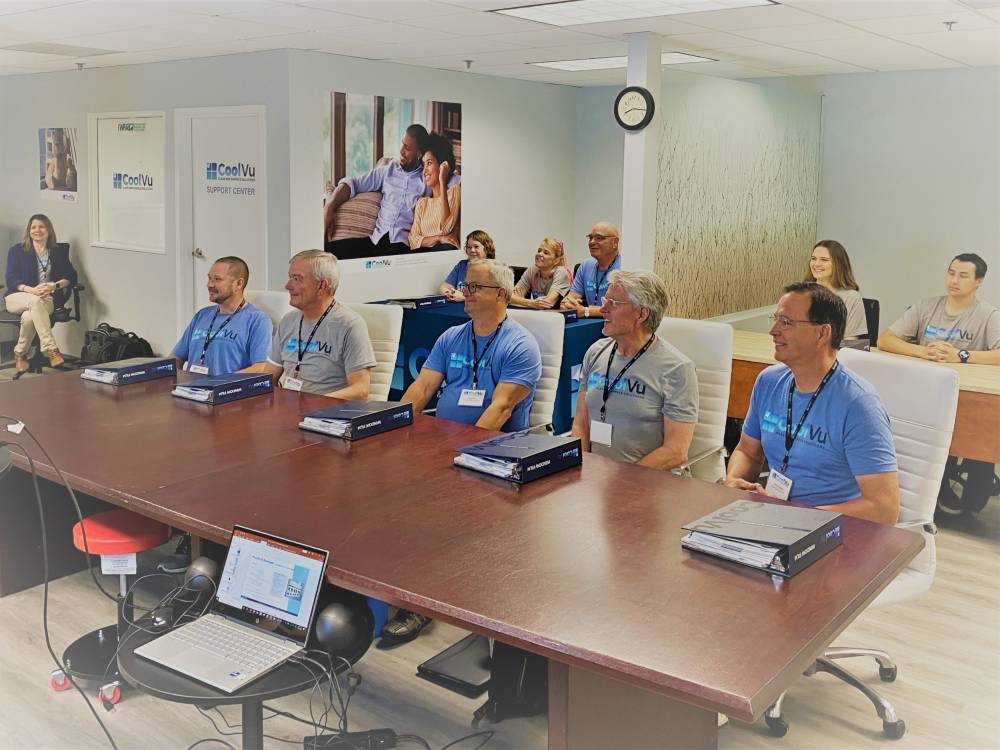
The typical franchisee journey runs roughly like this: discovery process and mutual evaluation, signing the franchise agreement, completing initial training, launching local marketing and outreach, completing your first 10 to 20 commercial projects, and then scaling with hired installers as demand grows. If you’re curious about the exact steps, review how to become a CoolVu franchise owner from inquiry to launch to see what the first 30 to 45 days can look like.
Revenue Streams and Profit Drivers (Including Ceramic Coating Options)
Commercial decorative film franchises can offer multiple revenue streams from different types of films and services, which stabilizes income and reduces dependence on any single product line.
Primary revenue categories:
- Decorative window films for offices, retail, and healthcare (privacy bands, patterns, branded graphics)
- Solar-control commercial window film for energy efficiency upgrades and glare reduction
- Safety and security films for schools, government, and retail storefronts
Optional adjacent services:
- Ceramic coating and paint protection film in automotive or commercial fleet contexts, where the franchise model supports it. These premium services complement a window and surface enhancement business without distracting from commercial clients.
- Architectural surface finishes on doors, walls, and fixtures, which often accompany glass upgrades during renovations
What drives strong margins:
- Relatively low material cost per square foot compared to the billed rate
- Efficient install times once crews are trained, enabling multiple projects per week
- Repeat orders from existing customers doing phased upgrades across multiple locations
Here’s a practical example: a franchisee landing a 10,000-square-foot office retrofit with decorative privacy bands and solar film can keep crews busy for several days and create follow-on work in the same building. Commercial tinting profit margins commonly range from 20% to 50%, higher for specialized or complex installations. Average revenues for established window film businesses reach around $300,000 per year, with owner earnings of $100,000 to $150,000 in strong markets. Independent reviews of CoolVu’s window film franchise performance and support highlight how strong training and marketing systems help owners capture this demand.
Operations: How the Decorative Film Franchise Model Works Day to Day
A typical day for a home-based commercial decorative film franchise owner starts with reviewing leads and following up on proposals, then shifts to site visits and installation oversight in the field. Many franchise models are designed around mobile operations, meaning you’re working from a van and on location rather than behind a retail counter.
Operational building blocks:
- Lead generation through local SEO, referral partners (glaziers, designers, contractors), and outbound outreach to property managers
- Site surveys to measure glass, assess light control needs, review sun exposure, and discuss decorative design options with the client
- Quoting, scheduling, and coordinating your installation team or subcontractors
Low-overhead model: No retail storefront is required in most systems. Inventory is carried just-in-time from approved suppliers, reducing storage needs. Your primary assets are a service vehicle, tools, film stock, and sample kits.
Quality and compliance best practices:
- Follow manufacturer guidelines for film selection based on glass type and climate to avoid thermal stress or seal failure
- Ensure films used in commercial settings meet fire and safety standards (such as ASTM E-84 for flame spread and smoke)
- Install contrast bands and patterns at ADA-recommended heights on large glass doors where applicable
The commercial sales cycle typically involves longer decision-making processes than residential work, but the payoff is larger projects and deeper client relationships. The business model allows for scalability as the business grows. You add crews, expand your service radius, and leverage referrals from satisfied facility managers to build a multi-six-figure book of B2B business over several years.
FAQs About Commercial Decorative Film Franchise Ownership
How much experience do I need to start a decorative window film franchise?
No prior film or glazing experience is required. Training programs are built for beginners willing to learn both the craft and the business side. Sales aptitude and willingness to either perform installations yourself at launch or supervise installers is far more important than technical background. Many successful franchisees come from corporate, military, or unrelated service industry careers.
What types of commercial spaces buy decorative and privacy films most often?
The strongest demand comes from coworking offices, corporate campuses, medical clinics, universities, banks, retail chains, restaurants, and hospitality venues. Government buildings, libraries, and religious institutions also represent consistent project sources. Most projects blend privacy, branding, solar control, or security needs.
How long does it take to ramp up to consistent revenue?
Realistic break-even often happens within 6 to 12 months. Year-two revenues can reach $120,000 to $300,000 or more depending on territory quality, sales effort, and project mix. Commercial projects have longer sales cycles, so building your pipeline early and persistently is critical.
Can I operate this franchise from home, or do I need a storefront?
Most systems are home-based with mobile, van-based operations. A storefront or small warehouse may become useful once you scale into automotive services, large-format graphics, or carry significant inventory, but it’s not a launch requirement.
What’s the difference between decorative window films and standard tint?
Standard window tinting focuses primarily on solar control, heat reduction, and UV blocking, often for automotive or residential windows. Decorative film emphasizes design: frosted, patterned, gradient, and branded looks. Many modern films combine both, giving you a decorative finish that also delivers energy efficiency benefits.
Do commercial clients care about energy efficiency when buying decorative films?
Absolutely. Combining privacy, branding, and energy savings into a single proposal makes it far more compelling. Energy rebate programs in many regions help offset cost, and compliance with building energy codes increasingly requires improved glazing performance.
Are decorative films allowed under local fire and building codes?
Yes, when using tested, commercial-grade products installed by trained professionals. Films used in commercial interiors must meet standards such as ASTM E-84 for flame spread and smoke, and safety glazing requirements under IBC codes. Proper documentation and certifications are part of the job.
How do ceramic coating and paint protection film fit into this franchise?
Ceramic coating and paint protection film serve automotive, marine, and commercial fleet markets. They’re premium add-on revenue streams that complement a window and surface enhancement business. Decorative films can last 5 to 10 years with proper care (use a soft cloth and non-abrasive cleaner for maintenance), and decorative films can be easily removed or updated without damage, making them a flexible, long-lifecycle product. Ceramic coating and PPF follow similar principles of surface protection but serve different customer segments.
Why Choose Our Decorative Film Franchise System
Not every franchise is built the same. The difference between a successful launch and a frustrating one often comes down to the systems, industry expertise, and real-world support behind the brand.
What sets this system apart:
- A home-based launch model with low overhead and protected territories that preserve your local market
- A deep catalog of decorative window films, privacy films, commercial window film, smart switchable films, and architectural surface finishes backed by established supplier relationships
- Training and mentorship from a leadership team with decades in the window film and franchise industries
CoolVu has built over 100 franchisees in less than 4 years, demonstrating a model that scales across diverse markets and owner backgrounds and has been recognized as a top franchise opportunity with attractive investment levels and incentives. CoolVu franchisees benefit from 24/7 support and training, with dedicated onboarding that guides new owners through licensing, insurance, equipment setup, and first-job preparation, all driven by an experienced franchise leadership team and mission-focused culture.
Customer-facing strengths that help you win bids:
- Professional proposals, spec sheets, and sample kits that showcase real installations and speak the language of architects and facility managers
- Marketing assets featuring success stories from offices, retail stores, healthcare, and hospitality environments
- Compliance credentials and warranty support that institutional clients require
Compare this structured model against going independent. With a franchise, you get faster startup, immediate brand credibility, established supplier pricing, and access to high-end products and technology you might not secure on your own, along with core benefits of franchise ownership such as training, systems, and marketing support. That commitment to your success is built into the organization from the date you sign.
Next Steps: How to Explore This Franchise Opportunity
If you’ve read this far, you’re serious about building something. Here’s how to take the next step without any pressure.
- Request an information packet or introductory call to review the business model, services (decorative window films, commercial window film, energy efficiency upgrades), and territory availability in your location.
- Complete a brief questionnaire about your goals, financial readiness, and local market to confirm initial fit.
- Attend a detailed franchise overview (virtual or in-person) to see training, marketing, and support in action.
- Review the Franchise Disclosure Document with your advisor. The financial performance of franchises can be assessed through the FDD, which covers fees, disclosure requirements, support details, and any available financial performance representations.
- Schedule a shadow day with an existing franchisee where possible to experience real operations, from sales visits to on-site installation.
This is a mutual evaluation. We want to understand your background, your market, and whether this is genuinely the right fit for you, just as much as you want to understand us. The opportunity is grounded in real, growing demand for decorative films and commercial window film solutions across every world market, in every region of the country, and across every commercial space with glass.
Reach out, share your story, and let’s explore whether a commercial decorative film franchise is your next chapter.