Table of Contents
Why Commercial Interior Surface Franchises Are Growing in 2026
Rising office renovations, mixed-use developments, and building retrofit projects between 2022 and 2026 have created strong demand for surface repair, window film installation, and architectural finishes. Stricter energy codes, ESG mandates, and a growing preference for economic and ecological restoration over costly demolition are pushing facility teams to repair rather than replace. Commercial interior surface franchises specialize in the repair, restoration, refinishing, and resurfacing of hard surfaces across offices, hotels, healthcare facilities, retail stores, and multi-family common areas.
This model is typically low overhead, often home based, and built around recurring B2B relationships with property managers, facility directors, and general contractors. Surface repair franchises emphasize quick turnarounds and minimal disruption, appealing to clients who need immediate solutions in occupied spaces. This article covers costs, earning potential, the role of comprehensive training and ongoing support, what to look for in a franchise disclosure document, and who this opportunity fits best.
Business Model Overview: How a Commercial Interiors Surface Franchise Works
A commercial interiors surface franchise deploys specialized teams that repair, protect, and resurface interior surfaces instead of tearing them out entirely. The result is faster turnarounds, lower project costs, and far less waste than full replacement. Many systems market their services as lower-cost alternatives to complete replacements, and most successful operations rely heavily on business-to-business recurring relationships that smooth revenue across months.
Core services include spot repairs on hard surfaces like countertops, tables, millwork, and tile, window film installation for solar control, privacy, and security, decorative wall graphics, and architectural surface finishes for doors and cabinetry. Surface Experts repairs small damage on hard surfaces with average repair time under one hour, and repairs are ready to use in less than four hours. Unlike traditional resurfacing, these are spot repairs that generate minimal odor, dissipating within two hours. Repairs cost a fraction of full replacements.
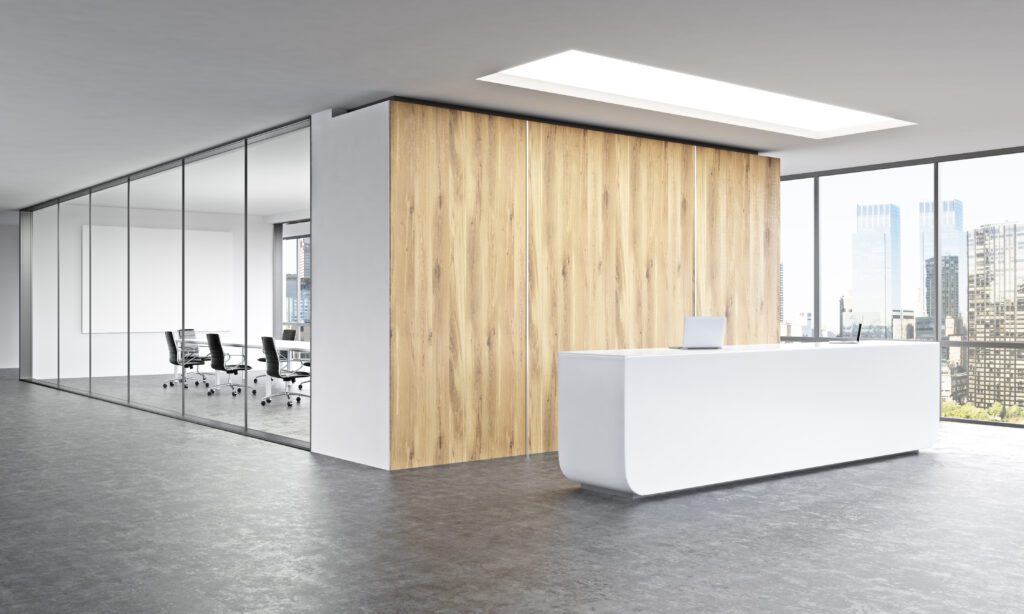
Client segments span office buildings, medical campuses, hotels, student housing, retail centers, and public-sector facilities like schools and municipal buildings. Effective commercial surface franchises target these clients because damage is constant and budgets favor repair over replacement. The typical workflow includes generating commercial accounts, inspecting and quoting damage, and dispatching technicians to complete the work. Franchisees generally focus on sales, project management, and customer relationships while technicians perform the actual repair.
Revenue flows from recurring work orders from property managers, project-based contracts from general contractors, and national maintenance agreements across multiple locations. Operations typically do not require expensive retail showrooms and can run from home-based setups, where the owner manages scheduling, estimating, and sales while a small field team works from fully stocked vehicles. Many systems grant exclusive territory rights so franchise owners are the only authorized provider within defined commercial ZIP codes. Labor intensity is a significant factor affecting operations and costs, which is why building a reliable team early matters.
Investment, Fees, and Market Availability
Exact figures vary by brand, but costs for a commercial interiors surface franchise are comparable to other mobile service franchises launched between 2018 and 2026. Using Surface Experts as a benchmark, the initial franchise fee ranges from $75,000 to $137,500, and total investment ranges from $135,000 to $235,000. The minimum net worth requirement is $200,000, with a cash requirement of $25,000 for franchisees. Franchise agreements last for 10 years and are renewable. Franchisees are required to have 2 to 6 employees to operate.
The franchise model offers a standard operating system along with territory rights, marketing, and training support. Ongoing fees include a royalty fee of 8% of gross sales, plus a brand fund contribution (commonly 2%), and technology fees for CRM and field-management software. Investing in a commercial interiors surface franchise requires evaluating market demand, initial costs, and competition in your area, along with building a realistic franchise investment budget. Some systems offer in-house financing or payment plans to qualified candidates.
Market availability is mapped by commercial square footage, number of Class A and B buildings, and count of target businesses rather than population alone. Candidates can gauge whether their city still has an open unit by submitting ZIP codes and commercial density information to the franchisor. Always review Items 5 through 7 of the franchise disclosure document for exact, current figures.
Investment components at a glance:
- Franchise fee
- Equipped vehicle with branded wrap
- Tools, materials, and initial inventory
- Launch marketing
- Working capital reserve (3–6 months recommended)
Earnings Potential and What Franchise Owners Really Do Day-to-Day
Income potential is typically presented in Item 19 of the franchise disclosure document. Financial performance representations should be carefully analyzed to understand true franchise profitability, since results vary based on sales activity, territory density, and execution. Among Surface Experts franchisees, top-quartile locations report gross revenue above $1.16 million annually, while bottom-quartile territories come in under $250,000. Surface Experts has opened over 30 franchises since 2018, providing a growing data set for prospective buyers.
Commercial revenue drivers include multi-unit property portfolios, annual maintenance contracts for scratched or damaged surfaces, and retrofit projects tied to energy codes and privacy requirements. Many owners are effectively operating within top service franchise models in the window and surface sector. Surface repair and refinishing often thrive during economic downturns, as businesses prefer cost-effective repairs over capital-intensive replacements, a pattern visible since the Great Recession.
Daily responsibilities for franchise owners include B2B sales calls, bidding RFPs, site visits, managing technicians, quality control on repairs and film installations, and overseeing cash flow and marketing. Most surface experts franchise systems are not designed for passive or semi-absentee operations, especially in the first 12 to 24 months. Experienced operators typically transition from solo work to a small team of 2 to 4 field techs within 18 to 24 months, building long term relationships with property managers that generate profitable, recurring revenue even in slow months.
Training, Ongoing Support, and Home Based Operations
Training programs for technical surface repair installation and cleaning methods are vital for franchise success. Comprehensive training is a core value proposition, covering technical skills, sales, and business management for people who may be new to the trade. Franchisees receive specialized training on proprietary bonding, color-matching technologies, and coating systems. Specifically, franchisees receive 72 hours of classroom training and 10 hours of on-the-job training, followed by on-site launch support in the franchisee’s territory.
Understanding a franchise’s competitive edge requires scrutiny of proprietary products and training support. Surface Experts provides ongoing support through a toll-free line, and franchisees have access to a franchisee intranet platform. Surface Experts also offers newsletters and meetings for franchisees, creating a community where owners share best practices and solve problems together. Ongoing support includes coaching calls, regional meetings, updated processes for new surface materials, and marketing assets like templated proposals for commercial accounts and pre-built presentations for property managers, similar to what you’d expect from a proven franchise business model in a booming industry.
What makes the model appealing as a home based franchise is the low lease overhead, smaller staff, and ability to dispatch crews directly from a mobile office. Digital tools handle scheduling, invoicing, and estimating remotely. As the business matures, ongoing support often includes recruiting and training field technicians so franchise owners can move out of the truck and into a management and business development role.
Pillars of support:
- Technical training and product updates
- Operations systems and logistics guidance
- Marketing, sales tools, and lead generation
- Peer network, conferences, and brand recognition building
Territories, Competition, and Positioning as “Surface Experts” in Your Market
An exclusive territory grants contractual rights to market and deliver services within a defined commercial zone. This helps franchisees build long term relationships without intra-brand competition. Territory structure relies heavily on commercial real estate concentration rather than purely on household density, factoring in building count, property management companies, and historical construction permits.
Competition comes from independent repair contractors, window tinters, refinishers, and general maintenance firms. A specialized surface experts franchise positions itself differently through speed, consistency, professional reporting, and warranty support, much like a window-focused interior design franchise model that emphasizes specialized expertise. Commercial interior surface franchises often operate with a mobile or small shop model, reducing overhead costs and allowing faster response times. Franchisees can operate from a mobile office, keeping fixed expenses low. Surface Experts offers a veteran discount of 5%, and market availability in 2026 favors secondary and growing metro areas where aging building stock and new code requirements create strong recurring demand.
Questions to ask about territory and competition:
- What is the exact geographic boundary and commercial square footage included?
- How is exclusivity protected?
- How saturated is the market with similar restoration companies?
- What tools are provided to establish brand recognition locally?
What to Evaluate in the Franchise Disclosure Document (FDD)
The franchise disclosure document contains essential information about any particular franchise and must be provided at least 14 days before signing any agreement. For a commercial interiors surface franchise candidate, the most important items to review are Item 7 (estimated initial investment), Item 11 (training and ongoing support), Item 17 (renewal, transfer, and termination rights), and Item 19 (financial performance representations, if provided), along with Item 20’s data on openings, closures, and transfers. Surface Experts provides an Item 19 covering 67 territories open at least 12 months.
Pay close attention to restrictions on home based operations, required vehicles, minimum marketing spend obligations, and staffing requirements. Make sure you understand Item 9 responsibilities and franchisee obligations before you commit. Speak with multiple existing surface experts franchisees listed in Item 20 to verify how accurately the FDD reflects day-to-day operations and customer satisfaction levels. Also confirm whether the brand works with E-2 or EB-5 visa candidates and any veteran incentives, which changed for many systems between 2020 and 2025.
Questions to ask the franchisor’s development representative:
- What is the average gross revenue in mature territories?
- What are total ongoing fees including royalty, marketing, and technology?
- What minimum performance benchmarks are expected in the first 24 months?
- What is the fast launch plan timeline from signing to first revenue?
Who This Franchise Model Fits Best-and Common Mistakes to Avoid
Best fit:
- Operations-minded leaders comfortable managing a team and B2B sales cycles
- Former construction, property management, or facilities professionals seeking to acquire a proven system
- Sales-driven career changers and entrepreneur types with discipline for follow-ups
- Investors willing to be active owners, especially veterans, first responders, and minorities who thrive in structured environments
Understanding the strategic advantages of purchasing a franchise can help you avoid common pitfalls as you evaluate opportunities.
Avoid these mistakes:
- Underestimating the hours required for business development with property managers and facility teams
- Hiring too late, which limits capacity and forces franchise owners to stay in the field instead of building the business
- Over-relying on one big client for most of your revenue
- Treating the franchise like a passive investment, expecting money without active leadership
Actionable recommendations: Build a 12-month pipeline plan before launch, using a structured franchise due diligence checklist to guide your preparation. Budget 20 to 30 percent more working capital than the low-end estimate. Schedule consistent outreach to property managers, moving companies, and homeowners from day one. Hire your lead technician early so you can focus on creating growth.

FAQs About Commercial Interiors Surface Franchises
How much does a commercial interiors surface franchise typically cost in 2026?
Total investment typically ranges from $135,000 to $235,000, with initial franchise fees between $75,000 and $137,500. This covers equipment, a branded vehicle, launch marketing, tools, materials, and working capital. Always consult the current franchise disclosure document for exact figures, as costs adjust periodically, and review broader guidance on evaluating and funding franchise opportunities to see how this model fits your portfolio.
Can I run this type of franchise as a home based business?
Yes. Many commercial interiors surface systems are designed as home based or mobile operations. Admin, sales, scheduling, and estimating happen from a home office. Technicians work on client sites from stocked vehicles. No retail showroom or expensive lease is expected.
Is this a semi-absentee or passive ownership opportunity?
Most surface experts style franchises expect active owner involvement for at least the first two to three years. Hands-on leadership directly impacts quality, safety, and client retention. Semi-absentee models rarely succeed early because building a stable commercial client base requires consistent sales effort and infrastructure development.
Do I need prior construction or repair experience to qualify?
No. Comprehensive training covers all technical skills, and franchisors typically prioritize management ability, sales expertise, and customer satisfaction over trade backgrounds. Your success depends more on your ability to lead employees and build relationships than on knowing how to repair tile or appliances on day one.
How long does it take to build a stable client base?
Expect a 12 to 24 month ramp-up. The sales cycle for commercial accounts is longer than residential service work because you need to establish trust with facilities teams and demonstrate consistency. Recurring maintenance contracts with property managers are the foundation of stable, predictable revenue.
What kind of ongoing support should I expect after launch?
Ongoing support includes coaching calls, updated training on new surface materials and processes, marketing campaigns, peer groups, and annual conferences. The corporate office provides tools for adapting as commercial design trends change, helping franchise owners maintain a competitive edge in their territory across the country.
Why Choose Our Commercial Interiors Surface Franchise
Our system combines surface repair, window film, decorative graphics, smart and switchable films, and architectural finishes into a single, scalable B2B and B2C model. This breadth of services means franchise owners capture more revenue per client relationship instead of referring work to competitors. We built our infrastructure around commercial clients in occupied environments like healthcare, education, and corporate offices where disruption must be minimal.
- Protected exclusive territory mapped to commercial density, not just population
- In-house financing options and a clear fast launch plan to accelerate your path to revenue
- Comprehensive training designed for newcomers, with ongoing coaching that helps you thrive as the market evolves
- Flexible home based operation with low fixed overhead, allowing owners to reinvest early profits into staffing, equipment, and community presence
We are not a residential service company trying to bolt on commercial work. Commercial is our focus, and our systems, marketing, and support reflect that.
Next Steps: How to Explore a Commercial Interiors Surface Franchise
If this opportunity aligns with your goals, request an information kit or schedule a discovery call to check territory availability in your city. The typical evaluation process includes an initial conversation, territory review, a 14-day FDD review period, validation calls with existing franchise owners, and a discovery day at headquarters before any franchise award or commitment.
Come prepared with specific questions about earnings potential, exclusive territory boundaries, and support for home based operations, informed by criteria for identifying the best franchises to buy. The more informed you are, the more productive your conversations with the franchise development team will be.
Becoming the local surface experts for commercial interiors is a tangible path for the right entrepreneur in 2026 and beyond. If you are ready to explore it, take the first step and request your territory check today.