
Table of Contents
Why Commercial Window Tinting Is a Standout Business in 2026
Market Overview: Demand for Commercial Window Tinting in the 2020s
Revenue & Profit Potential for a Commercial Window Tinting Business
Startup Costs & Initial Investment: What You Really Need to Begin
Franchise vs. Independent: Choosing the Right Path into Commercial Window Tinting
Why Commercial Window Tinting Is a Standout Business in 2026
Commercial window tinting offers strong business opportunities driven by energy savings, safety upgrades, and aesthetics. With rising electricity costs, post-pandemic office retrofits, and growing security concerns across schools and government facilities, the commercial window tinting industry offers opportunities beyond simply installing window film. Consumer demand for window tinting is surging across automotive, residential, and commercial markets.
Unlike tinting cars in a shop, commercial window tinting involves working with property owners and facility managers to upgrade entire buildings. This guide, written from CoolVu’s perspective as a national window film and architectural finishes franchise, walks you through market potential, startup costs, services, operations, and how partnering with a franchise can provide a clear path into this industry.
Market Overview: Demand for Commercial Window Tinting in the 2020s
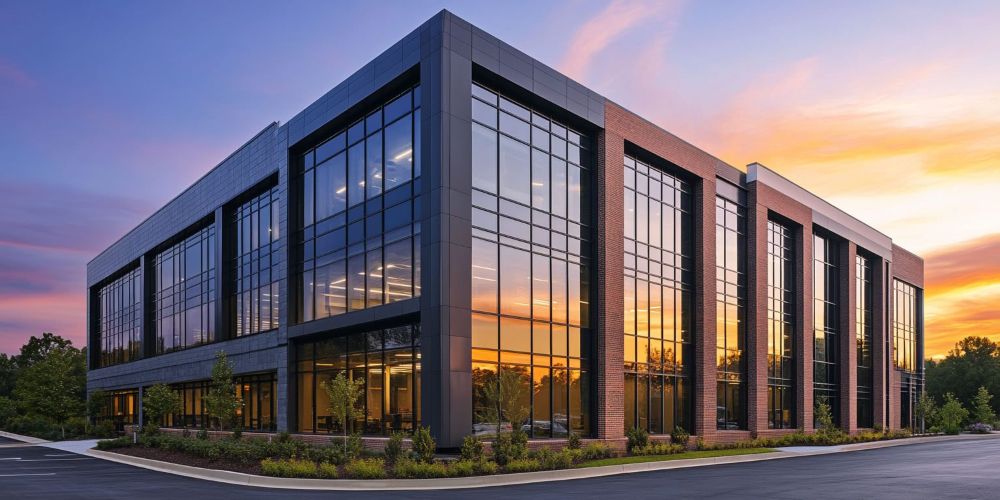
Commercial window tinting sits at the intersection of energy efficiency, safety, and aesthetics. Buildings are increasingly being upgraded rather than replaced, and window film is one of the most cost-effective retrofits available.
The global window film market is projected to reach $16.56 billion by 2030, expanding with a projected 5.3% annual growth rate through that year. The U.S. alone generated roughly $3.35 billion in window film revenue in 2025, holding over 30% of global market share. Energy efficiency upgrades are a key driver for commercial window tinting, and there is increasing demand for decorative and branded office interiors.
Target markets for commercial tinting include offices, retail spaces, and schools, along with healthcare facilities, government buildings, and hospitality venues. Commercial window tinting can lower HVAC expenses and improve guest comfort in hotels, which explains why property owners keep investing.
Key demand drivers in 2024–2026:
- Rising electricity and HVAC costs in hot climates and glass-heavy urban centers
- ESG and sustainability goals pushing building owners to reduce carbon footprints
- Employee comfort, glare control, and tenant retention priorities
- Security and privacy regulations in banking, healthcare, and education
Regionally, Sun Belt states and high-UV locations generate the strongest baseline demand, but any metro with large glass office towers has enough room for a well-run commercial tinting company. Many successful owners eventually operate a mixed residential, commercial, and automotive window tinting business to balance seasonality and serve diverse customers.
Revenue & Profit Potential for a Commercial Window Tinting Business
Commercial jobs often involve hundreds of windows, providing higher revenue per contract compared to residential work. A single office tower or school campus project can run $10,000 to $100,000 or more, while tinting cars typically generates smaller per-job revenue.
Revenue benchmarks by year 3:
| Scenario | Annual Revenue Range |
|---|---|
| Solo owner-operator, active territory | $250,000–$500,000+ |
| Small team, multiple recurring clients | $750,000–$1,200,000+ |
| Mobile auto-focused side line (3 cars/day) | $250,000+ |
A mobile tint business focused on volume automotive work can generate over $450k annually at scale, but commercial projects are where profitability really accelerates. A full-time installer should generate $100,000 to $150,000 in revenue, and window tinting can offer profit margins between 70–85% when pricing reflects value rather than just material cost.
Material costs should be around 15–25% of the job price, with labor as the main variable. High-end films can sell for double to triple standard film prices, which means specialty commercial work significantly impact your bottom line.
Additionally, commercial properties frequently invest in ongoing maintenance contracts for window film care, creating recurring revenue. Once you complete a successful project, property managers often hire the same company for phased retrofits, decorative upgrades, and security film installations across their portfolio.
A mixed model that includes some residential and light automotive tinting helps smooth cash flow during slower commercial sales cycles.
Startup Costs & Initial Investment: What You Really Need to Begin
Commercial window tinting has relatively low startup costs compared with most brick-and-mortar businesses, especially when you operate as a home-based or mobile service. A comprehensive business plan is crucial for success before you invest a dollar.
Major startup cost categories:
| Category | Typical Range |
|---|---|
| Business license and legal setup | $50–$600 |
| Tools (squeegees, heat guns, knives, ladders) | $1,000–$5,000 |
| Initial film inventory | $500–$1,000+ |
| Work vehicle or van | $5,000–$25,000 (used) |
| Insurance (GL, auto, workers’ comp) | $1,500–$4,000/year |
| Marketing launch (website, signage, cards) | $1,000–$3,000 |
| Working capital (60–90 days of expenses) | Varies |
Investment costs for starting a commercial tinting business can range from $2,000 to $10,000 on the lean end, while a more comprehensive setup with a solid business plan, quality tools, and training may fall in the $20,000–$60,000 range. A mobile window tinting business can have lower overhead costs since you avoid shop rent and bay build-outs.
Essential tools include tinting films, squeegees, and heat guns. Investing in high-quality equipment ensures effective window tinting services and fewer callbacks. Budget several months of working capital to cover costs like vehicle fuel, insurance, and replacement film rolls before revenue stabilizes.
Financing options include personal savings, SBA microloans up to $50,000, equipment financing, and in-house financing programs that some franchises-including CoolVu-may offer qualified candidates.
Startup costs for a primarily commercial window operation differ from a shop-based automotive tinting setup: commercial work requires more ladders, safety gear, and scaffolding, while an automotive shop needs rent, bays, and a dust free environment for clean installations.
Franchise vs. Independent: Choosing the Right Path into Commercial Window Tinting
You can either build an independent tinting business from scratch or join a franchise system like CoolVu. Each path has trade-offs in control, support, and speed to profitability.
Going independent means sourcing your own films and tools, building branding from zero, creating pricing structures, and learning by trial and error. You keep more control and avoid franchise fees, but brand recognition is slower and the learning curve is steeper. You still need to register your business and obtain necessary licenses, choose a location accessible to your target clients, and build trust with commercial property managers on your own.
A franchise model provides an established business name, proven operating manuals, national vendor relationships and buying power, structured sales and estimating processes, and marketing assets. CoolVu franchisees work from home-based offices, receive comprehensive training across commercial, residential, and specialty films, and operate in protected territories.
Many franchisees come from outside the tinting industry-no previous experience tinting cars or buildings required-because the franchise system teaches technical skill and business operations step by step. If you value independence and have prior trade experience, going independent may work. If you want a structured playbook, faster credibility with commercial property managers, and mentorship, a franchise like CoolVu offers a strong business model to follow.
Services & Profit Centers in a Commercial Window Tinting Business
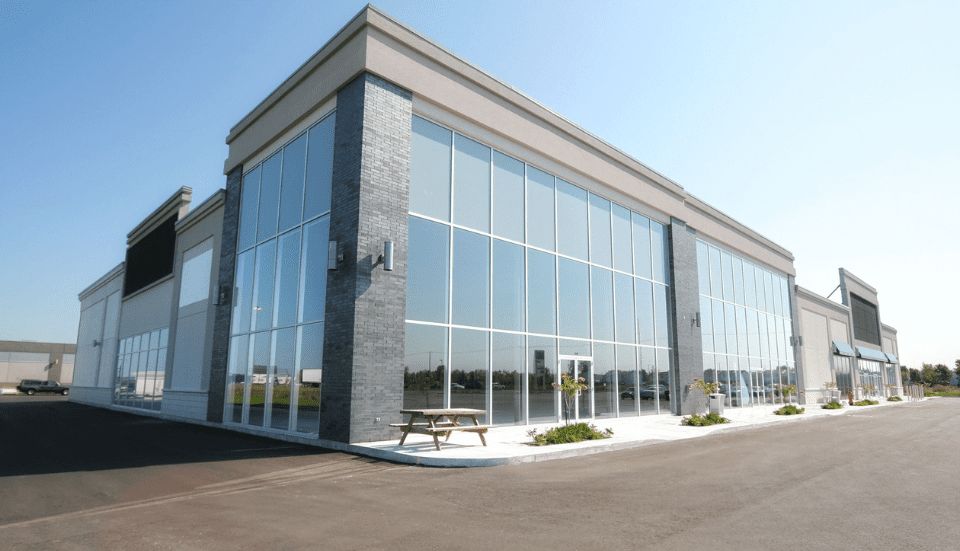
A modern commercial window tinting business typically offers multiple tinting services, creating several profit centers.
Core commercial film services:
- Solar control films: Installing spectrally selective films can reduce cooling costs in commercial buildings. Commercial window tinting blocks up to 99% of UV rays, and it can reduce energy costs by up to 30%.
- Privacy films: Window tinting enhances privacy for commercial properties, ideal for conference rooms and ground-floor glass.
- Security film: Safety and security films provide forced-entry resistance and storm protection. Applying specialized, thick films can prevent break-ins and protect against shattered glass.
- Decorative films: It improves the aesthetics of commercial buildings with frosted glass, logos, and custom graphics. Tinting can protect furniture from fading due to sunlight.
Many successful commercial tinting businesses expand into services like safety films and decorative films once the initial relationship with a client is established.
Higher-margin specialty work includes switchable smart films that turn glass from clear to private on demand, anti-graffiti coatings for retail spaces, and even ceramic coating services for adjacent surfaces.
From CoolVu’s perspective, franchisees access additional profit centers beyond window tinting: architectural surface finishes that resurface doors, cabinets, and walls, plus branded wall graphics. This lets franchisees become full glass and surface solutions providers, serving the unique needs of each territory. Diversifying services increases customer satisfaction and revenue per client, since commercial accounts often buy multiple services from a single trusted provider over several years.
Operations & Skilled Technicians: How the Work Actually Gets Done
A typical commercial window tinting project follows a structured process from first phone inquiry to final walkthrough.
Key steps:
- Onsite assessment and measurements
- Film selection and detailed proposal with clear communication on scope and timeline
- Scheduling to minimize tenant disruption (often after hours)
- Surface preparation-a clean workspace is vital for applying window tints effectively
- Installation by skilled technicians using proper technique
- Cleanup and final inspection with the client
Proper training in film installation is essential to prevent mistakes like bubbles, contamination, or thermal stress cracking. Recruit technicians with technical and customer service skills. Training should cover window tinting techniques and customer service alike. Experienced installers earn between $20 and $30 per hour, and ongoing training keeps staff updated on industry standards.
While prior experience helps, many successful commercial window operators learn through formal training and repetition, with speed and quality improving markedly over the first 6–12 months. CoolVu franchisees receive structured technical training, including hands-on installation of multiple film types, plus ongoing education on new products.
Use simple systems to stay organized: scheduling software, documented workflows, quality control checklists, and basic KPIs like installs per day, callback rate, and average ticket size. These systems significantly impact profitability over time.
Marketing & Customer Satisfaction: Winning and Keeping Commercial Clients
Commercial tinting services rely on both relationship-based selling and digital visibility. Effective marketing includes local outreach and digital strategies working together.
Practical marketing strategies:
- Networking with local businesses, property management associations, and general contractors boosts customer referrals
- Calling on local schools, municipal buildings, and car dealerships to attract customers
- Showcasing completed projects with measurable energy savings data
- Conducting a competitive pricing analysis to understand local competitors and market rate pricing
Creating a professional website enhances online visibility. Utilizing social media can attract potential customers, especially when you share before-and-after case studies. Your pricing model should reflect materials, labor, and overhead costs rather than simply matching what local competitors charge.
Customer satisfaction as a growth engine: Clear proposals, punctual crews, minimal disruption, thorough cleanup, and prompt warranty service all play a significant role. For example, imagine a 10,000-square-foot office in Atlanta cutting its cooling bills by 20% after a commercial tint installation. That property manager then hires the same company for two more buildings-this is how commercial relationships compound.
Franchises like CoolVu provide marketing assets, branded collateral, and digital campaigns that help new franchisees get attention faster than a completely unknown business name would.
Risks, Challenges & How to Avoid Common Mistakes
Every window tinting business faces challenges that can hurt profitability if not managed proactively.
Common risks:
- Underbidding large commercial jobs due to poor measurements or underestimated labor
- Using cheap film that fails, peels, or discolors-destroying your reputation
- Ignoring local tinting regulations regarding allowable tint levels and reflectivity
- Taking on high-rise work without proper training, insurance, or fall protection
Register your business with local or state authorities before taking on any job. Forming an LLC protects personal assets from business liabilities. General liability insurance is essential for window tinting businesses, and workers’ compensation is required once you hire a team.
Risk mitigation steps:
- Always conduct onsite assessments with detailed written estimates
- Require deposits for large jobs and enforce payment terms
- Maintain strong supplier relationships for consistent film quality
- Understand local tinting regulations before quoting
Proven systems-like those provided by a franchise such as CoolVu-help owners avoid costly early mistakes, especially those who have never run a tinting business or construction-adjacent service company before. Commit to continuous learning: attend industry trainings, review completed jobs with your team, and keep callback data rates low through disciplined quality control.
Why Choose CoolVu for Your Commercial Window Tinting Franchise
CoolVu is a modern alternative in the window film market, tailored for entrepreneurs who want a home-based, low-overhead business with strong commercial opportunity.
Core differentiators:
- Comprehensive training across commercial, residential, and specialty films-no prior skill level in tinting required
- Home-based operations model with no mandatory retail storefront
- Protected territories so you can operate without competing against fellow franchisees
- Ongoing coaching on sales, estimating, and project management
CoolVu’s national brand, vendor relationships, and buying power help franchisees secure high-quality commercial window film at competitive prices, improving both customer satisfaction and profit margins. The support ecosystem includes marketing campaigns, branded materials, lead-generation tools, and a franchise community that shares best practices.
CoolVu is ideal for motivated self-starters, veterans, first responders, women and minority entrepreneurs, and existing business owners who want to expand and add window tinting and surface solutions as a new profit line. Compare the time, risk, and hard work required to launch an independent company to the structured playbook, mentorship, and brand credibility offered by a CoolVu franchise-especially if your goal is significant commercial window tinting revenue.
FAQs: Commercial Window Tinting Business Opportunity
These FAQs focus on starting and running a commercial window tinting business, not just technical installation questions.
How much can I realistically earn with a commercial window tinting business?
Earnings vary depending on your market, service mix, and commitment. In year one, most owner-operators focus on building clients and may earn modestly while reinvesting. By year three, a well-run commercial tinting business in an active territory can generate $250,000–$750,000+ in annual revenue. A mobile window tint business focused on volume auto work can generate over $250k annually with three cars per day, while commercial projects push total revenue much higher.
Do I need previous experience tinting cars or buildings to start?
No. While technical skill helps, many owners start with zero tinting experience. Formal training, mentorship, and practice quickly build competence. CoolVu’s franchise system provides comprehensive training that covers every film type and installation scenario, so even a person from a completely different industry can reach a professional skill level within months.
What are the main differences between commercial window tinting and tinting cars?
Commercial jobs involve larger glass areas, longer sales cycles, higher per-project revenue, and relationship-based selling to commercial property managers and facility directors. Automotive tinting is faster-cycle, shop-based, and lower ticket. Safety requirements differ too-commercial work may require scaffolding and fall protection. Many successful window tinting business owners eventually do some of both to balance cash flow.
What licenses and insurance do I need to run a commercial window tinting business?
You need to form an LLC or corporation, obtain a business license (often $50–$150), and secure sales tax permits where applicable. General liability insurance is essential, along with commercial auto coverage for your vehicle. If you hire a team, workers’ compensation is required. Some states require a specialty contractor license for building film work. Always verify your local requirements before you operate.
How much does it cost to launch a commercial window tinting franchise with CoolVu?
Exact investment details are provided in CoolVu’s Franchise Disclosure Document. Generally, the initial investment aligns with the $40,000–$80,000 range, covering training, branding, territory, tools, and initial inventory. CoolVu offers training, support, and may offer relationships with financing partners to help qualified candidates cover costs and get started efficiently.
How long does it take to go from signing up to completing my first paying commercial job?
After signing, training typically takes several weeks. Initial marketing and sales outreach follow immediately. Most franchisees complete their first small residential or automotive jobs within one to two months, with the first commercial job often arriving in two to four months depending on territory, sales effort, and the specific market. Early revenue often comes from smaller projects while larger commercial contracts develop.
Next Steps: How to Explore the CoolVu Commercial Window Tinting Opportunity
The window tinting market is growing, energy codes are tightening, and building owners are actively seeking solutions. Commercial window tinting is a timely, scalable business opportunity for 2026 and beyond-especially when combined with adjacent services like security film, decorative graphics, and architectural surface finishes.
Your first step: contact CoolVu to request a franchise guide or schedule a no-obligation discovery call to discuss your goals and financial readiness.
Before you reach out, prepare:
- Your preferred territory or location
- Available liquid capital (around $50,000 or more)
- Your timeline for transitioning from a current job, if applicable
- Whether you plan to work solo at first or build a team
Exploring the opportunity carries no obligation. CoolVu’s team can help you evaluate whether a commercial window tinting franchise fits your skills, risk tolerance, and lifestyle goals. Whether you want to invest in a single territory or eventually expand across a region, there is a clear path forward.
Commercial window tinting and window film services let you build a long-term asset that improves buildings, lowers energy use, and creates local jobs-the kind of company worth the commitment.