Table of Contents
An energy savings franchise opportunity represents one of the most compelling business models for entrepreneurs seeking to capitalize on the growing demand for sustainable solutions. With energy costs rising across residential and commercial sectors, businesses are actively seeking partners who can help them cut costs while reducing their environmental impact.
This guide covers everything you need to know about energy franchise opportunities—from investment requirements and franchise types to operational models and market potential. We’ve excluded utility company partnerships and focused exclusively on franchise-based business opportunities that allow you to build your own business within an established framework. Whether you’re an experienced business owner looking to expand your portfolio or an entrepreneur exploring recession resistant industries for the first time, this content addresses your core concerns about profitability, training requirements, and growth potential.
Direct answer: Energy savings franchises offer turnkey business models helping clients reduce energy consumption by 15% to 35% while generating recurring revenue opportunities through monitoring contracts, maintenance agreements, and performance-based compensation structures.
By the end of this guide, you’ll understand:
- The different energy franchise business models and which suits your background
- Realistic investment requirements ranging from under $50,000 to $150,000+
- How to evaluate market potential in your territory
- Common operational challenges and proven solutions
- Selection criteria for choosing the right franchisor
Understanding Energy Savings Franchises
An energy savings franchise is a business model built around delivering products and services that enable clients to reduce energy consumption, lower costs, and minimize environmental impact. Franchisees operate under a recognized brand, following standardized processes to identify inefficiencies, recommend interventions, and often guarantee measurable savings.
The energy efficiency industry is growing at an annual rate of 12%, indicating strong market potential for franchise opportunities in this sector. This growth is fueled by rising utility costs, government incentives at the federal and state levels, and increasing corporate commitments to ESG (Environmental, Social, Governance) goals. Local government rebates and tax incentives can influence demand for solar and insulation efforts, making certain territories particularly attractive for franchisees.
Core Business Models
The shared savings model represents one of the most attractive approaches in this industry. Under this arrangement, the franchisee finances all or part of the energy retrofit and recovers costs through a percentage of the client’s verified energy savings over time. This creates a genuine win-win scenario: clients face little to no upfront investment, while franchisees build recurring revenue streams based on measurable performance.
This business model works because it removes the primary barrier to adoption—upfront capital costs—while aligning incentives. When your profits depend on actual client savings, you’re motivated to deliver exceptional results rather than simply completing installations.
Market Demand Drivers
Rising energy costs are forcing businesses across every sector to seek efficiency solutions. Energy services are often considered “non-discretionary” spending, maintaining constant demand even during economic downturns. This positions energy franchises as one of the few truly recession-resistant business opportunities available.
The U.S. HVAC systems market is expected to reach $39 billion by 2030, driven by demand for energy-efficient upgrades. Similarly, the global energy-efficient fixtures market is projected to exceed $150 billion by 2030. These figures underscore why entrepreneurs are increasingly drawn to this marketplace—the fundamentals support sustained growth over the coming years.
Understanding these demand drivers is essential because they directly influence your territory selection and service focus. The next section explores specific franchise types so you can identify which model aligns with your capital, expertise, and target customers.
Types of Energy Savings Franchise Models
Building on the foundational business models discussed above, energy franchise opportunities fall into several distinct categories. Each serves different market segments and requires varying levels of investment, technical expertise, and operational focus. There are 31 active and verified energy franchise opportunities listed on SMERGERS as of 27 April 2026, spanning multiple service categories.
Energy Management System Franchises
Technology-based solutions like the Best Energy Eniscope monitoring system serve major corporations and multi-site operations by providing real-time energy visibility. These franchises deploy IoT sensors, control systems, and software dashboards that deliver savings of 10% to 30% on heating and cooling energy for commercial buildings.
Investment requirements typically range from $100,000 to $150,000 for equipment and training. However, some concepts—like Best.Energy—offer entry investment starting around $40,000 with claimed payback within 6 months through recurring revenue from energy management contracts.
A fitness franchise retrofit of 57 locations using this approach delivered approximately 18% energy savings through demand-limiting controls and LED lighting upgrades, translating to $450,000 in annual savings across those sites.
Insulation and Building Efficiency Franchises
Physical improvement services focus on building envelope upgrades—insulation, air sealing, windows, and weatherization. These franchises often require cash required minimums around $75,000 to $125,000 and appeal to entrepreneurs who prefer tangible construction and installation work over technology deployment.
Retrofitting envelope improvements yields 10% to 30% savings on heating and cooling energy, with payback periods typically ranging from 5 to 15 years, depending on building type and climate zone. These services also improve indoor air quality by reducing drafts and controlling moisture infiltration.
Building efficiency franchises complements technology solutions because they address the physical infrastructure that monitoring systems optimize. Many successful franchise partners offer both services to capture a wider range of customer needs.
HVAC and Mechanical System Optimization
Specialized HVAC optimization franchises focus on heating, cooling, and ventilation system efficiency—the largest energy consumers in most commercial buildings. Services include equipment replacement, variable-speed drive installation, demand control ventilation, smart scheduling, and ongoing maintenance programs.
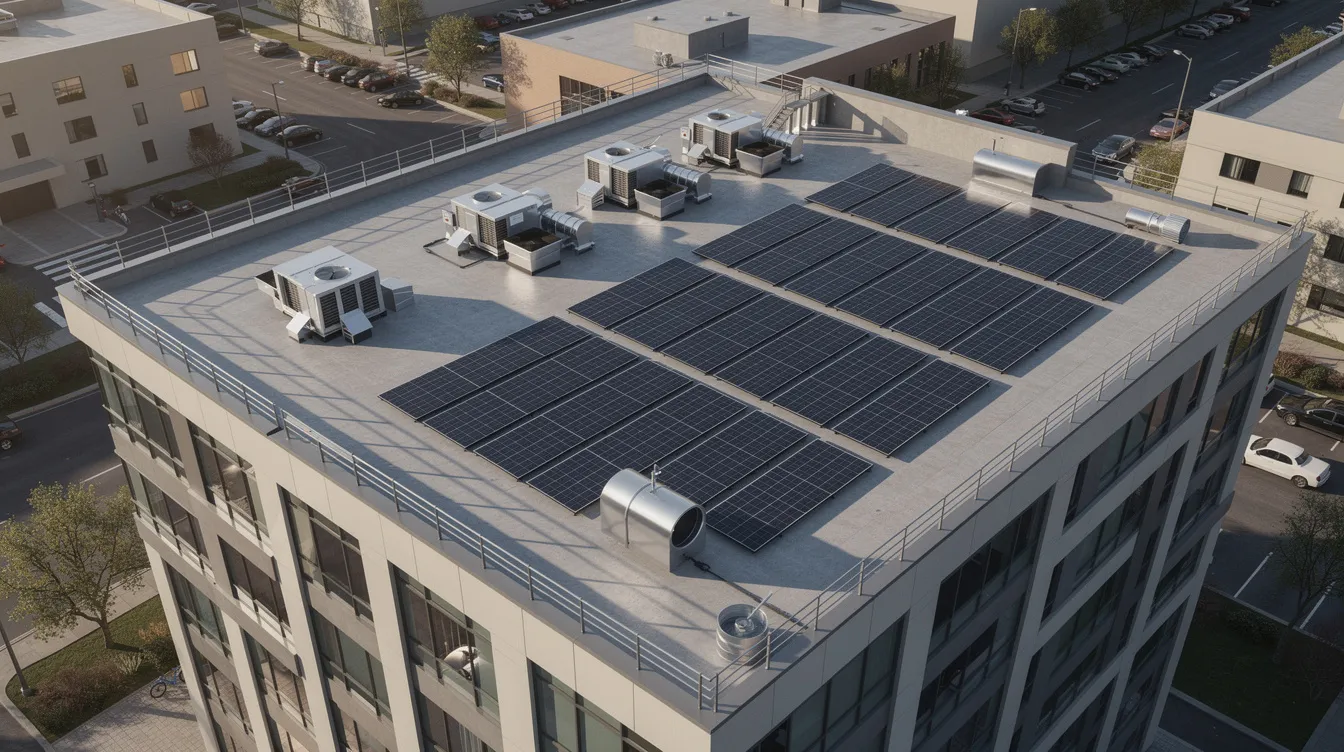
Typical investment for HVAC-focused franchises ranges from $125,000 to $200,000 depending on territory size and equipment inventory requirements. Franchises focusing on home and building repair or solar or wind generation installation typically require higher upfront investments due to the nature of the equipment and services provided.
Emerging Sustainable Energy Models
Beyond traditional efficiency services, some energy franchises focus on sustainable practices including the collection and recycling of used cooking oil that can be converted into biodiesel—an eco-friendly alternative to traditional fossil fuels. The demand for renewable energy sources, such as biodiesel from used cooking oil, is increasing due to growing environmental awareness and the need for sustainable practices.
Hybrid solar dryers for reducing food waste represent another emerging category, creating profits for farmers and entrepreneurs while advancing sustainability goals. These models demonstrate how the energy franchise industry continues expanding into adjacent markets.
The differences between franchise types directly impact your startup process. The following section details how to evaluate, select, and launch your energy savings franchise.
How to Start Your Energy Savings Franchise
With a clear understanding of franchise types and investment levels, you’re ready to move from research to action. Franchising provides established training and marketing platforms to drive business success, but selecting the right opportunity requires systematic evaluation.
Franchise Selection Process
This systematic approach applies whether you’re evaluating energy management systems, insulation services, or HVAC optimization franchises, and mirrors the kind of strategic preparation checklist for purchasing a franchise that experienced investors use to validate opportunities:
- Research established franchisors with proven track records and technology. Request information from multiple brands in your preferred category. Compare their systems, support services, and franchisee success rates.
- Evaluate territory availability and market demand in your region. Examine local utility rates, climate zone, regulatory incentives, and competition in retrofit or efficiency services. Exclusive territories protect your investment but vary significantly between franchisors.
- Review franchise disclosure documents (FDD) carefully. Pay particular attention to Item 7 (initial investment) and Item 19 (financial performance representation). Understanding the role of an earnings claim or financial performance representation will help you interpret Item 19 data and compare systems accurately. Only approximately 33% of energy conservation franchises disclose Item 19 earnings data, so press for transparency where possible.
- Conduct thorough due diligence including speaking with current franchisees. Ask about realistic payback periods, sales cycle challenges, technical support quality, and franchisor responsiveness. As you validate opportunities, keep in mind the strategic advantages of purchasing a franchise versus building an independent business from scratch. Current franchise partners provide invaluable insights that disclosure documents cannot capture.
- Secure financing through SBA loans, conventional loans, or franchisor financing. SBA financial assistance can support businesses leveraging government incentives in the energy sector, and understanding how to get an SBA loan to buy a business will clarify eligibility, documentation, and approval timelines. Many franchisors offer financing arrangements or preferred lender relationships, but you should also evaluate where to get the capital when purchasing a franchise so your funding mix supports long-term cash flow.
Investment Comparison Analysis
Franchise opportunities in the energy sector can vary widely in startup costs. The initial franchise fee for energy efficiency franchises can be around $60,000, with total initial investments ranging from approximately $107,200 to $132,400, so it’s essential to understand how much it costs to buy a franchise and build a realistic startup and operating budget.
| Franchise Type | Initial Investment | Training Period | Ongoing Support | Cash Required |
|---|---|---|---|---|
| Energy Management Systems | $100,000-$150,000 | 2-4 weeks | 24/7 technical support | $40,000-$75,000 |
| Insulation Services | $75,000-$125,000 | 1-2 weeks | Marketing and operational | $50,000-$75,000 |
| HVAC Optimization | $125,000-$200,000 | 3-6 weeks | Field operations and technical | $60,000-$100,000 |
| Entry-Level Monitoring | $40,000-$75,000 | 1-2 weeks | Technical and sales | $25,000-$40,000 |
| Investment requirements for energy-related franchises can vary widely, with some concepts requiring less than $50,000 in available cash, while others can range from $100,000 to $150,000 depending on equipment and vehicle needs. |
Your selection should align with your technical background, available capital, and target market preferences. Entrepreneurs with construction or HVAC experience often succeed with physical improvement franchises, while those with technology or sales backgrounds may prefer monitoring and management systems; use a structured framework for identifying the best franchises to buy so your choice matches your skills and long-term goals.
Understanding common operational challenges before launch helps you prepare effective mitigation strategies from day one.
Common Challenges and Solutions
Every business faces obstacles, and energy savings franchises are no exception. Recognizing these challenges early allows you to leverage franchisor support and develop proactive solutions, which is one of the core advantages of purchasing a franchise instead of operating as an independent contractor.
Generating Quality Leads
Challenge: Commercial clients often express skepticism about energy savings claims, while residential homeowners can be price-sensitive and overwhelmed by options.
Solution: Leverage franchisor marketing programs and focus your sales efforts on commercial property managers and facility directors who manage ongoing energy budgets. Target multi-site enterprises where a single relationship can yield dozens of installations. The recognized brand recognition from your franchisor helps establish credibility that independent operators struggle to achieve. Offering case studies with quantified revenue figures from existing clients demonstrates proven results rather than theoretical projections.
Proving ROI to Skeptical Clients
Challenge: Businesses want hard numbers and short payback periods before committing to energy efficiency investments.
Solution: Energy audits identify energy waste and recommend upgrades to enhance efficiency. Use these audits—often provided through franchisor-developed processes—combined with case studies from your franchise network to demonstrate proven savings. Energy efficiency measures can lead to energy savings of 15% to 35% for businesses, making them a cost-effective solution for reducing operational expenses. Share specific examples: a Chicago high-rise achieved approximately 18% cooling energy savings through HVAC optimization and smart building technology. Implementing energy efficiency technologies not only reduces energy consumption but also contributes to lower greenhouse gas emissions, supporting environmental sustainability efforts—a compelling message for ESG-focused clients.
Managing Seasonal Demand Fluctuations
Challenge: Energy demand and installation activity can be highly seasonal, with spring and fall peaks for HVAC work and winter concentration for insulation projects.
Solution: Diversify your service offerings to include monitoring contracts, lighting retrofits, and maintenance agreements that generate steady recurring revenue year-round. Long-term service contracts with commercial customers smooth revenue fluctuations and improve customer satisfaction through ongoing relationship management. Franchise partners who focus exclusively on one-time installations often experience more volatile operations compared to those building recurring revenue portfolios.
Technical and Operational Complexity
Challenge: Delivering consistent results requires technical expertise, regulatory compliance, and reliable supply chains for specialized equipment.
Solution: Select franchisors that provide comprehensive training, ongoing support, and established vendor relationships. Quality franchisors invest heavily in technical support infrastructure precisely because customer satisfaction depends on proper installation and performance verification. Certifications and licensing requirements vary by jurisdiction; your franchisor should provide guidance on local compliance requirements and help you navigate permitting processes.
With these challenges addressed, you’re positioned to make an informed decision about joining this growing industry.
Conclusion and Next Steps
Energy savings franchises represent a great opportunity for entrepreneurs seeking a profitable business with genuine growth potential. The industry is projected to grow at an annual rate of 12%, driven by increasing demand for cost-saving solutions in both residential and commercial sectors. This growth trajectory, combined with the recession resistant nature of energy services, makes the sector particularly attractive for long-term investment.
You now understand the core business models, investment requirements, and operational considerations that will determine your success. The difference between successful franchisees and those who struggle often comes down to proper franchisor selection and thorough market research before launch, supported by a disciplined approach to finding the best franchises to buy in your chosen niche.
Your immediate next steps:
- Identify the top 3 energy franchise opportunities that align with your capital, expertise, and target market
- Request franchise disclosure documents from each and compare Item 7 and Item 19 data
- Schedule discovery days to meet franchisor teams and evaluate company culture
- Speak with at least 5 current franchisees from each system you’re seriously considering
- Evaluate financing options including SBA loans and franchisor-provided arrangements
Related topics worth exploring include renewable energy franchises focusing on solar installation, environmental services businesses addressing broader sustainability needs, and complementary home services that can expand your operations once established, including top franchise opportunities to own in 2025 and broader insights from a specialized franchise evaluation and funding blog.

Frequently Asked Questions
What is the average payback period for energy savings franchise investments?
Payback periods vary significantly by franchise type. LED lighting retrofits typically achieve payback within 1-3 years. Energy management systems with recurring revenue models can recover initial investment within 6-12 months through ongoing monitoring contracts. HVAC system optimizations generally require 5-10 years for full payback, while envelope improvements like insulation may take 5-15 years depending on scope and climate zone. A quick-service restaurant franchise achieved payback in 9 months to 2 years through holistic retrofits that reduced lighting and electrical costs by approximately 75%.
Do I need technical background to operate an energy savings franchise?
Not necessarily. While technical expertise is valuable, most franchisors provide comprehensive training programs lasting 1-6 weeks depending on service complexity. Your role may focus more on sales, customer relationships, and business operations while employing trained technicians for installations. However, understanding basic energy concepts helps you communicate effectively with clients and evaluate project opportunities. Entrepreneurs with construction, HVAC, or engineering backgrounds often find the transition easier.
How much can I expect to earn in the first year?
Revenue figures vary widely based on franchise type, territory size, market conditions, and individual effort. Unfortunately, only about 33% of energy conservation franchises provide Item 19 financial performance representations in their disclosure documents. When evaluating opportunities, request revenue figures from current franchisees in similar markets and compare them with any earnings claims or financial performance representations disclosed in the FDD. Successful first-year operations in energy management systems have reported gross revenues ranging from $150,000 to $400,000, though net profits depend heavily on operational costs and local market conditions.
What ongoing fees do energy savings franchisors typically charge?
Most energy franchises charge royalty fees of 5-8% of gross revenue, with typical rates around 7%. Marketing fund contributions generally run an additional 1-2%. Some technology-based franchises charge monthly software or platform fees ranging from $500 to $2,000. Review Item 6 of any FDD carefully to understand the complete fee structure including any technology licensing or equipment lease payments.
Are there financing options available for energy savings franchises?
Yes, multiple financing pathways exist. SBA loans are commonly used for franchise investments in the $100,000-$250,000 range. Conventional business loans from banks and credit unions serve similar purposes. Some franchisors offer direct financing or preferred lender relationships with expedited approval processes. Federal and state energy efficiency tax credits can reduce your effective investment, and equipment leasing arrangements may lower initial cash requirements for technology-intensive franchises.
How do I evaluate the market potential in my territory?
Analyze several key factors: local utility rates (higher rates increase client motivation), climate zone (extreme temperatures drive HVAC and insulation demand), building stock composition (commercial vs. residential, age and condition), existing competition, and available government incentives. Request market analysis data from franchisors during the discovery process and review how your day-to-day responsibilities are defined in Item 9 of the Franchise Disclosure Document. Strong territories typically feature above-average energy costs, significant commercial building inventory, and active local incentive programs.
What training and support do franchisors provide?
Quality franchisors provide initial training covering technical skills, sales processes, business operations, and compliance requirements. Training periods range from 1 to 6 weeks, depending on service complexity. Ongoing support should include technical support for installation challenges, marketing assistance, vendor relationships, software and systems access, and regular franchisee communication. Evaluate the depth and responsiveness of support services before signing—this infrastructure directly impacts your ability to deliver results and grow your business.
Can energy savings franchises be operated part-time or as absentee businesses?
Most energy franchises require significant owner involvement, especially during the startup phase. Building client relationships, managing installations, and ensuring quality control typically demand full-time attention. Some monitoring-focused franchises with established recurring revenue may transition to semi-absentee models after 2-3 years once operations are systematized and reliable management is in place, provided you’ve followed a disciplined strategic preparation checklist for purchasing a franchise. However, treating an energy franchise as a purely passive investment from day one is generally not realistic or recommended by franchisors.