Table of Contents
Why Healthcare Privacy Film Is a High-Value Business Niche in 2026
The Growing Need for Privacy and Glass Solutions in Healthcare Settings
Core Healthcare Window Film Categories and Where They Fit
Zone-by-Zone Opportunity Mapping Inside a Healthcare Facility
Security and Safety Film: Protecting Pharmacies and High-Risk Areas
Why Healthcare Privacy Film Is a High-Value Business Niche in 2026
Healthcare facilities face tighter HIPAA enforcement by 2026, rising patient expectations around privacy and dignity, and relentless pressure to control capital costs. These converging forces have created one of the strongest commercial window film opportunities available to dealers, tint shop owners, and new franchisees ready to move beyond automotive work into healthcare environments.
This article is written for you-the window film professional looking to serve hospitals, outpatient clinics, imaging centers, dental offices, behavioral health clinics, pharmacies, and urgent care centers. Window film installation is faster than glass replacement, requires no major construction, and works with existing glass to deliver quick upgrades with minimal risk of disrupting patient care. The business opportunity spans privacy film, decorative film, frosted film, solar control film, and security film-not just one product category.
The Growing Need for Privacy and Glass Solutions in Healthcare Settings
Modern healthcare design has embraced transparency. Glass walls, interior glass partitions, and open reception areas bring natural light and improve wayfinding, but they also expose exam rooms, nurse stations, and registration desks to unauthorized viewing. Consider open-plan primary care clinics with glass-fronted consultation rooms, hospital corridors with full-height sidelites, or pharmacies with street-facing storefront glass. Every one of these creates a visual access problem.
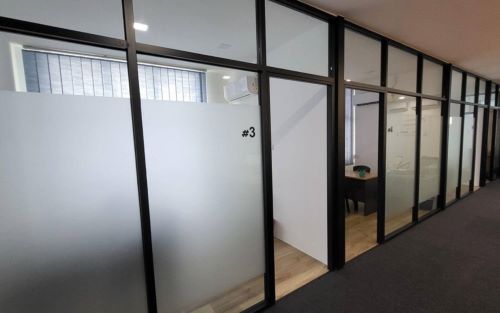
Patients near sun-drenched windows experience higher stress levels, and those in glass-enclosed exam rooms often feel “on display.” Staff resort to turning computer screens away from windows or taping paper over glass-improvised fixes that violate facility standards and infection control protocols. Telehealth stations in public-facing waiting areas and digital displays showing patient data add another layer of exposure. Healthcare privacy films can improve patient-provider trust by humanizing abstract data rules into tangible, visible protections patients can see the moment they walk in. Films about healthcare privacy can educate the public on data security awareness, and major streaming platforms now seek impactful documentary content on topics like data privacy, raising general awareness that makes facility administrators more receptive to solutions. These are not cosmetic problems. They are recurring, budgeted challenges that compliance officers and facility managers actively need vendors to solve.
Core Healthcare Window Film Categories and Where They Fit
Understanding what you can sell is the first step. Here is an at-a-glance guide to the main window film solutions relevant to medical environments.
| Film Type | What It Does | Key Healthcare Applications |
|---|---|---|
| Privacy and frosted window film | Obscures vision while allowing natural light flow through glass surfaces | Exam rooms, consultation doors, restroom partitions |
| Decorative film | Adds patterns, branding, or nature-inspired graphics to interior glass | Pediatric waiting areas, lobby branding, wayfinding |
| Solar control window film | Rejects infrared heat and reduces visible glare on sensitive equipment and computer screens | South- or west-facing patient rooms, nurse stations, diagnostic areas |
| Security window film | Holds glass together on impact, delays forced entry | Pharmacy windows, emergency department entrances, drug storage areas |
| Switchable smart film | Transitions from transparent to opaque on demand via electrical signal | ICU observation windows, flexible-use rooms, on demand privacy needs |
| Privacy window film blocks visual access to patient areas, while frosted window film allows natural light while obscuring views-making it ideal where patient comfort and daylight both matter. Solar control film rejects up to 80% of infrared heat and reduces glare intensity by up to 80 percent, protecting both patients and equipment. Window film blocks up to 99% of harmful ultraviolet rays, reducing uv exposure on furnishings and medical devices. The most profitable projects combine multiple film types on the same medical facility-privacy plus solar plus branded decorative banding-allowing you to position yourself as a glass and surface problem-solver rather than just a tint installer. |
Zone-by-Zone Opportunity Mapping Inside a Healthcare Facility
Each zone in a healthcare building has different privacy, light, and security requirements. Smart dealers build proposals zone by zone rather than offering one generic film. Privacy window film blocks visual access to protected health information in every area where glass creates a sightline to patient data.
- Reception and waiting areas: Privacy banding at eye level, logoed decorative privacy film on glass partitions, solar film on exterior windows to reduce hot spots
- Exam rooms: Full-height frosted film or gradient bands that maintain natural light above eye level while ensuring patient privacy during exams
- Treatment rooms: Higher opacity films, sometimes switchable smart film for procedure rooms that need flexible visual access
- Pharmacies and drug storage areas: Combined security film installation and privacy film on service windows and back-of-house doors
- Nurse stations and charting areas: Partial frosting to shield computer screens from corridor views without cutting off staff communication
- Behavioral health and counseling rooms: Subtle, non-reflective privacy film that supports patient comfort without feeling institutional or punitive
Mapping these zones typically reveals multi-phase projects, creating repeat business as budgets renew each fiscal year. In one 2025 outpatient clinic retrofit, privacy film was added to 24 exam room doors alongside solar film on a west-facing waiting area and security film on back-door glass panes-a single project totaling approximately $55,000.
HIPAA, Patient Confidentiality, and Regulatory Drivers
HIPAA requires physical safeguards for patient information, and those requirements extend to visual privacy through glass in healthcare settings. Healthcare organizations face significant cybersecurity and privacy problems, but physical exposure of protected health information through untreated glass remains one of the most overlooked vulnerabilities. HIPAA requires reasonable safeguards against unauthorized disclosure, and glass partitions where charts, whiteboards, or medical records are visible from public corridors can fail this standard.
Under HIPAA, patients have rights to access their medical records-but no one else should see them accidentally through a window. High-risk locations include registration desks with visible computer screens, glass walls around charting areas, and pharmacy work zones exposed to lobbies. No single product guarantees HIPAA compliance on its own, but privacy film is a tangible, fast-to-implement step that compliance officers frequently cite in internal risk assessments. Healthcare privacy films can shape policy discussions and influence regulatory perspectives when facilities demonstrate proactive investment in patient confidentiality. Strengthening patient consent protocols is crucial alongside privacy film installations, and any work inside active healthcare environments must practice compliance with privacy regulations throughout the process. Dealers should be prepared to explain how film limits visual access without disrupting patient care or blocking emergency egress sightlines.
Decorative and Frosted Film: Privacy Without an Institutional Feel
Frosted film and decorative film deliver privacy while supporting a warm, branded atmosphere in most healthcare facilities. Common design approaches include full-frosted doors for exam rooms, gradient bands on glass partitions that preserve clear glass above eye level, subtle nature-inspired patterns for oncology or infusion centers, and playful graphics for pediatric wings. Frosted window film allows natural light while obscuring views, so rooms remain bright and welcoming rather than closed off.
Decorative film projects typically carry higher margins per square foot because they involve design consultation, mockups, and custom printing-work that faces far less price commoditization than basic tinted film. Window film is easier to clean than traditional curtains or blinds, requires no laundering, and harbors fewer pathogens. These are strong talking points when presenting to infection control teams in any medical office or hospital.
Solar Control and Comfort: Energy Savings in Medical Environments
Solar control window film addresses heat, glare, and uv protection problems across healthcare settings while creating natural upsell opportunities alongside privacy film sales. Solar control film reduces glare intensity by up to 80 percent on diagnostic monitors and nurse station screens, stabilizes temperatures in sun-exposed waiting areas and patient rooms, and protects sensitive equipment from uv damage. Clear uv blocking film can be applied to exterior windows without changing the building’s appearance.
Solar control film reduces cooling costs by 10 to 20 percent, and most healthcare facilities see energy savings within the first billing cycle. Healthcare facilities can save tens of thousands of dollars annually, and window film installation can lead to significant energy savings that compound year over year. Solar control film lowers cooling costs by 10 to 20 percent even on spectrally selective films that preserve natural light flow. Position energy efficiency gains as a way for facility managers to free budget for patient-facing improvements, and bundle solar film with privacy solutions to create dual-benefit proposals that appeal to both engineering and compliance stakeholders.
Security and Safety Film: Protecting Pharmacies and High-Risk Areas
Healthcare-related crimes increased by 89% over five years, with pharmacies and ground-floor clinics among the most targeted locations. Security window film plays a critical role in protecting these high-risk areas. Security window film holds glass fragments together during impact events, preventing flying shards from injuring staff and patients while delaying forced entry long enough for security personnel to respond.
Key healthcare targets include hospital pharmacies, stand-alone retail pharmacy windows, behavioral health intake areas, and emergency department entrances. Security film reduces successful break-in attempts by over 85%, and security window film makes glass up to 40 times more shatterproof-far exceeding safety glazing requirements for most medical environments. Professional-grade security films meet GSA and ASTM testing standards, giving facility engineers and risk managers confidence in the specification. Security film installation is typically priced higher per square foot than privacy film, often requires attachment systems, and can be bundled with access control upgrades-making these projects especially profitable for dealers willing to collaborate with security consultants.
Revenue, Margins, and Business Models for Healthcare Privacy Film
Here is the financial case for targeting healthcare facilities as a growth vertical, especially when you plug these projects into a proven franchise business model in a booming window film industry.
- Large hospital systems: Multi-zone projects reaching tens of thousands to hundreds of thousands of dollars
- Mid-size outpatient campuses: $50,000–$150,000 across waiting areas, exam rooms, and exterior windows
- Smaller medical offices and urgent care: $5,000–$25,000, often repeated across multiple locations
- Pharmacy chains: Standardized decorative and privacy packages rolled out across dozens of sites
ROI for healthcare facilities typically occurs within two to four years when solar and privacy films are combined. Margins run higher than residential tint because healthcare work involves consultative selling, custom design, and virtually no DIY competition. Potential revenue streams for healthcare privacy films include B2B licensing and sponsorships with manufacturers and healthcare systems looking for preferred vendors. Educational licensing represents a massive revenue stream for healthcare privacy films installed in teaching hospitals, simulation labs, and medical schools. Investigation of systemic privacy issues in healthcare privacy films thrives through impact distribution models-multi-site rollouts where one successful installation becomes the template for an entire health system. Recurring revenue comes from layout changes, new clinic wings, rebranding, and maintenance cycles every few years.
Sales and Marketing Strategies to Reach Healthcare Decision-Makers
Selling into healthcare facilities is relationship-based B2B work, not walk-in traffic. Positioning yourself among the top service franchises in the window film and surface solutions space helps lend credibility with key stakeholders including facility managers, compliance officers, infection control directors, architects, and security directors.
Effective tactics include attending local healthcare engineering association events, presenting “lunch and learn” sessions on privacy and energy savings, and building before-and-after portfolios of exam rooms and waiting areas. Healthcare privacy narratives have the potential to raise public awareness of individual rights, and dealers who frame their pitch around patient dignity rather than just film specs win more trust. The production of healthcare privacy films requires a balance of storytelling and legal compliance-your proposals should address both the emotional experience and the regulatory requirement. Engaging narratives in healthcare privacy films attract a wide range of audiences, from compliance officers to C-suite administrators. Privacy can be a compelling theme that resonates emotionally with decision-makers when you show them what patients actually see through untreated glass. Strategic partnerships with advocacy groups can secure funding for healthcare privacy films, and dealers who translate complex legal concepts into relatable narratives for facility managers close deals faster. Build long-term relationships with regional healthcare systems and design-build firms specializing in medical interiors as your core pipeline.
Installation Logistics: Working in Active Medical Facilities Without Disrupting Patient Care
Professional window film installation can be performed in active healthcare environments with minimal disruption when properly scheduled and coordinated. This kind of flexible, on-site work fits well within service and home-based industries that are most likely to franchise. Best practices include working during off peak hours-evenings, weekends, or low-volume clinic periods-using quiet hand tools, and coordinating room-by-room access with charge nurses and department managers.
Infection control matters: use drop cloths, manage water and solution overspray carefully, and follow hospital cleaning protocols. Most interior privacy or frosted film installs take 30–60 minutes per opening, meaning zones can go offline one at a time while the rest of the medical facility stays operational. Even documentary crews filming in healthcare settings must comply with privacy regulations, and your installation teams should demonstrate the same sensitivity-avoiding loud conversations about security incidents in patient areas. Demonstrating this professionalism leads directly to repeat business.
Common Mistakes Dealers Make in Healthcare Projects (And How to Avoid Them)
Healthcare work has unique requirements. Avoiding a few common missteps protects both your margins and your reputation.
- Choosing the wrong film-films too dark or reflective for exam rooms create a claustrophobic feel and kill referrals
- Ignoring emergency egress sightline requirements in corridors where building code mandates minimum vision panels
- Underestimating the approvals process in large hospital systems, which can take months of interdepartmental review
- Failing to engage all stakeholders early-compliance, infection control, engineering, and purchasing all have sign-off authority
- Skipping mockups, leading to misaligned gradient films across adjoining glass panels
- Not confirming cleaning and disinfection compatibility with hospital-grade products
Always provide film samples, consult building codes, and document product data sheets and warranties clearly. Treat early healthcare projects as references-collect testimonials and photos to reduce friction on every future bid.
Frequently Asked Questions About Healthcare Privacy Film Work
Does privacy window film alone make a healthcare facility compliant with HIPAA?
Privacy window film significantly reduces risks of visual exposure of protected health information but must be part of a layered compliance program including administrative policies, staff training, screen positioning, and access controls. No single product guarantees HIPAA compliance on its own. Dealers should present film as a tangible, fast-to-implement step that supports existing HIPAA initiatives and helps healthcare providers demonstrate reasonable physical safeguards.
Will frosted privacy film make exam rooms feel dark or closed-in?
High-quality frosted window film allows natural light while obscuring views, so exam rooms stay bright with soft, diffused daylight. Gradient and banded designs preserve clear glass at the top of panels to maintain natural light flow and openness. Consider test installations on one or two rooms so clinicians and patients can give feedback before a full rollout across the healthcare facility.
How long does healthcare privacy film last and how is it cleaned?
Interior privacy and decorative films typically last 10–20 years in medical facilities when installed on appropriate glass. After a 30-day curing period, clean with standard glass cleaners and soft cloths, avoiding abrasives. Most professional films are compatible with common hospital-grade disinfectants, but always confirm with manufacturer recommendations and provide cleaning guidelines to facility staff.
Can installation be done without disrupting patient care or closing departments?
Experienced installers work around clinic schedules, performing work during off peak hours or room by room so exam rooms and waiting areas remain operational. There is no major construction, drilling, or heavy equipment involved, meaning noise and dust stay minimal. Advance coordination with department leaders avoids surprises and keeps patient care uninterrupted.
What kind of return on investment can a medical facility expect from window film?
Value shows up in several dimensions: fewer patient privacy complaints, improved patient comfort in waiting areas and patient rooms, lower visible glare for staff, and measurable energy efficiency gains. Most healthcare facilities see energy savings within the first billing cycle for solar control installations, while broader ROI typically occurs within two to four years. Dealers who help facilities track comfort and complaint metrics before and after installation create powerful case studies for future sales.
Can privacy and security films be removed or changed as departments evolve?
Professional-grade security films and privacy films can usually be removed and replaced without damaging the underlying existing glass when done by trained installers. This flexibility matters in medical environments where exam rooms become offices or outpatient clinics change specialties. Planning with standardized patterns or band heights simplifies future reconfigurations and reduces cost for the facility.
Why Choose This Franchise Model for Healthcare Privacy Film Services {#why-choose-this-surface-enhancement-franchise}
A structured, home-based franchise specializing in glass and surface solutions is ideally suited to healthcare privacy film work. CoolVu franchisees receive formal technical training on privacy, solar, security, and decorative films, plus support with healthcare-specific sales materials and access to a wide catalog of commercial window film and architectural finishes, all delivered through a turnkey CoolVu window film franchise setup. The low-overhead home-based setup, protected territories covering clusters of hospitals and medical office buildings, and marketing systems designed to attract B2B clients make it practical to build a dedicated healthcare focus, while still aligning with a broader home decor and window solutions franchise positioning. Franchisees also receive guidance on estimating, proposal writing, and project management for complex multi-phase medical facility projects-so you can confidently bid larger jobs knowing you have proven processes, a seasoned CoolVu franchise leadership team and support infrastructure, and national account experience behind you.
Next Steps: How to Enter the Healthcare Privacy Film Market in Your Area {#next-steps-and-call-to-action}
The healthcare privacy film business opportunity addresses urgent needs around patient confidentiality, patient safety, comfort, and energy performance in healthcare settings-creating durable demand for specialized dealers. Start by learning the core film categories, identifying local hospitals, clinics, and pharmacies in your area, assembling a small healthcare-specific sample kit, and beginning outreach to facility managers and medical office property managers, especially if you’re weighing the key benefits of franchise ownership versus going fully independent.
If you want structured support, training, and a proven business system, explore the CoolVu franchise model-already focused on residential and commercial window film, decorative graphics, and architectural finishes-and review the step-by-step process on how to become a CoolVu franchise owner. Request more information about franchise ownership, schedule a consultation call, or download a detailed guide on building a healthcare privacy film business in your region. The facilities are already budgeting for these upgrades. The question is whether you will be the one solving their problems.