Table of Contents
Defining Your Strategic Fit and Financial Goals
For the seasoned entrepreneur, evaluating franchise opportunities begins long before reviewing a single Franchise Disclosure Document. It starts with a rigorous internal audit of your own strategic objectives. This is not about a passion project or simply buying a job. It is a calculated investment designed to integrate into, and ideally enhance, your existing wealth-building strategy. This first step is your anchor, ensuring every subsequent decision is measured against a clear, personalized definition of success.
Aligning Franchise Investment with Your Long-Term Wealth Strategy
A franchise should be viewed as another asset class in your portfolio. Just as you would evaluate a stock or real estate holding, a franchise must serve a specific purpose within your broader financial plan. Is its primary role to generate consistent, predictable cash flow to fund other ventures? Is it a diversification play into a non-correlated industry? Or is the goal to build a substantial, saleable business entity over the next 5 to 10 years?
Answering this is critical. An opportunity that requires the owner’s constant operational presence may generate strong income but offers limited value as a passive or semi-passive asset. Conversely, a model built for multi-unit expansion with strong management systems might have a slower initial cash flow but a much higher potential for long-term equity growth. Aligning the franchise’s operational and financial DNA with your personal wealth goals is the first and most important filter in your search.

Calculating Your True Initial Investment and Working Capital
The figures listed in an FDD are a starting point, not the finish line. A professional investor plans for success by ensuring they are adequately capitalized not just to open the doors, but to operate confidently through the ramp-up period. Calculating your true initial investment requires a more comprehensive and conservative approach.
Your total capitalization needs should include several key components:
- The Initial Franchise Fee: The upfront cost for the license, training, and brand access.
- Build-Out and Equipment: Costs for vehicles, tools, software, and any necessary physical location setup.
- Initial Marketing and Launch: Funds allocated for a grand opening or initial lead generation campaigns to build momentum from day one.
- Professional Fees: A budget for legal and accounting advice to review agreements and set up your corporate structure correctly.
- Working Capital: This is the most critical and often underestimated figure. A prudent investor will secure enough working capital to cover all operating expenses, including their own salary, for at least 6 to 12 months. This buffer transforms pressure into patience, allowing you to execute the business plan without being forced into short-sighted, cash-flow-driven decisions.
Projecting ROI to Model for Higher Financial Returns
While a franchisor’s Item 19 can provide valuable historical data, your analysis cannot stop there. The goal is to build your own financial model, or pro forma, that reflects your specific market, management style, and financial objectives. This is where your entrepreneurial experience gives you a distinct advantage.
You can create projections for conservative, expected, and aggressive growth scenarios. More importantly, you can identify the key performance levers that will drive profitability. In a service franchise, for example, these levers might include lead conversion rates, average ticket value per job, labor efficiency, and customer acquisition cost.
When evaluating a franchise system, your focus should be on how well the franchisor helps you understand and influence these levers. A superior system provides not just a brand, but a proven methodology for optimizing these specific metrics to achieve a higher return on investment.
Assessing Scalability: Can This Model Grow Beyond a Single Territory?
For many experienced entrepreneurs, the ultimate goal is not to run a single successful unit, but to build an enterprise. Scalability is the litmus test that separates a good lifestyle business from a true wealth-building machine. You must assess every opportunity through the lens of multi-unit ownership from the very beginning.
Ask critical questions that probe the model’s capacity for growth:
- Owner Dependency: Does the daily operation require your personal, hands-on involvement, or is the system designed to be run by a well-trained manager? A system that depends on you is not scalable.
- Management Infrastructure: Does the franchisor provide a clear career path and training program for developing unit managers and regional leaders? Their ability to help you build a team is paramount.
- Territory and Expansion: How are territories defined? Does the franchisor have a clear, fair, and accessible process for awarding additional territories to successful existing franchisees?
- Support for Growth: Is the corporate support structure equipped to handle the unique needs of multi-unit operators, who require different support than a single-unit owner?

A truly best-in-class franchise is designed for duplication. The systems, support, and technology are all architected with the explicit assumption that the most successful franchisees will want to grow. This focus on scalability is a non-negotiable criterion for any entrepreneur looking to build an empire, not just a business.
The Art of Due Diligence: Vetting the System, Not Just the Brand
As an experienced entrepreneur, your due diligence process transcends the basic checklist. You are not simply verifying the existence of a business, you are interrogating its potential to become a high-performance asset in your portfolio. This means looking past the allure of a familiar logo to dissect the operational engine that drives franchisee success. The true art lies in vetting the underlying system for its efficiency, resilience, and scalability.
Evaluating the Core Business Model for Operational Efficiency
Your primary question should be, “Does this business model enhance my ability to execute, or does it create unnecessary friction?” A superior franchise system is engineered for operational leverage, allowing you to focus on growth rather than getting bogged down in logistical complexities.
When evaluating a model, look for signs of sophisticated design. Does it require managing perishable inventory and high overhead, or is it a streamlined, service-based model with healthier margins? A world-class system will provide integrated tools like proprietary CRM software, centralized call centers, or automated marketing platforms that reduce administrative load and accelerate cash flow from day one. This level of built-in efficiency is a hallmark of a franchisor that has invested heavily in the franchisee’s ability to scale effectively.
Analyzing Market Demand and Competitive Differentiation
You already know how to spot a market opportunity. Now, the task is to determine if the franchise provides a durable competitive advantage within that market. Assess whether the demand for the product or service is evergreen and recession-resistant, or if it is tied to a fleeting trend.
More importantly, analyze how the franchise insulates you from competitors. True differentiation goes beyond a brand name. Look for a genuine moat, which could include exclusive access to proprietary products, a highly refined service methodology, superior supply chain relationships, or a national brand presence that provides immediate credibility. A franchise that cannot clearly articulate its unique value proposition beyond “we have great service” is a red flag. A top-tier system gives you a defensible edge that is difficult for local competitors to replicate.
Franchisee Validation: Asking the Right Questions
Speaking with existing franchisees is the single most important reality check in your due diligence. A seasoned investor knows to go beyond the simple, “Are you happy?” Your goal is to gather strategic intelligence. Prepare questions designed to uncover the reality of the partnership.
Consider asking questions like:
- “Describe the first six months. How did the franchisor’s launch support align with the promises made during the sales process?”
- “On a scale of 1 to 10, how effective is the national marketing fund in generating qualified leads for your specific territory?”
- “Can you give me an example of a time you provided feedback to the corporate team? How was it received?”
- “How does the day-to-day operational reality compare to the financial performance representations in the FDD?”
- “If you could change one thing about the system or the support you receive, what would it be?”
The answers, and just as importantly, the tone in those answers, will paint a vivid picture of the franchisor’s culture, responsiveness, and true commitment to franchisee profitability.
Gauging the Franchisor’s Track Record in Launching New Territories
A single franchisee’s success can be an anomaly. A pattern of successful launches across diverse markets demonstrates a proven, repeatable system. When you investigate the franchisor’s history, you are looking for evidence of a well-oiled machine for opening new units.
Ask the franchisor for data on their launch performance. What is the average time for a new franchisee to open for business? What does their “ramp-up” period look like, and how quickly do new territories typically reach break-even and then profitability? A mature franchisor should not only have this data but should be eager to share it as proof of their system’s efficacy. A vague answer suggests a lack of process and a higher risk for your investment.
Deconstructing the FDD for Maximum Insight
For the uninitiated, the Franchise Disclosure Document can be an intimidating legal tome. For the strategic entrepreneur, it is a treasure trove of critical business intelligence. Your approach should not be to simply read it, but to deconstruct it, using it as a roadmap to understand the franchisor’s priorities, philosophy, and the long-term implications of your partnership.
A Strategic Review of the FDD
A novice reads the FDD to understand the rules. A professional reads it to understand the strategy. As you review the 23 items, you are looking for the “why” behind the legalese. The document reveals the franchisor’s history, the background of its leadership team, litigation history, and the financial health of the company.
Pay close attention to the narrative that emerges. Is there a history of disputes with franchisees (Item 3)? Are key executives experienced operators in the industry (Item 2)? Does the franchisor’s own financial performance show stability and growth (Item 21)? This high-level review provides the context for a deeper dive into the more tactical sections.
Decoding Item 19: What Financial Performance Representations Mean
Item 19 is often the most anticipated section, but it requires a discerning eye. If a franchisor makes a Financial Performance Representation (FPR), your job is to treat it as a starting point for analysis, not a guarantee of your own success.
Begin by understanding what the numbers represent. Is it gross sales, net profit, or some other metric? What is the sample size? A top-tier franchisor will provide clear context, often breaking down performance by quartiles. This allows you to see the full spectrum of results.
Your analysis should focus on understanding the drivers of top-quartile performance and assessing whether you can replicate those conditions in your market.

Scrutinizing the Franchise Agreement for Long-Term Flexibility
The Franchise Agreement, typically an exhibit to the FDD, is the legally binding contract that will govern your relationship for years. For an entrepreneur with a long-term perspective and an eye on an eventual exit, this document is paramount. Look for clauses that could impact your future flexibility.
Key areas to scrutinize include renewal rights, transferability, and post-term covenants. What are the conditions for renewing your agreement? If you decide to sell the business, what are the franchisor’s rights of first refusal, and are the conditions for approving a new buyer reasonable? A restrictive franchise agreement can significantly devalue your asset when it comes time to exit.
Understanding Territory Rights, Royalty Fees, and Other Costs
Your financial model is only as accurate as its inputs. The FDD provides the data needed to build a realistic forecast, but you must know where to look.
- Territory Rights: Does the agreement grant you an exclusive territory, meaning the franchisor cannot place another unit within a defined boundary? Or is it a “protected” territory? Understand the specifics, including the franchisor’s rights to sell products through alternative channels like the internet within your area.
- The Full Fee Structure: Look beyond the initial franchise fee and ongoing royalty. A thorough review will uncover a complete picture of your financial obligations, which can include brand or national advertising fees, local marketing requirements, technology fees, training fees, and transfer or renewal fees.
Only by accounting for every one of these potential costs can you accurately project your potential return on investment and ensure the opportunity aligns with your financial goals.
Interrogating the Support System: Training, Marketing, and Culture
For the seasoned entrepreneur, a franchise support system is not a safety net, it is a launchpad. You are not looking for basic business coaching. You are evaluating a strategic partner whose infrastructure must amplify your skills and accelerate your path to market dominance. The critical question is not “what support is offered?” but “is the support sophisticated enough to generate superior returns?”
Does Founder Experience Translate to Superior Support?
Many franchises are created by business executives, but the truly exceptional ones are often born from founders who were once operators themselves. There is a profound difference between a system designed in a boardroom and one forged in the field. A founder with deep, hands-on experience understands the daily operational friction points, the nuances of the sales process, and the specific challenges franchisees will face.
This experience should be visibly codified into the support structure. Look for evidence that the founder’s journey has informed the training manuals, the technology choices, and the marketing strategies. A system built by a successful operator is more likely to provide practical, battle-tested solutions that directly impact your bottom line.
Evaluating the Sales and Marketing Engine
An effective marketing program from a franchisor does more than just provide a logo. It should function as a high-performance engine designed to drive qualified leads and empower your local sales efforts. Your due diligence must dissect the mechanics of this engine.
A superior system provides a multi-faceted marketing and sales ecosystem. Demand clarity on these components:
- National and Regional Brand-Building: How does the franchisor generate broad awareness that benefits all locations?
- Local Lead Generation: What specific, turn-key digital marketing programs are in place to drive customers to your territory? This includes sophisticated SEO, pay-per-click advertising, and social media campaigns.
- Sales Technology and CRM: Is a robust customer relationship management (CRM) system provided? A quality CRM is non-negotiable for tracking leads, managing sales pipelines, and automating customer follow-up.
- Marketing Collateral and Sales Tools: Assess the quality of the professional assets provided, from digital brochures to proposal templates. These tools should reflect a premium brand and be designed to convert leads.
Assessing the Quality of Initial and Ongoing Training
Your business acumen is an asset, but industry-specific expertise is what unlocks profitability. A franchisor’s training program should respect your experience by focusing on mastery, not basics. Scrutinize the curriculum for its depth and structure.
Initial training should be an intensive immersion into the products, services, and proprietary operational methods. For a veteran entrepreneur, however, the real value lies in ongoing training. A world-class franchisor invests heavily in continuous education, including advanced sales techniques, new product certifications, and leadership development. This commitment to perpetual improvement is a hallmark of a system designed for long-term, scalable success.
Is There a Strong Culture of Collaboration and Success?
Do not underestimate the strategic value of a collaborative franchisee network. In a disconnected or competitive system, each owner operates in a silo. In a healthy, collaborative culture, the entire network functions as a peer-to-peer advisory board.
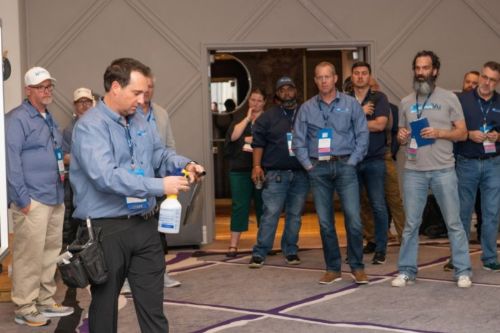
During your franchisee validation calls, probe this dynamic. Do owners freely share best practices? Do they celebrate each other’s successes? Is there a formal mechanism, like a franchisee advisory council or annual conference, for collective problem-solving? A culture of mutual support is a powerful force multiplier, providing real-time solutions and innovations that you could never achieve alone.
Why a Proven System Outperforms a Popular Brand
In the pursuit of a new venture, it is easy to be swayed by the allure of a household name. For the discerning investor focused on operational excellence and ROI, however, brand recognition is secondary to the integrity of the business system itself.
The Difference Between Brand Recognition and Operational Excellence
A popular brand ensures customers have heard of you, but a proven system ensures you can serve them profitably and effectively. Brand recognition might get the phone to ring, but it does not manage your inventory, schedule your technicians, or optimize your sales process. Operational excellence does.
Think of it as the difference between a flashy car with a mediocre engine and a lesser-known vehicle engineered for peak performance. The former looks good in the driveway, but the latter reliably wins the race. An experienced entrepreneur knows that long-term wealth is built not on brand awareness alone, but on the back of a smooth, efficient, and scalable operational model.

How a Mature System Mitigates Risk and Accelerates Profitability
A truly proven franchise system is one where the costly mistakes have already been made and paid for by the franchisor. The operational playbook, supply chain logistics, marketing strategies, and technology stack have been tested, refined, and validated across numerous territories.
This maturity significantly de-risks your investment. You are not a beta tester for the franchisor’s new idea, you are executing a model with a clear, demonstrable track record of success. This refinement directly translates to a shorter ramp-up period and a faster path to profitability.
Identifying the Hallmarks of a Truly Proven Franchise System
A proven system leaves a trail of evidence. As you conduct your due diligence, look for these tangible indicators that separate a well-oiled machine from a concept still in development:
- Comprehensive Documentation: The franchise should have meticulously detailed operating manuals that cover every facet of the business.
- A Refined Technology Stack: Look for integrated, proprietary software for scheduling, quoting, and business management that has evolved based on franchisee feedback.
- Established Vendor Relationships: A mature system has negotiated national pricing and secured reliable supply chains, providing you with a cost advantage from day one.
- Data-Driven Decision Making: The franchisor should provide clear Key Performance Indicators (KPIs) and benchmarks from across the network.
- A History of System Evolution: Ask how the business model, products, and marketing have adapted over the last five to ten years. A static system is a vulnerable one.
The Long-Term Value of Investing in Franchise Development
When you invest in a top-tier franchise, you are buying into an ecosystem of continuous improvement. Your royalty fees should not be viewed as a cost, but as an investment in a dedicated research and development department for your business.
This team is constantly scanning the horizon for new technologies, emerging market trends, and competitive threats. They are responsible for evolving the brand, refining the operational model, and developing new revenue streams. This long-term, strategic oversight is nearly impossible for an independent business owner to replicate, and it is the ultimate value of aligning with a truly superior franchise system.
Conclusion: Making Your Final Decision as a Strategic Investor
The exhaustive process of due diligence is complete. You have scrutinized the Franchise Disclosure Document, engaged with existing franchisees, and experienced the company culture. Now, you stand at the most critical juncture: translating this wealth of information into a definitive investment decision. For the seasoned entrepreneur, this is not a leap of faith but a calculated conclusion based on a strategic synthesis of the facts.
Synthesizing Your Due Diligence into a Go/No-Go Decision
A strategic investor approaches this final step as the construction of a comprehensive business case. Your goal is to move beyond isolated data points and see the interconnected system. Every piece of information must be weighed against your primary objective, which is securing an opportunity that delivers superior returns and operational efficiency.
Before making your final call, consolidate your findings by asking these critical questions:
- Financial Performance: Does the validated financial performance of current franchisees align with the model and meet or exceed your required return on investment?
- Operational Leverage: Is the support system robust enough to act as a genuine force multiplier, allowing you to scale faster and more efficiently than you could on your own?
- Leadership and Vision: Does the franchisor’s long-term vision resonate with your own ambitions? Do you have confidence in the leadership team’s ability to navigate future market shifts?
- Path to Scalability: Can you clearly visualize the path from a single thriving unit to a multi-unit enterprise? Does the franchise model actively encourage and facilitate that growth?
Your answer should form a clear investment thesis. A “go” decision is a declaration that you have identified a system with the proven framework, robust support, and scalable model necessary to become a top-performing asset in your portfolio. This is how to become a franchise owner who builds an enterprise, not just a single business.
Key Takeaways for Experienced Entrepreneurs
This journey is less about learning the fundamentals of business and more about mastering the art of leveraging a proven system. The core principles for your evaluation and success include:
- Prioritize the System Over the Product: The true asset you are buying is the business system. Your focus should be on its duplicability, efficiency, and scalability.
- View Support as Your Accelerator: Your skill is the foundation. The franchisor’s specialized support is the accelerator that enables you to bypass industry pitfalls and achieve profitability faster.
- Recognize that Culture Drives Performance: A collaborative franchise network is an invaluable resource for benchmarking performance and solving challenges.
- Understand that Scalability is the Ultimate ROI: The most significant financial returns are often realized through multi-unit ownership. Ensure the model is designed to support scalable growth.
Your Next Steps to Franchise Ownership
With a confident “go” decision, your focus now shifts from evaluation to execution.
- Finalize Your Funding: Work with your financial partners to secure the necessary capital. A well-prepared business plan informed by your due diligence will make this a straightforward process.
- Engage a Franchise Attorney: This is a non-negotiable step. Have a qualified franchise attorney review the final Franchise Agreement to ensure you fully understand every clause before signing.
- Execute the Agreement and Onboard: Signing the agreement marks the official beginning of your journey. This triggers the onboarding process, including scheduling your initial training, securing territory, and beginning the timeline for your grand opening.
This is the moment your strategic evaluation transforms into tangible action. You are not just buying a franchise, you are investing in a partnership and a platform for your next stage of entrepreneurial growth.
To fully understand how to become a franchise owner and build a scalable business, connect with CoolVu Franchise and explore the opportunity.
Frequently Asked Questions
What is the most overlooked part of the FDD for an experienced entrepreneur?
Often, it’s the clauses related to the exit strategy. Seasoned entrepreneurs should pay close attention to Item 17 and the franchise agreement exhibits detailing transferability, renewal rights, and the franchisor’s right of first refusal. A restrictive agreement can significantly limit your ability to sell the business on your terms and realize its full equity value.
How can I assess the scalability of a franchise model?
Look for a system that is not dependent on the owner’s personal involvement in daily operations. Key indicators include a robust training program for developing managers, a clear and fair process for acquiring additional territories, and a corporate support structure specifically designed to assist multi-unit owners. A franchise truly built for scale will treat multi-unit growth as the goal, not the exception.
Are high royalty fees always a bad sign in a franchise?
Not necessarily. The key is to evaluate royalty fees in the context of the value you receive. A higher fee may be justified if the franchisor provides superior technology, a powerful lead generation engine, and comprehensive support that leads to higher overall profitability and return on investment. The critical question is not the cost of the fee, but whether the services it funds provide a greater financial return than you could achieve on your own.
How do I tell the difference between a good marketing plan and a great one during franchise validation?
Go beyond asking if franchisees are “happy” with the marketing. Ask for specifics. Inquire about the quality and conversion rate of leads generated by the national marketing fund. Ask about the return on investment for their required local marketing spend. A great marketing system is measured by tangible results and its direct impact on a franchisee’s top and bottom lines.
More Interesting Posts: