Table of Contents
For the discerning entrepreneur, acquiring an existing small business often represents a compelling pathway to growth. It offers an established customer base and proven revenue streams. This approach can facilitate a faster launch than building a venture from the ground up. Yet, it demands a meticulous approach to due diligence and strategic evaluation. As an experienced business advisor, I recognize the ambition driving seasoned professionals seeking robust, reliable investment opportunities. This guide will navigate you through the intricate process of how to find a small business to buy. It also introduces a strategic alternative: the well-supported franchise opportunity. This option can offer a de-risked path to profitability and operational efficiency. For entrepreneurs seeking a proven model in the home services space, exploring window tinting franchises can provide both established demand and operational support, offering a compelling alternative to acquiring an existing business.
Understanding Your Entrepreneurial Goals: Why Buy a Business?
Embarking on the journey to acquire a small business demands a clear understanding of your underlying motivations and objectives. This isn’t just about owning a business. It is about making a strategic investment that aligns with your financial aspirations and personal strengths.
Defining Your Investment Objectives
Before you even begin to scout for opportunities, you must clarify what success looks like for you. Are you seeking aggressive short-term returns on investment (ROI)? Or are you more inclined towards a stable, long-term asset that appreciates over time? Your timeframe for this investment will significantly influence the types of businesses you consider.
Equally important is an honest assessment of your risk tolerance. Every business acquisition carries inherent risks, from market fluctuations to operational hurdles. Understanding your comfort level with these uncertainties will help you filter potential opportunities that align with your appetite for risk. For an experienced entrepreneur, the goal might be less about mere stability and more about maximizing ROI. This demands a business model with proven scalability and clear paths to increased profitability.
Assessing Your Entrepreneurial Skills and Experience
Your unique blend of skills, expertise, and past experiences forms a critical lens through which to evaluate potential acquisitions. Have you previously managed teams, scaled operations, or spearheaded sales and marketing initiatives? Your operational strengths will be a significant asset in turning around an underperforming business or accelerating growth in a healthy one.
Conversely, areas where your experience is limited might indicate a need for a business with robust, established systems. Alternatively, you might need a strong management team in place. It’s about finding a symbiotic relationship between your capabilities and the business’s needs. This ensures you can add genuine value from day one.

Identifying Your Ideal Industry and Market Niche
The sheer breadth of industries available for acquisition can be daunting. Begin by considering sectors where you possess intrinsic knowledge or a genuine passion. This not only makes the due diligence process more engaging but also positions you to identify competitive advantages and growth opportunities that others might miss.
Beyond the industry, pinpointing a specific market niche can further refine your search. For instance, within a broad sector like “home services,” you might discover a highly profitable niche in specialized window and surface solutions. This focused approach allows you to become an expert in that segment, capitalizing on specific market demands and trends.
Evaluating Business Ownership Versus Other Investment Options
For many, buying a small business is a significant step beyond traditional investment vehicles like stocks or real estate. The primary advantage is direct control and the potential for exponential growth through active management, which can lead to superior returns compared to passive investments. You’re not just buying an asset; you’re acquiring a living, breathing entity with the capacity to innovate and expand.
However, this also entails a higher level of personal involvement, responsibility, and typically, a less liquid investment. It’s a trade-off between greater control and potential returns versus the passive income and liquidity of other options. For experienced entrepreneurs, this direct control and active management can be the very appeal, as it allows them to leverage their expertise to drive value.
The Importance of a Clear Exit Strategy
Even before you acquire a business, it’s prudent to consider your eventual exit strategy. Will you aim to grow the business for a lucrative sale in five to ten years? Are you building a legacy business to pass on to future generations? Or perhaps you envision selling to key employees?
A well-defined exit strategy influences every decision you make, from the initial acquisition price to your operational investments. It helps to ensure that the business you acquire can be shaped into a valuable asset for future divestment, optimizing your long-term ROI. This might mean looking for businesses with clear pathways to scalability and strong market demand for acquisition, making a future sale more predictable and profitable.
Traditional Paths to Finding Small Businesses for Sale
The journey to finding a small business to buy typically involves exploring several established avenues, each with its unique advantages and challenges. Understanding these traditional paths is fundamental to a comprehensive search for business acquisition opportunities.
Online Marketplaces and Business Brokers
The digital age has revolutionized how businesses are bought and sold, with online marketplaces serving as a primary hub for connecting buyers and sellers. Simultaneously, business brokers continue to play a crucial role in facilitating these complex transactions.
Pros and Cons of Using Online Platforms
Online marketplaces like BizBuySell, LoopNet, or even specialized platforms like FE International for online businesses, offer unparalleled reach and a vast database of listings across various industries and price points.
The primary advantages include convenience, the ability to filter by specific criteria (industry, location, revenue), and direct access to sellers or their representatives. For an entrepreneur casting a wide net, these platforms are indispensable for initial market research and discovering active listings.
However, these platforms also come with considerations. The sheer volume of listings can be overwhelming, and not all information provided is rigorously verified.
You’ll often encounter a high percentage of “tire-kickers” among buyers and sometimes unrealistic valuations from sellers. The competition can also be fierce, requiring quick action and decisive communication.

Working with Business Brokers
Business brokers act as intermediaries, connecting buyers with sellers and guiding both parties through the intricate acquisition process. For buyers, brokers can be invaluable. They often have access to private listings—businesses not publicly advertised—and can help identify opportunities that align with your specific criteria.
Their services typically include initial screening, providing anonymized business information, coordinating meetings with sellers, assisting with business valuation, and navigating negotiations. However, these services come at a cost. Brokers are typically compensated through a commission, usually paid by the seller, ranging from 5% to 15% of the transaction price. While their expertise can streamline the process, it’s crucial to remember that brokers represent the seller’s interests first and foremost. Therefore, a buyer must still conduct their own independent due diligence and consider engaging their own advisors, such as attorneys and accountants.
Navigating the Complexities of Online Listings and Valuations
Online listings, while informative, can often be vague or incomplete, designed to pique interest without revealing sensitive information. It’s common to see adjusted financials or “seller discretionary earnings” (SDE) figures that require careful scrutiny. Understanding how to decipher these figures and ask the right follow-up questions is critical.
Furthermore, while listings often include an asking price, this is merely a starting point for negotiation. Effective navigation requires a critical eye, a healthy skepticism, and a willingness to dig deeper beyond the initial presentation to truly assess the business’s financial health.
Examples of Successful Acquisitions Through Online Marketplaces
Consider a scenario where an entrepreneur, Mark, was searching for a service-based business in a specific region. Through BizBuySell, he identified a plumbing company that had been listed for several months. While the initial financials seemed average, Mark’s background in operations management allowed him to spot inefficiencies.
After several conversations and a thorough due diligence process, he negotiated a lower price, leveraging the business’s stagnant growth and operational gaps as points of leverage. Post-acquisition, by implementing modern CRM software and optimizing scheduling, he significantly boosted profitability within 18 months. This demonstrates that even publicly listed businesses can hide substantial untapped potential for the right buyer.
Networking and Industry Connections
Beyond the formal channels, many successful small business acquisitions stem from leveraging existing relationships and proactively engaging within specific industries. These avenues can often lead to valuable off-market opportunities.
Leveraging Personal and Professional Networks
Your personal and professional network is a powerful, often underestimated, resource in the search for a small business. Attorneys, accountants, bankers, financial advisors, and even fellow entrepreneurs often have insights into businesses where owners might be considering a sale but haven’t yet listed publicly.
These off-market opportunities can be incredibly valuable, offering less competition and potentially more favorable terms, as sellers might prioritize a smooth transition to a trusted buyer over maximizing the sale price through a public auction. Proactively reaching out to your network with clear criteria for what you’re looking for can yield surprisingly fruitful leads.
Attending Industry Events and Conferences
Industry-specific trade shows, conventions, and conferences are not just for learning; they are prime networking grounds. By engaging with business owners, suppliers, and distributors, you can often glean information about industry trends, market shifts, and even owners who might be approaching retirement or looking for a strategic exit.
Active participation, striking up conversations, and demonstrating genuine interest in the industry can open doors to discussions about potential acquisitions long before any public announcement is made. This proactive engagement is a key small business acquisition tip.
The Value of Mentorship and Advice
Seasoned entrepreneurs who have navigated multiple acquisitions or built and sold businesses themselves offer a wealth of invaluable advice. Mentors can help you refine your search criteria, introduce you to their networks, and provide critical insights into evaluating opportunities that might seem daunting at first glance.
Their experiential knowledge can save you from common pitfalls and guide you toward more promising ventures. Building these relationships is not just about finding a business; it’s about developing your own expertise through their shared wisdom.
Businesses Acquired Through Networking
Consider this scenario: an experienced entrepreneur was looking to diversify her portfolio. During a regional business owners’ event, she struck up a conversation with a commercial property manager who mentioned an owner of a local window tinting business was nearing retirement and expressing a desire for a discreet sale to someone who understood the local market.
Through this connection, she was introduced to the owner, bypassing brokers and public listings. This direct approach allowed for a more personal negotiation, focusing on cultural fit and continued legacy, resulting in favorable acquisition terms not possible through a competitive bidding process. This highlights the power of relationship-building in business acquisition.
Direct Approach and Off-Market Opportunities
Sometimes, the most direct route to acquiring a small business is to identify your targets and approach them directly, even if they aren’t actively for sale. This strategy often uncovers hidden gems and provides unique advantages.
Identifying and Approaching Businesses Directly
This proactive strategy involves identifying specific businesses that fit your criteria, conducting preliminary research on their market position and apparent success, and then initiating contact. This is particularly effective for businesses that are leaders in their niche, have a strong local presence, or possess unique intellectual property. It requires a keen eye for potential, often recognizing value where current owners may not be fully capitalizing on their assets or simply lack an exit plan.
Strategies for Initiating Conversations
Approaching an owner who hasn’t publicly signaled a desire to sell requires tact and a well-crafted approach. Begin by expressing genuine admiration for their business and its achievements. Frame your interest not as a hostile takeover, but as a strategic partnership or an opportunity for them to transition out while preserving their legacy.
Consider sending a well-researched, personalized letter or making an introduction through a mutual acquaintance. The goal is to open a dialogue, not to pressure them into an immediate sale. The initial conversation should focus on understanding their long-term vision and pain points, identifying if a sale could be a solution for them.
Negotiating Favorable Terms and Conditions
When dealing with off-market opportunities, you often have more leverage in negotiating terms. Without the pressure of competing bidders, you can structure a deal that aligns more closely with your financial capacity and strategic objectives. This might involve seller financing, earn-out clauses tied to future performance, or a staged transition plan. The key is to build trust and demonstrate a shared vision for the business’s future, which can be just as important to a legacy-minded seller as the purchase price.
Benefits and Challenges of Acquiring Off-Market Businesses
The benefits of acquiring businesses not actively for sale are substantial: less competition, potential for lower prices (as the owner isn’t actively seeking to maximize sale price), and the ability to structure a highly customized deal. You also gain deeper insights into the business’s true operations and culture, as discussions unfold naturally over time.
However, the challenges include the time and effort required to identify and cultivate these opportunities. There’s no guarantee the owner will be interested, and even if they are, the process can be protracted. Owners not actively seeking to sell might not have their financials meticulously organized, adding complexity to due diligence. You must be prepared for a longer courtship period and potentially more investigative work.
Building Relationships for Strategic Exits
For many small business owners, their company represents a lifetime of work and personal investment. A strategic exit is often more about ensuring their legacy and the well-being of their employees than it is purely about financial gain. Building genuine relationships, demonstrating respect for their achievements, and conveying a clear vision for the business’s continued success can be instrumental in securing an off-market deal. This approach aligns perfectly with the advisory tone of an experienced business consultant, who understands the human element of business transactions.
Key Due Diligence Areas Before Buying
Once you’ve identified a potential acquisition, the most critical phase begins: due diligence. This exhaustive process is your opportunity to thoroughly vet every aspect of the business, uncover potential risks, and validate its value. Skipping or rushing due diligence is a common pitfall that savvy entrepreneurs must meticulously avoid, making it a crucial part of any buying an existing business checklist.
Financial Health and Valuation
The financial health of a business is the bedrock of its value. A thorough analysis goes beyond surface-level figures.
Analyzing Financial Statements
These three primary financial statements tell the story of a business’s performance and position.
The income statement (or Profit & Loss) reveals profitability over a period, detailing revenues, costs, and expenses.
The balance sheet provides a snapshot of assets, liabilities, and owner’s equity at a specific point in time.
The cash flow statement tracks the actual movement of cash in and out of the business, often revealing a truer picture of its liquidity than the income statement.
You’ll need access to at least three to five years of these statements to identify trends and anomalies. As a business advisor, I always stress the importance of understanding the narratives these numbers tell, looking beyond just the bottom line.

Understanding Key Financial Ratios and Metrics
Beyond the raw numbers, specific financial ratios offer deeper insights. Profitability ratios, such as gross profit margin and net profit margin, measure how efficiently the business converts sales into profit. Liquidity ratios, including the current ratio and quick ratio, assess its ability to meet short-term obligations.
Solvency ratios, like the debt-to-equity ratio, indicate its long-term financial stability and ability to meet long-term debt. These metrics provide a comparative benchmark against industry standards and historical performance, helping you gauge the business’s relative financial health.
Conducting Independent Valuations Using Various Methods
The seller’s asking price is merely a starting point; an independent business valuation is crucial. Common methods include the Discounted Cash Flow (DCF) method, which projects the business’s future cash flows and discounts them back to a present value, providing an intrinsic valuation based on its earnings potential. This method is particularly useful for growth-oriented businesses.
Another approach is Asset-Based Valuation, which assesses the fair market value of the business’s tangible assets (property, equipment, inventory) and sometimes intangible assets. This is often used for asset-heavy businesses or as a baseline. Finally, Market-Based Valuation (Multiples) compares the business to similar companies that have recently been sold, using industry-specific multiples (e.g., a multiple of EBITDA or revenue). This offers a realistic view of market demand and comparable transactions. Using a combination of these methods provides a robust valuation range, helping you negotiate a fair price.
Identifying Potential Risks and Liabilities
Due diligence is also about uncovering what’s not immediately apparent. This includes reviewing all contracts (customer, supplier, employee, lease), assessing any outstanding lawsuits or regulatory compliance issues, environmental liabilities, and potential contingent liabilities. Unrecorded debts, tax deficiencies, or expiring key contracts can significantly impact the business’s future viability and your financial exposure.
Negotiating a Fair Purchase Price
Armed with a thorough understanding of the business’s financials and a robust valuation, you are in a strong position to negotiate. A fair purchase price is one that reflects the business’s true value, its growth potential, and any identified risks, while also aligning with your investment objectives. This isn’t just about the dollar amount; it includes payment terms, seller financing, and earn-out structures.
Operational Efficiency and Systems
Beyond the numbers, the operational heartbeat of a business reveals its true health and future potential. This is a vital component of any small business acquisition tips.
Reviewing Operational Processes and Workflows
A deep dive into how the business actually operates day-to-day is essential. This involves understanding the supply chain, production or service delivery processes, customer onboarding, and fulfilment. Is everything clearly documented? Do operations run efficiently? Could certain steps be eliminated or streamlined? This review helps you identify areas for immediate improvement post-acquisition and understand the effort required to optimize performance.
Assessing the Efficiency of Existing Systems
Modern businesses rely heavily on technology. Evaluate the existing software and hardware infrastructure, including accounting systems, inventory management (e.g., point-of-sale systems), customer relationship management (CRM) tools, and communication platforms. Are they still effective, or outdated? Do they integrate smoothly with other systems? Can they scale for future growth? Inefficient or obsolete systems can be a significant drag on productivity and require substantial investment to modernize. For a business like a window film installer, robust scheduling, quoting, and inventory systems are paramount for operational efficiency.
Identifying Areas for Improvement and Potential Cost Savings
Through your operational review, you’ll likely uncover opportunities to enhance efficiency, reduce costs, or increase revenue. This could involve renegotiating supplier contracts, optimizing staffing levels, implementing new technology, or improving marketing strategies. These identified improvements not only enhance the business’s attractiveness but also form the foundation of your post-acquisition growth plan.
Understanding the Current Employee Base and Workforce Dynamics
The employees are the backbone of any small business. Assessing the current team, their skills, experience, and morale is critical. How reliant is the business on the current owner or a few key individuals? What is the employee turnover rate? Understanding the organizational structure, compensation plans, and workplace culture will inform your approach to employee retention and integration post-acquisition. A loyal and skilled workforce is a valuable asset; a disgruntled or inefficient one can be a major liability.
Developing a Plan for Post-Acquisition Integration
Even before the deal closes, having a preliminary integration plan is vital. This outlines how you will transition ownership, onboard new employees (or integrate existing ones), introduce new systems, and communicate changes to customers and suppliers. A smooth integration minimizes disruption, retains key talent, and maintains customer loyalty, ensuring the business continues to operate effectively under new leadership.
Market Position and Growth Potential
Understanding the business’s place in the market and its capacity for future growth is key to determining its long-term viability and your potential ROI. This forms a critical part of your investment strategies.
Analyzing Market Trends and Competition
A thorough market analysis involves understanding the broader industry trends, the size and growth rate of the target market, and the forces driving change.
What are the key demographics of the customer base? Are there emerging technologies or shifting consumer preferences that could impact the business?
Simultaneously, a deep dive into the competitive landscape is crucial. Who are the direct and indirect competitors? What are their strengths and weaknesses? How does the target business differentiate itself?
This comprehensive market analysis provides essential context.

Assessing the Business’s Competitive Advantages and Disadvantages
Every business has unique strengths and weaknesses. Identify the target business’s core competitive advantages—what makes it stand out? Is it a strong brand reputation, unique product offerings, superior customer service, a highly skilled workforce, or proprietary technology?
Conversely, what are its disadvantages? A heavy reliance on a single customer, outdated technology, or a poor online presence could be significant drawbacks. A clear understanding of these factors will inform your strategy for enhancing its strengths and mitigating its weaknesses.
Identifying Opportunities for Growth and Expansion
Beyond its current operations, what are the realistic opportunities for future growth? Could the business expand into new geographic markets? Are there complementary products or services it could offer? Is there potential to increase market share through improved marketing or sales strategies? Could new distribution channels unlock untapped revenue? This forward-looking assessment helps you project future earnings and understand the business’s scalability.
Developing a Market Penetration Strategy
If growth opportunities exist, how will you seize them? A market penetration strategy outlines how the business will increase its sales of existing products or services within its current markets. This might involve competitive pricing, enhanced marketing efforts, improving product quality, or expanding distribution. For an experienced entrepreneur, a clear market penetration strategy is essential for realizing the superior returns sought.
Understanding Current Market Share and Growth Trajectory
Knowing the business’s current market share provides context for its size and influence within its industry. Is it a market leader, a niche player, or a challenger? Coupled with its historical growth trajectory, this insight helps you project future performance. A business in a growing market, even with a small market share, might offer significant upside potential. Conversely, a large market share in a stagnant or declining market could signal future challenges.
The Franchise Advantage: A Strategic Alternative
While the process of buying an existing independent business offers a clear path to ownership, it is inherently complex and carries significant risks. For many experienced entrepreneurs, particularly those seeking superior returns and a de-risked pathway to profitability, a well-structured franchise opportunity presents a compelling strategic alternative. This is where the true value of leveraging proven systems, extensive support, and a vibrant community becomes evident, distinguishing a franchise vs buying existing business.
Leveraging Proven Systems and Brand Recognition
One of the most significant advantages of a franchise model lies in its established framework, which fundamentally reduces the inherent uncertainties of business ownership. This is a key benefit of any franchise opportunity.
The Benefits of Operating Under an Established Brand and System
When you invest in a franchise, you’re not starting from scratch. You’re buying into a recognized brand with a pre-existing reputation, customer trust, and a proven operational blueprint. This eliminates the arduous and often expensive process of building a brand identity, testing business models, and developing operational procedures from the ground up. The franchisor has already invested decades, in some cases, in refining the business model, making it efficient and repeatable.
Reduced Risk Associated with Proven Business Models
The failure rate for franchises is significantly lower than for independent startups. This is largely due to the fact that the business model has been extensively tested, refined, and proven across multiple locations and markets. For an experienced entrepreneur, this de-risked pathway is highly attractive, as it offers a more predictable return on investment compared to the unknowns of an independent small business acquisition, where the previous owner’s successes might be difficult to replicate.
Access to Marketing and Advertising Support
A major hurdle for any new business owner is effective marketing and advertising. Franchises typically provide robust marketing support, including national or regional advertising campaigns, proven local marketing strategies, pre-designed collateral, and often, access to sophisticated digital marketing tools. This collective marketing power is something an independent small business owner could rarely afford or achieve on their own.
Streamlined Operations and Processes
Franchisors provide detailed operational manuals, standardized procedures, and proprietary software designed for efficiency. From inventory management to customer service protocols, every aspect of the business is streamlined. This standardization reduces the learning curve, minimizes operational errors, and ensures consistent quality across all franchise locations, which is critical for scaling and maintaining brand integrity.
Reduced Start-Up Costs Associated with Established Infrastructure
While franchises have initial investment costs, these often include access to an established infrastructure of suppliers, technology, and operational templates. This can reduce the time and capital required to get a business off the ground compared to building everything independently. The franchisor’s economies of scale for purchasing equipment and supplies also translate into cost savings for franchisees, contributing to a more predictable financial health forecast.
Comprehensive Training and Ongoing Support (CoolVu’s Model)
The true differentiator for a best-in-class franchise lies not just in its brand, but in its unwavering commitment to franchisee success through unparalleled training and continuous support. This is a cornerstone of the CoolVu Franchise.
The Importance of Robust Training Programs in Franchise Success
Initial training is the foundation, equipping franchisees with the necessary knowledge and skills to operate the business effectively. However, the best franchises go beyond basic onboarding, offering ongoing education to adapt to market changes, introduce new products or services, and refine operational excellence. This continuous learning is vital for long-term success in the window film industry.
Detailed Analysis of CoolVu’s Training and Support Systems
CoolVu truly shines as a best-in-class opportunity, particularly for experienced entrepreneurs seeking strategic growth. The founders of CoolVu bring an unparalleled three decades of experience in both the window industry and franchise development. This deep well of expertise is directly infused into every aspect of the franchise system, providing transparent communication and a supportive approach.
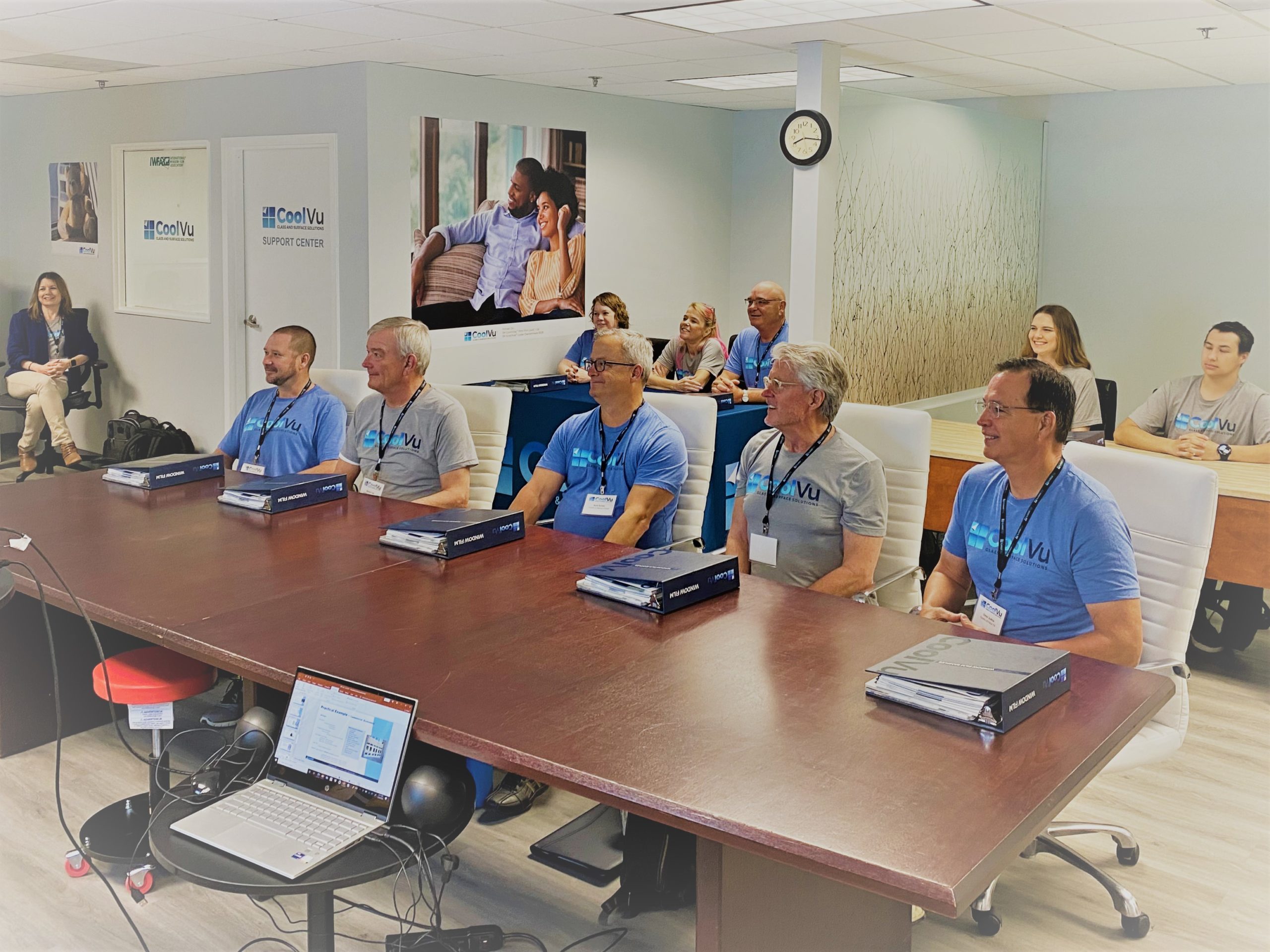
CoolVu offers a robust sales, marketing, and cultural onboarding program that is meticulously designed to accelerate franchisee success. This isn’t generic training; it’s a comprehensive, hands-on system developed from real-world insights into the window and surface film industry.
Franchisees benefit from structured initial training covering everything from product knowledge and installation techniques to sales strategies and operational management. They also gain founder-led insights and direct access to the wisdom and strategic vision of leaders who have shaped the industry for decades. This unparalleled mentorship means franchisees learn from the best, avoiding common pitfalls and leveraging proven pathways to profitability.
Additionally, proprietary sales methodologies are taught to convert leads into loyal customers, alongside comprehensive marketing playbooks that guide leveraging digital marketing, local advertising, and community engagement. A focus on building a strong company culture that emphasizes customer satisfaction, operational excellence, and team cohesion is also central to the cultural onboarding, which is critical for sustainable growth.
Ongoing Support from Franchisor
CoolVu’s commitment to its franchisees extends far beyond initial training. Franchisees receive continuous support, including mentorship from regional support managers and, often, direct access to the leadership team, including the founders themselves.
They also benefit from marketing assistance, with continuous updates to marketing materials, access to a dedicated marketing team, and strategic advice to keep local campaigns fresh and effective.
Furthermore, expert technical support is provided for product inquiries, installation challenges, and operational troubleshooting, ensuring that franchisees are never left to solve complex problems alone.
This level of sustained support is a significant advantage over acquiring an independent business, where you are solely responsible for all problem-solving and expertise.
Case Studies of Successful CoolVu Franchisees
Consider an example focusing on the needs of a multi-unit ownership candidate. An experienced entrepreneur invested in a CoolVu franchise, initially opening one territory. Leveraging the comprehensive sales training and the founder’s decades of industry experience in the window film industry, she quickly achieved profitability. What truly set CoolVu apart, from her perspective, was the operational efficiency and the continuous support for growth. Within three years, she had successfully expanded to three CoolVu territories, capitalizing on the proven systems and the strong brand reputation. Her growth trajectory significantly outpaced her previous independent business acquisitions, highlighting the power of a de-risked, well-supported franchise model for achieving superior returns.
Community and Scalability for Multi-Unit Owners
A thriving franchise system offers more than just operational support; it provides a powerful community and a clear blueprint for multi-unit ownership, perfectly suiting experienced entrepreneurs. This facilitates significant territory development.
The Value of a Supportive Franchise Community
Being part of a franchise means you’re not alone. You join a network of fellow entrepreneurs who share similar challenges and successes. This community acts as a valuable sounding board, a source of shared solutions, and a powerful peer-to-peer learning environment. The collective intelligence and experience within the network can be a significant asset, offering insights that are impossible to gain in isolation.
Opportunities for Multi-Unit Ownership and Expansion
For an experienced entrepreneur seeking substantial returns, the ability to scale is paramount. Many successful franchise models, including CoolVu, are designed with multi-unit ownership in mind. Once you’ve mastered operating one unit, the proven systems and support infrastructure make it significantly easier to replicate that success across additional territories, amplifying your revenue and profitability without having to reinvent the wheel each time. This provides clear investment strategies.
Access to Resources and Best Practices
Within a robust franchise community, best practices are routinely shared. This could include innovative marketing tactics that worked in one market, efficient hiring strategies, or new operational efficiencies discovered by a fellow franchisee. This free flow of information means every franchisee benefits from the collective experience, accelerating their growth and problem-solving capabilities.
CoolVu’s Support for Multi-Unit Franchisees
CoolVu specifically cultivates this powerful community, understanding that seasoned business owners thrive on collaboration and advanced learning. CoolVu’s support includes ongoing masterminds, which are regular, facilitated group sessions where experienced franchisees come together to discuss high-level strategies, overcome complex challenges, and share advanced growth tactics. These masterminds are invaluable for multi-unit owners looking to optimize performance across their portfolio.
The brand also provides rotating courses, offering continuous educational opportunities that dive deep into specific aspects of the business, from advanced sales techniques to new product installations or operational improvements. A highlight event is the awesome annual conference that brings the entire CoolVu franchise community together for networking, shared learning, recognition, and strategic updates from the founders. This conference reinforces the strong sense of community and provides unparalleled opportunities for growth and collaboration.
Scalability of the CoolVu Business Model
The CoolVu business model is inherently scalable, making it an ideal choice for entrepreneurs aiming for substantial returns. The demand for window and surface film solutions is consistently strong across residential, commercial, and automotive sectors. With robust systems, a recognized brand, and ongoing support for multi-unit development, CoolVu offers a clear pathway to expand your footprint and maximize your investment, leveraging a proven formula rather than the trial-and-error often associated with independent business acquisitions. This directly addresses the core desire for a business with high profitability and strong scalability in entrepreneurship.
Making the Right Choice: Is Buying or Franchising Right for You?
The decision between acquiring an existing independent small business and investing in a franchise is a pivotal one, with each path offering distinct advantages and challenges. For an experienced entrepreneur, this choice hinges on a careful assessment of risk, return, and personal preference, making the franchise vs buying existing business comparison critical.
A Comparative Analysis of Each Approach
Let’s summarize the critical distinctions between these two paths for business acquisition:
When buying an independent small business, you gain greater autonomy in decision-making and the potential for unique niche markets. There’s also the opportunity to implement your own vision entirely and possibly a lower initial purchase price if the business is underperforming. However, this path also carries higher inherent risk due to unproven systems, a lack of brand recognition, solitary problem-solving, intensive due diligence required, and potentially significant capital needed for post-acquisition improvements.
In contrast, investing in a franchise like CoolVu offers a de-risked model with proven systems, established brand recognition, comprehensive training and ongoing support, and collective marketing power. You also gain access to a supportive community and clear scalability for multi-unit growth. This often translates to a faster path to profitability and higher success rates. The considerations include less autonomy, as you must adhere to the franchisor’s guidelines, initial franchise fees and ongoing royalties, and a pre-defined business model that limits creative freedom.
Considering Your Risk Tolerance, Financial Resources, and Entrepreneurial Goals
Your personal profile plays a crucial role in this decision. If you have a high-risk tolerance, a penchant for forging your own path, and substantial capital to absorb potential missteps, an independent acquisition might appeal. However, if your goal is to leverage proven success, minimize operational risk, and quickly scale a profitable venture with robust support, a franchise offers a more structured and predictable environment.
Your available financial resources will also dictate the options. While franchises have initial fees, they often come with established vendor relationships and streamlined operational costs that can make them more predictable in terms of overall investment required to achieve profitability.
Weighing the Benefits of Established Systems Versus Autonomy
This is often the core of the debate for experienced entrepreneurs. An independent business offers complete autonomy, allowing you to build and innovate precisely as you see fit. However, this freedom comes with the burden of developing every system, solving every problem, and bearing every risk alone.
A franchise, while requiring adherence to established guidelines, frees you from these burdens, allowing you to focus your entrepreneurial energy on execution, growth, and customer satisfaction, leveraging a meticulously designed operational blueprint. For those seeking efficiency and proven results, the structured environment of a franchise can be a powerful accelerator.
Addressing the Needs of Experienced Entrepreneurs
For seasoned entrepreneurs who are seeking new, highly profitable investment opportunities with proven scalability and robust support, a franchise model often presents a superior option. The de-risked nature, coupled with comprehensive training and community support, means that precious time and capital are not spent on reinventing the wheel or navigating avoidable pitfalls. Instead, such an entrepreneur can deploy strategic acumen and leadership skills to scale a proven concept, achieving strong returns with greater predictability than an independent acquisition. The ability to tap into established marketing, operational systems, and a supportive network means they can focus on strategic growth rather than day-to-day firefighting.
A Checklist for Evaluating Opportunities
To aid in your decision-making, consider this checklist when comparing a franchise opportunity versus buying an existing business:
Clarify your goals.
Have you defined your ROI expectations, risk tolerance, and long-term vision?
This initial step is fundamental for both paths.
Next, assess the depth of due diligence required. Are you prepared for intensive financial, operational, and market due diligence for an independent business, or do you prefer a system where much of this is pre-vetted, as is often the case with a franchise?

Consider operational support.
Do you want to build all systems from scratch, or leverage a proven operational model and continuous support, like CoolVu’s model? Evaluate brand recognition: Are you prepared to build a brand from scratch, or do you prefer the immediate recognition of an established name? Your marketing prowess is also key. Can you effectively market an independent business, or would you benefit from collective marketing and pre-designed campaigns offered by a franchise?
Think about community and network.
Do you thrive as a solo operator, or do you value a supportive peer community for shared learning and growth, such as CoolVu’s masterminds? Crucially, consider scalability. Is the business model inherently scalable for multi-unit ownership, and is there franchisor support for this growth? Independent businesses often have limited scalability in this regard, while franchises like CoolVu offer a strong advantage.
Consider your exit strategy.
How easily can you exit this investment, and is the business appealing to future buyers? Franchises often have strong resale markets due to their proven systems. Also, evaluate the founder expertise and industry experience available. Can you leverage decades of founder experience in a specific industry, or are you reliant solely on your own expertise? A franchise, such as CoolVu with its 30 years of experience, offers this advantage. Lastly, review onboarding and training. Do you have a clear, robust onboarding plan, or is comprehensive training and cultural integration provided, like CoolVu’s sales, marketing, and cultural onboarding program?
CoolVu: Your Path to a Best-in-Class Window and Surface Film Franchise Opportunity
For the experienced entrepreneur seeking not just a business, but a strategic investment that delivers strong returns and scalable growth, CoolVu stands out as a best-in-class window and surface film franchise opportunity. It masterfully addresses the very pain points and desires that drive savvy investors.
CoolVu’s Unique Value Proposition and Competitive Advantages
CoolVu’s unique value proposition is rooted in its unparalleled foundation. Our founders bring three decades of unparalleled window industry and franchise development experience. This isn’t theoretical knowledge; it’s hands-on, battle-tested expertise that has shaped every aspect of the CoolVu system. This extensive background provides franchisees with an inherent competitive advantage: access to a proven model, deep industry insights, and strategic guidance that is simply unmatched. CoolVu’s competitive edge lies in its superior product lines, innovative installation techniques, and a business model optimized for efficiency and profitability within a thriving market, solidifying its position as a leader in the window film industry.
Detailing the Franchise’s Financial Performance and Potential ROI
CoolVu is specifically designed for high profitability. The window and surface film industry is characterized by strong demand across residential, commercial, and automotive sectors, offering diverse revenue streams. Our franchisees benefit from robust unit economics, efficient operational costs, and strong margins on premium products and services. While specific financial performance details are provided in our Franchise Disclosure Document (FDD), our model is structured to deliver impressive return on investment, particularly for multi-unit owners who leverage our scalable systems. We provide clear pathways to achieving substantial revenue and profit targets within a reasonable timeframe, aligning perfectly with the aspirations of a strategic investor focused on investment strategies.
Discussing CoolVu’s Robust Sales, Marketing, and Cultural Onboarding Program
The success of any business hinges on its ability to acquire and retain customers, and build a cohesive team. CoolVu’s comprehensive onboarding program is a testament to our commitment to franchisee success. We provide best-in-class sales training, equipping franchisees with proven methodologies to identify opportunities, present solutions, and close deals effectively.
We also offer targeted marketing support, from national campaigns to localized digital marketing strategies, providing the tools and guidance to generate high-quality leads consistently. Additionally, a unique program for cultural onboarding instills the CoolVu values of professionalism, customer service excellence, and team collaboration, fostering an environment where both employees and customers thrive. This robust program significantly de-risks the launch phase and accelerates market penetration.
Explaining the Franchise’s Territory Development Strategy
CoolVu’s territory development strategy is designed for expansive growth. We allocate exclusive territories that provide ample market potential, ensuring franchisees have significant room to grow without internal competition.
For experienced entrepreneurs, the CoolVu model offers clear opportunities for multi-unit ownership and scaling operations across multiple territories.
Our support systems, including masterminds and annual conferences, are specifically tailored to assist multi-unit owners in optimizing their operations, sharing best practices, and maximizing profitability across their entire portfolio.
This inherent scalability makes CoolVu an ideal platform for achieving sustained and significant entrepreneurial success.

Presenting Case Studies of Successful CoolVu Franchisees
Imagine a seasoned entrepreneur named David, who also sought a scalable, profitable venture. David, after extensively researching various franchise opportunities, chose CoolVu primarily due to the founders’ industry experience and the robust support system. He initially launched one territory, quickly leveraging the sales and marketing onboarding to build a strong customer base.
Within two years, participating actively in CoolVu’s masterminds and annual conferences, David gained insights into optimizing his operations and expanding his installation teams. He then confidently acquired a second territory, replicating his success with greater speed and efficiency due to the established CoolVu blueprint and continuous corporate support. David’s trajectory is a prime example of how CoolVu empowers experienced business owners to achieve greater success and profitability compared to other franchises they may have owned or independent ventures. His achievements underscore the power of a de-risked system coupled with expert guidance.
Why Choose a Franchise Model?
The journey of acquiring a small business, whether through traditional means or by embracing the franchise model, is a strategic undertaking that demands careful consideration. While how to find a small business to buy presents various options, a well-supported franchise opportunity like CoolVu offers a de-risked path to profitability, leveraging proven systems, extensive support, and a vibrant community. This can be significantly more advantageous than starting from scratch or acquiring an independent operation for seasoned entrepreneurs seeking superior returns and operational efficiency. CoolVu represents a unique opportunity to partner with industry veterans and join a thriving network poised for significant growth in the lucrative window and surface film market.
Explore the unique advantages of the CoolVu franchise model—visit our Contact Us page today and see how a best-in-class system can elevate your entrepreneurial journey.
Frequently Asked Questions
Q: What are the initial steps for how to find a small business to buy?
A: Begin by defining your entrepreneurial goals, including your investment objectives, risk tolerance, and the industry or market niche you’re interested in. Then, explore traditional avenues like online marketplaces, business brokers, personal networking, and even direct approaches to businesses not actively listed for sale.
Q: What is the most critical part of due diligence when buying an existing business?
A: Thoroughly analyzing the financial health of the business is paramount. This includes scrutinizing income statements, balance sheets, and cash flow statements, understanding key financial ratios, and conducting independent valuations. Identifying potential risks and liabilities early is crucial to making an informed decision.
Q: How does a franchise opportunity like CoolVu compare to buying an independent small business?
A: A franchise like CoolVu offers a de-risked model with proven systems, established brand recognition, and comprehensive training and ongoing support, leading to a faster path to profitability. In contrast, buying an independent business provides greater autonomy but comes with higher inherent risks, requiring you to build systems and brand recognition from scratch.
Q: What unique advantages does a CoolVu Franchise offer for experienced entrepreneurs?
A: The CoolVu Franchise leverages founders’ three decades of industry and franchise development experience, providing unparalleled training, proprietary sales methodologies, and continuous support. It offers clear opportunities for multi-unit ownership and scalability, supported by a strong community and masterminds, allowing seasoned entrepreneurs to achieve substantial returns with greater predictability.
Q: What should be included in a buying an existing business checklist?
A: A comprehensive checklist should cover clarifying your goals, assessing due diligence depth (financial, operational, market), evaluating available operational support, brand recognition, and marketing prowess. It should also include considerations for community and network support, scalability for multi-unit ownership, your long-term exit strategy, the value of founder expertise, and the robustness of onboarding and training programs.
More Posts about owning a franchise:
- Earnings Claim – Estimated income potential from a franchise in Item 19 of the FDD
- Is a Window Tinting Business Profitable? – Income potential from tinting windows for clients.
- Franchise Success Rates Explained Clearly – Stats showing how often franchises succeed.
- Window Franchise Startup Costs Explained – Costs needed to launch a window franchise.
- CoolVu Franchise Reviews – Real opinions from current CoolVu® franchise owners.