
Table of Contents
What to Know Before Investing in a Franchise
Determining whether a franchise is worth it depends on your individual goals, financial capacity, and risk tolerance. The straightforward answer: franchises can be an excellent investment for entrepreneurs seeking a proven business model with built-in support systems, but they require careful evaluation of costs, restrictions, and personal fit before committing significant capital.
This guide covers the complete landscape of franchise investment evaluation—from understanding fundamental concepts and financial commitments to assessing whether franchise ownership aligns with your business goals. We exclude specific brand recommendations and legal advice, which require consultation with a franchise consultant and attorney familiar with your jurisdiction and circumstances.
This content serves aspiring business owners, career changers considering entrepreneurship, and investors evaluating franchise opportunity options. Whether you’re weighing franchise ownership against starting a new business from scratch or comparing multiple franchise systems, understanding the true costs, benefits, and success factors is essential for making an informed decision.
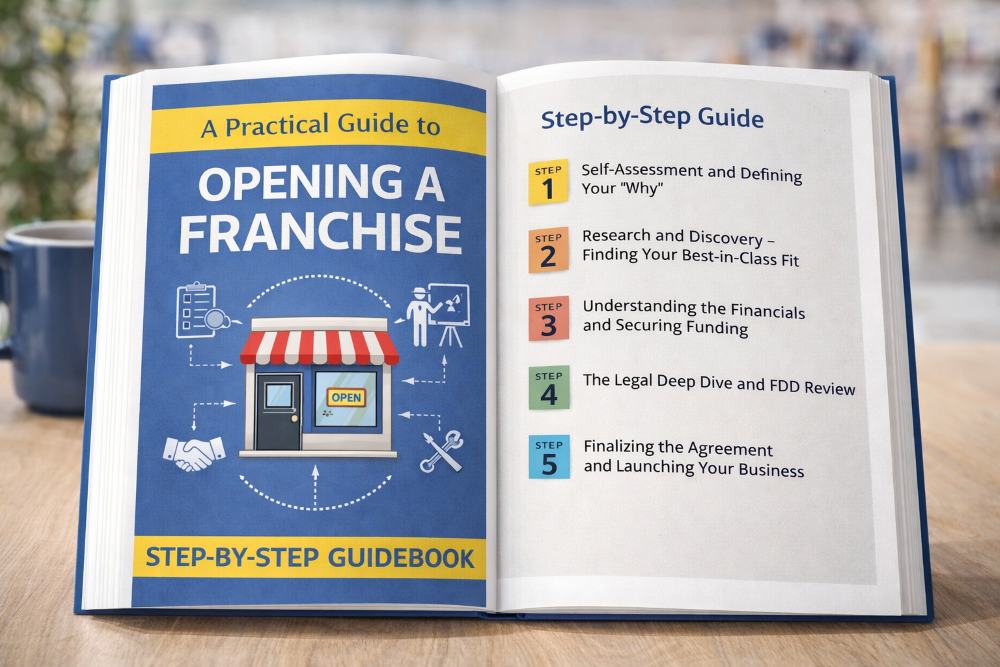
Direct answer: Franchises are worth it for entrepreneurs who value immediate brand recognition, proven systems, and ongoing support over complete creative freedom, and who are prepared for ongoing fees, operational restrictions, and the commitment required to follow strict guidelines within an established brand framework.
By the end of this guide, you will:
- Understand franchise investment fundamentals and how the franchisor-franchisee relationship works
- Evaluate the complete financial picture including initial costs, ongoing fees, and realistic profit potential
- Apply a systematic framework for assessing whether a specific franchise requires your investment
- Identify common challenges and practical solutions for navigating franchise business ownership
Understanding Franchise Investment Fundamentals
A franchise is a licensed business arrangement where a parent company (the franchisor) grants you (the franchisee) the right to operate under its established brand, systems, and trademark. In exchange for an initial franchise fee and ongoing royalty fees, you receive access to the brand’s proven model, training materials, supply chains, marketing materials, and operational systems.
The Franchise Disclosure Document (FDD) is the legally required document in the United States that outlines all financial requirements, earnings claims, legal obligations, territory rights, and termination clauses. The Federal Trade Commission mandates that franchisors provide this document at least 14 days before any agreement is signed, making thorough research essential before committing personal assets.
Core Components of Franchise Worth
The value proposition of franchise ownership extends beyond simply using a recognizable name. You’re purchasing access to:
Brand power and built-in customer base: Established brands attract customers immediately, eliminating the years of reputation-building independent businesses require. Research shows that 82% of franchisees cite brand recognition as a top motivation for their investment.
Proven systems and operations: Franchise systems include standardized day to day operations, supplier relationships (often reducing costs by approximately 15% compared to independent businesses), quality assurance protocols, and management processes refined over years of operation.
Ongoing support and training: Most franchisors provide initial training, continuing education, marketing support, and operational guidance throughout your franchise agreement term.
Franchise vs. Independent Business Ownership
The choice between buying a franchise and launching your own business involves fundamental trade-offs that affect everything from startup costs to long-term growth potential.
Startup requirements differ significantly. Independent businesses often require lower initial costs but demand that you build brand identity, customer relationships, and operational systems from scratch. Franchise ownership requires higher upfront investment but provides immediate access to proven infrastructure.
Ongoing obligations create different constraints. As a franchisee, you must pay royalty fees (typically 4-9% of gross revenue), contribute to marketing funds, use approved vendors, and follow operational guidelines. Independent business owners retain creative freedom but must solve operational challenges without established playbooks.
Risk profiles vary substantially. Data consistently shows franchises outperform independent businesses in survival rates—approximately 80% of franchise units survive three years versus 60% for independent firms. After five years, franchise survival rates remain significantly higher (64-70% versus 36-50% for independents), though outcomes depend heavily on industry and location.
Understanding these fundamental differences provides the foundation for evaluating whether the financial commitments of franchise investment align with your situation.
Financial Reality of Franchise Investment
The financial picture of franchise ownership involves three distinct phases: initial investment, ongoing commitments, and eventual profitability. Each phase requires realistic assessment based on specific franchise systems rather than industry averages alone.
Initial Investment Requirements
Franchise fees and total startup costs vary dramatically across brands and industries. The initial franchise fee—your upfront payment to join the franchise system—typically ranges from $15,000 for smaller service-based franchises to over $500,000 for premium locations of established brands.
However, the initial franchise fee represents only a fraction of total startup costs. Complete investment includes:
- Build-out and real estate: Construction, leasehold improvements, signage, and permits
- Equipment and inventory: Kitchen equipment, retail fixtures, technology systems, and initial stock
- Working capital: Funds to cover operating expenses before reaching profitability
- Professional fees: Legal, accounting, and franchise consultant services

Real example: McDonald’s franchise ownership requires a minimum of $500,000 in non-borrowed liquid capital. The initial franchise fee is $45,000, but total investment for a new traditional restaurant ranges from $1,471,000 to $2,728,000 depending on location format and construction requirements. Lower-cost alternatives exist—home-based service franchises may require total investment under $100,000.
Ongoing Financial Commitments
Beyond startup costs, franchise ownership involves continuous financial obligations that directly impact profitability:
Royalty fees represent the primary ongoing cost, typically ranging from 4-9% of gross revenue depending on industry. Fast food franchises generally charge 4-6%, while business services franchises may charge 10-12%. McDonald’s charges 4% for existing franchisees and 5% for new agreements starting in 2024.
Marketing fund contributions usually add 1-4% of gross revenue. These support national and regional advertising costs but may also require additional local marketing investment. McDonald’s requires not less than 4% of gross sales for advertising contributions.
Additional ongoing fees include technology and software licensing, required equipment upgrades, training refresher programs, renewal fees, and transfer fees if you sell. Many franchisees underestimate these ongoing costs when projecting profitability.
Rent considerations in franchises where the franchisor owns or controls real estate can significantly impact margins. Some franchise systems charge base rent plus percentage rent—in high-cost locations, rent obligations alone may consume substantial revenue.
Profit Potential and ROI Timeline
According to Franchise Business Review data from 2023, the average annual income for full-time franchise owners is approximately $102,910. Franchisees who have operated beyond the startup phase (more than two years) average $115,688 annually.
Earnings increase substantially with scale:
- Single-unit franchise owners: ~$102,910 average
- Owners with 2-4 units: ~$142,638 average
- Owners with 5+ units: ~$214,418 average
Timeline to profitability varies by investment size and industry. Many moderate-investment franchises become cash flow positive within 6 months to 3 years. High-investment brands like major fast food chains may require 3-7 years to fully recoup total investment when accounting for construction, equipment, and ongoing fee burden.
For context, average gross revenue for established U.S. franchisees operating more than 24 months is approximately $538,867, with median revenue around $419,190. The top 25% of franchisees report gross revenue exceeding $1.17 million—demonstrating significant performance variation within franchise systems.
These financial realities underscore why systematic evaluation before committing represents critical due diligence rather than optional research.
Franchise Evaluation Framework
With financial fundamentals established, the practical question becomes: how do you assess whether a specific franchise opportunity represents a good investment for your situation? This evaluation framework transforms general knowledge into actionable decision-making.
Due Diligence Process
Thorough research before signing any franchise agreement protects your investment and increases success probability. Follow this systematic process:
- Review the Franchise Disclosure Document thoroughly. Examine Item 19 (financial performance representations) for earnings claims, Item 7 for complete investment breakdown, Item 12 for territory rights, and Items 15-17 for renewal and termination conditions. The FDD reveals what marketing language conceals.
- Interview current and former franchisees about their experiences. Contact other franchise owners listed in the FDD—not just top performers but average and underperforming locations. Ask about hidden costs, actual hours required, satisfaction with franchisor support, and what they wish they’d known before buying.
- Analyze your local market demographics and competition. Evaluate population density, income levels, competing businesses, and market saturation. A strong national brand struggles if your franchise location sits in an oversaturated market or misaligned demographic area.
- Assess the right franchisor’s financial stability and track record. Review business history, growth trajectory, litigation history, and franchisee turnover rates. The International Franchise Association provides industry benchmarking, and state franchise registration documents offer additional transparency.
- Evaluate personal skills match with franchise requirements. Be honest about whether your experience, management capabilities, and lifestyle expectations align with what the franchise requires. Most franchises demand significant time commitment, especially during the initial years, so be prepared to spend time building the business.

Decision Matrix for Franchise Worth
Systematically compare franchise opportunities using weighted criteria:
| Evaluation Criterion | Weight | Questions to Answer |
|---|---|---|
| Initial investment relative to capital | High | Can I fund this without overleveraging personal assets? |
| Ongoing fee burden | High | What percentage of revenue goes to royalty fees and marketing? |
| Territory exclusivity | Medium | Am I protected from other franchisees or corporate competition nearby? |
| Franchisor support quality | Medium | What do current franchisees say about training and ongoing support? |
| Brand strength in local market | Medium | Does this brand attract customers in my specific location? |
| Exit and resale options | Medium | Can I sell if circumstances change? What’s typical resale value? |
| Operational flexibility | Low-Medium | Does the franchise system allow any adaptation to local conditions? |
| Multi-unit growth potential | Variable | Can I scale to multiple locations if successful? |
Industry-Specific Considerations
Franchise worth varies dramatically by sector—comparing a quick-service restaurant to a home services franchise requires different evaluation criteria:
| Factor | Food Service | Home Services | Retail | Business Services |
|---|---|---|---|---|
| Typical startup costs | $250K-$2.7M | $50K-$200K | $150K-$500K | $75K-$300K |
| Five-year survival rate | ~55-60% | ~70-75% | ~45-50% | ~65-70% |
| Typical royalty fees | 4-6% | 5-7% | 4-6% | 8-12% |
| Time commitment | Very high | Moderate-high | High | Moderate |
| Labor intensity | High | Moderate | Moderate | Low-moderate |
| Growth potential | High with scale | Steady | Market-dependent | Scalable |
Healthcare and senior care franchises show approximately 75% five-year survival rates, while retail franchises hover around 45%—industry selection significantly impacts success probability independent of individual franchise system quality.
These evaluation tools prepare you for the practical challenges that most franchisees encounter regardless of industry or brand.
Common Franchise Investment Challenges and Solutions
Even well-researched franchise investments encounter obstacles. Understanding common challenges and their solutions helps you prepare realistically and respond effectively.
High Initial Investment Barrier
Many desirable franchises require capital that exceeds available resources. McDonald’s $500,000 liquid capital requirement and $1.5-2.7 million total investment excludes many potential entrepreneurs.
Solution: Explore SBA loans specifically designed for franchise acquisition—the SBA 7(a) program finances franchise purchases with favorable terms. Many franchisors offer internal financing options or preferred lender relationships. Consider lower-cost franchise opportunities under $100,000 in home services, mobile businesses, or B2B services. Acquiring existing franchise locations rather than building new often reduces total investment while providing immediate cash flow and business history. Review all available funding options before deciding how to finance your investment.
Territorial Restrictions and Market Saturation
Even strong national brands struggle when too many units compete for the same customers. Some franchise agreements don’t guarantee exclusive territories, meaning competing franchisees—or corporate-owned locations—may open nearby.
Solution: Before signing any franchise agreement, thoroughly research territory exclusivity terms in the FDD. Conduct independent demographic analysis comparing population, income, and competitor density against typical performance metrics. Consider underserved suburban or secondary markets rather than saturated urban centers. Ask other franchisees about cannibalization experiences within the system.
Limited Creative Control and Operational Flexibility
Franchise systems require adherence to strict guidelines covering products, pricing, decor, suppliers, hours, and marketing. Entrepreneurs seeking to be their own boss in the fullest sense may find these restrictions frustrating.
Solution: Accept this trade-off as fundamental to franchise ownership—the restrictions that limit creative freedom are the same standardization that creates brand consistency and customer trust. If operational flexibility is essential to your satisfaction, seek franchise systems known for allowing local adaptation or consider non-food service franchises with lighter operational requirements. Alternatively, acknowledge that independent business ownership better matches your goals despite higher risk.

Ongoing Fee Burden Reducing Profitability
Royalty fees, advertising contributions, technology fees, and required vendor purchases can consume 12-15% or more of gross revenue before considering rent, labor, and cost of goods. On businesses with 15-20% net margins, these fees dramatically compress actual profit.
Solution: Build comprehensive financial projections incorporating all fees—not just royalties but technology licensing, required equipment upgrades, local marketing minimums, and vendor cost premiums. Compare total fee burden across franchise systems before selecting. When negotiating multi-unit development agreements, many franchisors offer reduced royalty rates or fee waivers that improve unit economics. Focus on franchise opportunities in higher-margin industries where fee burden represents smaller profit percentage.
Conclusion and Next Steps
Franchise worth ultimately depends on alignment between your personal goals, financial capacity, and the specific requirements of any franchise system you’re evaluating. Franchises offer proven business models, immediate brand recognition, and ongoing support that significantly reduce startup risk compared to independent businesses. However, these benefits come with substantial ongoing costs, operational restrictions, and the requirement to succeed within someone else’s system rather than creating your own.
The data clearly shows franchises outperform independent businesses in survival rates—but success is far from guaranteed. Most franchisees work long hours, especially during initial years, and financial returns vary dramatically based on industry, location, management capability, franchisor quality, and the ability to recruit and retain reliable employees.
Immediate next steps:
- Identify 2-3 target industries that match your skills, interests, and lifestyle expectations
- Request Franchise Disclosure Documents from 3-5 franchises within each target industry
- Schedule interviews with at least 5 current franchisees per system you’re seriously considering—including average performers, not just success stories
- Secure financing pre-approval to understand your realistic budget before emotional attachment to specific brands develops
- Consult with a franchise attorney to review any FDD before signing
For ongoing success, consider developing a comprehensive business plan, consulting with franchise law specialists, and connecting with resources from the International Franchise Association for industry benchmarking and franchisee support networks.
If you’ve decided that franchise ownership is the right path, CoolVu offers a proven business model in the growing window film industry. Visit their website to learn how this franchise opportunity combines strong support, brand recognition, and market demand.
Frequently Asked Questions
Is buying a franchise worth it compared to starting my own business?
Franchises offer lower risk through proven systems, brand recognition, and franchisor support—survival rates are roughly 65-70% at five years versus 36-50% for independent businesses. However, franchises cost more upfront, reduce creative freedom, and ongoing fees compress profit margins. The right choice depends on whether you prioritize structure and reduced risk over autonomy and unlimited upside potential.
How much money do franchise owners typically make per year?
According to Franchise Business Review 2023 data, full-time franchise owners earn an average annual income of approximately $102,910. Experienced franchisees (operating 2+ years) average $115,688. Multi-unit owners earn substantially more: $142,638 for those with 2-4 units and $214,418+ for owners with five or more locations. However, these averages mask significant variation—industry, location, and management quality dramatically impact individual outcomes.
What percentage of franchises fail within the first five years?
Approximately 30-35% of franchises fail within five years, meaning 65-70% survive. This compares favorably to independent businesses, where only 36-50% survive the same period. However, failure rates vary significantly by industry—healthcare franchises show approximately 75% five-year survival while retail franchises hover around 45%.
How long does it take for a franchise to become profitable?
Timeline varies by investment size and industry. Many moderate-investment service franchises become cash flow positive within 6 months to 3 years. High-investment operations like major fast food restaurants may require 3-7 years to fully recoup total investment. Factors affecting timeline include location quality, market conditions, operator experience, and how efficiently you manage initial startup phase costs.
What are the biggest red flags to avoid when evaluating franchises?
Watch for: hidden or escalating fees not clearly disclosed in initial conversations; financial performance data showing only top performers rather than median results; no territory exclusivity protections; high franchisee turnover rates; restrictive renewal or termination clauses favoring the franchisor; required vendor purchases at above-market prices; and franchisors unwilling to provide contact information for current and former franchisees.
Can I sell my franchise if it doesn’t work out?
Most franchise agreements allow resale, but with significant conditions. Franchisors typically require approval of buyers, may charge transfer fees (often 5-10% of sale price), and retain right of first refusal. Resale value depends on location quality, brand strength, your unit’s financial performance, and current market conditions. Some franchises maintain robust resale markets while others prove difficult to exit. Review transfer provisions in the FDD carefully and ask existing franchisees about their understanding of resale dynamics within the system.