
Table of Contents
The Dream and the Reality of Starting a Franchise
If you’ve recently searched for “how to open a franchise with no money,” you’re not alone. It’s one of the most common starting points for aspiring entrepreneurs. This question doesn’t come from a place of naivete, it comes from a place of profound practicality. You are standing at the edge of a major life change, looking for a bridge from the security of employment to the freedom of ownership, and you want that bridge to be as stable as possible.
Let’s address this search head-on. The quest for a no-money-down franchise is fundamentally a search for an opportunity without personal financial risk. After years of building a career, the thought of putting your savings on the line is daunting. The real question isn’t “Can I get something for nothing?” but rather, “How can I start this new chapter without jeopardizing everything I’ve worked for?”
The goal here is not to dismiss your question, but to reframe it into one that opens up more powerful and realistic pathways to success. Any seasoned business owner will tell you that entrepreneurship and investment are intrinsically linked. A business with no initial investment often has no established systems, brand recognition, or support structure, which paradoxically makes it a far riskier venture.
This brings us to a crucial shift in mindset. The most successful entrepreneurs don’t ask how to start with no money. They ask, “How can I secure smart funding for a high-return opportunity?” This new question isn’t about avoiding investment, but about making an investment that is calculated, strategic, and poised for growth. It’s about leveraging capital to buy into a system that dramatically shortens your path to profitability. The right franchise isn’t an expense, it’s an asset designed to generate a return far greater than the initial outlay.
Understanding Why Franchise Startup Costs Exist
To appreciate the value of a franchise investment, it’s essential to understand where that money goes. A franchise fee isn’t an arbitrary number. It is a carefully calculated investment that gives you the tools, systems, and support necessary to launch and grow your business effectively. When you see an investment range in a Franchise Disclosure Document (FDD), you are looking at a comprehensive budget for building a real, sustainable business.
Deconstructing the Franchise Investment
The total initial investment for a franchise is a transparent figure designed to prevent the kind of financial surprises that can cripple a new independent business. While specifics vary, the funds are typically allocated to a few key areas:
- Franchise Fee: Your license to operate under the brand name and use its proprietary systems.
- Tools and Equipment: The specific gear required to deliver the product or service to brand standards.
- Initial Inventory: The first set of products you will need to serve your first customers.
- Vehicle and Branding: Costs for a required vehicle and professional wrapping to turn it into a mobile billboard.
- Software and Technology: Access to custom scheduling, billing, and customer management software.
- Training and Launch Support: The cost of comprehensive training and on-the-ground support during your opening.
- Insurance and Licensing: Funds to cover required business insurance and local permits.
- Working Capital: A cash reserve to cover operating expenses for the first several months.
The Franchise Fee: Your Entry into a Proven System
The franchise fee is your key to unlocking a fully developed business model. Think of it as purchasing decades of trial-and-error, research, and brand-building. You are not just buying a logo, you are investing in a playbook for success. This fee gives you immediate access to a trusted brand name, a complete operational manual, established supplier relationships, and proven marketing strategies. It pays for the very framework designed to help you avoid common pitfalls and accelerate your journey toward profitability. You are paying to mitigate risk.
Working Capital: The Fuel for Your Business’s First Months
Many new entrepreneurs mistakenly view working capital as a cost. It is the most critical component of your business’s survival and initial growth. Working capital is the accessible cash reserve you use to pay for day-to-day operating expenses before your business generates consistent positive cash flow. This includes covering your own salary, employee wages, fuel, and marketing costs. An adequate working capital fund is a safety net. It allows you to focus on executing the business model and serving customers without the paralyzing stress of wondering how you’ll pay the bills next month.
The Hidden Costs of Starting from Scratch
When you contrast the transparent investment of a franchise with starting an independent business, the value becomes even clearer. Starting from scratch is fraught with hidden costs that are almost impossible to budget for accurately. Imagine creating a brand from nothing, or spending thousands on marketing materials that may not resonate. Picture the time and money spent testing different software, marketing channels, and operational procedures. A franchise investment turns these unpredictable variables into a single, manageable, and financeable number.
A Guide to Smart Franchise Financing Options
The idea of starting a business often brings an immediate question to mind: “How can I afford this?” It’s a valid concern, but one that can keep you from moving forward. The most successful entrepreneurs learn to reframe this. Instead of seeing capital as a barrier, they see financing as a strategic tool.
Every credible business opportunity requires an investment. Your focus should be on securing smart funding for a franchise that offers a clear path to profitability. The good news is that you have more options than you think.
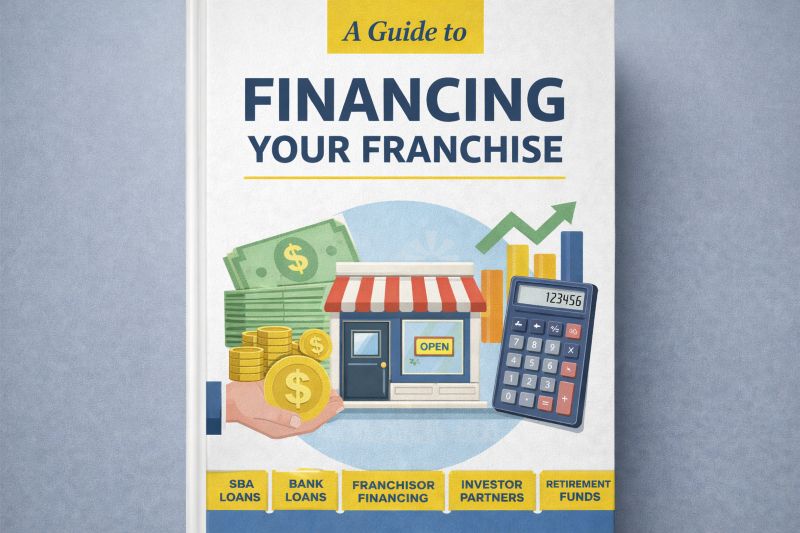
Unlocking Opportunity with SBA Loans for Franchises
One of the most powerful tools for financing a franchise is a loan backed by the U.S. Small Business Administration (SBA). These are not direct loans from the government. Instead, the SBA guarantees a portion of the loan made by a traditional lender, like a bank. This guarantee reduces the lender’s risk, making them more willing to provide funding with favorable terms, like lower down payments and longer repayment periods. Many established franchisors are listed on the SBA Franchise Directory, which signals to lenders that the business model has been vetted and can streamline your loan application process.
Exploring Franchisor Financing and Partnership Programs
Many strong franchisors are deeply invested in the success of their new owners and demonstrate this by offering financing assistance. Some may offer direct financing for a portion of the initial franchise fee, while others have established relationships with third-party lenders who understand their business model. When a franchisor offers or facilitates financing, it’s a powerful signal of confidence. They are, in effect, co-investing in you because they believe you have what it takes to succeed.
Leveraging Your Assets: 401(k) Rollovers and Home Equity
For aspiring entrepreneurs with established assets, two common pathways involve leveraging what you’ve already built.
A Rollover for Business Startups (ROBS) plan allows you to use funds from your 401(k) or other eligible retirement accounts to invest in your business without incurring early withdrawal penalties or taxes. The process involves creating a new corporation and using your retirement funds to capitalize it. It’s a complex process that requires professional guidance, but it allows you to invest in yourself using your own capital.
If you are a homeowner with significant equity, a Home Equity Loan (HEL) or a Home Equity Line of Credit (HELOC) can also be a source of capital. These options often provide funds at a lower interest rate than many other loans. This strategy involves using your home as collateral, a decision that should never be taken lightly, but for the right opportunity, it can be the key that unlocks your entrepreneurial future.
How to Get a Loan for a Franchise: Preparing Your Application
Securing a loan is about presenting yourself as a credible and prepared business owner. Here’s what you’ll need to have in order:
- A Strong Business Plan: A key advantage of franchising is that the franchisor provides a proven blueprint and will often help you create a detailed business plan.
- Good Personal Credit: Your personal credit history is a primary indicator of your financial responsibility.
- A Clear Financial Picture: Be prepared to provide personal financial statements, tax returns, and a detailed list of your assets and liabilities.
- The Franchise Disclosure Document (FDD): You and your lender will review this document carefully, paying close attention to the details of the initial investment and any financial performance representations.
The Strategic Shift: From Upfront Cost to Long-Term ROI
Once you understand that financing is achievable, the conversation changes. The question is no longer “Can I afford the franchise fee?” but rather, “Is this investment likely to deliver a strong, long-term return?” This shift in thinking is what separates hopeful dreamers from successful business owners. The initial investment is a purchase of a system, a brand, and a support structure designed to generate a return far greater than the initial outlay.
Why a Proven System Is Your Greatest Asset
When you start a business from scratch, you are responsible for everything. You have to invent the brand, develop services, and create marketing materials through trial and error. Each of these steps costs time and money. A franchise fee is your investment in avoiding that uncertainty. You are buying a proven system that includes an established brand, refined operating procedures, and professional marketing strategies. This system is your greatest asset because it dramatically shortens your path to profitability.
Calculating Potential Return on Investment
When evaluating a franchise, it’s natural to focus on the initial investment detailed in Item 7 of the FDD. However, your primary focus should be on the potential for return, which is often outlined in Item 19, the Financial Performance Representation. This section can provide historical data on the revenue, costs, and profits of existing franchise locations.
True ROI goes beyond the first year’s bottom line. You must also consider the value of what you are building. Are you creating a saleable asset that will grow in value over time? Does the business model allow for a flexible lifestyle once it’s established? A great franchise doesn’t just provide an income. It provides an opportunity to build long-term wealth and personal freedom.
How a High-Support Franchise Mitigates Financial Risk
Not all franchise systems are created equal. A low-cost franchise with minimal support can be one of the riskiest investments you can make. Conversely, a high-support system actively works to protect your investment. This support manifests in tangible ways. Comprehensive initial training ensures you don’t make costly rookie mistakes. Ongoing coaching helps you optimize performance. Centralized marketing funds create powerful campaigns you couldn’t afford on your own. Each of these elements acts as a form of insurance on your investment.
The Value of Experience: Learning from a Founder’s Journey
When you invest in a top-tier franchise, you are gaining access to the accumulated wisdom of its founder. Imagine having a mentor who has spent decades in your industry. They have already navigated economic downturns, tested dozens of failed ideas, and discovered the precise formula for success. This experience is baked into every aspect of the franchise system, from the training manuals to the marketing playbooks. Your franchise fee grants you a license to leverage that founder’s entire journey, allowing you to sidestep their mistakes and benefit directly from their hard-won victories.
Vetting the Opportunity: Identifying a High-Support Franchise
Securing funding is only half of the equation. The most crucial part of your journey is directing that capital toward an opportunity built to succeed. This means shifting your focus from simply finding the cheapest franchise to identifying the one that offers the highest potential return, backed by a robust support system. This is how you transform debt into a powerful engine for wealth creation.
Reading the Franchise Disclosure Document (FDD)
Every serious franchise candidate must provide you with a Franchise Disclosure Document (FDD). This is not a marketing brochure, it is a substantial legal document, and it is your single most important source of objective information. While the entire document is critical, pay special attention to these sections:
- Item 7: Estimated Initial Investment: This provides a detailed breakdown of all anticipated costs. A transparent and comprehensive Item 7 is a sign of an experienced franchisor.
- Item 19: Financial Performance Representations: This is where a franchisor can provide data on the financial performance of existing franchisees. Analyze it carefully to understand average revenues, margins, or profits.
- Item 20: Outlets and Franchisee Information: This table shows franchise growth. Look for steady growth and a low number of terminations, which could indicate franchisee dissatisfaction.
- Item 21: Financial Statements: This contains the franchisor’s audited financial statements. Look for signs of a financially healthy company that can adequately support its franchisees.

Key Questions to Ask About Support and Training
A franchise fee is an investment in a proven system and the support that comes with it. During your discovery process, you need to dig deep with pointed questions:
- Training: What does the initial and ongoing training program cover? Is it online, in-person, or both?
- Marketing: How does the corporate team support local marketing? Do they provide a marketing playbook, digital advertising support, or creative assets?
- Operations: When you have a day-to-day question, who do you call and what is their response time?
- Technology: What business management software does the franchisor provide? Is it user-friendly and designed to make running your business easier?
Your most valuable intelligence will come from speaking directly with existing franchisees. Ask for a list of current and former owners. Call them and ask about their experience and if they would make the same investment again.
Assessing the Business Model for Durability
A strong brand and great support must be applied to a business model that is built to last. Is the product or service a solution to a persistent customer need, or is it tied to a fleeting trend? A business that solves a fundamental problem, such as the need for energy efficiency or property enhancement, has built-in durability. Look for a model that allows for growth. Can you scale by adding staff and vehicles, or are you limited to what you can personally produce?
Identifying Low Cost Franchise Opportunities with High Value
The phrase “low cost franchise” is often misinterpreted. A truly high-value, low-cost opportunity is one that minimizes unnecessary overhead while maximizing support and profit potential. These opportunities often share key characteristics:
- No Required Real Estate: Mobile or home-based service franchises eliminate the massive financial barrier of a commercial lease.
- Low Staffing Requirements: Franchises that can be launched by an owner-operator keep payroll costs manageable.
- Service-Based Models: Businesses that sell services often require minimal inventory, freeing up working capital.
By focusing on models with these attributes, you can find franchises with initial investments well under $100,000 that still offer the robust support of a world-class system. This is the sweet spot where accessibility meets high return potential.
Your Action Plan for Franchise Financing
Once you have identified a high-support, high-ROI franchise, the next step is to build a concrete financial plan. This four-step process will move you from an aspiring entrepreneur to a credible business owner in the eyes of franchisors and lenders.
Step 1: Conduct a Thorough Personal Financial Assessment
Before asking anyone to invest in your business, you must have a crystal-clear understanding of your own financial position. Calculate your net worth by listing your assets and liabilities. Pull your credit report and know your score. Finally, determine the amount of liquid cash you can comfortably invest without jeopardizing your family’s financial security. This exercise empowers you to engage in financing discussions from a position of knowledge.
Step 2: Develop a Preliminary Business Plan and Budget
Next, outline the finances of your future business. Use the franchisor’s Item 7 as your guide to build a detailed startup budget. List every anticipated expense, from the franchise fee and training costs to insurance and initial marketing. Add a contingency fund of at least 10-15% for unexpected costs. A good franchisor will often provide templates or tools to assist with this process.
Step 3: Research and Compare Your Top Franchise Financing Options
Now that you know how much capital you need, you can explore the various avenues for securing it.
- SBA Loans: These government-backed loans often result in lower down payments and longer repayment terms. A franchisor’s listing on the SBA Franchise Directory can streamline this process.
- Franchisor Financing: Some franchisors offer in-house financing or have partnerships with third-party lenders who are already confident in the franchise’s viability.
- Rollovers for Business Start-ups (ROBS): This arrangement allows you to use eligible retirement funds to finance your business without penalties, though it requires professional guidance.
- Conventional Bank Loans: A traditional business loan is also an option, though it may require a higher down payment than an SBA-backed loan.
Step 4: Prepare to Engage with Lenders and Franchisors
With your research complete, it is time to put your plan into action. Your goal is to approach these conversations as a well-prepared business professional presenting a sound investment opportunity. Organize your documents, including your personal financial statement, credit report, and startup budget. When you speak with the franchisor or a lender, you can confidently articulate what you need, why you need it, and how you plan to use it to build a successful enterprise.
Your Journey from Aspiring Entrepreneur to Empowered Owner
The transition from a steady job to business ownership can feel daunting. The most common fear is not the leap itself, but the belief that you lack the resources to succeed. As we’ve explored, the path to franchise ownership isn’t about starting with nothing. It’s about shifting your perspective from “I have no money” to “How can I strategically fund a high-value opportunity?”
Key Takeaways: From Financial Fear to Strategic Action
The journey begins by replacing financial anxiety with a clear, actionable strategy. The most successful franchise owners don’t find a magic “no money down” loophole. Instead, they internalize a new way of thinking.
- Move Beyond the Myth: The “zero-investment” franchise is largely a fiction. The real goal is to secure smart, accessible funding for a business with a proven track record.
- View Your Finances as a Starting Point: Your credit score, savings, and assets are not barriers. They are the foundational tools you can use to unlock powerful funding options.
- Recognize the Value of a System: A franchise fee is an investment in a pre-built system designed to accelerate your path to profitability.
- Understand the Role of a True Partner: The right franchisor acts as a dedicated partner, guiding you through the complexities of financing and providing the resources to build a realistic financial plan.
The Real Path to Ownership Starts with a Plan
True progress begins long before you sign a loan document. It starts with a clear, honest, and strategic plan. Your financial fears lose their power when confronted with a well-researched roadmap. Your first step is a thorough self-assessment of your complete financial picture.
From there, your focus turns to research. Look for franchise systems that demonstrate a strong history of franchisee success.
The question evolves from “What is the cheapest option?” to “Which opportunity provides the greatest potential return and the most robust support for my investment?”

Your Next Step on the Entrepreneurial Journey
The entrepreneurial journey is a series of calculated steps, not a single, terrifying leap. You have now reframed the financial question and understand the value of investing in a proven system. Your next step is simple: take action. Move from passive reading to active exploration. Begin a conversation with a franchise development professional who can help you understand the specific financial pathways available for their system. This is a no-obligation opportunity to see how your personal financial picture aligns with a real-world business model. By taking this small step, you begin to build your bridge from aspiring entrepreneur to empowered business owner, one solid plank at a time.
To fully understand how to open a franchise with no money using a strategic, low-risk approach, connect with CoolVu Franchise and explore the opportunity.
Frequently Asked Questions
Can you really open a franchise with no money?
While the “no money down” franchise is mostly a myth, you often don’t need to have the entire investment amount in cash. The real path to ownership involves understanding how to open a franchise by strategically using your existing financial strengths (like a good credit score) to secure funding. The goal is to obtain smart financing for a proven business model, not to find a business with zero startup costs, which would be an extremely risky venture.
What are the most common franchise financing options?
The most popular franchise financing options include SBA loans, which are government-backed and often have favorable terms, and conventional business loans. Many aspiring owners also use a Rollover for Business Start-ups (ROBS) to invest their retirement funds without penalties or tap into a Home Equity Line of Credit (HELOC). Strong franchisors often have financing partnerships that can help simplify the process.
Why is working capital so important for a new franchise?
Working capital is the cash reserve you use to cover all your operating expenses during the first few months of business before you are generating consistent profit. This includes your salary, marketing costs, fuel, and supplies. Having sufficient working capital is like having a financial safety net. It allows you to focus on growing your business and serving customers without the stress of wondering how you’ll pay the bills.
How do I know if a franchise is a good investment?
A good investment delivers a strong return and is backed by a robust support system. To assess this, you must thoroughly review the Franchise Disclosure Document (FDD), especially Items 7 (Initial Investment), 19 (Financial Performance), and 21 (Franchisor’s Financials). Most importantly, you must speak to existing franchisees about their experience with profitability, training, and corporate support. Their honest feedback is the most valuable insight you can get.
More Interesting Posts: