Table of Contents
Avoiding Common Mistakes When Opening a Business
Even the most astute business leaders, including entrepreneurs who want to open a business, can fall into common traps when evaluating profitable franchise opportunities. The core issue is a misaligned focus. Many are conditioned to look for a great product or a hot market, but in franchising, you are not buying a product. You are investing in a system designed to deliver that product or service profitably and at scale.
This distinction is fundamental. When your evaluation criteria prioritize industry trends over operational substance, you risk acquiring a liability instead of an asset. These are the most common and critical evaluation mistakes we see from entrepreneurs who want to open a franchise, and how you can reframe your perspective for a more successful outcome.
The Allure of a Hot Trend vs. The Stability of a Proven Model
An industry experiencing explosive growth can easily captivate you. Whether it’s a new fitness craze or a niche food concept, the narrative of a rising tide lifting all boats is a powerful one. However, what feels like a ground-floor opportunity is often a crowded room with a shaky foundation.
Hot trends frequently lead to a gold rush mentality among franchisors, who may rush to market with underdeveloped systems. They prioritize rapid expansion over franchisee success, resulting in:
- Market Saturation: A sudden influx of competitors can quickly erode margins and shrink your potential customer base before you have established a foothold.
- Operational Deficiencies: Untested systems for training, marketing, and supply chains leave you to solve critical problems on your own, directly increasing your operational burden.
- Fleeting Demand: Today’s must-have concept can become yesterday’s news with surprising speed, leaving you with a specialized business model that lacks long-term relevance.
A proven model, in contrast, offers stability. It exists within an established, evergreen industry and has been refined over years, not months. Its value is not in novelty but in resilience. It has weathered economic shifts, adapted to changing customer needs, and perfected the processes that drive profitability. For the entrepreneur focused on building a durable asset, stability provides the bedrock for sustainable growth.

Looking Past Brand Recognition to Find True Business Scalability
A household name certainly has its advantages, as built-in brand awareness can shorten the runway for initial customer acquisition. Yet, many savvy investors mistakenly equate brand recognition with business viability. They assume a famous logo guarantees a sophisticated operational backend, a fair territory, and a supportive franchisor-franchisee relationship. This is a dangerous assumption.
True business scalability is not a function of brand power alone. It is born from the efficiency and profitability of the individual business unit. Before being swayed by a familiar name, you must ask more incisive questions:
- What are the unit economics after royalties, marketing fees, and other required expenses?
- Does the business model rely on easily recruited labor, or does it require a unicorn employee who is impossible to find?
- How robust are the systems for lead generation, customer management, and financial reporting?
- Is the franchisor culture one of genuine partnership or a more transactional, compliance-focused relationship?
A lesser-known brand with exceptional systems, strong unit economics, and a culture dedicated to franchisee support presents a far greater opportunity for scaling than a famous brand with mediocre fundamentals. Your goal is to build wealth through a replicable business system, not just to rent a well-known trademark.
How Misinterpreting the Franchise Disclosure Document (FDD) Leads to Poor Decisions
The Franchise Disclosure Document (FDD) is the single most important tool for evaluating a franchise, yet it is chronically underutilized. Most prospective franchisees mistakenly cherry-pick two data points: the initial investment in Item 7 and the financial performance representation in Item 19. This is like judging a company solely on its stock price and last quarter’s revenue.
A strategic analysis of the FDD goes far deeper. It is your primary source of objective evidence about the quality of the franchise system you are considering. To avoid a poor decision, shift your focus from “How much can I make?” to “How well is this system built to support me?”
Key FDD Items to Review
When reviewing an FDD, prioritize your investigation of these items:
- Item 2: Business Experience. Scrutinize the background of the executive team. Do they have decades of direct experience in franchising and building operational systems, or are they simply founders of a single successful location? Leadership experience is a powerful indicator of the system’s maturity.
- Item 3: Litigation. A lengthy history of lawsuits between the franchisor and its franchisees is the ultimate red flag. It points to a system that fails to deliver on its promises or a fundamentally broken relationship model.
- Item 11: Franchisor’s Assistance, Advertising, Computer Systems, and Training. This is the blueprint of the support system. A vague Item 11 signals that you will bear the heavy burden of developing your own operational processes. A detailed, comprehensive section demonstrates a commitment to your launch and ongoing success.
- Item 20: Outlets and Franchisee Information. This table provides a clear view of system health. Pay close attention to the number of franchise terminations, non-renewals, and transfers. A high churn rate indicates systemic problems and franchisee dissatisfaction.
Viewing the FDD through this lens transforms it from a legal formality into a strategic intelligence report. It allows you to objectively assess the operational integrity, leadership quality, and long-term viability of the franchise system, the very factors that will determine your success.
Beyond the Logo: Assessing the Leadership That Drives Scalability
A world-class operational system provides the blueprint for success, but it is the human element that breathes life into it. For the discerning entrepreneur, evaluating the leadership, corporate team, and franchisee network is the final and most crucial test of a franchise’s potential as a scalable asset.
An exceptional system executed by a mediocre team will always underperform. A strong team, however, can elevate a good system into a market-leading force. This is where you move beyond the numbers and assess the character, experience, and culture that will ultimately define your own success within the brand.
A founder with deep, hands-on industry and business-building experience brings a level of strategic insight that is impossible to replicate. They understand the operational challenges you will face because they have faced them. This experience informs everything, from the design of the support systems to the long-term strategic direction of the brand. Look for a leadership philosophy that prioritizes franchisee profitability. A brand obsessed with unit-level economics, franchisee validation, and sustainable growth is a brand built for the long term.
The day-to-day value of a franchise system is delivered through its corporate support team. This is a critical distinction for any experienced entrepreneur concerned with the operational lift of a new venture. A team built for mentorship acts as a strategic partner, actively invested in helping you overcome hurdles and accelerate your growth. This mentorship-driven culture dramatically shortens your learning curve and reduces the burden of integration. It is the difference between being handed a manual and being guided by experts.
From Day One to Mastery: A Robust Onboarding Program
For the discerning entrepreneur, the true value of a franchise is not found in its product catalog but in the architecture of its support systems. A world-class franchise provides a blueprint that anticipates your needs, streamlines your operations, and accelerates your path to profitability. It’s the critical difference between buying a business and investing in a scalable asset.
An elite onboarding program is engineered to remove friction and minimize operational burden. For an experienced operator, time is your most valuable asset. A superior franchise delivers a turnkey launch experience, providing pre-configured software, proven marketing campaigns, and established supply chain relationships. This allows you to focus on high-value activities like strategy, sales, and leadership from the very first day. The right system allows you to integrate a new, profitable business unit without derailing your existing focus.
Many franchises offer initial training, but few cultivate a genuine culture of continuous learning. A commitment to perpetual improvement is the hallmark of a franchise built for long-term growth. This includes regularly updated training modules, peer-to-peer forums for sharing best practices, and direct access to industry experts for strategic coaching. This ensures your business remains competitive, agile, and profitable for years to come.

Your initial franchise fee is an investment in a proven system, and ongoing support is the mechanism that protects and grows that investment. This continuous partnership fundamentally de-risks your venture by helping you avoid costly missteps and shorten your learning curve. This direct support system doesn’t just provide a safety net, it acts as an accelerant, enabling you to capitalize on opportunities faster and achieve a return on your investment (ROI) far sooner than you could on your own.
Putting Theory into Practice: The CoolVu Advantage
Understanding the theory of a strong franchise system is one thing, but seeing it flawlessly executed is another. CoolVu was founded on the principle that franchisee success is the only metric that matters, a belief that has shaped every aspect of our franchise development and operational model.
Our system is engineered for immediate impact. From the moment you join, you gain access to a comprehensive suite of tools designed to drive revenue and control costs. Our proprietary quoting software ensures you are pricing jobs for maximum profitability, while our national marketing engine delivers qualified leads directly to you. You are not spending your first six months figuring out what works. You are executing a proven plan from day one.
Seasoned professionals designed our franchise system in the field, not theorists. They have managed sales teams, completed installations, and built multi-million dollar businesses in this exact industry. This deep, practical experience defines our DNA. When you have a question, you are speaking with a leadership team that knows your challenges because they have lived them. We provide hands-on guidance for business planning, marketing execution, and operational excellence, ensuring you have the expert counsel you need at every stage of your growth.
A System Built for Rapid Launch
For the entrepreneur looking to add a new revenue stream without adding significant operational complexity, our onboarding program is the solution. We have engineered a rapid integration program that is both comprehensive and efficient, designed to get your CoolVu business operational in as little as 90 days.
- Phase 1: Business Foundations. We begin with remote sessions covering the essentials of business setup, financial modeling, and marketing strategy.
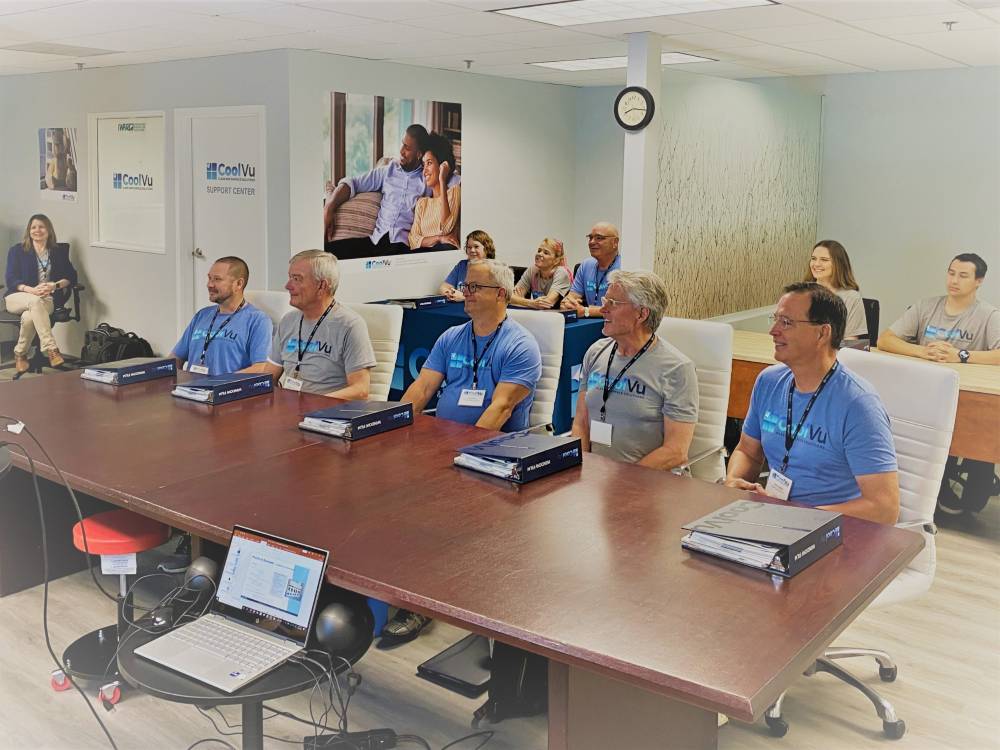
- Phase 2: Immersive Training. You and your lead installer attend our hands-on training center for intensive instruction on our full range of products, from window films to architectural surface finishes.
- Phase 3: In-Market Launch Support. Our team works directly with you to execute your grand opening marketing plan, ensuring a strong start and an immediate flow of leads.
Adding a CoolVu franchise is a strategic decision to acquire a scalable asset with high margins and a low operational footprint. For the portfolio-minded entrepreneur, CoolVu checks every box. The combination of a diverse, in-demand product set and a world-class support system creates a uniquely powerful business model. You are not just selling a product, you are leveraging a sophisticated system to build wealth.
Building Your Legacy with a Proven Franchise System
The decision to invest in a franchise is a pivotal moment in your entrepreneurial journey. As an experienced business leader, you understand that the true value of an opportunity lies not in its surface-level appeal but in its fundamental structure. The goal for entrepreneurs who want to open a franchise is to build a scalable asset and a legacy, not simply to purchase another job. This requires a shift in perspective, moving your evaluation beyond the product to the engine that drives it: the franchise system itself.
Your Strategic Checklist for How to Choose a Franchise
To effectively vet a franchise, you need a framework that cuts through the marketing noise and assesses core operational strength. This approach mitigates risk and addresses the critical concern of integrating a new business without an overwhelming operational burden. As you evaluate potential partners, use this checklist to gauge the robustness of their system.
What to Evaluate First
- Leadership and Track Record: Does the executive team have demonstrable experience not only in the industry but in building and scaling franchise networks? A seasoned leadership team that has navigated economic cycles is invaluable.
- The Operational Playbook: Ask to understand the depth of their documented processes. A superior system provides a clear playbook for every facet of the business, from lead generation and sales to project management and financial reporting.
- Onboarding and Training Systems: How is expertise transferred? Look for a comprehensive, multi-phased training program that combines classroom learning with hands-on, in-field application.
- Marketing and Lead Generation Engine: Is there a sophisticated, centralized marketing program that delivers qualified leads to your territory? A franchise that has mastered customer acquisition provides an immense advantage.
- Technology and Support Infrastructure: What proprietary software is provided to manage your operations? An integrated technology stack for CRM, scheduling, and analytics is a hallmark of a modern, efficient franchise.
Ultimately, the differentiating factor that separates high-performing franchisees from the rest is the quality of the system they buy into. A business with a popular product but a weak operational framework forces you into a constant state of reinvention. A franchise with a meticulously engineered system empowers you to focus on leadership, strategy, and scale. The proven processes, established brand equity, and continuous support act as a powerful accelerator. For the serious entrepreneur, the choice is clear. You are investing in a proven formula for success.
To see how entrepreneurs who want to open a business can leverage a proven system, connect with CoolVu Franchise and explore the opportunity today.
Frequently Asked Questions
What is the biggest mistake entrepreneurs make when choosing a franchise?
The most common mistake is focusing on a trendy product or a familiar brand name instead of the underlying business system. The best franchise for entrepreneurs is one with a robust, proven operational model, strong leadership, and comprehensive support, as these are the factors that enable long-term business scalability and profitability.
How can I tell if a franchise has a strong support system?
Look for tangible evidence in the Franchise Disclosure Document (FDD), particularly in Item 11, which details the franchisor’s assistance and training. Also, speak directly with existing franchisees about their experience with the onboarding program and ongoing support. A strong system features proactive coaching, continuous training opportunities, and a collaborative franchisee network.
Is a well-known franchise brand always the best choice?
Not necessarily. While brand recognition can help with initial customer acquisition, it does not guarantee strong unit economics, a supportive culture, or a scalable business model. A lesser-known brand with superior systems, a commitment to franchisee profitability, and a stronger support structure often represents a better long-term investment.
Why is the Franchise Disclosure Document (FDD) so important?
The FDD is your most objective source of information for business ownership. Instead of just looking at the investment (Item 7) and earnings claims (Item 19), you should analyze the leadership’s experience (Item 2), litigation history (Item 3), and the details of the support system (Item 11). This deeper analysis provides a clear picture of the franchisor’s stability, culture, and commitment to your success.
More Interesting Posts: