Table of Contents
Beyond Passion: Defining Your Strategic ‘Why’ for Franchise Investment
Aligning Franchise Selection with Your Portfolio Goals
Evaluating How a Franchise Complements Your Existing Business Acumen
Moving Past the Hype: Assessing True Market Demand and Scalability
The Strategic Blueprint: How to Decode the Franchise Disclosure Document (FDD)
The Engine of Success: Evaluating the Franchisor’s Support and Systems
The Ultimate Due Diligence: Strategic Insights from Franchisee Validation Calls
The Launchpad: Identifying a Gold-Standard Onboarding and Training Program
Conclusion: The Shift from Franchise Buyer to Strategic Partner
Frequently Asked Questions
Beyond Passion: Defining Your Strategic ‘Why’ for Franchise Investment
While passion often fuels the decision to invest in a franchise, long-term success is built on a foundation of strategy. For an experienced entrepreneur, a franchise isn’t just a new business venture. It’s a calculated addition to a wealth-building portfolio. Moving beyond a brand’s surface-level appeal requires a disciplined assessment of how the opportunity aligns with your specific financial goals and professional strengths.
This initial strategic framework is the most critical step. It transforms the selection process from a search for a “good business” into a targeted mission to find the right business for you. A clear “why” acts as your compass, ensuring every subsequent evaluation is measured against a consistent set of personal and financial objectives.
Aligning Franchise Selection with Your Portfolio Goals
Before you evaluate any specific franchise, you must first evaluate your own investment portfolio. Consider a new franchise as an asset class with a distinct risk and return profile. Ask yourself what role this investment is intended to play.
Are you seeking an active source of high-margin cash flow, or are you focused on building long-term equity in a scalable, multi-unit enterprise?
The answer will dramatically narrow your search. A capital-intensive, high-overhead model like a quick-service restaurant might offer significant revenue potential but comes with corresponding financial commitments and operational complexity. Conversely, a service-based, low-overhead model can offer greater flexibility, higher margins, and a faster path to profitability. This often appeals to an investor focused on efficient cash flow and reduced financial exposure. A premier franchisor will understand this distinction and be able to articulate precisely how their model serves specific investment strategies.

Evaluating How a Franchise Complements Your Existing Business Acumen
Your existing experience is a valuable asset, and the right franchise should allow you to leverage it for a competitive advantage. The best franchise systems provide a robust operational playbook but also offer the flexibility for your professional strengths to accelerate growth. If your background is in sales and marketing, a business-to-business or business-to-consumer service model allows you to apply those skills directly to drive revenue. If you excel at team building and management, a model that requires scaling a skilled workforce will be a natural fit.
The key is to find a complementary relationship. The franchise provides the proven system, brand recognition, and support infrastructure, while you provide the seasoned leadership and business acumen to execute the plan at a high level. Be wary of opportunities that require you to abandon your core competencies entirely. A great franchise partner doesn’t ask you to start from zero. They give you a platform from which your expertise can truly shine.
Moving Past the Hype: Assessing True Market Demand and Scalability
Every franchisor will present their market as a burgeoning opportunity. Your task is to verify that claim with objective analysis. Look beyond the marketing brochures and conduct your own preliminary due diligence on the industry. Is the demand for the product or service growing, stable, or declining? Who are the primary competitors, both independent and franchise-based, in your target territory?
More importantly, assess the model’s scalability. A truly strategic franchise investment offers a clear path to multi-unit ownership. This involves several factors:
- Territory Integrity: Does the franchisor offer appropriately sized, protected territories that can support significant growth or an additional unit?
- Operational Model: Can the business eventually be run by a manager, or does it always require the owner’s direct daily involvement?
- Capital Requirements: What is the financial threshold for opening a second or third unit, and does the franchisor offer any support or incentives for expansion?
A transparent franchisor will not only welcome these questions but will actively provide data and tools to help you model your market potential. Their confidence in the scalability of their system is a powerful indicator of a healthy, growth-oriented partnership.
The Strategic Blueprint: How to Decode the Franchise Disclosure Document (FDD)
The Franchise Disclosure Document (FDD) is much more than a legal formality. It is the single most important source of data for evaluating a franchisor. For the discerning investor, this document is a strategic blueprint that reveals the operational health, financial stability, and foundational culture of the entire franchise system.
Reading an FDD is not a passive exercise. It requires an active, critical mindset focused on uncovering the story behind the numbers and clauses. A thorough analysis will either validate the franchisor’s claims and confirm their status as a top-tier partner or expose the red flags that signal a high-risk, low-support investment. This is where you separate the best-in-class opportunities from the rest.

Reading Between the Lines of Item 19: Financial Performance Representations
Item 19 is the section of the FDD where a franchisor can provide information about the financial performance of existing franchisees. A strong, confident franchisor will almost always provide a detailed Item 19, seeing it as a key selling point. Its absence is a significant warning sign.
When reviewing Item 19, go deeper than the top-line revenue figures. You are looking for clarity, detail, and context.
- What is being measured? Are the numbers based on gross sales, gross profit, or net income? A report of gross sales without corresponding cost-of-goods-sold or key operating expenses is incomplete.
- What is the sample set? Does the data represent all franchisees, or only a certain subset, such as those open for more than a year or those in the top quartile? Understand who is included and, just as importantly, who is excluded.
- How is the data presented? Look for figures broken down by quartiles or other cohorts. This provides a much more realistic picture of the performance range, including the average and median results, rather than just a single, potentially misleading system-wide average.
A transparent franchisor provides a robust Item 19 that gives you the tools to build a realistic financial model. It demonstrates their confidence in the profitability of their system and their commitment to setting up new franchisees for success.
Understanding the True Cost: A Deep Dive into Initial and Ongoing Fees
Items 5 and 6 of the FDD outline the fees you will pay to the franchisor, both initially and on an ongoing basis. Your goal here is not simply to find the cheapest option, but to understand the value you receive in exchange for these fees. A low royalty fee may be attractive, but it could signal a lack of funding for crucial support systems.
Analyze the ongoing fees, which typically include a royalty fee, a brand or marketing fee, and a technology fee. For each fee, ask what you get in return. A great franchisor can clearly articulate how royalties are reinvested into coaching, research, and development. They can show you exactly how the marketing fund is spent and what results it generates. These franchise fees are your investment in the system’s collective strength, and a quality partner will be fully transparent about that ROI.
Analyzing Item 7: Estimating Your Initial Investment with Precision
Item 7 provides the franchisor’s estimated range for your total initial investment, from signing the franchise agreement to opening your doors. While helpful, you should treat this as a starting point for your own detailed budget. A franchisor’s low-end estimate may be based on ideal conditions that rarely exist.
Break down the Item 7 table line by line and conduct your own local research. Call commercial real estate agents to verify leasehold improvement costs. Price out insurance and local permits. The most critical line item is often “Additional Funds” or “Working Capital,” which covers your expenses during the initial ramp-up period before your business generates positive cash flow.
A prudent franchisor will provide a realistic and even conservative working capital estimate. They want you to be well-capitalized and prepared for the realities of a new business. During your discussions, ask how they calculated this figure and what assumptions it includes. Their answer will reveal much about their experience and their genuine interest in your financial stability.
Identifying Potential Red Flags in Litigation and Bankruptcy Histories
Items 3 and 4 of the FDD detail the litigation and bankruptcy histories of the franchise system and its executives. While a few lawsuits are not uncommon for a large, established company, you must analyze the nature of the disputes.
A pattern of litigation initiated by franchisees is a major red flag. If multiple franchisees are suing the franchisor for issues like lack of support, deceptive sales practices, or encroachment on their territory, it points to systemic problems and a breakdown in the franchisor-franchisee relationship. This is a clear sign of a toxic culture and a partner you cannot trust.
Similarly, a history of bankruptcy for the franchisor or its key leaders should prompt serious investigation. While businesses can recover, it signals past instability. Your investment is a long-term commitment, and you must have absolute confidence in the financial stewardship and ethical integrity of the corporate team you are partnering with.

The Engine of Success: Evaluating the Franchisor’s Support and Systems
Once you have validated the market and the business model, your focus must shift to the operational core of the franchise. This includes the systems and support structures the franchisor provides. This is the engine that will power your business day-to-day. A great product can fail with a weak operational framework, but a robust system can turn a good opportunity into an exceptional, scalable enterprise.
For the experienced investor, this is where the most critical evaluation occurs. You are not simply buying a brand. You are investing in a pre-built ecosystem of processes, technology, and human expertise. The quality of this ecosystem is the single most important predictor of your long-term return on investment.
Gauging the Impact of Founder Experience and Leadership Vision
A franchise system is a direct reflection of its leadership. Before you scrutinize the playbooks and software, assess the architects of the entire operation. A founder with deep, hands-on industry experience brings an invaluable level of credibility and practical insight that cannot be replicated. They have already navigated the challenges you will face, and their experience is embedded in the DNA of the franchise business model.
Look beyond the polished biography in the marketing packet. Investigate the leadership team’s track record. Do they have a history of innovation and growth? What is their stated vision for the next five to ten years? A strong franchisor is not static. They are constantly evolving to meet new market demands and technological advancements. You are looking for a leadership team that views you as a strategic partner in fulfilling a clear, ambitious long-term vision, not just as a source of royalty fees.
Assessing the Sophistication of Sales and Marketing Systems
A recognizable brand name is only a starting point. True business growth is driven by a sophisticated and reliable system for generating qualified leads and converting them into profitable sales. A top-tier franchisor provides a multi-faceted marketing engine that works for you, not a vague mandate that you figure it out on your own.
Critically examine the support provided at both the national and local levels. A strong national marketing fund should build broad brand awareness and drive web traffic, but how does the system help you capture and convert leads in your specific territory? Look for proven, data-driven strategies for local digital marketing, such as pay-per-click advertising, search engine optimization, and social media campaigns. The franchisor should provide not just the tools, but also the training and ongoing support to execute these strategies effectively and measure their return on investment.
Is the Technology Stack an Asset or a Liability?
In today’s business landscape, technology is the central nervous system of an efficient operation. A franchisor’s technology stack can either be a powerful competitive advantage or a significant operational drag. Your due diligence must include a thorough audit of the software and digital tools you will be required to use.
A modern, effective tech stack should be fully integrated, creating a seamless flow of information from lead generation to final payment. Ask for a demonstration of their core platforms.
- Customer Relationship Management (CRM): How does the system track leads, manage customer communications, and automate follow-ups? Is it intuitive or clunky?
- Quoting and Project Management: Is there a proprietary tool for creating professional quotes, scheduling jobs, and managing project workflows? This is essential for maintaining efficiency and professionalism.
- Financial and Reporting Dashboards: What level of insight does the technology provide into your key performance indicators? You should have on-demand access to data on sales, profitability, and marketing effectiveness.
An outdated, piecemeal collection of third-party software is a major red flag. It signals a lack of investment and can create immense frustration for you and your team. A premier franchise system provides a proprietary or highly customized technology suite that is a genuine asset, designed to make your business easier to run and more profitable.

Evaluating the Operational Playbook for Day-to-Day Excellence
The franchise “playbook,” or operations manual, is the embodiment of the franchisor’s proven system. Its quality is a direct measure of their commitment to your success. A flimsy, generic manual suggests a franchisor that is more interested in selling units than in supporting them. A comprehensive, detailed, and constantly updated playbook is the mark of a true partner.
Evaluate the initial and ongoing training programs. The initial training should be an immersive experience covering every aspect of the business, from technical skills and sales processes to financial management and local marketing. Equally important is the plan for ongoing franchisor support. How does the franchisor assist with new product launches or system updates? Is there a dedicated support team you can call with operational questions? A robust support infrastructure ensures you are never left to solve critical business problems alone.
The Ultimate Due Diligence: Strategic Insights from Franchisee Validation Calls
After you thoroughly review the FDD and analyze the franchisor’s systems, verify everything you have been told. Conduct validation calls with existing franchisees, as this is arguably the most crucial phase of your due diligence. These conversations give you an unvarnished, real-world perspective on the business opportunity.
Approaching these calls with a strategic mindset is essential. Your goal is not simply to ask if franchisees are “happy.” Your goal is to gather specific, quantifiable data and qualitative insights that will allow you to build an accurate financial model and truly understand the day-to-day realities of being a partner in this brand.
Crafting Questions That Reveal True Profitability and ROI
Go beyond the high-level financials presented in Item 19. Your objective is to understand the story behind the numbers and the key levers that drive profitability.
- How long did it take you to ramp up and reach the average revenue figures presented by the franchisor?
- What is your approximate breakdown between material costs, labor costs, and other major operating expenses? This helps you model your own potential profit and loss.
- Can you describe the seasonality of the business? How do you manage cash flow during slower periods?
- What was your total initial investment, and how did it compare to the estimate in the FDD? Were there any unexpected costs?
- Based on your performance, what is a realistic timeframe for a new franchisee to achieve a return on their initial investment?
How to Inquire About the Franchisor-Franchisee Relationship
A healthy, supportive, and collaborative relationship with the franchisor is vital for long-term success. The dynamic between corporate leadership and its franchisees can reveal a great deal about the company’s culture and priorities.
- On a scale of 1 to 10, how would you rate the responsiveness and quality of support you receive from the corporate team?
- When you have provided feedback or suggestions, do you feel that leadership listens and takes action?
- How effective is the Franchise Advisory Council or any other formal channels for franchisee communication?
- Can you provide an example of a time the franchisor went above and beyond to support you? Conversely, can you share a time when you felt the support was lacking?
Understanding the Reality of Daily Operations and Work-Life Balance
The marketing materials will always present an idealized version of ownership. Franchisee validation calls are your chance to understand what the job actually entails and whether it aligns with your personal and professional goals.
- What does a typical week look like for you as the owner? How much time do you spend in the field versus in the office?
- Are you primarily working on the business (strategy, marketing, finance) or in the business (sales, installation, project management)? How has that changed over time?
- What has been your biggest operational challenge, and how has the franchisor helped you overcome it?
- How many hours per week did you work when you first started, and what do you work now? Does the business provide the work-life balance you originally envisioned?
Asking About the Effectiveness of Marketing and Support Programs
This is where you cross-reference the franchisor’s claims about their systems with the on-the-ground reality. Existing franchisees have direct experience with the tools and support programs and can tell you what truly works.
- Which of the franchisor’s marketing programs generate the most valuable leads for your business?
- How would you rate the quality and usability of the core technology, such as the CRM and quoting software?
- When you encounter a technical issue or an unusual customer request, how effective is the corporate support system in helping you find a solution?
- What is one piece of support or one system improvement you wish the franchisor would implement? This question often uncovers minor gaps or significant opportunities for improvement.
The Launchpad: Identifying a Gold-Standard Onboarding and Training Program
With the franchise agreement signed, the transition from candidate to partner begins. This is a pivotal moment, not just for you, but for the franchisor. It is their first opportunity to demonstrate that the systems and support they promised are not just theoretical but tangible, actionable, and designed for your success. An exceptional onboarding and training program is the single most reliable indicator of a franchisor’s commitment to your long-term profitability. It is the foundation upon which your new enterprise will be built.
What a Robust Initial Training Program Should Cover
Initial training should be an immersive experience that goes far beyond a simple product overview. A premier franchisor understands that they are not just teaching you a trade, they are teaching you how to run a successful business within their proven framework. A truly comprehensive program is meticulously structured to build confidence and competence from day one.
When evaluating a training curriculum, look for a balanced and in-depth approach that covers these core pillars:
- Technical Mastery: In-depth, hands-on training for all core products and services. This should include installation techniques, product specifications, and troubleshooting, ensuring you can deliver exceptional quality and service.
- Operational Excellence: Detailed instruction on the day-to-day management of the business. This includes using the proprietary software systems for scheduling, invoicing, and customer relationship management (CRM).
- Financial Acumen: Training on the business’s financial model, including key performance indicators (KPIs), pricing strategies, expense management, and profitability analysis. A great franchisor wants you to understand the numbers that drive your success.
- Staffing and Management: Guidance on how to recruit, train, and manage a high-performing team, which is essential for scaling your operation.
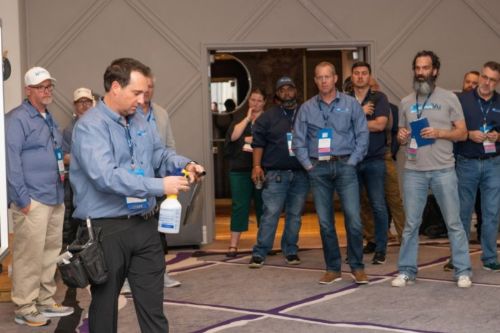
A franchisor who invests in this level of detail demonstrates a clear understanding that your operational readiness is directly tied to their brand’s reputation and the system’s overall health.
Evaluating the Quality of Sales and Marketing Onboarding
A business cannot thrive without a predictable stream of customers. The quality of the sales and marketing onboarding is a non-negotiable component of a top-tier franchise system. This training should equip you with a powerful, market-tested engine for customer acquisition from the moment you launch.
Go beyond asking if they “provide marketing support.” A strategic evaluation means digging deeper. A superior franchisor will provide a clear, step-by-step system for generating leads and converting them into profitable jobs. This includes comprehensive training on a national lead generation program, coaching on effective sales consultation processes, and access to a polished library of professionally designed marketing assets. The goal is not just to give you tools, but to teach you a repeatable process for winning business in your local market.
Assessing Long-Term Support and Continuous Education
The business landscape is never static. New products, evolving marketing channels, and changing consumer behaviors require continuous adaptation. A franchisor committed to your long-term growth will have a robust system for ongoing support and education that extends well beyond the initial training week.
This commitment is a hallmark of a true partnership. Look for evidence of a mature support infrastructure, such as a dedicated franchise business consultant, a responsive technical support hotline, and a vibrant franchisee network for peer-to-peer advice. Inquire about the cadence of continuous education. Premier systems often feature regular webinars on new techniques, annual national conferences for strategic alignment, and regional meetings that foster a strong sense of community and shared learning. This ongoing investment proves the franchisor is just as focused on your success in year five as they are in year one.
The Importance of Cultural Onboarding
Finally, do not underestimate the importance of cultural onboarding. This is the process through which you and your team learn to embody the brand’s core values, mission, and commitment to the customer experience. It is what separates a collection of individual businesses from a cohesive, powerful brand network.
A franchisor that deliberately integrates you into its culture is building a foundation for long-term alignment and satisfaction. This often involves direct interaction with the executive team, understanding the brand’s history and vision, and connecting with fellow franchisees who share a common purpose. This focus on culture ensures that every franchisee is a true brand ambassador, reinforcing the quality and integrity of the system in every customer interaction. It is a subtle but powerful sign of a franchisor who is building a legacy, not just selling units.
Conclusion: The Shift from Franchise Buyer to Strategic Partner
Navigating how to get a franchise is not merely about completing a series of steps. It is about fundamentally shifting your perspective. The most successful franchisees are those who move beyond the transactional mindset of a “buyer” and adopt the strategic diligence of a “partner.” They understand that they are not just purchasing a business model, but investing in a long-term relationship.
This final stage of your research is about synthesizing everything you have learned to make a confident, strategic decision. It’s where you confirm that the franchisor is not just selling a system, but offering a true partnership dedicated to mutual growth and profitability.
A Framework for Making the Right Decision
As you finalize your evaluation, remember that the quality of your due diligence directly impacts the quality of your future success. A generic approach yields generic results. A strategic approach, however, uncovers premier opportunities. To ensure you are aligning with a top-tier partner, keep these critical evaluation points at the forefront:
- Scrutinize the System’s Blueprint: Treat the Franchise Disclosure Document (FDD) as the core architecture of your potential business. Analyze Item 19 for a transparent look at financial performance and Items 7 and 11 for a clear understanding of the initial investment and the franchisor’s operational support obligations.
- Validate with Purpose: Conduct franchisee validation calls not just to check a box, but to gather unfiltered intelligence. Ask current franchisees pointed questions about the franchisor’s responsiveness, the effectiveness of the marketing systems, and the true time commitment required to reach profitability.
- Assess the Leadership and Culture: Use Discovery Day to look beyond the presentation and evaluate the people. Does the leadership team possess deep industry experience? Is there a palpable culture of support, innovation, and respect for franchisees? A strong culture is often the leading indicator of a healthy system.
- Demand Proof of Support: A great franchisor’s support extends far beyond a startup manual. Look for concrete evidence of robust, ongoing training, sophisticated marketing resources, and accessible technical support that empowers you to overcome challenges and seize opportunities.
Adopting an Investor Mindset for Long-Term Success
Ultimately, acquiring a franchise is one of the most significant professional decisions you will ever make. Following a simple checklist might lead you to a viable business, but it is an evaluative mindset that will lead you to an exceptional one. This means viewing every interaction, every document, and every conversation as a data point in your assessment of a long-term partner.
A premier franchisor welcomes this level of scrutiny. They are confident in their systems, their support, and their culture. They are also evaluating you, seeking partners who are engaged, strategic, and committed to executing a proven model. This mutual diligence is the foundation of a healthy and profitable relationship where both parties are fully invested in each other’s success. By adopting this mindset, you cease to be a passive buyer and become the kind of strategic partner that the best franchise systems are eager to attract.
To fully understand how to get a franchise using a strategic, investor-driven approach, connect with CoolVu Franchise and explore the opportunity.
Frequently Asked Questions
What is the most important part of the franchise buying process?
The most critical part of the franchise buying process is comprehensive due diligence, specifically the franchisee validation calls. While analyzing the Franchise Disclosure Document (FDD) is essential for understanding the numbers and legal obligations, speaking directly with existing franchisees provides an unfiltered, real-world account of the franchisor’s support, culture, and the true path to profitability.
What is the biggest red flag in a Franchise Disclosure Document (FDD)?
A major red flag is a pattern of litigation initiated by franchisees against the franchisor (found in Item 3). This indicates systemic issues and a potentially toxic relationship. Another significant warning sign is a weak or completely absent Item 19 (Financial Performance Representation), as it suggests a lack of confidence in the system’s profitability or a lack of transparency.
Is a franchise with a low royalty fee always a better deal?
Not necessarily. While a low royalty fee seems attractive, it can be a red flag for a poorly funded support system. Royalty fees fund the corporate team, ongoing training, research and development, and day-to-day franchisee support. It is more important to assess the value you receive for the fees you pay rather than simply choosing the lowest-cost option. A high-value partner will be transparent about how these fees are reinvested in your success.
How much money do I really need to start a franchise?
Use Item 7 (Estimated Initial Investment) in the FDD as a starting point, not a final number. To get an accurate budget, you must conduct your own local research. Call local vendors to price out expenses like real estate, insurance, and permits. Pay close attention to the franchisor’s estimate for “Working Capital,” as this is the crucial cash reserve you will need to cover expenses before your business becomes profitable. A conservative, well-researched budget is key to a stable start.
More Interesting Posts: