Table of Contents
Your Next Move: How to Start a Franchise When You’re Already an Expert
As a successful business owner, you’ve already conquered the steep learning curve of entrepreneurship. You know how to build a team, manage a P&L, and navigate market shifts. Standard advice on how to start a franchise, with its focus on basic business plans and securing financing, simply doesn’t apply. Your next venture isn’t about learning to run a business. It’s about leveraging your capital and experience to achieve a new level of strategic growth.
From Entrepreneur to Strategic Investor
Your first business likely required a hands-on, entrepreneurial mindset. You wore every hat, made every decision, and built the operational playbook from the ground up. While that experience is invaluable, applying the same approach to franchising would be a misallocation of your most precious resource: your time.
The shift is from “creator” to “curator.” Your role is no longer to invent a system but to identify and acquire a superior one. This reflects an investor’s mindset, where the focus is on evaluating an operational asset based on its return potential, scalability, and the strength of the team behind it. Rather than taking on another job, you are acquiring a machine engineered for predictable profit.

Why Your Experience Demands a Different Approach
Because you have been in the trenches, you can see past the glossy marketing materials. You understand a business’s success is determined by the day-to-day realities of its operational model. This puts you in a unique position to ask tougher, more insightful questions when you look for the best franchise opportunities for experienced owners.
A first-time franchisee might focus on the product or the brand’s popularity. You, however, should be evaluating the system’s efficiency. Consider how streamlined the supply chain is, how effectively the marketing engine delivers qualified leads, and how robust the back-office technology truly is. Your experience allows you to look for a franchise that solves operational problems for you, rather than creating new ones.
A Franchise as a Portfolio Multiplier
Think of this next move not as simply adding another company to your portfolio, but as acquiring a strategic multiplier. A best-in-class franchise shouldn’t just be a standalone income stream. It should be a high-margin, low-complexity operation that enhances your overall position.
A well-chosen franchise can generate significant cash flow with less of your direct involvement than your first business, freeing you to focus on higher-level strategy across all your ventures. It offers portfolio diversification and introduces a proven, scalable model that might even provide operational insights you can apply to your existing businesses. The goal is to find a system so well-honed that it accelerates your growth, not just adds to it.
Beyond the FDD: How to Evaluate a Franchise’s True Engine
With this strategic mindset, your due diligence must go deeper than the standard checklist. The real value of a franchise is rarely found in marketing slicks or even in the mandated disclosures. It’s found in the engine of the business, its model, its leadership, and its culture.
The Franchise Disclosure Document: A Starting Point, Not the Final Word
The Franchise Disclosure Document (FDD) is an essential legal tool. It provides a baseline of historical data, financial performance representations, and a clear outline of your contractual obligations and royalty fees. For the experienced investor, however, the FDD is merely the opening chapter of the story.
It tells you what the system is and where it has been. It does not tell you why it works or where it is going. Use the FDD to verify claims and identify red flags, but do not let it be the final word. Your real investigation begins where the FDD ends, focusing on the qualitative factors that drive future success.
Deconstructing the Business Model: Is the Advantage Defensible?
Any successful business has a competitive advantage, but not all advantages are created equal. As a strategic investor, your primary task is to determine if the franchise’s “moat” is both deep and wide. Is its success based on a fleeting trend, or is it built on a defensible, long-term foundation? Look past the surface-level product and analyze the structure that supports it.
- Proprietary Technology: Does the franchisor provide tools or systems that are genuinely superior to off-the-shelf solutions? How do these systems reduce your operational burden and increase margins?
- Supply Chain: Has the franchisor secured exclusive access or preferential pricing with key suppliers? This can create a durable cost advantage that competitors cannot easily replicate.
- Marketing Sophistication: Evaluate the franchisor’s customer acquisition engine. Do they have a data-driven approach to generating leads for franchisees, or do they simply provide a logo and a list of best practices?
- Market Resilience: How is the business model positioned to handle economic downturns or new competitors? A model that relies on a single, easily copied service is far riskier than one with multiple, integrated revenue streams.
Assessing Leadership and Culture: The Value of Franchisor Vision
For an owner whose time is a closely guarded asset, the quality of the franchisor’s leadership team is paramount. This team is effectively your partner in execution. A strong leadership team streamlines your path to profitability. A weak one will create constant friction and demand your personal intervention to solve problems that should have been handled at the corporate level.
Investigate the founders and the executive team. Are they seasoned operators with a deep understanding of the industry, or are they financiers who just packaged a concept? Look for a track record of building and scaling businesses.
A leadership team that has run its own successful units understands the franchisee’s challenges firsthand. Their vision for the future, backed by a clear plan for innovation and investment, is your best indicator that the system will continue to evolve and maintain its competitive edge.
The Scalability Test: Can This Model Outperform Your Current Ventures?
As an established business owner, your goal isn’t just to add another revenue stream. It’s to find a model that can achieve a level of growth and profitability that your current portfolio might be struggling to reach. A new franchise must pass a simple, yet critical test: does it have the potential to scale more efficiently and outperform your existing ventures?
This requires a shift in perspective. You are not just buying a business. You are investing in a pre-built system designed for duplication. The right opportunity will have scalability baked into its DNA, offering a clear path to expansion that leverages a central system rather than relying solely on your direct effort.
Evaluating the Path to Multi-Unit Ownership
A single, successful unit is a good start, but true wealth generation in franchising often comes from multi-unit ownership. Your evaluation must focus on the franchise’s capacity to support this ambition. Look for concrete evidence in the Franchise Disclosure Document (FDD) and in conversations with existing owners.
Does the franchisor offer reduced franchise fees for subsequent units? Are there structured territory reservation agreements that allow you to secure adjacent markets for future growth? A system designed for scale will have a clear, incentivized path for proven operators to expand their footprint. This structure is a strong indicator that the franchisor’s own success is tied to your ability to grow beyond a single location.
Analyzing the Model’s Design: Executive Owner or On-Site Operator?
This is perhaps the most important distinction for an experienced entrepreneur. Many franchise models are designed to replace a job, requiring the owner to be the lead technician and general manager. You’ve already done that. You’re looking for an asset to manage, not another job to perform. Scrutinize the model to determine if it’s built for an executive owner.
- Can you run the business with a general manager? A well-designed system will have documented processes that a capable manager can execute.
- What is the owner’s expected role after year one? The answer should be focused on strategy, expansion, and high-level financial oversight, not daily operational fires.
- Does the technology support remote oversight? A robust dashboard with key performance indicators (KPIs) allows you to manage the health of the business from anywhere.
If the franchisor’s narrative consistently returns to the owner’s hands-on involvement in daily tasks, it’s a red flag. The right model empowers you to work on the business, not endlessly in it.
Assessing Market Demand and Territory Potential
A brilliant operational model is useless without strong, sustainable demand. Conduct your own independent analysis of the target market. Look for demographic tailwinds, commercial growth, and a customer base with the disposable income to afford the product or service.
Pay close attention to territory rights and protection. A well-defined and exclusive territory is your shield against internal competition. It ensures that as you invest in building brand awareness in your area, another franchisee won’t open across the street and cannibalize your efforts.
Ask the hard questions about saturation. A thoughtful growth plan that avoids oversaturation demonstrates a long-term commitment to franchisee profitability.

The Support Infrastructure: Your Key to Minimizing Operational Burden
Scalability is a theoretical advantage until it is enabled by a world-class support system. For an experienced owner, the primary value of a franchise is its ability to minimize the operational burden of a new enterprise. You are not paying an initial investment and royalty fees to learn how to create a P&L statement. You are paying for a turnkey system that handles the heavy lifting of marketing, sales, and technology.
A superior franchisor acts as your outsourced executive team. They provide the refined systems and specialized expertise that would take you years and hundreds of thousands of dollars to develop on your own. This is the core of the value proposition and it is what allows you to add a new business without being consumed by it.
Why ‘Best-in-Class’ Onboarding Is Critical
For you, onboarding isn’t about learning basic business principles. It’s an accelerated process of downloading a proven operational playbook. The quality of the initial training program is the first and best indicator of the franchisor’s overall competence.
A ‘best-in-class’ onboarding process respects your experience. It focuses on the unique aspects of the new business model, its specific financial levers, and its proprietary systems. It should be a strategic immersion, not a remedial course. A disorganized training process signals that you will be left to figure things out on your own, negating the very reason you chose to start a franchise.
The Gold Standard: Evaluating Sales, Marketing, and Technology Systems
The true engine of a modern franchise lies in its centralized systems. These are the assets that create leverage and allow a small, local team to perform with the sophistication of a major corporation. Your evaluation should be a forensic audit of these three pillars.
- Sales Systems: A top-tier franchisor delivers a proven, repeatable sales process, complete with scripts, presentation materials, and pricing strategies. Look for a robust Customer Relationship Management (CRM) platform that is pre-configured for the business.
- Marketing Engine: Ask to see the marketing machine in action. The best franchisors operate a sophisticated lead generation engine that delivers qualified inquiries to your inbox. They provide a full library of professional local marketing assets and a powerful website.
- Technology Stack: The gold standard is a fully integrated, cloud-based technology stack. This means one system ideally handles scheduling, dispatching, invoicing, payment processing, and customer communications. An elegant, all-in-one platform simplifies operations and provides the data you need to make smart decisions.
Beyond Launch: Gauging the Quality of Ongoing Coaching
A franchise launch is an event, but success is a process. The quality of the long-term partnership is what protects and grows your investment. Assess the structure for ongoing franchisee support. Is there a dedicated franchise business coach? Are there regular performance reviews, regional meetings, and national conventions? The presence of franchisee peer groups is a strong sign of a healthy, collaborative culture.
Calculating True ROI: How Superior Support Impacts Your Bottom Line
As a seasoned business owner, a strategic franchise investment analysis goes deeper than a pro forma income statement.
It requires you to quantify the franchisor’s operational support and translate it directly into dollars, cents, and most importantly, hours of your own time saved.
The real return on investment isn’t just found in unit-level margins. It’s found in the efficiency, speed, and scalability that a superior support system provides.
This is where you move from buying a business to investing in an engine for growth.

The Financial Value of a Robust System
A best-in-class franchisor doesn’t just hand you a brand. They provide a set of accelerators that directly impact your P&L. Let’s reframe support as a direct financial input.
- Centralized Marketing: A robust marketing program directly lowers your customer acquisition cost (CAC). When the franchisor delivers a steady stream of qualified leads, your sales cycle shortens, and your revenue ramp-up accelerates.
- Refined Operations: Proven operational systems reduce costly errors and waste. This translates to higher gross margins on every job by eliminating the expensive trial-and-error phase that plagues independent startups.
- Integrated Technology: A unified platform for CRM, scheduling, and finance is a direct reduction in your administrative overhead. It minimizes the need for costly back-office staff and gives you real-time data to make profitable decisions.
When you evaluate how to choose a franchise, ask, “How does this support reduce my CAC, improve my gross margin, or lower my overhead?” The answer is the hidden value that separates an average opportunity from a superior investment.
The Hidden Costs of Weak Franchisor Support
The most significant expense in a poorly supported franchise system isn’t found on any financial statement. It’s the cost of your own time. When a franchisor’s systems are weak, you are forced to step in and fill the gaps.
Every hour you spend reinventing a wheel the franchisor should have perfected is an hour you can’t spend on high-value activities like planning your second territory expansion or optimizing another business in your portfolio. A weak franchise system doesn’t just demand your capital. It hijacks your calendar and puts a hard ceiling on your ability to scale.
Modeling Profitability Based on System Efficiency
A sophisticated investment model must look beyond the economics of a single unit. It must project profitability based on the efficiency of the entire system. Unit economics tell you the potential of one transaction. System efficiency tells you how quickly and reliably you can replicate that transaction with decreasing owner involvement.
A superior system allows you to build a more accurate long-term model by asking different questions.
- Start by reframing the question from, “What’s the net profit on this unit?” to, “How quickly does the operational playbook allow me to delegate day-to-day management and begin developing a second unit?”
- Next, move beyond, “What’s our marketing budget?” and focus on, “How does the franchisor’s integrated CRM and marketing automation increase customer lifetime value?”
- Finally, replace, “How many hours do I need to work?” with, “At what revenue milestone does the system’s efficiency allow the business to run profitably under a manager, freeing up my strategic time?”
Modeling for system efficiency shifts your perspective. You’re no longer calculating the profit potential of one location. You are calculating the velocity at which you can build a multi-unit portfolio, the defensibility of your cash flow, and the ultimate exit value of a business built to run without you. That is the true measure of a franchise investment.
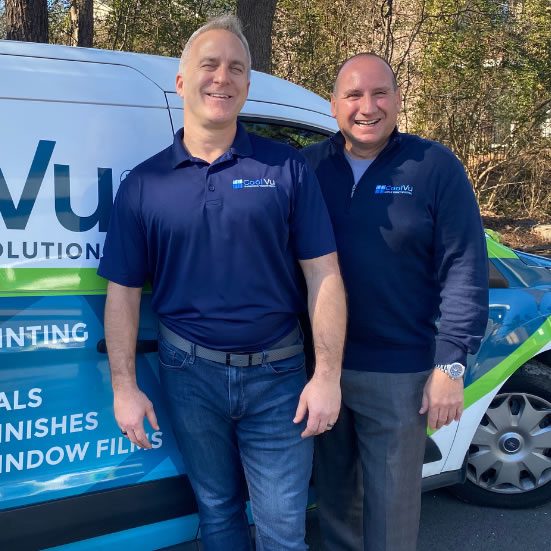
To start a franchise with a proven system built for scalability, efficiency, and long-term growth, connect with CoolVu Franchise to explore the opportunity.
Frequently Asked Questions
How is choosing a franchise different for an experienced business owner?
For an experienced owner, the focus shifts from learning basic business skills to strategically selecting a superior operational system. You are not buying a job. You are acquiring a scalable, high-performance asset that can enhance your entire business portfolio with minimal operational drag on your time.
What should I look for in a Franchise Disclosure Document (FDD) beyond the basics?
Use the FDD as a starting point, not the final word. Look beyond the initial investment and royalty fee structures. Scrutinize Item 19 for financial performance representations, but then ask why those numbers are what they are. Investigate the sections on territory rights, obligations for technology, and advertising fund contributions to understand the true engine of the business and the franchisor’s commitment to your success.
How can I tell if a franchise model is designed for an executive owner?
Scrutinize the owner’s expected role after the first year. A model built for executive ownership will have well-documented systems, a technology stack that allows for remote oversight, and a clear path for a general manager to run daily operations. If the franchisor’s conversation consistently emphasizes the owner’s hands-on involvement in sales or service, it is likely designed for an on-site operator.
Why is strong franchisee support more important than the product itself?
A great product is a starting point, but world-class franchisee support is what enables scalability and profitability. Superior support in marketing, sales, and technology acts as a business accelerator. It lowers your customer acquisition costs, reduces administrative overhead, and provides a proven playbook that allows you to get to profitability faster and with less personal involvement. This frees up your time to work on the business, not in it.
More Interesting Posts: