Table of Contents
Beyond ‘Good Enough’: Defining a Best-in-Class Franchise System
As a seasoned operator, you recognize a good franchise when you see one. It has brand recognition, a documented operational model, and a clear path to revenue. You have likely built your success on such foundations.
But for your next acquisition, “good” is no longer the benchmark. To meaningfully enhance your business portfolio, you must seek a system that operates on an entirely different level, a ‘best-in-class’ asset engineered for superior performance.
The distinction is critical. A good franchise helps you run a business. A best-in-class system provides the framework, technology, and strategic support to dominate a market.
It’s the difference between adding another income stream and acquiring a high-yield strategic advantage that elevates the performance of your entire portfolio.
Hallmarks of an Elite Franchise Ecosystem
You have moved beyond the allure of a familiar logo. An experienced investor knows the true power of a franchise lies not in its name, but in the engine that drives franchisee success. An elite system is a fully integrated ecosystem, meticulously designed to maximize operational efficiency and profitability. While others focus on the storefront, you should be evaluating the scaffolding.
Look for these non-negotiable hallmarks:
- A Unified Technology Stack: This goes far beyond a mandated point-of-sale system. A superior franchise provides a seamless, centrally managed technology suite. This includes the CRM, marketing automation, scheduling, quoting tools, and financial dashboards, all working in concert. The goal is to eliminate data silos and administrative drag, giving you a clear, real-time view of your business performance.
- Proactive, Data-Driven Support: Standard franchise support is reactive, they answer when you call. Elite support is predictive. The franchisor should be leveraging system-wide data to identify performance trends, benchmark KPIs, and provide you with strategic insights, often before you have identified the challenge yourself. They don’t just solve problems, they prevent them.
- A Dynamic Operational Playbook: The binder of operations you received with your first franchise is static. A best-in-class playbook is a living, evolving resource. It should be constantly refined with feedback from the field, updated to reflect market changes, and enhanced with new best practices from top-performing franchisees.
- A High-Performance Peer Network: A franchisor-facilitated culture of excellence is a powerful asset. The system should actively cultivate a network where franchisees are not just colleagues but collaborators. This includes structured forums for sharing specific, measurable tactics and celebrating data-backed successes, turning the entire network into a competitive advantage.
The Founder’s Footprint: How Industry Experience Shapes a Superior Model
The origin story of a franchise system matters more than you might think. A system conceived in a boardroom by financiers has a different DNA than one forged over decades by an industry master. When a founder has spent their career on the front lines, making the sales, managing the crews, and solving the exact problems you will face, that experience is deeply embedded into the business model.
This “founder’s footprint” manifests in tangible advantages. Operational processes are not theoretical. They are battle-tested and refined to eliminate inefficiencies that only an experienced practitioner would recognize. Training programs are built on real-world scenarios, drastically shortening the learning curve for you and your team.
This deep industry experience also translates into unmatched supply chain and vendor relationships. A founder with decades of credibility can secure preferential pricing, access to superior products, and a level of supplier support that a newer franchise system simply cannot replicate. This is an inherited competitive moat that immediately benefits your bottom line and operational resilience.
Dissecting the FDD with a Strategist’s Eye
You know how to read a Franchise Disclosure Document (FDD). Now, you must read it not as a franchisee, but as a portfolio strategist. Your analysis must go beyond the standard review of costs and obligations to uncover the indicators of a truly elite system.
Item 7: Beyond the Initial Investment
Your focus here should shift from the initial lump sum to the recurring fees that power the ecosystem. Scrutinize the technology fees, marketing fund structures, and any required software subscriptions. The key question is not “How much does it cost?” but “What is the ROI on these mandatory expenses?” Look for evidence that these fees fund a powerful, integrated, and ever-improving system, rather than a collection of disjointed profit centers for the franchisor.
Item 19: Interrogating Financial Performance
Go deeper than the top-line revenue figures. A best-in-class system will often provide more granular data. Look for cohort analysis showing the performance of franchisees in their first, third, and fifth years.
This reveals the maturity curve and the system’s ability to create sustainable success. Pay close attention to the gap between the top and bottom quartile performers. A narrow gap is a strong indicator of a highly effective, replicable system where success is engineered, not accidental.

Item 20: Reading Between the Lines of Franchisee Information
You will call other franchisees, but your questions must be more strategic. Move beyond “Are you happy?” and ask questions that validate the claims of an elite ecosystem.
- “Describe the process for how the franchisor rolls out new technology. Is it a seamless integration?”
- “How does the franchisor use data to help you improve your business performance compared to other owners?”
- “Can you give me a specific example of how the support team proactively helped you solve a problem?”
The answers will tell you whether you are joining a standard franchise or a high-performance network. Pay close attention to franchisee turnover and transfer data, looking for patterns that suggest systemic strengths or weaknesses.
The Financial Litmus Test: Metrics That Signal a High-Profit Franchise
As an experienced operator, you know that top-line revenue is a vanity metric. It tells you almost nothing about the health or efficiency of a business. The real story, the one that dictates your take-home profit and long-term wealth, is found in the unit-level economics.
When you evaluate your next franchise investment, you must look past the flashy Item 19 revenue numbers and apply a more sophisticated financial lens. The goal is not just to add another revenue stream, it’s to add one that outperforms the others on a percentage basis.
Analyzing Unit-Level Economics
The first mistake many seasoned buyers make is comparing gross revenue figures between entirely different business models. A million-dollar-a-year restaurant may sound impressive, but its profitability can be decimated by thin margins and immense labor costs. A service-based franchise with half the revenue could easily be twice as profitable.
Your analysis must start with a few key indicators of franchise profitability:
- Gross Profit Margin: What is the margin on your core products and services after accounting for the cost of goods sold (COGS)? In a service business, this includes material costs and the direct labor required to perform the service. A system with strong supplier relationships and premium-priced services will consistently deliver healthier margins.
- Prime Cost: This is the combination of your COGS and total labor costs. For many businesses, this number hovers between 55% and 65% of total sales. A franchise model that can operate efficiently with a prime cost below this benchmark is engineered for superior profitability. It signals a lean operational structure.
- Fixed vs. Variable Expenses: A model heavily reliant on expensive retail real estate and high fixed overhead is inherently riskier and less scalable. Look for models with low fixed costs, where expenses grow in direct proportion to revenue. This creates a more resilient and scalable business where profitability accelerates as you grow.

Calculating True ROI
The standard return on investment calculation is a useful starting point, but it can be dangerously incomplete. A low initial investment can lure you into a system that costs you far more in the long run through operational friction and a slow path to profitability. A strategic analysis of ROI must account for intangible accelerators.
The franchisor’s contribution to your ramp-up speed is a critical variable. A system with a robust, national lead generation program and a well-defined sales process gets you to break-even cash flow months faster than one that simply hands you a logo and a territory map. That compressed timeline dramatically increases your real-world ROI.
You must also factor in the value of the franchisor’s technology stack. An integrated system for quoting, scheduling, invoicing, and marketing is a core asset that reduces administrative overhead. This operational efficiency is a direct and continuous contributor to your net profit.
Scalability by Design
For a portfolio entrepreneur, the first unit is just the beginning. Your decision should be weighted heavily toward a model’s potential for efficient multi-unit franchise opportunities. Scalability is not an accident. It is a feature that must be intentionally designed into the franchise system’s DNA.
A scalable model is defined by a simple operational structure, low capital requirements for subsequent units, and a business that is not dependent on a small pool of highly specialized labor. You want a system where you can add a second or third territory without reinventing your operational playbook or securing massive new financing. Contrast a business that requires a new million-dollar build-out for every location with a mobile service model where adding a new unit might only require another branded vehicle and a small, well-trained team. The latter allows you to compound your growth with far greater speed and capital efficiency.
How to Own a Franchise Without Drowning in Operations
The ultimate goal for a strategic owner is to build a portfolio of assets, not a collection of jobs. If your new franchise requires your constant, hands-on presence to function, it has failed a critical test. To truly own a franchise means having the freedom to work on the business at a strategic level while your team, empowered by world-class systems, works in it.
The Myth of ‘Semi-Absentee’ vs. True Executive Ownership
The term “semi-absentee” is often misused in franchising, creating a false expectation of passive income. The more effective and realistic goal is executive ownership.
Executive ownership is not about being absent. It is about being in control without being entangled in the day-to-day. It’s the ability to direct strategy, analyze performance, and lead your team from a position of oversight. This is only possible when the franchise system itself is so robust and systematized that a competent manager can execute the playbook with predictable results. Your role becomes coaching that manager, not doing their job for them.
The Critical Role of Integrated Technology
Many franchisors promise a “turnkey” business, but for an experienced owner, that term requires deeper scrutiny. A true turnkey system for an executive owner is a fully integrated ecosystem of technology and processes that automates and simplifies the most critical functions of the business.
When evaluating a system, ask to see the tech stack in action. Is there a central, proprietary software that handles everything from the initial customer lead to the final payment?
- Does the CRM automatically feed leads to your sales team?
- Can you generate professional quotes and convert them to work orders with a few clicks?
- Is scheduling optimized to maximize the efficiency of your field technicians?
- Does the marketing system provide clear data on campaign performance and cost-per-lead?
A fragmented system that relies on a patchwork of third-party software creates operational drag. A single, elegant platform is the engine of executive ownership, giving you and your manager a clear view of the entire business from one dashboard.
Empowering Your Leadership Team
You cannot achieve executive ownership without a strong leader running the daily operations. The mark of a superior franchise system is that it makes it easier for you to hire, train, and retain that crucial manager.
A great system accomplishes this by providing the core framework for management and removing the guesswork. The franchisor should provide clear key performance indicators (KPIs) for the business, such as lead conversion rates, average ticket size, and job profitability. This gives you an objective, data-driven way to measure your manager’s performance. The best systems also offer comprehensive training not just for technicians but for the management role itself. The franchise system becomes a silent partner in developing your leadership team, simplifying your role to one of high-level coaching and strategic direction.
Evaluating Support: Onboarding for Experienced Owners
The quality of a franchisor’s support system, especially during onboarding, is the single greatest predictor of your new venture’s velocity. For an experienced operator, this is not about learning the basics. It’s about leveraging a superior franchise support system to achieve peak performance faster than you could on your own.
Your expertise is your greatest asset, but it is also a bottleneck if it cannot be replicated across your team. A best-in-class franchise understands this. Its training program is designed not just to educate you, but to empower your employees to execute with precision and professionalism. When evaluating a new franchise, scrutinize the systems in place for training technicians, salespeople, and administrative staff. This replicability is what transforms a business from a demanding job into a scalable, high-performance asset.
A truly comprehensive onboarding program is a masterclass in market entry and rapid scaling. This level of strategic implementation should provide a clear, 90-day roadmap that includes pre-training launch support, a targeted marketing launch, in-market technical training, and hands-on guidance for setting up your business operations. This strategic approach minimizes your ramp-up period and accelerates your path to profitability.
Once the launch excitement fades, the true nature of your relationship with the franchisor is revealed. An elite franchisor operates as a genuine strategic partner invested in your long-term profitability. This means having a dedicated business coach, receiving sophisticated marketing support, and having a direct line to technical experts. Before you sign any franchise agreement, ask current owners pointed questions about the quality and proactivity of the support they receive. The answers will tell you whether you are investing in a partner or just funding another company’s overhead.
The Power of Community: Leveraging Masterminds for Growth
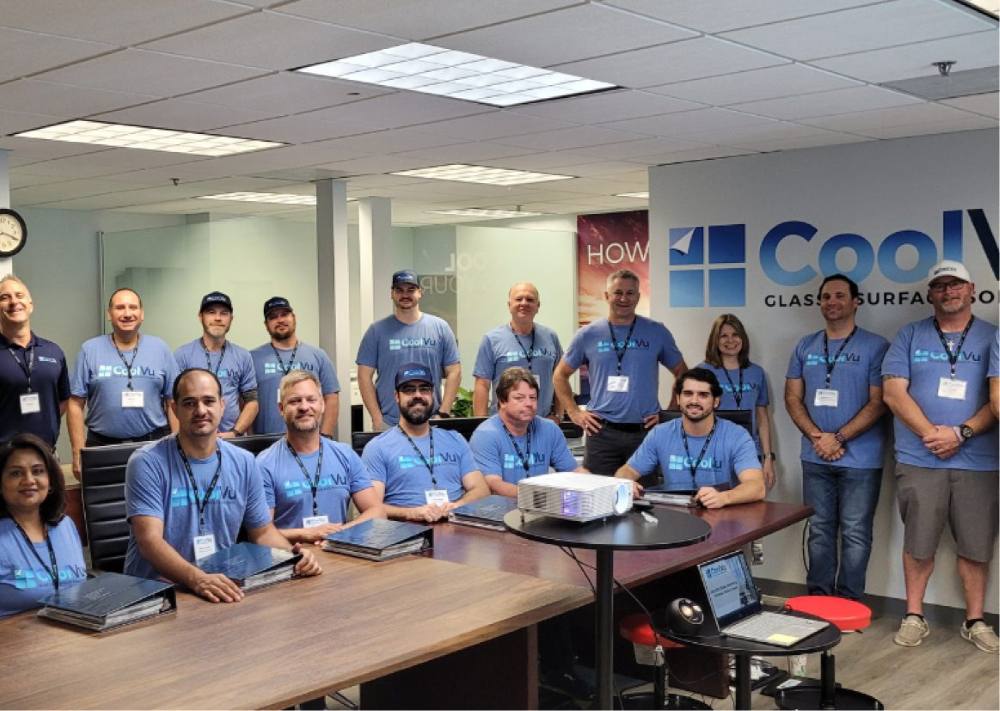
Beyond the formal support structure lies a powerful, often overlooked asset: the franchisee network itself. A world-class franchise system intentionally cultivates a community built on collaboration, not just co-existence. For an experienced entrepreneur, this network functions as a high-level advisory board.
The quality of a franchise system can be measured by the quality of the franchisees it attracts. When you join a system that appeals to high-caliber business people, you gain access to an elite peer group. This is about having a network of fellow experts to call to discuss supplier negotiations or employee compensation strategies.
The most effective franchise communities formalize this peer-to-peer exchange through mastermind groups. These are small, structured groups of non-competing franchisees who meet regularly to tackle challenges and share wins. This collective intelligence allows you to solve problems in days that might have taken you months to figure out on your own.
Finally, when evaluating a franchise, pay close attention to the culture. Look for systems where owners freely share performance data and best practices. This happens when the franchisor promotes transparency and celebrates collective success. This collaborative ecosystem is a hallmark of a truly elite franchise opportunity for seasoned business owners.
Conclusion: Your Next Step to Building a Best-in-Class Portfolio
As an experienced owner, you are past the point of simply adding another logo to your portfolio. Your next franchise investment must be a calculated one, designed to elevate the performance of your entire enterprise. It requires a new lens for evaluation, one that scrutinizes the DNA of a franchise system, not just its surface-level appeal.
This means looking beyond brand recognition to analyze the fundamental drivers of profitability and efficiency. You must assess the founder’s industry expertise, the robustness of the operational support, and the system’s ability to generate high margins in a non-commoditized market. This refined approach is what separates adding another revenue stream from acquiring a true high-performance asset.
A Final Investment Filter for Elite Franchise Systems
Before you engage deeply with any new franchise, apply a rigorous filter. These questions are designed to reveal the true caliber of the franchise system.
- Founder Expertise: Is the system built by a corporate team, or by a founder with decades of direct, in-the-field experience in this specific industry?
- Unit-Level Economics: Can the franchisor provide transparent, granular data on franchisee profitability, not just top-line revenue? Look for strong gross profit margins and a clear path to net operating income that exceeds your current portfolio’s average.
- System Scalability: Does the support infrastructure, from technical training to marketing execution, demonstrate an ability to help you grow efficiently and pursue multi-unit franchise opportunities?
- Market Differentiation: Is the product or service offering protected from commoditization? A superior model operates in a niche where expertise and quality command a premium.
Answering these questions honestly will quickly separate the truly exceptional opportunities from the merely adequate ones. Your decision transcends the purchase of a license. You are selecting a strategic partner for the next chapter of your business legacy. A true partner invests in your performance, understanding that their success is intrinsically linked to yours. For the seasoned entrepreneur, this partnership is the final, and most important, differentiator. It is the advantage that ensures your next franchise is not just another business, but your best one.
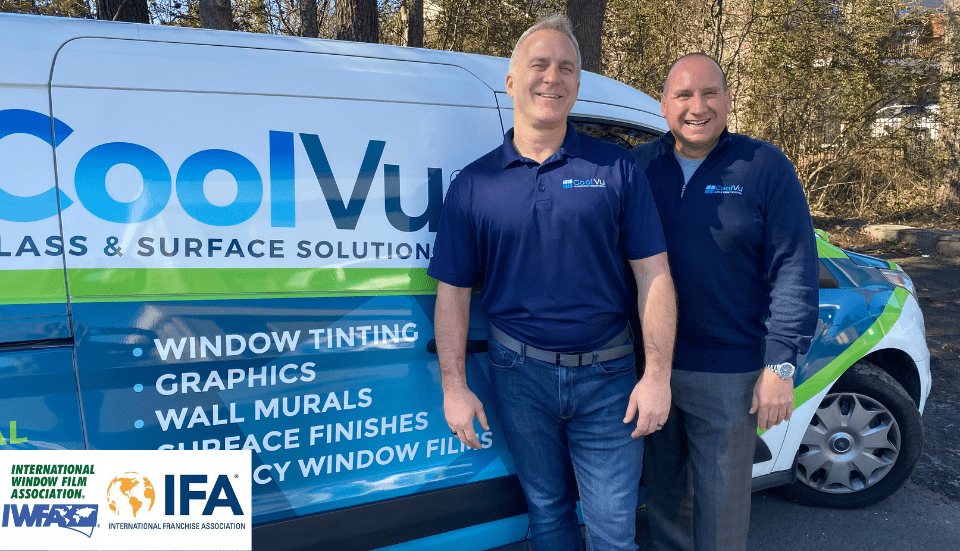
To own a franchise with a proven system designed for scalability and long-term growth, connect with CoolVu Franchise to explore the opportunity.
Frequently Asked Questions
What’s the real difference between a good franchise and a ‘best-in-class’ one for an experienced owner?
For an experienced owner, a “good” franchise offers a proven brand and a basic operational model. A “best-in-class” franchise provides a superior business system. This includes an integrated technology stack for maximum efficiency, data-driven support that proactively identifies opportunities, and a model engineered for higher franchise profitability and easier scalability.
How do I analyze franchise profitability beyond just the Item 19 revenue figures?
Look past top-line revenue and focus on unit-level economics. Analyze the gross profit margins on core services, the prime cost (COGS + total labor) as a percentage of sales, and the ratio of fixed vs. variable expenses. A high-profit franchise will demonstrate strong margins, a low prime cost, and a low-overhead model that creates operational efficiency and accelerates profit as you scale.
What makes a franchise model truly scalable for multi-unit franchise opportunities?
True scalability is designed into the business model. Key features include a simple operational structure, low capital requirements for adding subsequent units, and a reliance on talent that is readily available and trainable. A model that allows you to expand with a new vehicle and a small team, rather than a new million-dollar build-out, offers far greater capital efficiency for a multi-unit franchisee.
Can I really achieve ‘executive ownership’ and own a franchise without being a semi-absentee owner?
Yes. “Executive ownership” is a more realistic goal than “semi-absentee.” It means you are in strategic control without being involved in daily tasks. This is only possible when the franchise provides a robust, fully documented system with integrated technology and comprehensive training for your manager. The system empowers your manager to run the business, allowing you to focus on high-level strategy, performance analysis, and growth.
More Interesting Posts: