Table of Contents
The First Strategic Step: Choosing the Right Industry
When you decide that the franchise model aligns with your entrepreneurial style, the journey of how to own a franchise truly begins. The first step isn’t to fall in love with a brand, but to methodically identify the right industry. This phase is about strategic filtration. Your goal is to find a sector where a robust franchise system can provide the operational leverage you need to succeed, saving you the immense time and effort of building a market presence from the ground up.
Align Your Goals with the Right Industry
Before analyzing a single financial statement, you must first look inward. What do you want this business to do for your life? The answer will act as the primary filter for your search, ensuring the business serves your goals, not the other way around.
Consider what you envision for your day-to-day. Are you looking for a business that requires your full-time presence on-site, or one that can eventually be managed with a semi-absentee model? Are you aiming to build a multi-unit empire, or a single, highly profitable location that becomes a pillar of your community? Each path requires a different kind of operational model, level of capital, and type of industry. A strong franchise partner will be transparent about the operational demands of their system and how it can support these different ambitions for business ownership.

Analyze Market Demand and Long-Term Sustainability
A key advantage of a franchise system is that the franchisor has already invested heavily in proving market demand. They have done the national-level research, tested the products or services, and refined the business model. Your task is to validate their findings within your specific territory and assess the industry’s long-term health.
Look for industries that solve a persistent customer need rather than catering to a fleeting trend. For example, property improvement and energy efficiency are not fads. They are consistent needs for homeowners and commercial building owners driven by factors like aging infrastructure and rising energy costs. A franchise in such a sector offers built-in, long-term relevance. A great franchisor will provide you with data and tools to analyze your local market, helping you understand the competitive landscape and demographic profile of your potential customers. This partnership in due diligence is the first sign of a system built for mutual success.
Identify Industries with High Margins and Scalability
For a seasoned entrepreneur, a new venture must be more than just another income stream. It must be a strategic growth engine. This means seeking out industries that offer strong unit economics and a clear path to expansion. High margins provide the financial cushion to weather market fluctuations and the fuel to reinvest in growth.
Scalability, however, is where a premier franchise system truly demonstrates its value. A scalable model is one that you can replicate efficiently across multiple locations or territories without having to reinvent your operational strategy each time. When evaluating an industry, ask critical questions that point to its scalability within a franchise framework.
- Does the business model rely on a simple or a highly complex operational structure?
- What does the staffing model look like, and how easy is it to train new teams?
- Is the supply chain robust and able to support multi-unit growth?
- Does the franchisor offer tiered support for multi-unit owners?
The answer to these questions will reveal whether an industry is simply profitable or genuinely scalable. A system designed for growth provides the blueprint, training, and support that make expansion a manageable process rather than a logistical nightmare.
Move Beyond Passion with a Data-Driven Approach
Many aspiring business owners are told to “follow their passion.” While passion can be a powerful motivator, it should not be your primary investment thesis. A successful franchisee’s passion is often for building an efficient business, leading a great team, and delivering exceptional customer service, not necessarily for the specific product itself.
Adopt the mindset of a strategic investor. Your decision should be rooted in objective data about the industry’s performance, profitability, and future outlook. The best franchisors facilitate this by providing a comprehensive Franchise Disclosure Document (FDD). This document is a treasure trove of information, offering detailed insights into the business model, financial performance representations, and the company’s history. By focusing on market sustainability, profitability, and scalability, you move from a wide pool of industries to a shortlist of truly viable opportunities.
Evaluate the Franchisor: The Non-Negotiables of Partnership
Once you’ve identified a promising industry, the journey shifts from a broad concept to a specific, critical decision: choosing your partner. This is not merely a vendor selection. You are entrusting your capital, your time, and your entrepreneurial future to the system, leadership, and vision of the franchisor. A great franchise partner provides the blueprint that transforms your investment into a thriving, streamlined operation, making this evaluation one of the most important steps to buying a franchise.
The Hallmark of a Great Franchisor: A Robust and Proven System
The core value of a franchise lies in its system. For an experienced entrepreneur, this is where efficiency is born. Instead of spending months or years developing and testing operational processes, marketing strategies, and supply chains, you adopt a model that has already been refined. A truly robust system is a comprehensive ecosystem designed to accelerate your path to profitability and minimize costly errors.
When evaluating a franchisor’s system, look for concrete evidence of its strength across several key areas:
- Operational Playbooks: The day-to-day procedures should be clearly documented, from customer service scripts and job execution protocols to inventory management and quality control.
- Marketing and Lead Generation: The franchisor must have a sophisticated engine for generating brand awareness and, most importantly, customer leads. A proven system moves beyond basic branding to provide tangible tools and campaigns that drive revenue.
- Technology and Software: A modern franchise like CoolVu should leverage technology to streamline business management, including proprietary software for scheduling, invoicing, customer relationship management (CRM), and financial reporting.
- Supply Chain and Vendor Relationships: The franchisor should have established national accounts and preferred pricing with key suppliers. This not only reduces your costs but also ensures you have access to the right materials from day one.
A system this complete is your greatest asset. It provides the structure that allows you to focus on leading your team and growing your business, rather than getting bogged down in the minutiae of building from scratch.
Gauge Leadership: The Critical Role of Founder Experience
You are investing in a brand’s future, and that future is shaped by its leadership. A franchisor led by a founder with deep, first-hand experience in the industry is an invaluable asset. They have not only designed the business model but have also lived it. They understand the challenges you will face because they have faced them, and they have built the system’s solutions based on that hard-won knowledge.
Look beyond the corporate structure to understand the founder’s story and the executive team’s vision. Is their focus on aggressive, short-term franchise sales, or on the long-term, sustainable success of each franchisee? A strong leadership team is transparent about their strategic direction, their investments in innovation, and their commitment to keeping the brand relevant and competitive.
Vet the Training and Support Infrastructure
A franchisor’s promises are only as good as its ability to deliver on them. The franchise training and support infrastructure is where the operational playbook comes to life. This is the mechanism that transfers the brand’s proven knowledge directly to you and your team.
First, a comprehensive initial training program goes far beyond the technical aspects of the product. It should be an immersive business education covering administration, financial management, marketing, sales processes, and proprietary software.
Second, your journey truly begins after the initial training ends. A great franchisor provides a dedicated, multi-layered support system to ensure you are never on your own. Ask pointed questions about the support structure:
- Is there a dedicated point of contact for new franchisees?
- What does the field support model look like? Will experienced consultants visit you on-site?
- Are there regular webinars, national conferences, and regional meetings to foster continuous learning?
- How does the franchisor help with ongoing marketing and lead generation efforts?
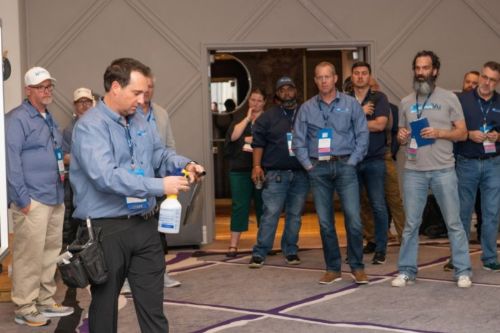
This continuous loop of training and support is what makes a franchise system dynamic, helping you navigate challenges and operate at a high level.
The Validation Process: What to Ask Current Franchisees
The final and most crucial piece of your evaluation is validation, which means speaking directly with the people who are already living the business every day. The Franchise Disclosure Document will contain a list of all current and recently departed franchisees. Do not skip this step. Honest conversations with existing owners will confirm or challenge everything the sales team has told you.
Come prepared with thoughtful questions. Your goal is to understand the reality of the business, not just the highlights.
- “How does your day-to-day experience compare to what the franchisor described?”
- “How effective was the initial training in preparing you to run the business?”
- “When you have a problem, how responsive and helpful is the corporate support team?”
- “Are the marketing programs effective in helping you generate revenue?”
- “Knowing what you know now, would you make the same decision to invest in this franchise?”
The patterns you uncover in these conversations are your most reliable indicator of the franchisor’s true character and the strength of its system.
Decode the Franchise Disclosure Document (FDD)
After your initial evaluations, you will receive the Franchise Disclosure Document, or FDD. This comprehensive legal document can seem intimidating, but it is designed to empower you. Think of it not as a hurdle, but as your single most important tool for objective due diligence, providing a transparent, federally regulated look into the franchise system.
Item 7: Understand Your Estimated Initial Investment
Item 7 of the FDD provides a detailed, tabulated breakdown of your estimated initial investment. This is the franchisor’s good-faith estimate of what it will cost to get your business open and operational. It goes far beyond the initial franchise fee and is critical for building a realistic budget. The table typically includes a low and high range for costs such as the franchise fee, real estate or vehicle costs, equipment, initial inventory, grand opening marketing, and additional funds or working capital for the first few months. This item provides a clear financial roadmap, allowing you to plan your capital needs with confidence.
Item 19: Analyze Financial Performance Representations
Item 19 is where a franchisor can, at its option, provide data about the financial performance of its existing franchisees. While not all franchisors provide an Item 19, those that do offer a powerful lens into the system’s economic potential. When analyzing an Item 19, look beyond the top-line revenue figures. A strong representation will provide context, such as gross sales, average ticket prices, or even certain costs and margins. Use this data not as a guarantee of your own success, but as a benchmark to understand what is possible and to build your own financial projections.
Navigate the Franchise Agreement and Key Obligations
Included as an exhibit to the FDD is the franchise agreement itself. This is the binding legal contract that will govern your relationship with the franchisor for years to come. It is highly recommended that you review it with a qualified franchise attorney, but you should pay special attention to several key areas.
- Term and Renewal: How long is the initial contract term, and what are the conditions for renewing the agreement?
- Territory Rights: Will you receive an exclusive or protected territory where the franchisor will not place another location?
- Your Obligations: The agreement will detail all of your responsibilities, including operational standards, reporting requirements, and approved suppliers.
- Franchisor’s Obligations: This section outlines the franchisor’s commitment to providing training, support, and access to the brand’s systems.
- Termination and Transfer: Under what conditions can you or the franchisor terminate the agreement? What is the process if you decide to sell your franchise?

Secure Financing for Your Franchise Investment
With your due diligence complete and a strong franchise partner selected, the next step is to secure the capital needed to launch your new venture. This process is far more straightforward when you are part of a reputable franchise system, as lenders view a proven model as a significantly lower risk than a brand-new, independent startup.
Build a Realistic Budget and Business Plan
Using Item 7 of the FDD as your guide, your first task is to build a comprehensive budget. It’s wise to plan for the high end of the estimated investment range to ensure you are well-capitalized. Crucially, your budget must include a provision for working capital. This is the cash on hand you will need to cover operating expenses for the initial months before your business achieves positive cash flow.
As a franchisee, you have a powerful advantage when creating a business plan for a lender. Your franchisor provides the proven model, historical data, and brand recognition that forms the foundation of a compelling plan. They can provide the operational plan, marketing strategies, and Item 19 data to build credible financial projections. This partnership turns the business plan from a creative writing exercise into a data-driven presentation that gives lenders the confidence to invest.
Common Funding Pathways for Franchisees
Because of their lower risk profile, franchises often receive preferential treatment from lenders.
- SBA Loans: Loans backed by the U.S. Small Business Administration are a popular option. The SBA guarantees a portion of the loan, reducing risk for lenders and often leading to more favorable terms.
- Franchisor Financing: Some franchisors offer direct financing or have preferred lending partners who are already familiar with their business model, which can streamline the application process significantly.
- Other Sources: Other common options include leveraging a home equity line of credit (HELOC), using a 401(k) or IRA rollover for business startups (ROBS), or securing conventional bank loans.
Understand Ongoing Costs: Royalties and Marketing Fees
Your financial planning must account for the ongoing fees that sustain the franchise system and fuel its growth. These are not simply costs, they are your investment in the continued support and brand value that make the model work. The royalty fee, typically a percentage of your gross revenue, gives you the license to use the brand and access the entire operational system. The marketing fund fee is another contribution that is pooled to pay for national advertising and brand-building initiatives that benefit the entire system.
Execute a Seamless Launch with Best-in-Class Training
After you’ve validated the financial model and the franchisor’s culture, the final step in becoming a franchisee is the onboarding and training process. This is where the promise of a “proven system” is put to the test. A robust program is the bridge between your decision to invest and your ability to operate successfully, and it is a critical factor in accelerating your path to profitability. For an experienced entrepreneur, a strategic onboarding program isn’t about teaching the basics of business, it’s about providing a complete operational framework that saves invaluable time and effort.
From Classroom to Real-World Application
Theoretical knowledge can only take you so far. The true measure of a franchise training program is its ability to translate classroom learning into real-world competence. This is why hands-on, practical training is a necessity. Look for a franchisor that moves you from the conference room to the field, working with the actual tools, materials, and software you will use every day. This approach drastically shortens the learning curve and builds the confidence needed to lead your own team and serve your first customers with authority.
The Technology Stack That Powers Your Business
In today’s market, your business runs on technology. A top-tier franchisor provides a fully integrated technology stack that serves as the central nervous system for your operation. This is a significant advantage that eliminates the headache and expense of researching, purchasing, and integrating disparate software systems yourself. A comprehensive technology stack should provide a seamless solution for critical functions:
- Customer Relationship Management (CRM): A centralized platform to manage leads and track customer interactions.
- Quoting and Invoicing: Professional, streamlined tools to create accurate proposals and manage payments.
- Scheduling and Dispatch: Software that optimizes your technicians’ routes and calendars.
- Marketing and Analytics: Systems to execute digital marketing campaigns and track key performance indicators.

An integrated stack means you can focus on growing your business, not on being an IT administrator.
Launching with a Proven Partner
The culmination of a world-class onboarding program is a seamless and successful business launch. A franchisor’s ability to repeatedly and effectively open new locations is the ultimate proof of their system’s strength. An experienced partner has a detailed, step-by-step launch playbook that begins weeks before you officially open, with pre-launch marketing designed to build awareness and generate initial leads. As your launch day approaches, the support often intensifies with a corporate team member on-site to assist you.
Choosing a partner with a long and successful track record of launching new franchisees is your greatest assurance that you are not starting a business alone. You are executing a finely tuned strategy with an expert team dedicated to your success. Learning how to own a franchise is less about having all the answers yourself and more about choosing a partner whose proven system becomes your blueprint for success.
To fully understand how to own a franchise and build a scalable, system-driven business, connect with CoolVu Franchise and explore the opportunity.
Frequently Asked Questions
What is the most important step to buying a franchise?
While every step is important, evaluating the franchisor and their system is the most critical. A great business idea is not enough. Your success depends on the strength of the franchisor’s operational playbook, leadership, training, and ongoing support. This is the foundation of your entire business.
How much does it really cost to start a franchise?
The total cost goes far beyond the initial franchise fee. A franchisor is required to provide an estimated initial investment in Item 7 of the Franchise Disclosure Document (FDD). This table breaks down all anticipated costs, including equipment, vehicles, insurance, marketing, and working capital needed for the first few months of operation.
Do I need industry experience to own a franchise?
Not necessarily. One of the primary benefits of a strong franchise system is its ability to teach you the business. A world-class franchisor provides comprehensive franchise training that covers not only the technical skills required but also the business management, sales, and marketing systems needed to operate successfully. Your drive and business acumen, paired with their proven model, is the recipe for success.
What is a Franchise Disclosure Document (FDD)?
The FDD is a legal document that franchisors are required by the Federal Trade Commission (FTC) to provide to prospective franchisees. It contains 23 sections detailing extensive information about the franchisor, the system, and the legal agreement, ensuring you have the material facts needed to make an informed investment decision.
How do I know if a franchise is a good investment?
You determine if a franchise is a good investment through thorough due diligence. This involves carefully reviewing the entire FDD, analyzing the financial performance representations in Item 19, validating the business model by speaking with current and former franchisees, and assessing whether the system and culture align with your personal and financial goals.
More Interesting Posts: