
Table of Contents
For the experienced business owner, the idea of a franchise offering a “proven business plan” can sound elementary. You have likely written several business plans yourself. You understand they are documents of intention, not guarantees of execution. The true asset for an investor is not the plan, but the system: a dynamic, road-tested, and meticulously engineered operational framework that has demonstrated success time and again. The greatest advantages of a franchise are found in this system, which offers not just a map, but a high-performance vehicle designed for a specific journey.
The Power of an Engineered Operating System
A business plan outlines a destination with market research and financial projections. A sophisticated operating system provides the turn-by-turn directions and real-time performance data to get you there efficiently. It is the tangible collection of processes, tools, and support structures that govern day-to-day execution and long-term business growth.
For an entrepreneur accustomed to building from scratch, integrating a new venture often represents a significant operational drain. A superior franchise system directly mitigates this concern. Instead of spending critical months developing your own workflows, you are handed a fully integrated toolkit. This system is not theoretical, it is the product of thousands of hours of refinement across numerous territories.
A truly engineered operating system includes:
- A defined sales and consultation process that guides customer interactions from first contact to final invoice, maximizing conversion rates.
- A proprietary technology stack, including CRM and project management software configured specifically for the business model.
- Automated marketing and lead generation funnels that deliver qualified prospects with predictable consistency.
- Standardized training programs for key roles, ensuring quality and operational consistency without requiring your direct oversight for every new hire.
- A data-driven performance dashboard with established key performance indicators (KPIs), allowing you to manage the business by the numbers.
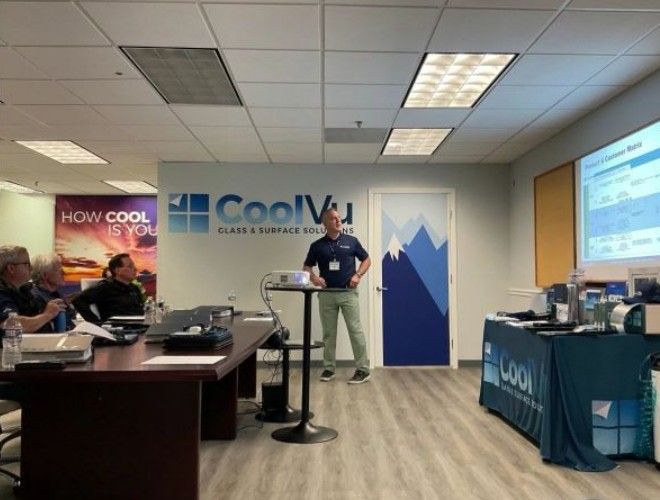
This level of operational maturity lets you bypass the costly and time-consuming trial-and-error phase, letting you focus immediately on execution and leadership.
A Track Record that Reduces Your Risk
Any franchise can point to success in its home market. The more telling metric for an investor is a history of successful launches in diverse territories. This demonstrates that the system is not dependent on the founder’s charisma or a specific local economy. It proves the franchise model is robust, replicable, and adaptable.
A franchisor with a deep track record in new territory development has already absorbed the learning curve on your behalf. They have identified common pitfalls, streamlined the launch sequence, and perfected the initial marketing blitz needed to gain traction. This de-risks your franchise investment benefits and dramatically shortens the time from signing the agreement to generating positive cash flow, a critical concern for any investor evaluating a new opportunity.
Designing for Scalability: The Framework for Multi-Unit Growth
A job is something you have to do, an investment is something that works for you. Many franchises are designed to create the former, while a premier franchise is engineered to deliver the latter. The ultimate proof of a system’s power is its inherent design for scalability. For a sophisticated investor, the goal is rarely to own and operate a single unit. The goal is to build a portfolio.
A system designed for scale anticipates the needs of a multi-unit owner from day one.
- Standardized Operations mean you can implement the same successful model across multiple locations with minimal variation, ensuring predictable quality and customer experience.
- Robust Training Infrastructure allows you to develop a bench of talent, including managers who can run locations independently, freeing you to work on the business, not just in it.
- Centralized Support Systems for marketing, booking, and administrative tasks reduce the operational overhead of each additional unit, allowing for more profitable expansion.
This framework empowers you to apply your business acumen at a strategic level. When you compare a franchise vs independent business, the path to expansion is clear. An independent owner must personally architect every stage of growth. In a superior franchise system, the playbook for adding a second or third territory has already been written. You can focus on identifying opportunities and leading your team, confident that the scaffolding for growth is there to support you.
Strategic Risk Mitigation and Reduced Operational Drag
For the experienced entrepreneur, evaluating a new venture is not just about the potential upside. It’s a calculated assessment of risk and the operational burden required to achieve that upside. A best-in-class franchise fundamentally rebalances this equation by systematically de-risking the venture and absorbing the operational drag that typically slows down growth.
Launching any new business involves a significant tax on your time and energy. You must develop systems, vet suppliers, build marketing funnels, and establish operating procedures from a standing start. A superior franchise system is engineered to solve this exact problem. It replaces the guesswork of a standalone launch with a proven, step-by-step process. This allows you to bypass months of foundational work and channel your energy directly into revenue-generating activities from the very beginning.
This structured support system ensures you are implementing a proven model correctly from day one, minimizing costly early mistakes and shortening the runway to positive cash flow and a stronger return on investment (ROI).
Transferring Complexity to Maintain Strategic Focus
Perhaps the most profound advantage for a sophisticated investor is the ability to outsource operational complexity. In a standalone business, the owner is responsible for everything from product research and software evaluation to marketing strategy and supply chain logistics.
A mature franchise system allows you to transfer these immense operational burdens to the franchisor. The franchisor’s dedicated corporate team handles the complexities that are essential for long-term competitive advantage. This includes tasks like researching new technologies, updating software, managing national supplier relationships, and developing network-wide marketing systems.
This strategic division of labor frees your cognitive bandwidth. You are liberated from the minutiae to concentrate on the three pillars of local growth: leading your team, driving sales, and building relationships in your community. You get to be the CEO of your market, leveraging a powerful corporate infrastructure to amplify your efforts.
The Multiplier Effect of an Elite Peer and Leadership Network
While robust systems provide the vehicle for success, an elite franchise network supplies the high-octane fuel. The true value is not a generic community, but a curated ecosystem of high-performing peers and accessible, experienced leadership. This network acts as a strategic force multiplier, dramatically shortening learning curves and amplifying your own business acumen.
Instead of a simple help desk, a best-in-class franchise cultivates a strategic mastermind group. This is a proactive environment where franchisees collaborate on high-level challenges and opportunities. Imagine encountering a complex installation request. Instead of spending days on research, you can tap into the collective experience of dozens of owners who have likely already tackled and perfected the same issue.
Beyond peer support, a superior franchise provides direct access to the founding leadership for high-level mentorship. When you are considering a major capital investment or navigating a significant market shift, the founder’s perspective is invaluable. They have seen the industry’s cycles, understand the system’s core economics, and are personally invested in your long-term franchisee success.
How to Spot a ‘Best-in-Class’ Franchise Opportunity
The advantages of a franchise described above are the hallmarks of an elite opportunity. As a sophisticated investor, your due diligence must focus on identifying the tangible evidence of these superior qualities.
Evaluate Leadership with Deep Franchise Experience
First, scrutinize the leadership team. Industry expertise is crucial, but it is not the same as franchise development experience. Building a scalable, supportive, and profitable system for hundreds of independent owners is a completely different discipline. Examine the founders’ backgrounds. Have they successfully built and managed a franchise network before? A leadership team with a proven track record in franchising is a clear indicator that the business system has been engineered for sustainable growth.
Read Between the Lines of the Franchise Disclosure Document (FDD)
The Franchise Disclosure Document (FDD) is your most important source of objective data. Focus on these key items:
- Item 19: Financial Performance Representations. Strong systems are transparent and confident in sharing this information.
- Item 20: Outlets and Franchisee Information. Look at the rate of franchise terminations and transfers. A high rate of turnover can be a significant red flag. This item also provides contact information for current and former franchisees.
- Items 5, 6, and 7: Fees and Estimated Initial Investment. Compare the initial investment with the financial performance in Item 19 to ensure the potential return justifies the cost.
Gauge the Health of the Existing Franchisee Network
The most reliable indicator of a franchise’s quality is the satisfaction of its existing owners. Use the contact list from Item 20 of the FDD and make the calls. Speak with a broad cross-section of owners and ask direct questions:
- “How effective is the corporate operational support when you have an urgent issue?”
- “Does the franchisee network feel collaborative or competitive?”
- “Knowing what you know now, would you make the same investment again?”
The candid answers to these questions will provide the ultimate confirmation of whether you are looking at a standard franchise or a true best-in-class opportunity.
The Franchise as a Strategic Lever for Portfolio Diversification
For the experienced entrepreneur, the decision to add a new venture is a strategic move to build a more resilient and scalable portfolio. Viewing a best-in-class franchise through this lens reveals its true potential, not as a pre-packaged business, but as a high-performance engine you can integrate to achieve your financial goals with greater speed and certainty.
The conversation for a sophisticated investor must be elevated. It is about investing in a meticulously engineered system designed for force multiplication, one that takes your existing business acumen and amplifies it. Your evaluation criteria must evolve. Instead of focusing on initial fees, a strategic assessment should prioritize the quality and sophistication of the underlying systems. This is how you identify a partner that will reduce, not increase, your operational burden.

With this recalibrated framework, your entrepreneurial journey becomes a more focused and strategic endeavor. The goal is to find a franchisor whose commitment to system engineering and franchisee support aligns with your own standards for excellence. Challenge potential franchisors to demonstrate the strength of their systems with data, franchisee testimonials, and transparent access to their operational platforms. Your ideal partner will not only welcome this scrutiny but will see it as the foundation of a successful, long-term relationship built on mutual respect and shared ambition.
Frequently Asked Questions
Why should an experienced entrepreneur buy a franchise instead of starting another independent business?
For a seasoned entrepreneur, the primary advantage is leverage. A top-tier franchise provides a meticulously engineered operating system, established supply chains, and proven marketing funnels. This allows you to bypass months of foundational work, reduce operational drag, and apply your business acumen to scaling an already proven model, leading to faster profitability and portfolio diversification.
What makes a franchise operating system better than just a business plan?
A business plan is a strategic document of intent. A superior franchise operating system is a tangible, living framework for execution. It includes a proprietary technology stack, standardized sales and training processes, and data-driven performance dashboards. It’s a high-performance vehicle, not just a map, built from thousands of hours of real-world refinement.
How does a franchise reduce the time it takes to become profitable?
A premier franchise accelerates your time-to-profitability by compressing the learning curve. This is achieved through immersive initial training, on-location launch support from experienced professionals, and dedicated ongoing coaching. By minimizing costly early mistakes and providing a clear path for execution, the system shortens the runway to positive cash flow.
What should I look for in a Franchise Disclosure Document (FDD)?
In the FDD, focus on three key areas. Review Item 19 for transparent Financial Performance Representations. Analyze Item 20 to check for high rates of franchise turnover, which can be a red flag. Finally, use the franchisee contact list in Item 20 to conduct your own due diligence calls with current and former owners.
More Interesting Posts: