Table of Contents
What Does “Franchise With No Brick and Mortar” Really Mean?
Brick and Mortar vs. Service-Based: How the Models Really Compare in 2026
Types of No–Brick-and-Mortar Franchises: Mobile, Home-Based, and Virtual
Key Advantages and Tradeoffs of Franchises With No Physical Storefront
Best Franchise Opportunities Without Brick and Mortar (By Industry)
What Does “Franchise With No Brick and Mortar” Really Mean?
A franchise with no brick and mortar is exactly what it sounds like: a franchise business that operates without a fixed retail storefront, showroom, or traditional office open to the public. Instead, these models run from home offices, branded vehicles, or entirely online. The owner handles admin, sales, and scheduling from home while delivering services directly to clients at their location, whether that’s a residence, a commercial building, or a job site.
Franchise systems designed without traditional storefronts are growing due to increased flexibility, and several forces are accelerating this shift into 2026. Commercial rents keep climbing. Remote work has normalized the idea that serious businesses can run from anywhere. Service based businesses are growing faster than retail. And consumers increasingly expect services to come to them rather than the other way around. Franchise opportunities today can be home-based or mobile, and they span dozens of industries from cleaning services to senior care to surface enhancement.
This article is written for aspiring franchise owners who are actively comparing brick and mortar vs. service based and home based options. We’ll use CoolVu, a home-based, owner operated franchise in the window film and surface enhancement space, as a concrete example throughout. Here’s what you’ll learn:
- The real cost and lifestyle differences between brick and mortar and service based franchise models
- The three main types of no-storefront franchises (mobile, home based, virtual) and which industries fit each
- Key advantages, tradeoffs, and common mistakes to avoid
- How CoolVu operates as a home based franchise in a $3.35 billion U.S. window film market
- A step-by-step framework for evaluating and acting on your best franchise opportunities, especially in proven franchise business models in booming industries
Brick and Mortar vs. Service-Based: How the Models Really Compare in 2026
The first real decision most prospective franchisees face is whether to invest in a fixed physical location or a flexible, service based franchise model. Understanding this distinction saves months of wasted research.
Brick and mortar franchises include concepts like fast-food restaurants, juice bars, massage studios, and 24-hour gyms. They require a traditional storefront, significant buildout, and multi-year commercial leases. Typical investment ranges start at $250,000 and climb fast once you factor in construction, equipment, signage, and working capital. Success depends heavily on location: foot traffic, parking, visibility, local competition, and whether a 5-to-10-year lease commitment will remain viable through economic cycles.
Non-traditional franchises typically have lower overhead costs than brick-and-mortar franchises. Service based franchises like painting companies, maid services, pest control operators, home health agencies, senior care providers, commercial cleaning operations, and modern window film providers are among the industries most likely to franchise because they can deliver services on-site at the customer’s location. There’s no retail rent to cover during slow weeks. Your cost structure shifts from high fixed expenses (rent, utilities, full-time front desk staff) to variable costs tied directly to jobs (labor, materials, travel).
Service-based franchises typically require lower initial investment. Data across 31 home services brands shows average total investments ranging from $87,000 to $229,000, with many options under $100,000. Many service-based franchises offer higher recession resistance because they deliver essential or compliance-driven work: repairs, health care, inspections, and security installations don’t pause when consumer confidence dips.
Here’s how the two models compare on practical factors:
- Time to launch: Service based and mobile franchises often launch in 60–120 days; brick and mortar buildouts can take 9–18 months
- Capital required: Many no-storefront concepts start under $100K; most brick and mortar concepts exceed $250K, and prospective owners should understand the typical costs involved in purchasing a franchise before committing
- Staffing complexity: Service based models can start with one owner and scale; brick and mortar typically needs day-one staff
- Scalability: Service based franchises can be highly scalable through territory expansion without additional leases, especially models like a CoolVu window film franchise that grow crew-by-crew instead of store-by-store
- Exit/resale: Brick and mortar has tangible assets (fixtures, lease) but also liabilities; service based resale depends on client base and recurring contracts
- Ownership styles: Both models can support owner operated and semi absentee structures, but service based models tend to offer more flexibility for the owner’s daily schedule
Types of No–Brick-and-Mortar Franchises: Mobile, Home-Based, and Virtual
The phrase “no brick and mortar” breaks down into three overlapping formats: mobile, home based, and virtual. Most modern franchises blend elements of at least two.
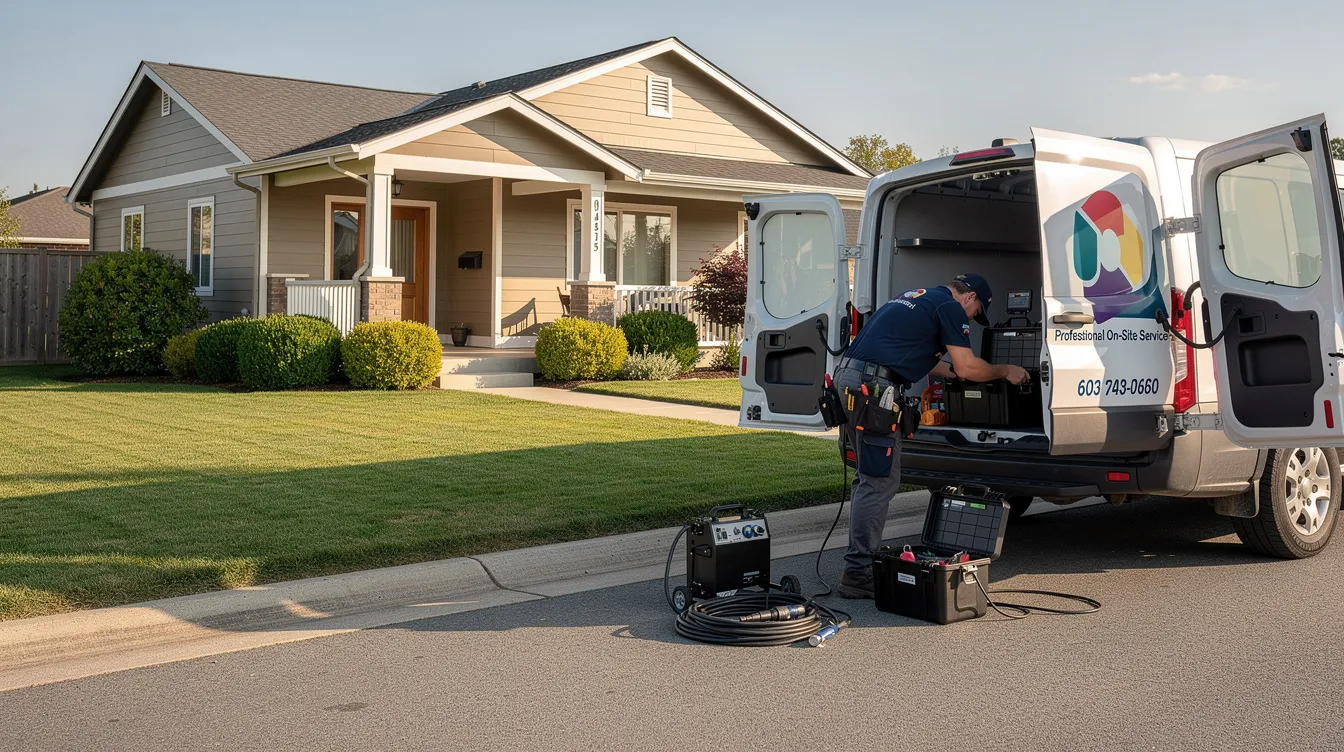
Mobile franchises operate from vehicles or mobile units. The franchisee and their team travel to customers, performing services on site from a wrapped van, truck, or trailer. Mobile franchises cater to consumer demand for convenience. Matco Tools exemplifies the mobile franchise model with tool trucks that bring inventory directly to mechanics. Kona Ice operates over 1,300 mobile shaved ice locations nationwide. Other examples include mobile pet grooming, mobile car detailing, and mobile IV therapy services. Franchising examples include cleaning, travel agencies, and pet services that all use some form of mobile or on-location delivery.
Home based franchises allow operation from a home office. The owner runs scheduling, marketing, invoicing, and client relations from home while field work happens at client sites. Think property management, bookkeeping, home inspection, tutoring, senior placement, and travel planning. Many service-oriented franchises can operate entirely from a home office with nothing more than a laptop, phone, and a reliable vehicle.
Virtual or remote franchises may have no vehicles or local warehouse at all. Online travel agencies, medical billing services, virtual bookkeeping, and cost-reduction consulting are typical examples. These can start with as little as $10,000–$20,000 in total investment.
In practice, many franchisees blend these models. A CoolVu franchisee, for instance, manages sales and admin from a home office while deploying branded vehicles and trained installers to residential and commercial job sites, closely mirroring a modern mobile franchise business opportunity. This hybrid approach keeps overhead minimal while still putting a professional, branded presence in front of customers.
Typical startup costs for no-storefront franchises in 2026:
- Virtual/remote: $10,000–$20,000
- Single-van mobile or home based: under $100,000
- Multi-vehicle or multi-crew mobile operations: $150,000+
Industries that particularly fit these models:
- Home services (window film, pressure washing, window cleaning, pest control, painting)
- Home health and senior care
- Youth enrichment and education
- B2B services (bookkeeping, payroll, IT support, digital marketing)
- Mobile wellness (pet grooming, IV therapy, mobile store concepts for med-spa services)
- Surface enhancement (decorative graphics, architectural finishes, smart glass)

Key Advantages and Tradeoffs of Franchises With No Physical Storefront
Lower overhead costs and lifestyle flexibility are the headline attractions of a franchise with no brick and mortar, but these models still demand strong sales skills, self-discipline, and operational hustle.
Financial advantages are significant. There’s no retail lease bleeding cash on day one. Buildout costs drop to near zero. You can start with one vehicle or a small team and add capacity only as demand justifies it. Home-based franchises typically have lower overhead costs than any storefront model, and they can qualify for home office tax benefits that further reduce your effective cost. Home-based franchises reduce financial risk compared to brick-and-mortar because you aren’t locked into a long lease if the market shifts.
Speed to revenue is another real differentiator. Service-based franchises often have quicker ramp-up times than brick-and-mortar franchises. While a restaurant franchisee waits 12+ months for construction and permitting, a mobile franchise owner can be serving customers within 60–120 days of signing.
Lifestyle flexibility is tangible. Owner operated and semi absentee structures both work within these models. You can build your schedule around family, run daily operations from your house in athletic wear, and avoid a commute. But some sectors, like home services or mobile wellness, require evening and weekend availability when clients are home.
Tradeoffs matter. Without a traditional storefront, there’s no walk-in traffic. You need to actively generate leads through marketing, local networking, online quoting tools, and referral relationships. Managing dispersed crews across a territory requires routing apps, CRM systems, and sometimes proprietary software or proprietary technology provided by the franchisor. Franchises operating without retail storefronts can reach customers in places traditional stores cannot, but that reach depends on your willingness to sell and your comfort managing a mobile business across multiple job sites each week.
Mobile franchises typically have lower overhead costs than brick-and-mortar, and service based franchises carry negligible location risk as services are performed on-site. These models can also be more resilient in uncertain economies because you can scale down or add crews faster than a facility-based business can renegotiate a lease.
When a no-storefront franchise is a strong fit:
- You’re a self-starter comfortable with consultative sales and local networking
- You prefer low fixed costs and want to scale only as revenue grows
- You value territory-based growth over dependence on a single location
- You want to build a customer base through relationships, not foot traffic
- You’re comfortable using technology (CRM, automated retail quoting, routing tools) to manage operations
Best Franchise Opportunities Without Brick and Mortar (By Industry)
This section gives a high-level view of industries where no-storefront models thrive. CoolVu is used as a concrete example in the surface enhancement space.
Home services is the largest and most diverse category. Garage floor coatings, painting, window cleaning, pool care, pest control, pressure washing, handyman franchises, and window film or surface solutions all operate without a facility open to the public. CoolVu sits here as a modern home based, mobile franchise offering architectural window film, tinting, decorative graphics, and architectural surface finishes to both residential homeowners and commercial property managers, aligning with what to look for in a window tinting and surface solutions franchise. The U.S. window film market alone is valued at roughly $3.35 billion in 2025, projected to reach $5.31 billion by 2033, and the industry is highly fragmented with 18,000–26,000 small operators, most running one-van operations. That fragmentation creates real opportunity for a disciplined franchise model with consistent branding and training and positions window film among the best franchises to buy right now for experienced investors. Service-based franchises include project-based and subscription models, and many home services concepts generate recurring revenue through maintenance contracts or subscriptions.
Home health and senior care is recession-resistant and growing fast. Ten thousand Americans turn 65 daily, increasing demand for home care franchises through at least 2030. Non-medical home care, senior placement, and senior relocation franchises are among the best franchise opportunities for owner operated or semi absentee investors who want meaningful work with strong demographic tailwinds.
Youth and education franchises (tutoring, STEM enrichment, sports programs, after-school care) operate in schools, churches, and community centers rather than standalone locations. These are highly seasonal but can be highly profitable in densely populated suburbs with growing demand for enrichment programs.
B2B services offer attractive recurring revenue streams: IT support, payroll, bookkeeping, cost-reduction consulting, logistics brokerage, and digital marketing franchises all function from home offices. Clients are small businesses and mid-market companies, and contracts are often monthly retainers, creating predictable revenue.
Mobile wellness and personal services are newer but growing: mobile IV therapy, mobile med-spa treatments, mobile pet grooming, and mobile detailing all focus on high convenience at premium price points. These concepts suit franchise ownership models where the owner can sell and manage a team delivering services directly to customers at their home or office.
For each category, the question is whether you’re more comfortable with owner operated hands-on work or a semi absentee role overseeing employees. Home health, cleaning services, and B2B bookkeeping lend themselves to semi absentee faster. Surface enhancement, mobile wellness, and youth programs often start owner operated, especially models that function as a home decor and window solutions franchise.
How CoolVu Fits the No–Brick-and-Mortar Model (And What Makes It Different)
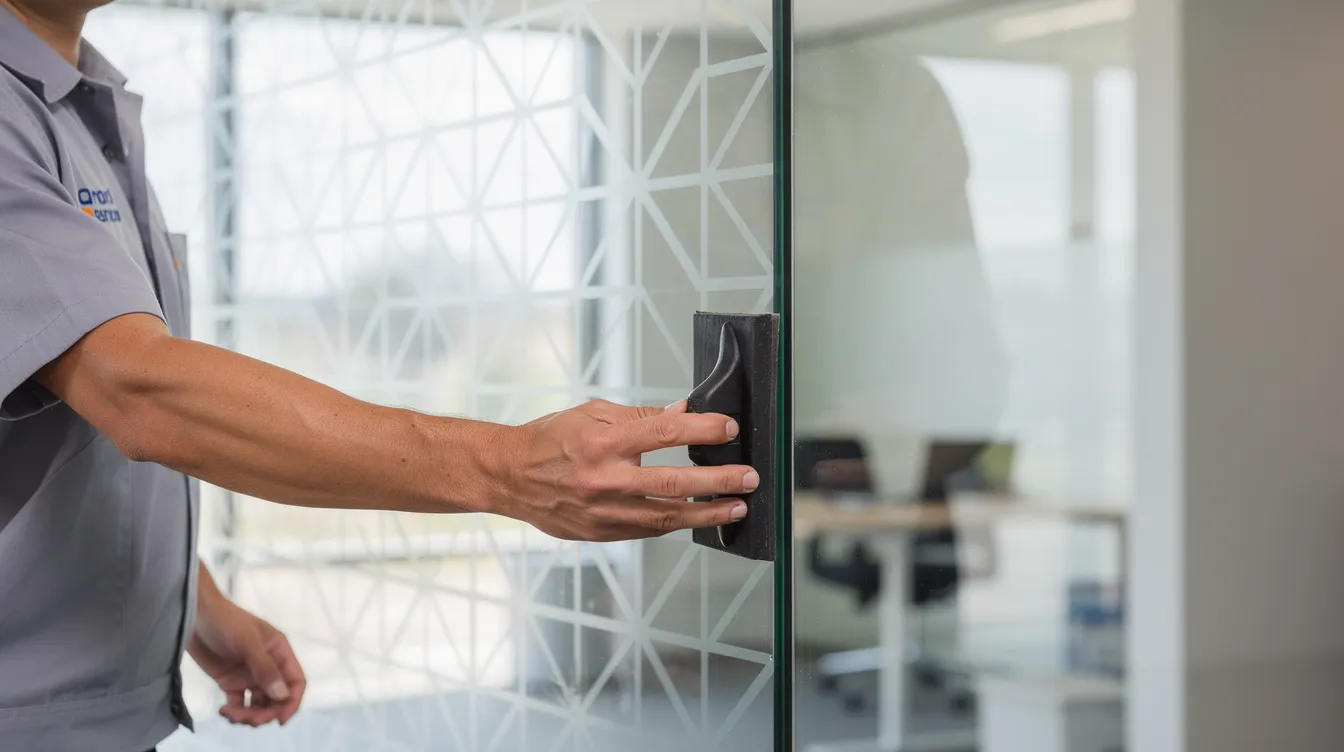
CoolVu is a home-based window tinting and surface enhancement franchise focused on window film, tinting, decorative graphics, and architectural surface finishes. Franchisees operate without a retail storefront or office space. Admin, scheduling, and sales happen from a home office. Branded vehicles carry installers and materials to residential and commercial job sites.
The product mix is broader than a typical tint shop: energy-efficient window films, security and privacy films, smart and switchable glass films, decorative wall graphics, and architectural surface wraps for cabinets, doors, and walls. This breadth creates multiple services under one brand, opening revenue streams across B2B and B2C clients. Commercial contracts with property managers, designers, architects, and contractors create repeat business and referral pipelines. Many home-based franchises generate recurring revenue through maintenance contracts or subscriptions, and CoolVu’s commercial relationships function similarly.
CoolVu provides comprehensive training covering product knowledge, installation technique, and consultative selling, backed by an experienced franchise leadership team and support infrastructure. No prior glass, construction, or sales experience is required. Franchisees also receive lead generation marketing support, protected territories, in-house financing options, and ongoing operational coaching.
Why a CoolVu-style model appeals to no-storefront investors:
- Low overhead with no showroom lease or large inventory requirements
- Scalable from one owner and one van to multiple crews across a territory
- B2B and B2C client mix reduces dependence on any single market segment
- Aligned with long-term demand drivers: energy efficiency regulations, privacy needs, security mandates for schools and hospitals, and commercial building modernization
- Home based operations with a lower initial investment than most brick and mortar franchises in similar industries, while still offering the key benefits of franchise ownership
CoolVu competes in a large market alongside product manufacturers like 3M, LLumar, and Solar Gard, but differentiates through a broader surface solutions lineup, franchise-focused support infrastructure, and a business model designed from day one for home based, mobile delivery rather than retail.
FAQs: Common Questions About Franchises With No Brick and Mortar
How much does a franchise with no brick and mortar typically cost to start in 2026?
Virtual and remote franchises can start as low as $10,000–$20,000. Home based service franchises and single-van mobile concepts commonly fall under $100,000 total. More complex multi-vehicle operations may require $150,000 or more. The franchise fee itself averages $20,000–$60,000 across most home services brands, with royalties typically running 4%–8% of gross revenue. Your total franchise investment depends on equipment needs, vehicle branding, working capital, and territory size.
Can I run a mobile or home based franchise as a semi absentee owner?
Yes, but not from day one in most cases. Semi absentee ownership means you hire a manager to handle daily operations while you provide oversight, typically 10–15 hours per week. Industries like cleaning services, home health, and B2B bookkeeping tend to transition to semi absentee faster because processes are highly repeatable. Surface enhancement and mobile wellness usually start owner operated for 12–18 months before the owner steps back.
Do I need industry experience to own a service based franchise?
Most franchisors, including CoolVu, do not require prior industry experience. Comprehensive training programs cover technical skills, sales, and operations. However, some industries like home health or senior care may require specific state licensing or clinical oversight depending on your location. Always check state requirements during your due diligence.
How do I find the best franchise opportunities without a storefront?
Start by clarifying your budget, lifestyle goals, and preferred industries. Request Franchise Disclosure Documents (FDDs) from 3–5 brands, paying close attention to Item 7 (initial investment) and Item 19 (financial performance representations). Talk to at least 3–5 existing franchisees in each system. Match your personality to the model: are you more comfortable with consultative sales or operations management?
What are the biggest mistakes new no-storefront franchisees make?
Underfunding marketing is the most common error. Without a storefront generating walk-in traffic, you must invest in lead generation from week one. Other mistakes include underestimating the importance of local networking, trying to operate as semi absentee before building a stable customer base, and not following the franchisor’s playbook closely enough during the first year.
How quickly can I expect to ramp up revenue in a home based or mobile franchise?
Realistic timelines range from 6–18 months to reach consistent monthly revenue, depending on your market, your effort level, and the franchisor’s marketing and training support. CoolVu franchisees, for example, benefit from protected territories and corporate lead generation that accelerate early traction, supported by a streamlined process to become a franchise owner. Territory maturity, hiring your first employees, and building referral networks all affect how quickly profitability arrives.
Is a mobile franchise or a purely home based franchise better?
It depends on your comfort with on-the-road work. A mobile franchise puts you in front of new customers daily but involves more driving, scheduling, and field logistics. A purely home based model may be more administrative and phone-intensive. Many of the strongest concepts blend both, giving you the advantages of home based cost structure with the client-facing presence of a mobile business.
Why Choose CoolVu When Exploring Home-Based, Service-Based Franchise Models?
CoolVu offers a home based, scalable, diversified franchise model built for the no-storefront era. Protected territories prevent market cannibalization. In-house financing options lower the barrier to entry. A robust marketing engine generates leads so franchisees can focus on selling and installing rather than figuring out demand generation from scratch.
The product mix-spanning energy-efficient films, privacy solutions, decorative graphics, and smart glass-serves both residential and commercial clients. This B2B and B2C balance means you aren’t dependent on a single market or season. Training and ongoing coaching help new franchisees without construction or sales backgrounds ramp up confidently, and the low overhead structure supports both owner operated launches and eventual multi-crew growth.
CoolVu aligns with durable long-term trends: energy efficiency regulations tightening across states, growing demand for home office privacy, increased security requirements for schools and healthcare facilities, and commercial building modernization through surface refinishing instead of full replacement.
Who CoolVu is ideal for:
- Entrepreneurs with approximately $50,000 in liquid capital who want clear visibility into the cost to buy a CoolVu franchise
- Veterans, first responders, women, and minority entrepreneurs seeking a proven system
- Career changers leaving corporate roles who want an attractive option with real independence
- People comfortable with consultative selling who want to build something in their community
- Anyone specifically researching a franchise with no brick and mortar in the home services market and asking whether buying a franchise is ultimately worth it
Next Steps: How to Evaluate and Take Action on a No–Brick-and-Mortar Franchise
The research phase is valuable, but the difference between people who own franchises and people who talk about owning franchises is a structured evaluation process. Move from browsing to comparing.
Here’s a concrete path forward:
- Clarify your budget and income goals. Know your liquid capital, your risk tolerance, and the annual income you need within 18–24 months.
- Pick 2–3 preferred industries. Match your interests and skills to industries with strong demand in your market.
- Request FDDs from 3–4 brands. Compare Item 7 (total cost), Item 19 (financial performance), royalty rates, territory size, and franchisee satisfaction.
- Talk to existing franchisees. Ask about their first year, their biggest surprise, and whether they’d do it again. Aim for 3–5 conversations per brand.
- Validate local demand. Check household density, building age, small businesses count, and competitor presence in your territory. For home services like window film, look at housing stock age, climate (sun exposure), and commercial real estate activity.
- Build a simple decision matrix. Weigh startup cost, training quality, territory protection, sales vs. operations balance, and lifestyle fit side by side.
If CoolVu is on your shortlist, request a franchise information kit, speak with a franchise advisor, or schedule a discovery call to check whether your market is still available. The conversation costs nothing and gives you real numbers to work with.
A well-chosen, service based, home based, or mobile franchise can provide a lower-risk, lower-cost path into business ownership than most brick and mortar concepts. Resources that explain whether buying a franchise is a good idea can help you weigh risk, demand, and support before you commit. The market for these models is maturing fast. The best territories won’t stay open forever, and the franchisees who succeed are the ones who move from research into action with clarity and confidence.