
Table of Contents
Why B2B Franchises Are Some of the Best Franchises to Own
If you are searching for the best b2b franchises to own in 2026, you are looking for franchise opportunities that combine strong profit potential, proven brand strength, reliable support systems, recession resistance, healthy average unit volume, and a realistic owner lifestyle. That combination is exactly why business to business franchises have steadily climbed the rankings among prospective franchisees who want to build wealth without the grind of managing a 50-person restaurant crew until midnight.
The numbers tell the story clearly. B2B professional services franchises average 12-22% net margins, while food service franchises typically generate just 3-9% net margins. When you factor in lower overhead, fewer employees, and the potential for recurring revenue from contract-based clients, the math shifts dramatically in favor of service-based B2B models.
In 2026, franchise categories gaining the most traction include automotive services, business consulting, commercial cleaning, staffing, and specialized surface solutions like window film and architectural finishes, all among the industries most likely to franchise in the current market. Concepts like CoolVu, which operates as a home-based franchise with multiple revenue streams in both residential and commercial markets, represent the kind of low investment, high-potential model that experienced operators and aspiring entrepreneurs are gravitating toward.
This article covers exactly what you need to evaluate: criteria for choosing the right b2b franchise, top categories, specific brand examples including Minuteman Press and Keller Williams, where CoolVu fits, common mistakes, FAQs, and a practical path to making your decision, echoing the kind of strategic guide to the best franchises to buy that positions CoolVu as a top investment.
What Is a B2B Franchise and How Is It Different From B2C?
A b2b franchise is a franchise where the primary customers are other businesses, institutions, or organizations rather than individual consumers walking in off the street, reflecting the classic business franchise model that offers a proven system, support, and branding. Think of Minuteman Press printing marketing materials for a hospital network versus a fitness studio selling monthly memberships to individuals. Or consider CoolVu installing energy-efficient window film for a commercial property management company versus a local coffee shop serving lattes to morning commuters.
B2B franchises focus on business services rather than direct consumer sales, and that distinction creates several structural advantages. Invoice sizes tend to be larger. Contracts often span months or years, creating predictable cash flow. And lower consumer risk is associated with B2B sales because clients are already familiar with business needs, budgets, and procurement processes.
The tradeoff is longer sales cycles. Landing a contract with a school district or healthcare system takes relationship building, proposals, and patience. But once those relationships are established, repeat customers become a reliable revenue engine.
B2B franchises generally operate during standard weekday business hours, which means fewer evenings and weekends than most retail or restaurant concepts. Many models, including consulting, surface solutions, and some marketing franchises, are home-based, eliminating expensive retail buildout costs and reducing the staff required to run smoothly.
Key Criteria for Evaluating the Best B2B Franchise Opportunities
Before calling any concept one of the best franchises, experienced franchise investors apply a practical checklist, similar to the factors used in expert guides that uncover high-profit, proven franchise opportunities like CoolVu. Here is what actually matters.
Financial fundamentals. Look at average unit volume, typical net margins (12-22% for many business services categories), total investment range, and realistic breakeven timelines. Many owners cross-check these numbers with data from sources like Franchise Business Review, which surveys franchisee satisfaction and financial performance across hundreds of systems.
Brand strength. How long has the franchisor operated? How many units are open? Does the brand have strong brand recognition in its market? Proven performance across multiple economic cycles matters more than flashy marketing. Check rankings from Entrepreneur, Franchise Business Review, and Franchise Times for context.
Operational model. Is it home-based or does it require a retail location? How many employees are needed to launch? Does the owner need prior industry experience, or can they rely on comprehensive training and vendor partnerships? Some models like advanced automotive services require technical staffing, while surface-solutions franchises can start with a small crew and the owner handling business development.
Support and training. Evaluate the onboarding program length, field support availability, marketing systems, lead generation tools, and technology stack (CRMs, quoting platforms, project management software). Strong support systems separate successful systems from names on a wall.
Scalability. Can you open multiple locations or add territories? Is the model designed so you can eventually build a management team and step back from daily operations? Franchise ownership requires a defined budget and clear goals, and scalability should be part of that plan from day one.
Territory protection. Territorial rights are an important factor to confirm in a b2b franchise agreement. Some brands offer an exclusive territory, while others allow overlapping zones that can create internal competition.
Why Many Investors Prefer B2B Franchises Over Retail and Food
Picture this: a typical quick service restaurants franchise requires $500,000 to $1.5 million in buildout costs, 20-40 employees, and generates 3-9% net margins after food waste, labor, and overhead. Now compare that with a B2B service franchise where the total investment might be $60,000 to $200,000, the team starts at two to five people, and margins land in the 12-22% range.
B2B franchises typically feature lower overhead than B2C franchises because many operate from a home office or small commercial space rather than a high-rent retail storefront. No foot traffic means no expensive signage, no constant remodeling, and no dependency on weekend crowds.
Resilience through multiple economic cycles is another draw. Businesses still need compliance services, safety upgrades, facility maintenance, staffing solutions, and technology support even during downturns. A Taco Bell location depends on discretionary consumer spending. A commercial cleaning contract or a security film installation for a government building does not.
The strongest B2B franchises share qualities like recurring revenue and low overhead, giving owners more predictable monthly cash flow, which is why many investors focus on top service franchises in high-demand niches like window film and surface treatments. And the lifestyle component matters: most B2B franchise owners work primarily during business hours, scheduling around family commitments rather than covering late-night shifts.
Customer dynamics are fundamentally different too. B2B relies on relationships and contracts with other businesses, while B2C relies on advertising-driven daily traffic. If you are comfortable with consultative selling and long-term follow-up, B2B fits naturally.

Top B2B Franchise Categories to Consider in 2026
Think of the B2B franchise landscape as a map with several distinct regions, each offering different risk-reward profiles. Here are the main categories where strong franchise systems operate in 2026:
- Print, marketing, and promotional products: Serving local businesses, schools, healthcare, and nonprofits with branded materials and campaigns.
- Commercial cleaning and facilities services: Contract-based janitorial, sanitation, and floor care for offices, medical facilities, and industrial sites.
- Business consulting and coaching: Strategic planning, leadership development, sales training, and financial advisory delivered to medium sized businesses.
- Staffing and employment services: Supplying temporary, contract, and permanent employees across manufacturing, logistics, healthcare, and professional roles.
- Automotive services: Fleet maintenance, tire management, and specialized B2B repair contracts for companies with vehicle fleets.
- Real estate brokerages and property services: Agent-based models plus inspection, restoration, and surface enhancement services.
- Surface solutions and architectural finishes: Window film, tinting, decorative graphics, and surface treatments for commercial and residential properties. This is where CoolVu sits, a crossover B2B/B2C service with heavy commercial demand.
B2B franchises require detailed management for operations like payroll or printing, but the operational complexity varies significantly between categories. The sections below break each one down.
Print, Marketing, and Promotional Products Franchises
Print and marketing services are classic business to business franchises with deeply recurring demand. Local businesses, hospitals, school districts, and nonprofits need business cards, brochures, signage, wide-format printing, branded promotional products, and event materials on an ongoing basis.
Minuteman Press is one of the longest-running examples, with approximately 1,039 franchised units in the U.S. and a median average unit volume near $750,000 for established locations. The brand leverages both print production and promotional products to create multiple revenue streams for franchise owners. The investment requirements typically range from roughly $138,000 to $216,000.
Fully Promoted has over 250 locations worldwide and focuses specifically on branded products and promotional marketing, another proven model where promotional products franchises benefit from recurring revenue models. The UPS Store ranks number one in the Postal and Business Services franchise category, combining shipping, printing, and mailbox services in a single B2B-friendly retail concept.
What gives these franchises staying power is the consultative relationship. A franchise owner who helps a local hospital system manage its signage, branding, and printed collateral becomes embedded in that client’s operations, generating repeat customers year after year.
Commercial Cleaning and Facilities Services Franchises
Commercial cleaning is often the entry point for first-time franchise owners interested in B2B. Total investment for many cleaning brands falls between $50,000 and $100,000, and recurring revenue from contracts is common in these models.
Core services include nightly office cleaning, floor care, medical office sanitation, and post-construction cleanup. Contracts are typically monthly, creating predictable invoicing that helps businesses succeed through steady cash flow rather than one-time sales.
ChemDry has over 3,000 locations worldwide, demonstrating the scale achievable in cleaning and surface care. While ChemDry focuses on carpet and upholstery cleaning with both residential and commercial clients, the B2B side drives significant volume through property management contracts and corporate accounts.
The challenges are real: price-sensitive competition, labor-intensive crews, and the constant need to recruit and retain reliable workers. But owners who differentiate through vertical specialization, such as healthcare-grade sanitation or green cleaning protocols, and who leverage scheduling technology for quality control, tend to build a profitable business faster than those competing purely on price.
Business Consulting, Coaching, and Professional Services Franchises
Consulting and coaching franchises deliver B2B value through expertise rather than physical products. These include strategic planning, leadership coaching, financial advisory, and sales training for companies looking to grow or solve operational challenges.
The advantages are compelling: very low inventory, often home-based with lower overhead, high fees per engagement, and margins that can reach 15-25% for lean operations. Executive search franchises can generate substantial revenue per placement, making them attractive for professionals with deep industry networks.
The ideal owner profile is a former corporate executive, manager, financial professional, or sales leader with strong communication skills and the ability to build trust quickly. Franchise Business Review consistently reports high franchisee satisfaction among owners who enter business consulting systems with realistic expectations and a solid professional network, similar to how CoolVu franchise reviews highlight support and home-based flexibility for owners in the window film and surface solutions space.
The challenge is that intangible services are harder to sell than a tangible product you can demonstrate on the spot. Success in consulting is tied closely to the owner’s own business development efforts and personal brand in the local market. Sales requirements are critical in many B2B franchises, and consulting is no exception.
Staffing and Employment Services Franchises
Staffing franchises supply temporary, contract, and direct-hire employees to companies in manufacturing, logistics, healthcare, and professional roles. The revenue model works on the spread between bill rates charged to clients and pay rates given to workers.
These are high-revenue operations. Express Employment Professionals, with 860-plus offices, reports that mature territories open 60 or more months average approximately $5.78 million in annual billings, with owner earnings ranging from $300,000 to $650,000 in strong markets. AtWork Personnel franchises generated average gross profit around $604,309 recently.
Many B2B franchises require a significant capital investment, and staffing is a prime example. Total investment ranges from $137,000 to $391,000 depending on the model, and working capital demands are substantial because franchisees often fund weekly payroll while waiting 30-45 days for client invoices.
The ideal owner comes from HR, operations, sales, or management backgrounds and is comfortable with fast-paced, people-intensive environments. Workers’ comp compliance, background checks, and sophisticated timekeeping software are daily realities, making this category operationally complex but rewarding for experienced operators who thrive on volume and velocity.
Automotive Services B2B Franchises
Many automotive services brands have a strong B2B component that goes far beyond consumer oil changes. Fleet maintenance contracts with delivery companies, bodywork for dealerships, tire management for logistics firms, and specialized services like ADAS calibration represent stable, contract-driven revenue.
Snap-on Tools operates in over 130 countries, serving professional mechanics and fleet maintenance operations with tools, diagnostics, and equipment. While Snap-on Tools is a mobile distribution franchise rather than a repair shop, its global presence illustrates the scale of the B2B automotive ecosystem.
The pros of automotive B2B are compelling: recurring fleet contracts, essential services that remain in demand through economic cycles, and clear productivity metrics. An automotive franchise that builds a book of fleet clients in local government and regional logistics companies can stabilize revenue far beyond what retail walk-ins provide.
The cons include specialized equipment, larger facilities, technical staffing requirements, and startup costs that often exceed those of home-based B2B models. For investors with the capital and interest in the industry, automotive B2B delivers proven performance and long-term demand.
Real Estate Brokerages and Property Services Franchises
Real estate brokerage franchises like Keller Williams, RE/MAX, and NextHome operate as hybrid B2B/B2C systems. The franchise owner’s primary “clients” are licensed agents who operate under the brand as independent contractors.
The economic model is built on commission splits, desk fees, and technology platform subscriptions. Keller Williams has grown into one of the largest real estate franchises globally through a training-driven, agent-centric model that frequently appears on franchise rankings for both growth and broker-owner satisfaction.
For owners, the appeal is scalability: you can add agents without proportionally increasing overhead. Brand recognition and resources like lead-gen platforms, training systems, and marketing tools attract agents, and agent productivity drives revenue.
Beyond brokerages, property-related B2B services like inspection, restoration, and surface enhancement plug into the same ecosystem of property managers, builders, and investors. Venture X requires a minimum cash of $500,000 for its flexible workspace franchise, representing the higher end of property-focused B2B concepts. On the more accessible end, brands like CoolVu serve the same clients, property managers, facility directors, and building owners, with surface solutions and window film services at a fraction of the investment.
Surface Solutions, Window Film, and Architectural Finishes Franchises
This emerging category focuses on enhancing existing buildings rather than replacing them. Services include energy-efficient window film, privacy and security films, decorative graphics, and architectural surface finishes that mimic wood, stone, or metal at a fraction of the cost of traditional materials.
Demand drivers are accelerating in 2026. Rising energy costs push commercial property owners toward window film that reduces solar heat gain. Building code changes increasingly require energy-performance upgrades. UV protection mandates in healthcare and education create compliance-driven demand. And modern wayfinding graphics and branded environments give retail chains and hospitality brands reasons to refresh their spaces without gut renovations.
Typical B2B clients include commercial property owners, facility managers, healthcare systems, school districts, government buildings, retail chains, and hospitality brands seeking window tinting for businesses to improve energy efficiency, comfort, and privacy. These are organizations with budgets, procurement processes, and ongoing needs, exactly the kind of clients that generate recurring revenue through repeat projects and referrals.
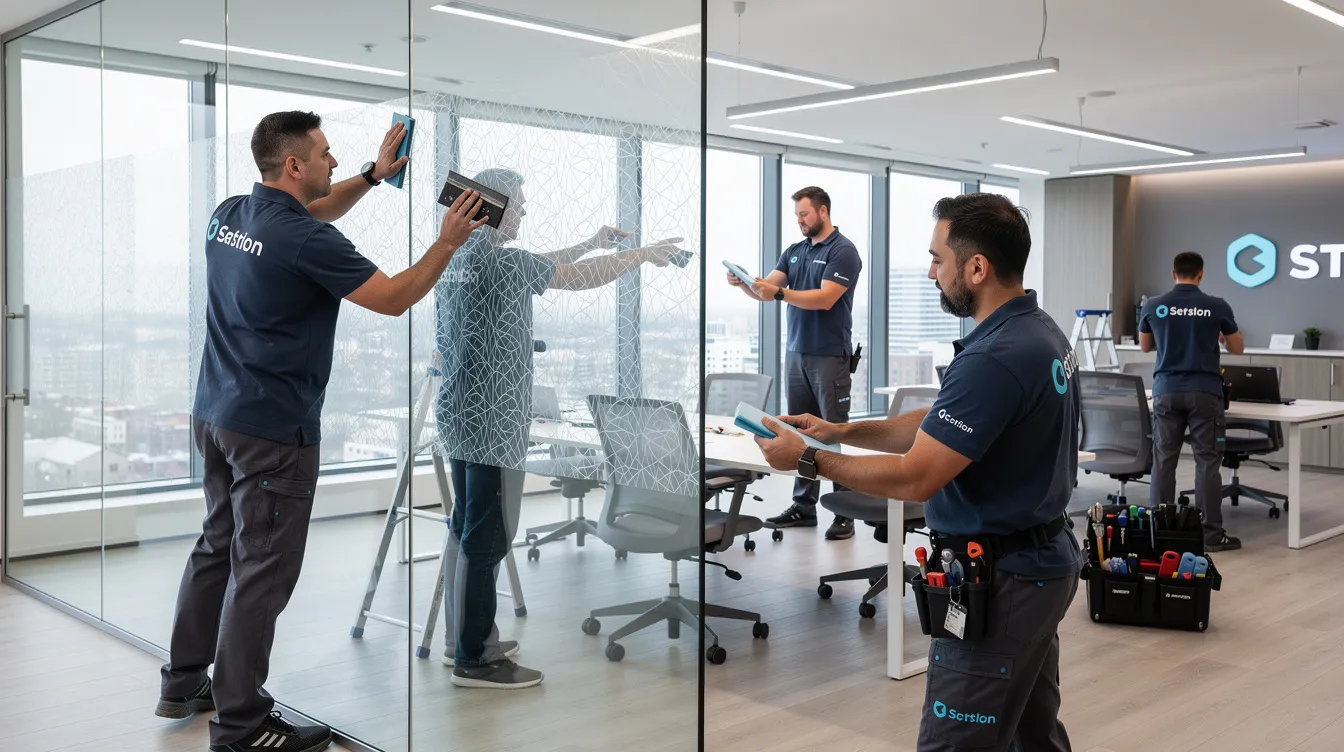
These franchise models often operate with lower overhead: a home-based office, small warehouse or storage space, and project-based crews rather than large permanent staffs, aligning with a proven franchise business model in the booming window film and surface solutions industry. Use cases range from applying security film for a school district to installing energy-saving window film across a medical office campus to refreshing a hotel lobby with architectural finishes, all without the disruption and expense of full construction.
Spotlight: CoolVu as a High-Potential B2B/B2C Service Franchise
CoolVu is a home-based franchise specializing in window film, tinting, decorative graphics, and architectural surface solutions for both homes and commercial properties. The total investment ranges from $63,000 to $111,000, with a franchise fee of $40,000 for a single territory and discounted pricing for additional territories acquired simultaneously.
On the B2B side, CoolVu delivers energy efficiency improvements, security and privacy upgrades, branded graphics, and modern surface finishes to offices, retail locations, healthcare facilities, schools, and institutional clients. Commercial accounts and repeat institutional clients create the kind of B2B-style recurring opportunities that stabilize revenue beyond one-time residential projects.
Franchisees receive comprehensive training through an in-person, four-day program covering product knowledge, installation techniques, marketing, estimating, and territory profitability. Ongoing support includes coaching, in-field installation assistance, marketing strategy, and technology tools for quoting and project management, all backed by an experienced CoolVu leadership team and franchise support organization. Protected territories, in-house financing options, and a structured onboarding process round out the support infrastructure.
The ideal CoolVu owner is a motivated self-starter with approximately $50,000 in liquid capital, comfortable with consultative selling and project management. The franchise actively welcomes veterans, first responders, women, and minority entrepreneurs. Prior industry experience in window film or construction is helpful but not required, thanks to CoolVu’s defined training and vendor partnerships.
For comparison, InXpress, a shipping and logistics B2B franchise, requires an investment ranging from $85,600 to $169,990, also home-based but in a completely different service category than a CoolVu window film franchise focused on energy-efficient glass and surface solutions. CoolVu’s investment sits at the lower end of the B2B franchise spectrum while offering multiple revenue streams across both residential and commercial markets.
Comparing B2B Franchise Models: Overhead, Margins, and Lifestyle
When you stack B2B franchise categories side by side, the differences in overhead, margins, and daily life become clear.
Print and marketing (Minuteman Press-style): Investment in the $138,000-$216,000 range, requiring a production facility. Median revenue near $750,000 for established units. Net margins around 15-20% for well-run locations. Owners manage equipment, inventory, and production staff.
Commercial cleaning: Lower entry cost, often under $100,000. Margins around 16% on average. Recurring monthly contracts. Labor-intensive, requiring crew management and quality oversight.
Business consulting: Lowest fixed costs, often entirely home-based. Margins of 10-25% depending on utilization and retainer mix. Revenue depends heavily on the owner’s network and sales ability.
Surface solutions (CoolVu-style): Investment from $63,000 to $111,000. Home-based with project-based field crews. Margins in the mid-teens to 20% for efficient operators. Mix of residential and commercial work, with commercial accounts providing larger, more predictable revenue.
Staffing: Higher investment ($150,000-$400,000+), office-based operations, significant working capital demands. Mature offices can reach $4-7 million in billings with owner earnings of $300,000-$650,000, but the ramp-up to profitability takes 18-30 months.
Home-based B2B franchises like consulting and surface solutions home-based models such as CoolVu can reach breakeven faster thanks to lower fixed costs. Staffing and print require more patience and capital but offer higher revenue ceilings for experienced operators willing to invest the time.
What Type of Entrepreneur Thrives in B2B Franchising?
Successful B2B franchises often require strong networking and relationship-building skills. The owners who thrive are disciplined operators who enjoy consultative sales, long-term follow-up, and building trust with clients over time rather than chasing daily transactions.
Helpful backgrounds include sales, operations, project management, corporate leadership, construction, and facilities management. For surface solutions and automotive services, trade experience accelerates the learning curve but is rarely mandatory in well-designed franchise systems that provide training, making it possible for owners to step into even an interior design-oriented window and surface solutions franchise concept like CoolVu without a formal design background.
B2B sales can be systematic and process-driven, not just endless networking events. Introverts who follow a structured outreach process often outperform extroverts who rely on personality alone.
Consider these owner archetypes:
- The corporate escapee: A mid-career professional leaving a Fortune 500 role, bringing project management discipline and a local professional network. Thrives in consulting, staffing, or surface solutions.
- The veteran with logistics experience: Comfortable with field operations, crew management, and structured systems. Excels in automotive services, commercial cleaning, or CoolVu-style installation businesses.
- The sales professional seeking business ownership: Someone who has sold B2B services for companies and wants to build their own business using those same skills. Fits nearly any B2B category.
How to Research and Shortlist the Best B2B Franchise for You
Start by clarifying your goals, budget, industries of interest, and desired lifestyle before looking at specific brands. Franchise ownership requires a defined budget and clear goals, and skipping this step leads to expensive mismatches, especially if you are still learning core concepts from resources like a franchise dictionary that explains key terms and structures.
Use public rankings from Entrepreneur Franchise 500, Franchise Business Review satisfaction reports, and Franchise Times Top 400 as starting points for identifying well-regarded systems, alongside strategic guides that explain what the best franchises to buy look like using examples such as CoolVu. These rankings are filters, not final answers.
Request franchise disclosure documents from your top three to five candidates. Review Item 7 for total investment details and Item 19 for financial performance representations. Work with a CPA or financial advisor to interpret these numbers in the context of your local market.
Talk to multiple current franchisees, ideally those in markets similar to yours. Ask about support quality, marketing effectiveness, average unit volume accuracy, and how long it took to reach breakeven. Franchise owners need to secure financing before launching, so begin exploring SBA loans, home equity options, or franchisor-provided financing options early in your research.
Franchisees should consult legal and tax professionals before signing any agreement. Franchise agreements often include ongoing royalty fees and marketing contributions that affect long-term profitability. An independent franchise attorney can review territory provisions, renewal terms, and exit conditions to protect your interests, while franchisor resources such as detailed CoolVu franchise FAQs covering costs, territories, and incentives help clarify the business terms.
Understanding Average Unit Volume and Financial Performance Claims
Average unit volume is the mean annual revenue across all units in a franchise system. It matters more than brand buzz because it tells you what owners are actually generating, not what the franchise sales team hopes you will imagine.
AUV and profit figures usually come from Item 19 of the franchise disclosure documents. Not all franchisors choose to include performance representations, so the absence of Item 19 data is itself a data point worth noting.
Variance within a system can be enormous. Two locations in the same franchise can produce wildly different results due to territory demographics, owner execution, local competition, and market conditions. Always ask for median figures and quartile breakdowns, not just averages, which can be skewed by a handful of top performers.
Ask franchisors and existing owners about realistic ramp-up timelines, working capital needs during the early months, and the most common mistakes that slow growth. Proven track record claims should be backed by verifiable data, not anecdotes.
Common Mistakes to Avoid When Choosing a B2B Franchise
Choosing based solely on low fees. A low franchise fee means nothing if the support, training, and brand strength are weak. Evaluate total investment and the value behind every dollar.
Underestimating working capital. Most new franchise owners need 6-12 months of operating expenses beyond the initial investment. Build a conservative cash buffer.
Skipping conversations with existing franchisees. Talking to top and average performers gives you a realistic picture. Every franchisor will highlight their best stories. You need the full range.
Ignoring culture fit. A franchise that requires aggressive cold calling every day is a poor match for someone who prefers project-based work. Match your personality to the operating model.
Assuming B2B means no selling. Every b2b franchise opportunities list includes brands that require active business development. If you are not interested in sales, B2B franchising will be a struggle.
Relying entirely on brokers. Franchise brokers can introduce you to options, but they earn commissions from franchisors. Always do independent research through franchise direct channels, FDD review, and franchisee validation.
Ignoring unit economics for brand name. Strong brand recognition is valuable, but it does not guarantee profitability in your specific territory. Dig into AUV, margins, and overhead before signing.
How the Sales and Onboarding Process Typically Works in B2B Franchising
The franchise buying process follows a fairly standard sequence: initial inquiry, introductory calls with the development team, FDD review and cooling-off period, validation calls with current franchise owners, discovery day at the franchisor’s headquarters, legal and financing steps, then signing and training.
From first call to opening day, timelines typically range from 3-9 months. Home-based B2B models like consulting or surface solutions tend toward the shorter end, while automotive or real estate concepts requiring facility buildout take longer.
Key decision points where you should pause and reflect include after your FDD review (when the financial picture becomes concrete) and after talking to several franchisees (when operational reality sinks in). These are not steps to rush.
Prepare specific questions about marketing support, technology stack, territory protection, net worth requirements, and the expected owner role during onboarding. The more clarity you gain before signing, the smoother your first year will be.
Why Local Market Analysis Matters Even With Strong Brands
Even the best b2b franchise can underperform in a poorly chosen or oversaturated territory. Local market analysis is not optional.
Research the number of target businesses in your territory: commercial properties, healthcare facilities, schools, retail chains, and companies that need the services your franchise provides. Check major employers, upcoming construction or development projects, and local economic trends.
For surface solutions like CoolVu, markets with strong commercial real estate activity, hot climates driving demand for energy-efficient window film, or aging building stock needing cost-effective refreshes tend to outperform. A territory full of new construction may have less immediate retrofit demand than one with older commercial buildings.
Leverage local chambers of commerce, business networking groups, and economic development reports. This research takes hours, not weeks, and it dramatically reduces the risk of launching in a territory that cannot support your revenue goals.
What to Expect in the First 12–24 Months of Owning a B2B Franchise
The first phase is launch and training: absorbing the franchise system, setting up operations, and making your first sales. Expect to be the primary salesperson, marketer, and often the lead technician or project manager during this period.
Months three through twelve focus on early client acquisition. You are building a pipeline of local businesses, attending networking events, making proposals, and converting initial projects into ongoing relationships. Cash flow may feel tight before recurring contracts accumulate, which is why entering with adequate working capital is essential.
By months twelve through twenty-four, successful franchise owners begin seeing a base of repeat customers that stabilizes monthly revenue. A new CoolVu franchisee, for example, might start with smaller residential window tinting jobs, build relationships with property managers and facility directors, and ramp into larger commercial projects like installing security film for a school district or energy film across an office campus within 18-24 months, mirroring the growth paths described in CoolVu franchisee testimonial and review stories.
The workload shifts gradually from owner-does-everything to owner-manages-growth. Hiring a key installer or project coordinator during this phase is often the inflection point where the business starts to feel like a successful business rather than a demanding job.
How Technology and AI Are Changing B2B Franchise Models
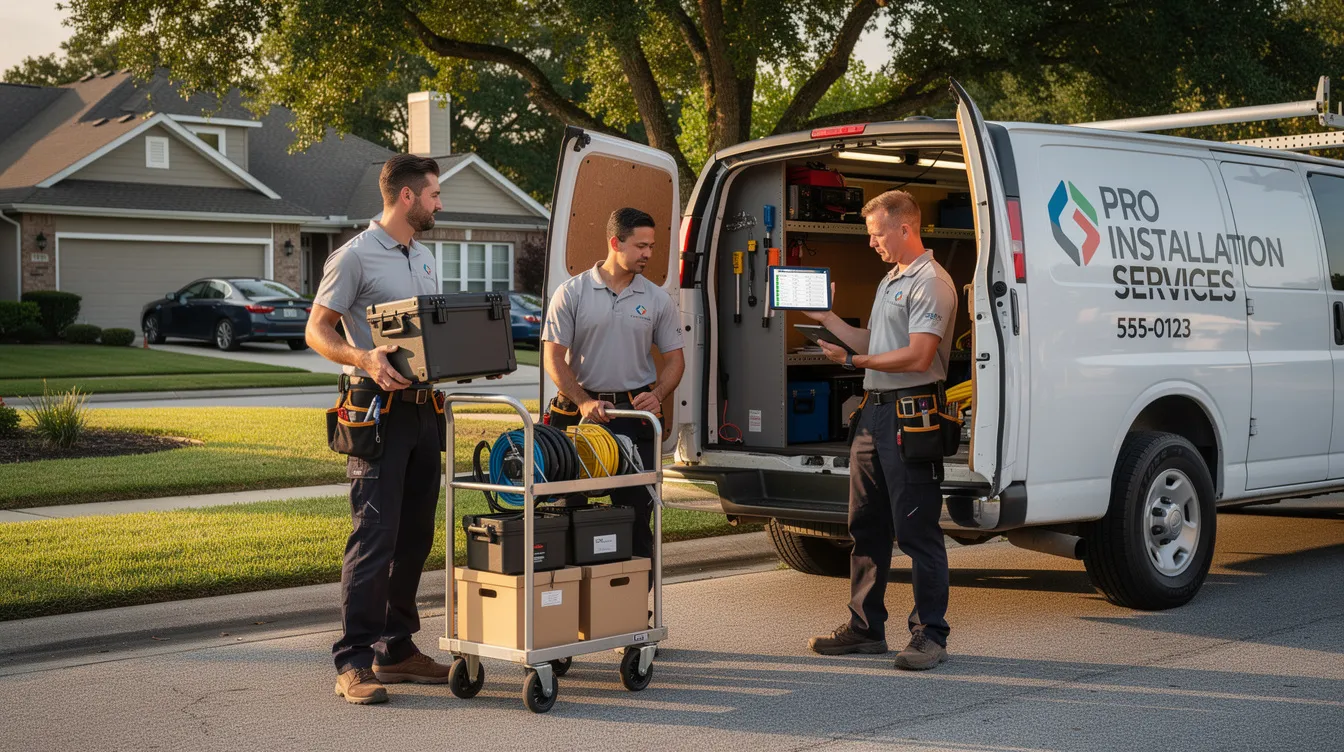
Technology is reshaping how B2B franchisees operate daily. CRM systems automate follow-up with clients. Digital marketing automation generates and nurtures leads. Online quoting tools let franchise owners send professional proposals from a phone on a job site. And for surface solutions, AR and VR visualizations allow clients to preview window film or decorative finishes on their actual building before committing.
AI-enhanced search, including AI Overviews in Google, makes authoritative, well-reviewed franchises more discoverable. This means strong local SEO and active reputation management are increasingly important resources for franchise owners who want a steady flow of inbound leads.
Some franchisors, including CoolVu, support franchisees with centrally managed digital campaigns, lead tracking dashboards, and analytics tools that take the guesswork out of marketing spend. When evaluating b2b franchise opportunities, ask specifically how technology is integrated into daily operations and marketing, not just listed as a feature on a brochure.
FAQs About the Best B2B Franchises to Own
What are the most profitable types of B2B franchises right now?
Business services, consulting, staffing, and specialized property services including window film and surface solutions tend to deliver higher net margins than consumer-facing concepts. B2B professional services franchises average 12-22% net margins compared to 3-9% for food service, according to industry benchmarks. The most profitable models combine recurring revenue with lower overhead and efficient operations.
How much money do I need to start a B2B franchise?
Typical bands range from under $100,000 for many home-based models (including CoolVu at $63,000-$111,000) to $100,000-$300,000 or more for office-based or light-industrial setups. Total investment includes the franchise fee, equipment, marketing, insurance, and at least 6-12 months of working capital. Franchise sales teams can provide exact figures for their brand.
Are B2B franchises easier to run than restaurant or retail franchises?
They are generally simpler from a staffing and operations standpoint, but they demand more relationship-based selling and patience with longer sales cycles. Whether that feels easier depends on your skills. Someone comfortable with B2B conversations often finds these models more manageable than managing high-turnover retail crews and weekend shifts.
Can I keep my full-time job while running a B2B franchise?
Some models allow semi-absentee ownership after the initial ramp-up, but most require heavy owner involvement during the first 12-24 months. Discuss owner role expectations with each franchisor and talk with current owners who attempted to juggle both. Owning a franchise while employed full-time is possible in some categories but rarely advisable during launch.
Do B2B franchises fail less often than other franchises?
No category is failure-proof. However, lower fixed overhead, contract-based recurring revenue, and serving essential business needs can help B2B owners weather downturns better than some retail concepts. Ask franchisors directly about closure rates, transfers, and reasons owners exit the system. Franchise success depends on execution, not just category selection.
How long does it take for a B2B franchise to become profitable?
A typical range is 12-36 months depending on the category, capital reserves, and owner execution. Home-based models with lower overhead can break even faster, while staffing or print franchises with higher fixed costs may take 18-30 months. Model conservative projections using FDD data and realistic local assumptions with help from a CPA.
Do I need industry experience to own a B2B franchise?
Most B2B systems prioritize transferable skills like sales, management, and operations over specific technical experience. They provide technical training and vendor partnerships to fill knowledge gaps. CoolVu is a good example: prior industry experience in window film or construction is helpful but not required, because the franchise provides defined training and ongoing support that prepares owners without trade backgrounds.
Why Choose CoolVu for Your B2B Franchise Investment?
CoolVu fits many of the criteria outlined in this article for a top-tier B2B franchise. The home-based model keeps overhead low compared to retail or facility-dependent concepts. Multiple revenue streams, including energy-efficient window film, security film, decorative graphics, and architectural surface finishes, allow franchise owners to serve diverse clients from homeowners to corporate property managers.
The support infrastructure is built for owners who may not have prior industry experience. Comprehensive training covers installation, estimating, marketing, and territory strategy. Protected territories reduce internal competition. In-house financing options and a low investment entry point (starting at $63,000 total) make CoolVu accessible to a broader range of aspiring entrepreneurs than many competing franchise opportunities.
What sets CoolVu apart in the surface solutions space is the combination of B2B and B2C demand. Commercial accounts with healthcare systems, school districts, retail chains, and hospitality brands create ongoing project pipelines, while residential work fills scheduling gaps and builds local brand recognition, as highlighted in recent overviews of why CoolVu is a top franchise opportunity. This diversified client base helps businesses succeed through varying economic conditions.
If you are comparing b2b franchise opportunities, put CoolVu’s model, training quality, investment requirements, and territory structure side by side with the other brands on your shortlist, using the same criteria outlined in expert guides to the best franchises to buy into. The numbers and the support should speak for themselves.
Next Steps: How to Evaluate CoolVu and Other B2B Franchises
Start by narrowing your list to three to five B2B franchises that match your budget, skills, and lifestyle goals. Request information packages and franchise disclosure documents from each. Create a simple comparison worksheet covering total investment, support quality, AUV data, territory structure, and lifestyle fit.
Speak directly with CoolVu’s franchise development team to get detailed answers about the opportunity and review territory availability in your area. Ask about current franchisee performance, onboarding timelines, and the day-to-day reality of running a surface solutions business.
Attend webinars, discovery days, or virtual events offered by your top candidates. Talk with multiple current franchisees wherever possible. The franchise owners already in the system will give you the most honest picture of what daily life, revenue ramp-up, and franchisor support actually look like.
Before making a final commitment, involve your spouse or partner, CPA, and franchise attorney. This is a significant decision that deserves thorough analysis. The best B2B franchise for you is the one where your capital, skills, and ambitions align with a proven system built to support your growth, especially if you are considering a window tinting franchise with multiple revenue streams like CoolVu.