Table of Contents
What Is a Commercial Building Privacy Franchise? (Fast Answer for Busy Investors)
Why Commercial Building Privacy Is a Growing Opportunity in 2026
How the Franchise Business Model Works for Privacy and Window Film Services
Understanding the Legal Landscape: Franchise Laws and State Privacy Laws
The Franchise Disclosure Document: Key Items to Review for a Privacy-Focused Business
What Is a Commercial Building Privacy Franchise? (Fast Answer for Busy Investors)
A commercial building privacy franchise is a service business where franchisees install window film, glass tinting, decorative privacy graphics, architectural surface finishes, and smart or switchable films for commercial and residential properties. Commercial building privacy franchises serve a wide range of sectors, including corporate offices, healthcare facilities, schools, retail locations, and government buildings. The franchise model can offer several solutions to the same customer, from a single conference room frosting job to a campus-wide energy and privacy retrofit.
Franchisees typically operate as mobile or home-based units. You visit a site, assess glass and surfaces, recommend the right privacy and energy solutions, and perform the installation without needing a large storefront or retail space. This keeps overhead limited and lets you focus spending on sales, marketing, and skilled labor. Privacy solutions address visibility and confidentiality issues in modern offices, and privacy films can obscure sensitive areas without sacrificing natural light.
This type of franchised business fits a proven franchise business model in a booming industry-fees, brand standards, franchisor support-but it is tailored to the commercial property market and the privacy needs of 2026 workplaces: open-plan retrofits, regulated spaces, and aesthetically driven environments. Franchises bridge the gap between functional privacy and open aesthetics, which is exactly what today’s building owners want. Many commercial privacy solutions also offer high solar heat rejection, and high-performance films block UV rays and reduce glare on computer screens.
Core revenue streams include:
- Interior privacy film (frosted, patterned, etched)
- Exterior solar control film (solar control films can reduce solar heat gain and lower HVAC demand)
- Safety and security film (anti-shatter, laminated)
- Decorative glass graphics and architectural surface wraps
- Smart or switchable film solutions
Why Commercial Building Privacy Is a Growing Opportunity in 2026
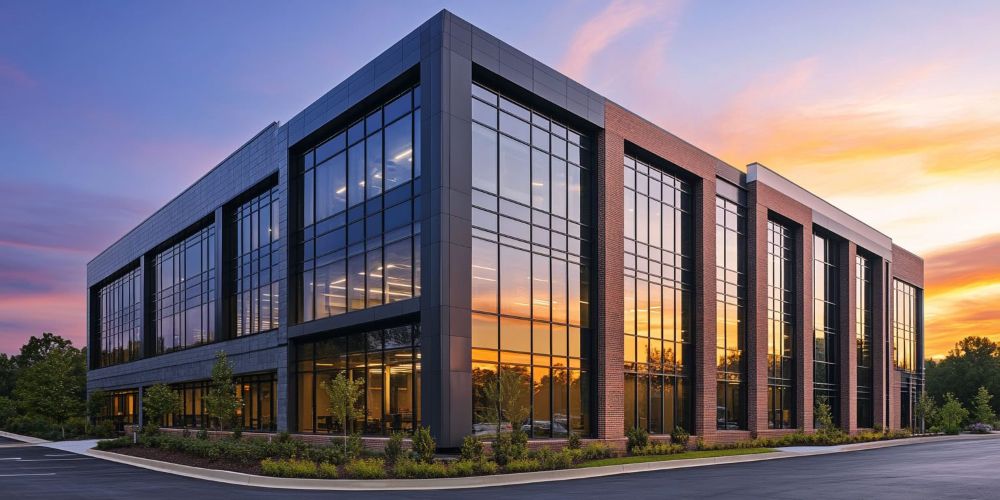
Between 2020 and 2026, demand for commercial privacy and glass enhancement surged. Return-to-office trends, hybrid work models, updated building codes, and corporate privacy policies all pushed building owners to rethink how glass and open space function in their properties. The U.S. window film market reached approximately $3.35 billion in 2025 and is projected to surpass $5.31 billion by 2033, expanding at a CAGR of roughly 6.1%.
High-growth B2B demand is driven by modern open-office layouts. Increased use of glass walls, open floorplans, and co-working spaces creates demand for retrofit privacy solutions instead of costly construction. Frosted films, smart films, and patterned graphics let companies create visual separation without drywall.
Specific segments stand out. Medical offices subject to HIPAA visibility concerns need compliant visual screening. Banks and financial advisors require client confidentiality in consultation rooms. Schools upgrading interior windows benefit from privacy and safety solutions. Tech firms with sensitive R&D areas invest in secure visual barriers. Franchises often target commercial real estate managers and corporate tenants because commercial clients typically have dedicated budgets for facilities management, making the sale process more predictable. Investing in privacy solutions taps into a fast-growing B2B niche.
Rising demands for data security make privacy solutions essential across industries-not just for digital data but for physical visibility into workspaces. The market for smart glass in Canada alone is projected at US$168 million in 2025, pointing to broader North American momentum.
Macro trends fueling demand:
- Energy efficiency mandates and building code updates
- ESG reporting requirements for commercial properties
- Tenant expectations in Class A office towers
- Landlords competing on amenities, comfort, and aesthetics
- State privacy laws enacted or updated in California, Colorado, Connecticut, Virginia, and Utah heightening attention on both digital and physical privacy
How the Franchise Business Model Works for Privacy and Window Film Services
The franchisor develops the brand, builds technical systems, negotiates vendor relationships, and creates marketing infrastructure. Franchisors provide centralized branding, marketing materials, and training. The franchisee owns and operates a local installation business, managing day-to-day sales, client service, and project delivery. Franchisors control site approval and operational standards to maintain consistency across the system.
Under a typical franchise agreement, contractual obligations include territory rights, adherence to brand standards, required use of approved films and adhesives, regular financial reporting, royalty payments, and participation in system-wide marketing. Franchise agreements can last up to 20 years, so this is a long-term commitment worth careful review.
Franchise fees typically range from tens to hundreds of thousands of dollars. For a home-based model, total investment often falls between $56,000 and $110,000, including the initial franchise fee, equipment, vehicle wrap, initial film inventory, insurance, and working capital for six to twelve months. Franchisees may pay ongoing royalties based on gross income, typically in the 5% to 8% range, plus advertising fund contributions of 1% to 3%.
Compared to starting an independent tinting company, franchises benefit from bulk pricing and preferred distribution agreements, seven key benefits of franchise ownership, proven sales processes, brand recognition that helps win B2B contracts, and territory protection. Independent operators gain flexibility but face higher procurement costs and a steeper learning curve.
What the franchisee receives:
- Technical and sales training
- Operations manuals and installation playbooks
- Marketing assets and lead-generation tools
- Preferred vendor terms and pricing
- CRM and quoting software
- Ongoing technical and business support
Understanding the Legal Landscape: Franchise Laws and State Privacy Laws
U.S. franchise regulation starts at the federal level with the Federal Trade Commission franchise rule, which requires every franchisor to provide a franchise disclosure document before selling a franchise or collecting any fee. This disclosure must be delivered at least 14 calendar days before signing. Around 14 states also require separate registration or filing before a franchisor can offer franchises within their borders.
Beyond franchise disclosure laws, commercial building privacy franchises must navigate applicable privacy laws and state privacy laws that affect how customer and employee data is collected, stored, and used. Five states had comprehensive privacy laws by 2023, and several more have adopted similar frameworks since. The CCPA, for example, applies to businesses with revenues over $26,625,000-a threshold that some franchise systems cross at the brand level even if individual entities do not.
There is an important distinction between data privacy (how your business handles customer information, lead forms, and CRM records) and physical privacy (the visual screening your products create). A responsible operator needs to understand both. Franchisees must determine their compliance with state privacy laws independently, because local regulations vary significantly.
Franchise relationship laws in some states govern termination, renewal, and transfer of the franchise, which can affect long-term planning for franchise ownership.
States with stronger frameworks:
- Franchise laws: California, New York, Illinois
- State privacy laws: California, Colorado, Connecticut, Virginia, Utah
Consult a franchise attorney before signing any legal documents.
The Franchise Disclosure Document: Key Items to Review for a Privacy-Focused Business
Franchisors must provide a franchise disclosure document before sales discussions result in any payment or binding agreement, and prospective owners should weigh the top things to consider when evaluating a window tinting franchise alongside what they read in the FDD. The FDD is a standardized pre-contract document required by federal law, and it must reach you at least 14 days before you sign or pay anything.
Items 1–4: Franchisor Background. Review the leadership team’s experience in the window film or architectural finishes industry. Check litigation history, especially any claims related to privacy, advertising, or product failure. Note any bankruptcies.
Items 5–7: Fees and Investment. Item 5 covers the initial franchise fee. Items 6 and 7 detail ongoing fees and total estimated investment, including equipment, vehicles, film inventory, tools, and working capital. For a home-based commercial privacy operation, expect total investment ranges of $56,000 to $200,000 depending on territory size and equipment choices.
Items 11 and 12: Training and Territory. Evaluate training depth-technical installation, sales for B2B commercial accounts, and compliance with privacy laws and building codes. Item 12 defines your territory: exclusive rights, ZIP code boundaries, encroachment rules. This matters in markets with dense office parks.
Item 17: Renewal, Termination, Non-Compete. Understand term length, renewal conditions, and what happens if regulations change in your state and force operational adjustments. Non-compete clauses define what you can and cannot do if you leave the system.
Item 19: Financial Performance Representations. Any earnings claims must appear in this section. Review them with an accountant who understands service franchises. Check whether figures are averages, medians, or top-quartile results, and how many units are represented.
Track your questions in writing as you review the disclosure document. Request clarifications or addendums before you move forward.
Privacy Laws, Data Roles, and the Modern Franchise Relationship
In 2026, commercial building privacy franchises sit among top service franchises in the window and glass industry and handle both physical upgrades and personal data. Lead forms, client lists, CRM notes, employee records, and installation photos all create data that falls under state laws and regulations.
Recent U.S. state privacy laws define two key roles: controllers and processors. Controllers determine the purpose and means of processing personal data and bear most compliance responsibilities under privacy laws. Processors can only process data on behalf of controllers, following the controller’s instructions. In the franchise relationship, franchisors can act as data controllers when they run centralized CRM and marketing platforms. Franchisees may serve as data processors when they handle local customer data on behalf of the brand. Where both parties independently decide how to use data for their own purposes, they may become joint controllers and share compliance responsibilities under privacy laws. Compliance obligations primarily fall on the data controller, making it critical to define these roles clearly.
The franchise agreement and any data processing addendums should clearly assign roles, rights, and responsibilities. Franchisors may be considered controllers under state privacy laws when they collect leads through national campaigns or determine how customer data is shared.
Questions to ask the franchisor about data and privacy:
- Does your CRM comply with California, Colorado, and Virginia privacy frameworks?
- Who is responsible if a consumer exercises their right to access or delete data?
- Do you provide template privacy notices for local franchisee websites?
- What cyber insurance coverage does the system offer or require?
- Under what circumstances would parties share personal information with third parties?
Operational Reality: What Daily Life Looks Like in a Commercial Privacy Franchise
A typical day starts with checking the CRM for new leads-property management companies requesting quotes, facility directors following up on proposals, or brokers referring retail tenants who need storefront privacy. Franchisees manage client consultations, project bids, and installations, which means your morning might include an on-site visit to measure glass at a medical office, followed by preparing a digital proposal over lunch.
Projects vary widely. A small conference room frosting job can be completed in a few hours. A multi-floor corporate headquarters upgrade may span weeks and require off-hours scheduling to avoid disrupting employees. Healthcare facilities and retailers often request weekend or evening installations. Education institutions typically schedule work during breaks.
Staffing evolves. Most owners start solo or with one installer, then scale to multiple crews as the pipeline grows. Training your team in film handling, ladder safety, and proper care of architectural finishes is an ongoing exercise. Franchises provide standardized operational playbooks for installation training, which accelerates onboarding and supports a best-in-class home-based franchise model for glass and surface solutions.
Commercial cycles align with lease renewals, fiscal year budgets, and tenant improvement projects. Managing strong B2B relationships with property managers is crucial for maintaining a steady pipeline across seasons.
Core tools and assets:
- Branded service van
- Plotter and cutting equipment
- Ladders, lifts (often rented for tall or exterior work)
- Sample books for films and decorative surfaces
- Digital design, mockup, and proposal tools
Evaluating Earnings Potential and Risks in a Commercial Building Privacy Franchise
Any earnings claims from a franchisor must be grounded in data disclosed in Item 19 of the FDD. Anything communicated outside that document should be treated cautiously.
Revenue drivers include average ticket size for commercial privacy projects (typically larger than residential), recurring work from property management portfolios and corporate campuses, and upselling to energy-saving or security films during a privacy job. Gross margins in window film installation frequently fall between 70% and 85%, depending on the complexity and value added. Industry data shows average franchise unit revenues ranging from roughly $632,000 to $743,000, with top-performing units exceeding $1 million annually, especially in well-supported window film franchise systems.
Cost drivers include film and materials (the largest line item), installer labor, lift rentals for high or exterior work, fuel and vehicle maintenance, insurance, marketing spend, and ongoing royalties and advertising fund fees.
When building a conservative pro forma, assume a slower first-year ramp-up. Mobile or home-based operations often reach break-even in four to nine months, while larger operations with a retail component may take 18 to 24 months. Factor in local commercial vacancy rates and determine how many repeat clients versus one-time jobs the market realistically supports. Failure to plan conservatively is a significant risk.
Risk-mitigation steps:
- Speak with multiple existing franchisees in similar-sized markets
- Stress-test your financial model with an accountant
- Model worst-case scenarios: lower close rates, project delays, supply disruptions
- Maintain diversified client verticals to avoid overdependence on one sector

What to Look for in Training, Support, and Technology
In a technical service like window film and architectural finishes, high-quality training and support can be as valuable as the brand itself. The success of your business depends on getting live-job-ready fast.
Ideal initial training covers hands-on film installation practice, glass and substrate assessment, job costing, B2B sales techniques for selling to property managers and facility directors, and compliance basics related to franchise laws and privacy laws. Look for programs that bring new owners to revenue-active status within weeks, not months.
Ongoing support should include phone and virtual tech support for tricky installations, updated product lines, marketing campaigns aligned with commercial real estate cycles, and regional meetings where franchisees share best practices—features often highlighted in independent CoolVu franchise reviews. Technology matters: a robust CRM for managing commercial accounts, quoting and measurement tools, digital proposal templates, and project-photo documentation systems that protect against disputes.
Questions to ask prospective franchisors:
- How long before a new owner is revenue-active?
- Is there field support available in my state or region?
- Does the system provide privacy-compliant data and marketing tools out of the box?
- How often are training materials updated to reflect new films, codes, and regulations?
Common Mistakes New Franchisees Make (and How to Avoid Them)
Many problems can be avoided with planning, due diligence, and respect for contractual obligations.
Underestimating sales work. This is not a purely technical role. Profit depends on proactive outreach to property managers, general contractors, interior designers, and corporate facility teams. A weak pipeline in the first year is the most common reason for slow growth, so it is essential to understand frequently asked questions about the CoolVu franchise model, costs, and support before you commit.
Misreading the FDD and franchise agreement. Failing to understand renewal options, territory limits, or minimum performance standards creates unpleasant surprises. Review every item carefully with a franchise attorney before signing.
Neglecting compliance. Ignoring state privacy laws, safety requirements, building codes, or workers’ compensation rules can lead to fines and reputational damage. Consumers and employees both have rights that you must comply with.
Overdependence on one vertical. If you only deal with co-working spaces or only collect revenue from retail clients, a downturn in that sector will hurt. Diversify into medical, financial, education, and public-sector work.
Preventative steps:
- Hire a franchise attorney to review all legal documents
- Engage an accountant to stress-test your pro forma
- Shadow existing franchisees for a day to see the real workflow
- Create a 12- to 24-month cash flow plan with worst-case assumptions
FAQs About Commercial Building Privacy Franchises
Below are answers to common questions about franchise agreements, disclosure documents, privacy regulations, and daily operations in this industry.
How much does it cost to start a commercial building privacy franchise?
Total investment for a home-based mobile operation in 2026 typically ranges from about $90,000 to $200,000, depending on territory size and vehicle or equipment choices. Major cost buckets include the initial franchise fee, vehicle purchase or lease, plotter and cutting equipment, tools and ladders, initial film inventory, licensing and insurance, and working capital for six to twelve months. Compare FDD Item 7 estimates with real conversations from current franchisees in similarly sized markets to determine whether the numbers hold up.
What is the difference between the franchise disclosure document and the franchise agreement?
The franchise disclosure document is a standardized information package required by the Federal Trade Commission. It summarizes the system, costs, risks, and historical performance across all entities in the brand. The franchise agreement is the binding contract that actually creates the franchise relationship, defines your contractual obligations, and controls day-to-day rights and duties. Have a franchise attorney review both, paying special attention to renewal, termination, non-compete, data privacy, and territory language.
How do state privacy laws affect a commercial building privacy franchise?
Even though the core service is physical film installation, your business will collect and use customer and employee data-web leads, email lists, CRM notes, stored records. State privacy laws may require you to honor opt-out requests for marketing emails, safeguard personal information, and disclose any data-selling or sharing practices. Ask the franchisor whether their systems and marketing programs are designed to comply with California, Colorado, and other leading state privacy frameworks. Being aware of these requirements early prevents costly corrections later.
How long does it usually take to become profitable?
Timelines vary by market size and owner effort. Many service-based franchisees aim for break-even in 9 to 18 months, with some reaching faster payback when they secure large commercial accounts early. Profitability depends on consistent lead generation, sales closing skills, crew efficiency, and controlling overhead-not just the brand name. Review Item 19 data, speak with multiple franchisees, and build conservative financial models that account for slower-than-expected ramp-up.
Do I need prior construction or window film experience?
Many successful owners come from sales, management, or corporate backgrounds and learn technical skills through franchisor training and field practice. Being comfortable with B2B sales, reading basic construction plans, and managing small teams is often more important than holding a trade license at the outset, subject to local regulations. Complex installations or high-security jobs may require additional experience or specialized training based on building codes in your state.
Can I sell my franchise later if I want to exit?
Most franchise agreements allow transfers, but they typically require franchisor approval, buyer qualification, and sometimes a transfer fee. Item 17 of the FDD and the franchise agreement itself outline the exact sale process, including any rights of first refusal or conditions tied to performance or outstanding obligations. Plan for exit from the beginning by building strong recurring commercial relationships and documented systems that make the business attractive to future buyers.
Why Choose Our Commercial Building Privacy Franchise Model
CoolVu is a specialized surface and window film franchise built for both commercial and residential work, with a strong emphasis on privacy, energy efficiency, and design, backed by an experienced franchise leadership team and mission-driven history. Our model gives you access to an industry where demand is growing and competition from independent operators often lacks the brand credibility and vendor relationships that win large commercial contracts.
Our home-based operations keep overhead limited. No large showroom is required-you run a mobile service focused on offices, retail, healthcare, schools, government buildings, and high-end homes. Training goes deep: hands-on installation instruction, sales playbooks tailored to property managers and facility directors, and onboarding programs that bring new owners to live-job readiness quickly.
Every CoolVu franchisee receives a protected territory and access to industry-leading films, decorative graphics, and architectural finishes. We maintain preferred vendor relationships that create competitive pricing you cannot get as an independent operator. Ongoing coaching, marketing campaigns aligned with seasonal and budget cycles, and a network of franchisees who share best practices across markets help you maintain momentum well beyond your first year.
We also offer financing options and have historically provided franchise fee waivers for veterans and first responders, making franchise ownership more accessible—an impact reflected in franchisee testimonials and reviews from across the CoolVu network.
Next Steps: How to Explore a Commercial Building Privacy Franchise Opportunity
If you want to combine B2B relationships, design-minded work, and recurring revenue into a single business, the next step is a conversation.
Here is a simple action path:
- Request more information and schedule a discovery call
- Review a sample franchise disclosure document
- Prepare questions about territory, costs, training, and support
- Visit an existing franchise location or ride along with a local owner to see real installations and customer interactions
- Gather your financial documents, speak with a franchise attorney and accountant, and set a realistic timeline-often 60 to 120 days from first conversation to signing a franchise agreement
Contact CoolVu today to discuss available territories, upcoming training dates, and whether your background and goals are a strong fit for this commercial building privacy franchise model. The market is growing, the demand is real, and the right time to start building is now.