
Table of Contents
For many prospective owners, the journey into franchising begins with a list of household names. It’s a natural starting point, rooted in the assumption that brand recognition directly translates to business success. For the seasoned entrepreneur, however, this logic is incomplete. True opportunity isn’t found in the logo on the sign, but in the economic engine that powers the business.
A Deeper Analysis for Strategic Investors
A first-time franchisee is often buying into the sense of security offered by a familiar brand. A strategic investor is purchasing a cash-flowing asset. This fundamental difference in perspective demands a more rigorous evaluation that moves far beyond public perception and brand awareness.
Experienced business owners understand that the most significant factors determining success are operational efficiency, profit margins, and the owner’s quality of life. A bustling storefront with a famous name can easily mask crippling overhead, thin margins, and relentless operational demands. The real questions are not “Is this brand popular?” but rather “What is the true cost of generating a dollar of profit?” and “Does this model scale efficiently or simply multiply my headaches?”
The Three Pillars of a Strategic Franchise Investment
To cut through marketing claims and brand prestige, a disciplined analysis should rest on three core pillars. These pillars form a framework for identifying the best franchise opportunities with superior long-term potential.
- Profitability: This goes beyond top-line revenue. True profitability lies in the unit economics, which is the percentage of each dollar earned that becomes actual profit for the owner. This requires a forensic look at the cost of goods sold, labor requirements, real estate overhead, and all recurring fees. A high-margin model is inherently more resilient and rewarding than a high-revenue model with a bloated cost structure.
- Scalability: The ideal franchise model allows for expansion without a linear increase in complexity or capital. Can you grow your revenue by adding a team member and a vehicle, or does growth require securing another six-figure loan for a new brick-and-mortar location? True scalability is about increasing market share and profit potential with manageable, incremental investments.
- Support: For an experienced operator, support isn’t about learning to make a product. It’s about access to strategic guidance, sophisticated marketing systems, and a direct line to leadership that understands the nuances of the business. The best franchise systems are led by founders who remain deeply involved, providing expert-level mentorship that helps owners navigate challenges and seize opportunities. This is a stark contrast to the often-bureaucratic support of a legacy mega-franchisor.
A Proven Model Forged from Industry Experience
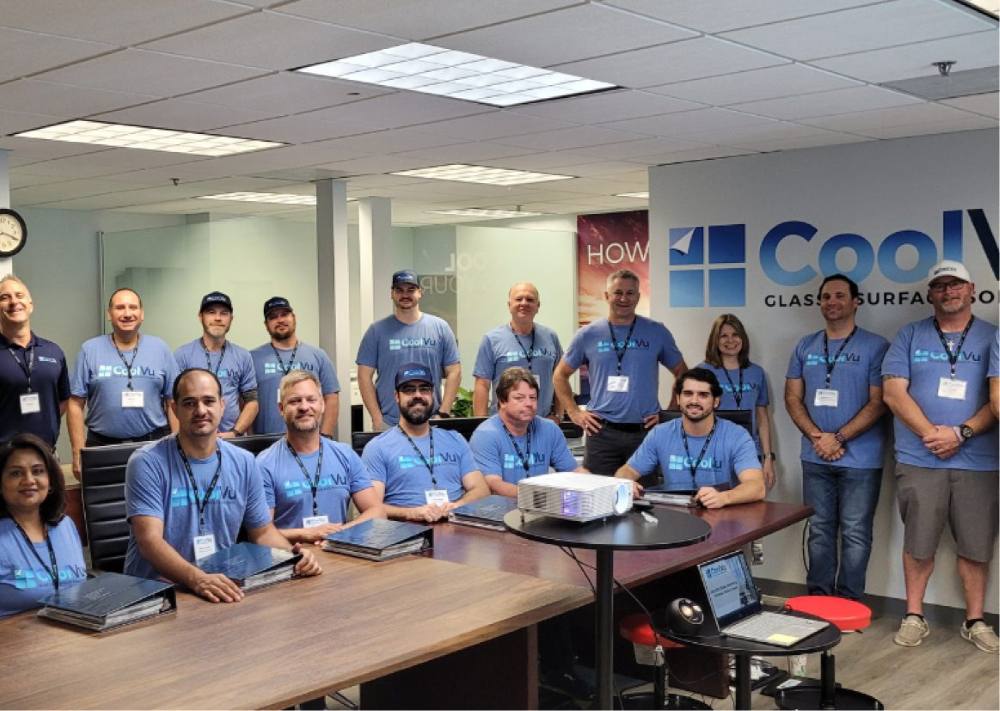
This three-pillar framework is not a theoretical exercise. It is a proven evaluation model forged from over 30 years of building, operating, and scaling businesses in the service industry. It is the very lens through which the most successful, asset-light franchise models are designed. By prioritizing exceptional unit-level profitability, creating a low-overhead and highly scalable service model, and building a support system led by industry experts, the model itself becomes a case study for what a strategic franchise investment should be.
How to Read a Franchise Disclosure Document for True Unit Economics
The Franchise Disclosure Document (FDD) is the single most important tool for applying this analytical framework. However, most people read it incorrectly. To uncover a franchise’s true economic potential, you must look beyond the surface.
- Go Beyond Item 19: The Financial Performance Representation (FPR) in Item 19 is the highlight reel. It shows what’s possible, but it doesn’t always show the full picture. Your job is to work backward and understand the costs that produce those revenues.
- Scrutinize Items 5, 6, and 7: These items detail the true cost of entry and operation. Item 7 outlines the estimated initial investment, but you must look for wide ranges and footnotes. Item 6 details all other fees, including royalty, marketing, software, and training fees that will impact your cash flow every single month. Item 5 covers initial fees. Add these up to understand the total financial commitment, both upfront and ongoing.
- Calculate Your Own Break-Even: Use the cost data from Items 6 and 7, along with realistic local estimates for labor and other expenses, to calculate a break-even point. How much revenue do you need to generate just to cover your costs? A high break-even point is a significant risk indicator, signaling a business with heavy operational drag.
Category 1: The Pitfalls of High-Overhead Franchises (Food & Retail)
When we apply our three-pillar framework to some of the most common types of franchises, those in the quick-service restaurant (QSR) and retail sectors, a clear pattern of risk emerges. While these brands offer visibility, they often come with significant structural disadvantages that suppress owner profitability.
Deconstructing the True Cost of QSR and Retail
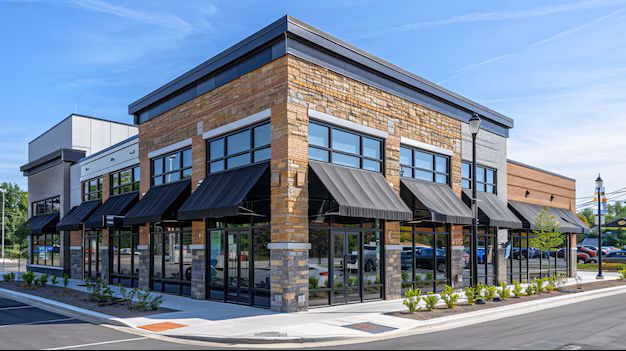
The initial investment for a well-known food or retail franchise can easily reach $500,000 to over $1 million. This capital is overwhelmingly tied to non-productive assets like real estate build-outs and specialized kitchen equipment. While necessary for operation, these high upfront costs create immense financial pressure from day one. An owner is often servicing a substantial debt load for years before they can realize a meaningful personal return, turning a promising venture into a long-term struggle for solvency.
The Operational Drag of High Staffing, Inventory, and Real Estate
The challenges of a high-overhead model extend far beyond the initial investment. They are woven into the daily operations, creating a constant drag that erodes profitability and consumes the owner’s time and energy.
- High Staffing Needs: QSR and retail models are labor-intensive, often requiring 15-30 employees with notoriously high turnover rates. This translates into a constant cycle of hiring, training, and scheduling, compounded by rising wage pressures.
- Perishable Inventory: Food franchises contend with the financial drain of spoilage and the complexities of supply chain management. A single disruption can halt sales, while poor inventory control directly eats into profits.
- Prime Real Estate: These businesses depend on high-visibility, high-traffic locations, which command premium rents, long-term lease obligations, and significant property taxes. This fixed cost is relentless, regardless of sales volume.
Why High Revenue Doesn’t Equal High Returns
This dynamic often becomes a deceptive trap for aspiring franchisees. A sandwich shop generating $1.2 million in annual revenue sounds incredibly successful. However, when you deconstruct the numbers, the owner’s reality is often far less impressive.
Consider that of that $1.2 million, 30% might go to food costs ($360k), 25% to labor ($300k), 10% to rent ($120k), and 8% to royalties and marketing fees ($96k). After other operating expenses, the business is left with a net profit margin of perhaps 5-7%, or $60,000 to $84,000. For an owner who invested $400,000 and works 60 hours a week, this is a profoundly disappointing return on investment. High revenue creates the illusion of success, but low margins dictate the owner’s actual financial outcome.
Category 2: The Low-Investment, High-Competition Trap (General Services)
While the high capital demands of food and retail franchises can be daunting, the opposite end of the spectrum presents its own set of challenges. General service franchises, think residential cleaning or lawn mowing, lure entrepreneurs with the promise of low start-up costs. For the seasoned investor, this apparent advantage often conceals significant long-term liabilities that can stifle growth and cap profitability.
The Double-Edged Sword of Low Entry Costs
A franchise fee under $50,000 and minimal equipment needs can seem like an irresistible entry point into business ownership. This low barrier to entry is the primary marketing tool for many general service franchises. It democratizes entrepreneurship, but it also floods the market.
The very ease of entry that attracts one investor also attracts hundreds of others, including independent operators who can start with even less capital. This creates an environment of intense, localized competition where a franchise brand name offers little defense. The low initial investment, therefore, becomes a double-edged sword. It gets you into the game, but it ensures the game is played in a crowded, unforgiving arena.
The Challenge of Commoditization and Price Competition
When a service is easy to replicate and requires no specialized expertise, it becomes a commodity. Whether it’s cleaning a window or mowing a lawn, customers perceive little difference between providers beyond price. This dynamic forces franchisees into a constant downward pricing pressure.
In a commoditized market, your primary competitive lever is cost. This leads to a relentless race to the bottom, where margins are perpetually squeezed. For an investor accustomed to strategic positioning, this is a frustrating operational reality. Instead of building value through superior service or brand equity, the business model itself forces you to compete on the least sustainable metric: being the cheapest option available.
The Path to Owner Burnout
The combination of intense price competition and a low scalability ceiling creates a predictable outcome: owner burnout.
The business model requires the owner’s constant, direct involvement to remain profitable. They are not just running the business, they are the business.
The owner is forced to wear every hat, including lead salesperson, chief marketer, scheduler, quality control inspector, and often, the primary service provider. There is no clear path to delegate these roles because the margins don’t support the necessary overhead.
The dream of strategic, high-level management gives way to the reality of 70-hour workweeks spent in the truck. This isn’t building an asset, it’s buying a demanding, low-paying job with significant financial risk.

The ‘Best-in-Class’ Model: Specialized, High-Margin Services
For the discerning entrepreneur, the most attractive franchise opportunities reside in a third category that is often overlooked. These ‘best-in-class’ models blend the accessible investment level of service franchises with the high margins and defensible market position of a specialized B2B operator. They represent the sweet spot for strategic growth.
Defining the Opportunity in Specialized Services
A ‘best-in-class’ franchise is defined not by its ubiquity or brand recognition, but by its superior business model. The core of this model is a specialized service that solves a distinct, high-value problem for a specific customer segment.
Unlike general services, these offerings require technical training, proprietary products, or a sophisticated sales process. This complexity is not a bug, it’s a feature. It creates a barrier to entry that protects franchisees from the commoditization trap. The focus shifts from being the cheapest to being the expert, allowing for premium pricing and robust profit margins.
How Niche Expertise Protects Margins
When you are one of a few certified experts in a field, you are no longer competing with every independent operator with a van and a ladder. Niche expertise in areas like architectural finishes, energy-efficient building solutions, or advanced surface protection allows you to build a defensible market position, often called a “moat.”
This moat is constructed from:
- Technical Skill: The service cannot be easily replicated without significant training and support from the franchisor.
- Proprietary Products: Access to exclusive, high-performance materials gives you an advantage competitors cannot match.
- Consultative Sales: The sales process is about diagnosing problems and prescribing solutions, positioning you as a trusted advisor rather than a simple vendor.
This structure fundamentally changes the client relationship. You are no longer bidding for a job, you are being hired for your expertise. This authority is what protects your margins from competitive erosion.
The Superior Unit Economics of an Asset-Light Model
For an investor who has managed the heavy overhead of a QSR or retail location, the unit economics of a specialized, asset-light service model are a revelation. These profitable franchise models do not require expensive commercial real estate, large inventories of perishable goods, or high hourly labor costs to operate.
The financial model is lean and efficient. The primary costs are related to acquiring a customer and delivering the service. Because the service is high-margin, each job contributes significantly to covering fixed costs and generating profit. This allows for a faster path to profitability and generates substantial free cash flow that can be reinvested into growth, not just used to maintain a physical location.
How to Analyze Franchise Examples for True Scalability
For the seasoned investor, the allure of franchising is not in owning a job, but in building an empire. True scalability is the engine of wealth creation in this space, yet many entrepreneurs mistakenly equate growth with simply writing larger checks. A sophisticated analysis reveals that the most strategic opportunities are built not on capital-intensive duplication, but on operational efficiency.
Scaling Operations vs. Scaling Capital
At the heart of any expansion strategy lies a fundamental choice. Do you scale your capital, or do you scale your operations? Understanding this distinction is the first step toward identifying a truly superior franchise model.
Scaling capital is the traditional, brute-force path to growth, common in sectors like QSRs and retail. To open a second location, you must replicate nearly the entire initial investment. This means securing new real estate, funding another costly build-out, purchasing inventory, and hiring a full staff. Growth is linear, but it is also incredibly capital-hungry.
Scaling operations, by contrast, represents a more agile and efficient approach. Instead of duplicating brick-and-mortar infrastructure, you expand your capacity to serve a wider area. This model, inherent to the best service-based franchises, focuses on leveraging existing resources. Growth is achieved by adding a trained technician and a service vehicle, not by building another four walls. This allows an owner to expand their revenue potential exponentially while increasing overhead only incrementally.
The Efficient Path to Multi-Territory Ownership
The operational scaling advantage is most pronounced in the service-based franchise sector. For an entrepreneur aiming to dominate a market through multi-territory ownership, this model removes many of the traditional barriers to expansion.
The core efficiencies are compelling:
- Lower Expansion Capital: The cost to launch a new service territory is a fraction of what is required for a new physical storefront.
- Centralized Command: A multi-territory service business can often be managed from a single, low-cost office or even a home base, eliminating redundant overhead.
- Simplified Logistics: Service businesses avoid the complexities of managing perishable goods and the associated supply chain headaches.
- Market Agility: Deploying a new service vehicle into an adjacent territory is a fast and flexible way to test and capture new markets.

For an owner experienced with the high fixed costs of a retail or restaurant franchise, the lean and agile nature of a service business presents a clear path to higher margins and more rapid, less risky expansion.
Evaluating Franchise Support Systems for Growth
A scalable business model is only as powerful as the support system that underpins it. When evaluating franchise examples, a critical eye must be cast on the franchisor’s capacity to foster multi-unit growth. Look for a franchisor that offers executive-level training on managing managers, interpreting multi-unit financials, and developing regional strategy. They should provide documented playbooks for multi-team scheduling, fleet management, and centralized call handling.
In the modern economy, growth is also driven by technology. A best-in-class franchisor provides a fully integrated, enterprise-level infrastructure that makes expansion a turnkey process. This includes a unified platform for customer relationship management (CRM), intelligent scheduling, and integrated financial reporting that gives you a consolidated view of your entire operation. This allows a franchisee to focus on closing sales and delivering exceptional service, knowing that a steady stream of qualified leads is being generated for all of their territories.
Conclusion: A New Framework for Your Next Franchise Investment
Our analysis has moved beyond surface-level brand recognition to evaluate franchise examples on the metrics that truly define investor success: profitability, scalability, and operational efficiency. For the seasoned entrepreneur, this shift in perspective is the key to unlocking superior returns in a crowded market.
We have explored three distinct types of franchises. The first, high-overhead models like quick-service restaurants, offer brand power but come with punishing costs and thin margins. The second, low-barrier-to-entry services, often trap owners in a commodity market. The third tier, however, represents a strategic sweet spot: specialized, high-margin service franchises built on superior unit economics and expert-led support.
Profit Over Brand Recognition
For an experienced multi-unit operator, the allure of a household name can be a powerful distraction from what truly matters. Brand recognition drives foot traffic, but it doesn’t guarantee profit. A sophisticated investor asks not just “How much revenue can a location generate?” but “What is the net profit on every dollar of that revenue?” A franchise with $1 million in top-line revenue and a 5% net margin is a far less attractive venture than one with $500,000 in revenue and a 40% net margin. Focusing on the math of the model, rather than the fame of the brand, is the hallmark of a strategic investment decision.
The specialized service franchise delivers on the core demands of the modern investor for efficiency and return on capital. Their value is derived from proprietary expertise, protected territories, and a scalable, asset-light operational structure. This is where the best franchise opportunities are often found.
As you evaluate your next opportunity, use this framework to ask more penetrating questions that reveal the true quality of the business model. Challenge the franchisor to detail the unit economics. Discuss the primary drivers of profitability and the systems in place to protect your margins. By prioritizing these metrics over brand familiarity, you position yourself to identify a franchise that works as a true investment vehicle, not just another job.
To explore franchise examples built for scalability and strong returns, connect with CoolVu Franchise and discover the opportunity.
Frequently Asked Questions
Why are high-revenue franchises not always the most profitable?
High revenue is a vanity metric if it isn’t paired with strong profit margins. Many high-revenue franchises, like quick-service restaurants, have extremely high overhead costs, including prime real estate, large payrolls, and expensive inventory. After these costs, the actual net profit for the owner can be a very small percentage of the total revenue, leading to a poor return on a very large initial investment.
What are the biggest risks of low-investment service franchises?
The main risks are intense competition and commoditization. Because the barrier to entry is so low, these markets (like basic cleaning or lawn care) become flooded with competitors. This forces franchisees to compete almost exclusively on price, which crushes profit margins and makes it very difficult to scale. The result is often owner burnout, as the business requires the owner’s constant involvement to stay afloat.
What should I look for in a Franchise Disclosure Document (FDD) to understand profitability?
Go beyond the highlight reel in Item 19 (Financial Performance Representations). Scrutinize Items 5, 6, and 7 to understand the full picture of your initial and ongoing costs, including all royalty, marketing, and software fees. Use this data to calculate your own realistic break-even point. A model with a low break-even point is less risky and has a faster path to profitability.
How does a specialized service franchise model offer better scalability?
A specialized service franchise scales operations, not capital. Instead of needing to fund an entirely new brick-and-mortar location (a high-capital expense), growth is achieved by adding a trained technician and a service vehicle (a low-capital expense). This allows an owner to expand their market territory and revenue potential with a much smaller, incremental investment, leading to a more efficient and profitable path to multi-unit ownership.
More Interesting Posts: