
Table of Contents
Looking Beyond the Brand to the Business Engine
For the consumer, a franchise is a brand. For the experienced entrepreneur, the brand is merely the wrapping paper. The real asset you are acquiring is the underlying operational system. While a recognized name provides an initial tailwind in customer acquisition, it’s the system’s architecture that determines your ability to scale efficiently, protect margins, and ultimately, generate superior returns across a portfolio of units.
While a first-time franchisee might focus on a popular brand name, a strategic operator analyzes the system behind the brand to acquire a growth engine. The following framework is designed to help you conduct that analysis, moving beyond surface-level appeal to analyze the machinery of a truly profitable and scalable franchise model.
Deconstructing the ‘Business-in-a-Box’: Assessing Operational Efficiency
The term ‘business-in-a-box’ often implies a simplistic, one-size-fits-all solution. A more accurate metaphor for a high-performance franchise is a pre-engineered, high-tolerance engine.
It’s a system where hundreds of small, inefficient tasks and decisions have been diagnosed, optimized, and standardized, freeing you to focus on high-value strategic work.
When evaluating a franchise business, look past the marketing slicks and demand to see the operational playbook. Does it provide clear, field-tested protocols for everything from lead intake and sales consultation to project execution and final invoicing? The goal is not to find a system that requires no thought, but one that has already solved the repetitive operational problems.

This allows you to focus your expertise on market penetration, team leadership, and multi-unit expansion, rather than reinventing a scheduling process or a customer follow-up sequence. A truly efficient system multiplies your effectiveness as an operator.
The Technology Stack: Is It Built for Today’s Market and Tomorrow’s Scale?
In today’s market, a franchise’s technology stack is a direct indicator of its viability. A dated, disjointed collection of software is a profound liability, creating operational drag and limiting your ability to grow. A modern, integrated tech stack, on the other hand, is a powerful force multiplier.
Your due diligence must include a thorough audit of the core technology.
- Customer Relationship Management (CRM): How does the system manage the entire customer lifecycle? Is it a generic, off-the-shelf solution, or has it been customized to the specific nuances of the business model, automating lead nurturing and sales pipeline management?
- Operations and Scheduling: Look closely at the software used for job quoting, scheduling, and project management. An elegant system provides a single source of truth, visible to sales, operations, and technicians. A clunky one creates information silos and daily friction.
- Financial and Analytics Dashboards: Can you, as an owner, access real-time key performance indicators for a single unit or your entire network at a glance? A sophisticated franchisor provides tools that turn raw data into actionable business intelligence, enabling you to make informed decisions about pricing, staffing, and marketing spend.
The critical question is whether the technology is built to support a single thriving unit or a sprawling multi-unit empire. A system that requires manual data entry and workarounds will buckle under the pressure of scale. A system built for growth will make managing five units feel as streamlined as managing one.
Supply Chain and Vendor Relationships: A Hidden Source of Profit or Pain?
An often-underestimated component of a franchise system is its supply chain. For an experienced operator, this is a primary area of analysis, as it directly impacts both gross margins and operational reliability. A mature franchise leverages the collective purchasing power of its entire network to secure advantages that an independent business simply cannot access.
However, not all franchise supply chains are created equal. You need to assess whether the franchisor’s vendor relationships are a source of profit or a point of constraint. Is the franchisor merely a mandatory middleman, marking up products that you could source yourself? Or are they a strategic partner, actively negotiating superior pricing, ensuring product quality, and securing priority access to inventory and new innovations? A robust supply chain provides more than just cost savings, it offers a competitive buffer against market volatility and supply disruptions.
Measuring the Moat: Analyzing the System’s Competitive Defensibility
Finally, you must evaluate the system’s competitive moat. What protects the business model from being easily replicated by independent competitors or eroded by market shifts? Brand recognition is part of this, but for a durable, long-term asset, the moat must be far deeper. The system itself is the true source of defensibility.
Look for systemic advantages that are difficult for an outside competitor to copy.
- Proprietary Processes: Are there unique, trademarked, or patented methods for service delivery or customer acquisition that create a demonstrably better outcome?
- Network Effects: Does the system become stronger and more valuable as more franchisees join? This can manifest as greater buying power, richer datasets for business intelligence, or increased brand dominance in a region.
- Integrated Technology: A custom-built, end-to-end technology platform that seamlessly connects marketing, sales, operations, and finance is exceptionally difficult and expensive for a competitor to replicate.
- Strategic Territory Development: A sophisticated franchisor doesn’t just sell territories, they architect a market. They use data to define territories that have a high probability of success while preventing internal cannibalization, protecting the investment of every owner in the system.
A strong moat ensures that the unit economics you model today are likely to remain stable and defensible for years to come, protecting the value of the portfolio you intend to build.
The Financial Deep Dive: Looking Past Royalties to True Profitability
For the seasoned investor, a franchise is an asset class. Its financial viability must be scrutinized with the same rigor you would apply to a private equity deal or a real estate acquisition. The surface-level numbers presented in marketing materials are merely an invitation to begin your due diligence. True profitability is found in the details of the operating model, the complete fee structure, and its performance relative to your other investment options.
Analyzing the Franchise Disclosure Document (FDD) with an Investor’s Eye
The Franchise Disclosure Document is not a legal formality to be skimmed, it is your primary source of intelligence. An experienced entrepreneur should read it less like a contract and more like an investor prospectus, focusing on the story the numbers tell about the franchisor’s health and the system’s economic engine.
Pay particular attention to three key sections. Item 7, the “Estimated Initial Investment,” provides the baseline capital required, but you must pressure-test these figures against your local market realities. Item 19, the “Financial Performance Representations,” is the most scrutinized section, offering a window into unit-level economics. Look for cohorts based on maturity, geography, or performance tiers to understand the full spectrum of outcomes.
Finally, Item 21, the “Financial Statements,” reveals the franchisor’s own stability. A healthy, profitable franchisor is more likely to reinvest in the system, technology, and support that drive your success.

Modeling Your True ROI: Unit Economics Beyond the Projections
The figures in Item 19 are a starting point, not a guarantee. Your real task is to build a dynamic financial model for a single unit in your specific territory. This is where your existing business acumen provides a decisive advantage. Go beyond the franchisor’s averages and model your own best-case, likely, and worst-case scenarios.
Your model must be grounded in local data. What are the prevailing wages for the required staff? What are the commercial rent costs per square foot in your target area? How will local taxes and regulations impact your bottom line? A robust model will allow you to run sensitivity analyses on key drivers like customer acquisition cost, labor rates, and cost of goods sold. This exercise reveals the true leverage points in the business and helps you understand the cash flow dynamics and the realistic payback period for your initial investment.
Understanding the Complete Fee Structure: Royalties, Marketing, and Hidden Costs
The royalty percentage is just one component of the ongoing financial relationship. A complete analysis requires you to map out all franchise fees and, more importantly, assess the value delivered in return. These fees are your investment in the franchisor’s system, and you should expect a clear return.
Common fees to dissect include:
- Ongoing Royalty: What specific support, coaching, and operational guidance does this fee fund?
- Brand or Marketing Fund: How are these funds deployed? Ask for metrics on lead generation, brand awareness campaigns, and the return on investment (ROI) on marketing spend.
- Technology Fees: Does this cover a modern, integrated software suite for CRM, scheduling, and finance, or is it for dated, proprietary software?
- Training Fees: Are these for initial onboarding only, or do they include ongoing development for you and your key managers?
Scrutinize the FDD and franchise agreement for any other required purchases, proprietary products, or transfer fees. Every fee should correspond to a service or system that either reduces your risk, increases your operational efficiency, or accelerates your revenue growth.
Comparing Financial Performance: How to Benchmark Against Other Ventures
The ultimate financial question is not just whether the franchise can be profitable, but whether it represents the best use of your capital compared to your other opportunities. You aren’t just buying a business, you are making a strategic portfolio allocation.
Benchmark the franchise model’s projected cash-on-cash return, internal rate of return (IRR), and payback period against other asset classes you might consider, such as a new independent venture, a real estate investment, or even the stock market. Factor in the risk profile. The franchise fees you pay are, in essence, a premium for a de-risked business model with a proven playbook. The right franchise should offer a compelling risk-adjusted return that outperforms your other options by providing a faster and more predictable path to scalable cash flow.
The Scalability Test: Can This Franchise Business Grow with Your Ambitions?
For an entrepreneur focused on portfolio growth, a single successful unit is just the beginning. The real prize is a business model that can be replicated efficiently across multiple territories. This is the ultimate test of a franchise system. You are not acquiring a single income stream but a vehicle for building an empire. The evaluation must shift from “Can I run one?” to “Can this system support ten?”
The Path to Multi-Unit Ownership: Is the Model Built for an Empire?
There is a fundamental difference between a franchise that allows multi-unit ownership and one that is architected for it. A model designed for scale is built on systems, not personalities. It minimizes dependence on a single owner-operator’s presence and empowers a tiered management structure.
Key indicators of a scalable model include:
- Streamlined Operations: The day-to-day workflow is simple, well-documented, and easily taught to new managers and employees.
- Robust Technology Stack: A centralized platform for scheduling, billing, and customer management across multiple locations is non-negotiable.
- Low Owner Dependency: The business can achieve 80% of its potential with a well-trained manager, freeing you to work on the business, not in it.
- Strong Brand Equity: The brand’s reputation and marketing systems do the heavy lifting in attracting customers, reducing the need for a founder’s personal network in each new market.
If the model requires you to be the lead salesperson, primary technician, and chief marketer, it is a job, not a scalable asset.
Evaluating Territory Rights and Expansion Potential
Your ability to scale is directly tied to the territory structure defined in the FDD. Look for a franchisor with a logical and strategic approach to market development. You want clearly defined and protected territories that give you sufficient runway for growth without fear of cannibalization from another franchisee.
Investigate the process for acquiring additional territories. Does the franchisor offer rights of first refusal on adjacent areas? Are there financial incentives or reduced franchise fees for existing, high-performing franchisees who choose to expand? A forward-thinking franchisor will have a clear, predictable path for its most successful partners to build regional dominance. This clarity is essential for your long-term strategic planning.
Assessing the Franchisor’s Capacity to Support Multi-Unit Franchisees
A system might be scalable in theory, but if the franchisor’s corporate infrastructure can’t keep pace, your growth will stall. As you grow, your needs will evolve from basic operational questions to complex challenges involving regional marketing, middle management development, and consolidated financial reporting.
Probe the franchisor’s support structure. Do they have dedicated business consultants or performance coaches specifically for multi-unit operators? Is there a peer group or advisory council for top-performing owners? Ask existing multi-unit franchisees, found in Item 20 of the FDD, about their experience. Did the support they received evolve and improve as they added their second, third, and fifth units? A franchisor committed to your growth will have invested in the infrastructure to support it.
The Leadership Factor: Can the Business Run Without You?
This is the final, critical test. A truly scalable franchise is an asset that generates cash flow and builds equity without consuming all of your time and attention. The franchise support system itself must provide the framework for you to install leadership and manage performance by the numbers.
This requires more than just hiring a good manager. It requires a business model with well-documented standard operating procedures (SOPs), comprehensive training modules for every role, and a clear set of key performance indicators (KPIs) that can be monitored remotely. When evaluating the franchise, ask yourself: Does this system give me the tools to lead leaders? If the answer is yes, you have found a model that can serve as a powerful engine for growth within your broader investment portfolio.
Assessing the Support Structure: From Onboarding to Ongoing Mastery
For the experienced operator, support isn’t about hand-holding. It’s about strategic amplification. You already know how to lead a team, manage a P&L, and drive sales. The critical question is how effectively a franchisor’s support structure can accelerate your mastery of their specific model, providing leverage you couldn’t create on your own. A mediocre system offers basic training, a world-class system provides a pathway to market leadership.
Beyond Basic Training: Evaluating the Quality of Strategic Onboarding
Any franchise can teach you the basic mechanics of its operation. A truly strategic partner, however, designs its onboarding to integrate your existing expertise with its proven system. The focus shifts from “how to run a business” to “how to dominate a market with our specific tools.”
Effective onboarding for a seasoned entrepreneur should be less about business fundamentals and more about high-level systems transfer. Evaluate a franchisor’s program by looking for a curriculum that prioritizes:
- Key Performance Indicator (KPI) Deep Dives: The franchisor should be able to show you precisely which 3-5 metrics are the ultimate drivers of profitability in their model and train you to manage them obsessively from day one.
- Ideal Customer Profile (ICP) Immersion: You need more than demographics. A great system has meticulously documented its most profitable customer segments, including their psychographics, pain points, and buying triggers. Onboarding should be a masterclass in recognizing and closing these clients.
- Technology Stack Integration: The training should focus on leveraging the franchisor’s software to maximize operational efficiency, not just on basic data entry. How does the system automate lead nurturing, scheduling, and financial reporting to free up your time for strategic growth?
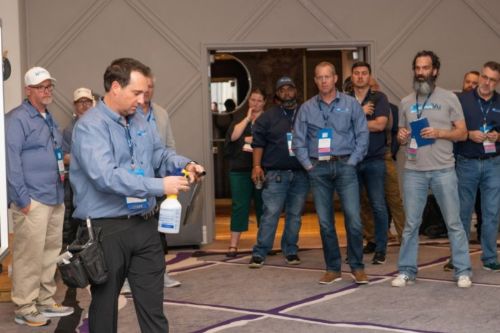
The Power of the Network: Accessing Peer Masterminds and Continuous Learning
In a startup, your network is who you build. In a top-tier franchise, it’s an asset you acquire. The true value of a franchisee network isn’t a directory of names or an annual conference. It’s a curated, high-level peer group of operators running the exact same playbook in different markets.
This creates a powerful mastermind environment. When you’re learning how to evaluate a franchise, ask about the mechanisms for continuous learning. Is there a formal platform for franchisees to share best practices on scaling, hiring A-players, or managing multi-unit operations? Access to peers who are six months, two years, or a decade ahead of you on the same journey provides an unparalleled advantage, transforming shared challenges into collective solutions.
Founder Experience as a Strategic Advantage
An anonymous corporate entity and a founder-led organization offer vastly different strategic value. A founder with deep, boots-on-the-ground experience in the industry is not just a figurehead, they are the system’s chief architect and your most valuable strategic resource. Their journey is a roadmap of avoided mistakes and capitalized opportunities.
This experience should be accessible and embedded in the franchise’s DNA. It manifests as a playbook that has been pressure-tested in the real world, a supply chain built on long-standing relationships, and a brand that resonates with the market because its creator was once its target customer. You aren’t just buying a manual, you’re gaining access to the architect who can explain the “why” behind every “how.”
When Challenges Arise: Gauging the Depth of Ongoing Support
Every business faces headwinds. The quality of a franchise is truly revealed in these moments. The support you’ll need as a sophisticated owner goes beyond a technical help desk. You need strategic counsel.
When a new, low-cost competitor enters your territory or a local economic shift impacts lead flow, what does the franchisor do? A best-in-class support structure functions like a strategic back office. They should be able to analyze the situation with you, provide data from other markets that have faced similar challenges, and co-develop a strategic response. This transforms support from a reactive cost center into a proactive, value-driving partnership.
Why a ‘Best-in-Class’ Franchise Outperforms Other Ventures
For an entrepreneur with capital and experience, the world of opportunity is broad. You could launch a new startup, acquire an independent local business, or expand your real estate portfolio. Yet, when evaluated through the lens of risk-adjusted returns and operational scalability, a premier franchise system often presents one of the best franchise opportunities for growth.
The Risk-Adjusted Return: De-risking Growth Compared to a Startup
A startup is a bet on an unproven idea. You bear the full weight of developing a product, finding market fit, building a brand, and creating operational systems from scratch. The potential for a massive return is matched by an exceedingly high probability of total failure.
A top-tier franchise, conversely, is an exercise in intelligent risk mitigation. The product-market fit is already established. The brand has recognition and credibility. The operational playbook is a known quantity. Your investment is not an R&D expense, it’s a deployment of capital into a validated model. This allows for more predictable forecasting and a significantly higher probability of achieving strong, consistent returns, making it a fundamentally different and smarter risk.
Speed to Profitability: Leveraging a Proven Playbook
The timeline from launch to meaningful cash flow is drastically compressed in a strong franchise system. While a startup founder spends years refining their model, a franchisee gets a complete business system on day one. This includes pre-built marketing campaigns, refined sales processes, established supplier relationships, and a complete operational playbook.
This turnkey system allows you to bypass the costly and time-consuming trial-and-error phase. Your focus immediately becomes execution and optimization within a proven framework, enabling you to generate revenue and achieve profitability in a fraction of the time it would take to build a business from the ground up.
Achieving Higher Operational Efficiency Through Systemization
As an experienced entrepreneur, you know your most valuable asset is your time and strategic focus. An independent business or startup often requires the owner’s constant involvement in day-to-day firefighting. A superior franchise is designed from the outset for operational efficiency, freeing you to work on the business, not just in it.
This efficiency is the direct result of deep systemization. Every core function has a standardized operating procedure. The technology is pre-selected and integrated. The marketing is system-driven. This creates a highly efficient engine that reduces waste, ensures quality, and, most importantly, is designed to run effectively without your constant tactical input.
Portfolio Diversification with a Scalable Business Model
Finally, view the franchise not as a single business but as a potential asset class for your overall investment portfolio. A well-chosen franchise offers a unique blend of active management and system-driven income that can complement traditional investments like stocks and real estate.
Because the model is proven and documented, it is inherently scalable. Success with your first unit creates a clear, repeatable path to multi-unit or multi-territory ownership. This allows you to build a substantial enterprise on a foundation of proven systems, diversifying your wealth and creating a saleable asset with predictable performance and recognized brand value.
Conclusion: Your Framework for Selecting a High-Performance Franchise Asset
The path to building a scalable business portfolio is paved with strategic decisions, not just hard work. Viewing a franchise business through the lens of a portfolio asset fundamentally changes the evaluation criteria. It’s no longer about buying a business model, but about acquiring a system engineered for growth. This framework can guide your final decision.
The Entrepreneur’s Franchise Evaluation Checklist
Before you move forward with any opportunity, filter it through this high-performance checklist. This isn’t about ticking boxes, but about confirming the strategic alignment between the franchise system and your ambition for portfolio growth.
- System and Process Maturity: Is the system a sophisticated, pressure-tested platform designed to support multi-unit expansion with minimal loss of efficiency?
- Founder and Leadership DNA: Are they primarily financiers, or are they seasoned operators who have built and scaled businesses themselves? Your goal is to partner with leaders whose experience you can leverage.
- Scalability of the Economic Model: Does the financial model account for the efficiencies of owning multiple territories? Is there a clear, profitable path from one unit to five, and then to ten?
- Support as a Force Multiplier: Does the franchisor’s technology, marketing, and supply chain free up your capital and attention to focus on strategic growth, or does it create administrative drag?
- The Innovation Roadmap: A franchise that is static today will be obsolete tomorrow. Demand to see the franchisor’s plan for future-proofing the brand, its products, and its systems.

The Final Litmus Test: Does the Franchise Amplify or Constrain Your Skills?
Ultimately, your decision comes down to a single question. Will this franchise system amplify your existing entrepreneurial skills, or will it constrain them?
A constraining system forces you into the role of a manager, bogging you down with rigid processes and low-level operational tasks. It effectively puts a ceiling on your ability to strategize, lead, and expand.
An amplifying system does the opposite. It handles the 80% of operational minutiae with proven, efficient processes. This liberates you to apply your expertise where it matters most: building a high-performance team, identifying new market opportunities, and executing a multi-unit growth strategy. It provides the foundation so you can build the empire.
Next Steps in Your Due Diligence Journey
With this framework in hand, your due diligence process becomes more focused and effective. Your next steps should be to move from analysis to validation.
Engage with the franchisors on your shortlist, but control the narrative. Use the checklist above to ask targeted questions that go beyond their standard presentation. You are a potential strategic partner evaluating a capital allocation decision.
Insist on speaking with their most successful multi-unit operators. Ask them specifically about the transition from their first unit to their third and fifth. Probe for the challenges of scaling and how the franchisor provided tangible support. Their journey is the clearest predictor of your own. Finally, return to your financial models. This is the final step in confirming that you’re not just buying a franchise, but acquiring your next high-performance portfolio asset.
To see how a high-performance franchise business can scale within your portfolio, connect with CoolVu Franchise and explore the opportunity.
Frequently Asked Questions
What’s more important when evaluating a franchise: the brand name or the operating system?
For an experienced entrepreneur, the operating system is far more important. While a strong brand provides an initial advantage, the underlying system, including its technology, processes, and supply chain, is what determines your long-term profitability and ability to scale efficiently. The system is the engine, the brand is the exterior paint.
How can I tell if a franchise business model is truly scalable?
Look for a model built on systems, not personalities. Key indicators include streamlined, well-documented operations that can be taught to a manager, a centralized technology stack that can manage multiple locations, and a business that can perform well without the owner’s constant daily presence. If the model requires you to be the primary salesperson and operator, it’s a job, not a scalable asset.
What are the most important things to look for in a Franchise Disclosure Document (FDD)?
Treat the FDD as an investor prospectus. Pay close attention to Item 19 (Financial Performance Representations) to understand potential earnings, Item 7 (Estimated Initial Investment) to model your startup costs accurately, and Item 21 (Franchisor’s Financial Statements) to ensure the franchisor itself is healthy and stable. A profitable franchisor is more likely to reinvest in the systems that support you.
Why are ongoing royalty fees and technology fees worth paying?
Think of franchise fees as an investment, not a cost. These fees should provide a clear return by giving you access to a system that accelerates growth and reduces risk. Royalty fees should fund expert coaching and ongoing support, while technology fees should cover a modern, integrated software suite that drives operational efficiency. A great franchisor can clearly demonstrate how these fees contribute directly to your success.
More Interesting Posts: