Table of Contents
Why Business Privacy Solutions Franchises Matter in 2026
Between 2020 and 2026, the privacy landscape in the United States shifted dramatically. What started with the California Consumer Privacy Act and a handful of state-level regulations has expanded into a patchwork of 24 comprehensive data privacy laws spanning states from Virginia and Colorado to Texas, New Jersey, and Rhode Island. California’s data breach notification law was enacted back in 2003, and since then, 39 states have enacted consumer notification laws for data breaches. The message is clear: businesses of all sizes are now expected to protect personal and financial information across every layer of their operations.
But most of the conversation around data protection focuses on passwords, encryption, and firewalls. What gets overlooked is the physical layer: the glass conference room where a client’s account details are visible from the hallway, the reception desk where patient names sit in full view, or the retail counter where payment card information flashes on a POS screen facing the street. Data privacy builds trust between businesses and customers, and that trust erodes quickly when a visitor can simply look through a window and see what should be confidential.
That gap is where a business privacy solutions franchise steps in. By installing privacy window films, security films, decorative graphics, and smart switchable glass, a home-based franchise can help offices, clinics, banks, schools, and retail stores control who sees what, without building expensive new walls. The result is a practical, scalable business that addresses a critical issue at the intersection of data protection, physical security, energy efficiency, and design.
What Is a Business Privacy Solutions Franchise?
A business privacy solutions franchise is a franchise business that installs window films, privacy graphics, and architectural surface finishes to control visibility and protect sensitive information in commercial and residential spaces. Unlike a general tint shop, a privacy-focused franchise understands how physical exposure of consumer data intersects with compliance expectations and client trust. Franchise systems in this space typically offer a full range of products, from frosted and reflective films to security-grade films and on-demand switchable smart glass.
This is a home-based window tinting and surface enhancement franchise model. Owners operate from a small office or home, visiting clients on-site with samples, measurement tools, and mobile installation equipment. There is no need for a retail showroom. Overhead stays low, and the focus stays on relationship-driven B2B and B2C service.
Typical clients include medical offices guarding patient records, law firms protecting client files, financial institutions shielding customer data from public view, retail chains securing storefronts, and residential homeowners seeking privacy without heavy drapes or permanent structural changes. These franchises sit at the intersection of security systems, energy efficiency, and branding. They offer solar control films that reduce cooling costs, security films aligned with facility protection strategies, and branded privacy graphics that reinforce company identity while keeping the inside out of sight.
How Privacy Window Films Protect Data in 2026 Workspaces
Physical visibility is one of the most underestimated exposure points in any data protection program. Consider a typical open-plan office: monitors face glass partition walls, meeting rooms are wrapped in floor-to-ceiling clear glass, and reception desks sit behind transparent panels. Anyone walking down a corridor or passing on the sidewalk can see names, account numbers, and confidential discussions in progress.
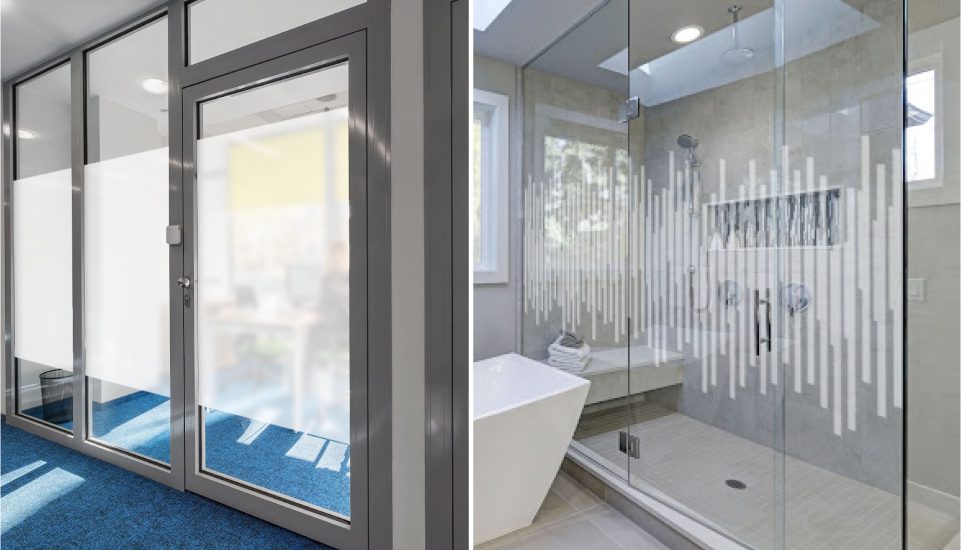
Privacy window films address this by altering the way light passes through glass. Frosted films for conference rooms obscure document-level detail while still letting natural light fill the space. One-way reflective films on street-facing windows prevent passersby from seeing inside during the day. Patterned or gradient films provide a middle ground, blocking specific sight lines without making a room feel closed off.
The practical applications are immediate. A bank branch installs gradient film on teller-side windows so that customer account details are not visible from the lobby. A hospital applies frosted film to exam-room sidelights so patient names on intake forms cannot be read from the hallway. An HR department uses decorative patterned film on their glass-walled office during open enrollment season, when stacks of personal data and social security numbers are spread across desks. Seventy-six percent of consumers want transparency in data usage, and visible steps to guard their information, like privacy films, send a powerful signal that a company takes protection seriously.
These films help businesses implement reasonable physical safeguards around consumer data and customer data as part of broader data protection programs. They do not replace digital security measures, but they close a gap that no amount of encryption can address: the gap between what’s on a screen and who can see it through a pane of glass.
The Legal and Regulatory Context: Data Privacy Meets Physical Space
The regulatory environment around data privacy has expanded faster than most businesses expected. The California Consumer Privacy Act, which took effect in 2020 and was strengthened by the California Privacy Rights Act, gave consumers the right to opt out of data collection and established new standards for how businesses handle consumer information. Utah, California, Virginia, and Colorado enacted comprehensive data laws in 2023, and by mid-2026, 24 states have comprehensive consumer data privacy laws on the books. Each law varies in thresholds, enforcement mechanisms, and the specific rights it grants, but the trend is unmistakable: state laws now requires businesses of nearly every size to adopt reasonable measures to protect personal data.
These privacy laws are not limited to the digital realm. Most require “reasonable security measures” and principles of data minimization and access controls. While no statute specifically mandates window film, the spirit of these regulations encompasses physical security. If a compliance audit reveals that consumer data is routinely visible through a glass wall to unauthorized viewers, that could be flagged as a failure in access controls. Franchises must comply with various state data privacy laws, and franchises must comply with varying regulations based on location as they operate across state and national borders. For businesses with operations in the EU or serving EU residents, non-compliance with GDPR can incur fines up to 4% of revenue. GDPR penalties can reach up to 4% of annual global revenue. Businesses face fines up to 4% of global revenue for GDPR violations. Even domestically, the Federal Trade Commission has authority to pursue enforcement actions, and 39 states require consumer notifications after data breaches, which can trigger class action lawsuits and significant fines.
For franchisees selling privacy films, the key is to speak credibly with clients’ facility, IT, and compliance teams. The conversation is not about making legal guarantees. It is about showing how privacy films complement broader strategies, reducing line-of-sight risk as one layer in a comprehensive information security program. When a compliance officer asks, “What are we doing about physical exposure of sensitive data?”, a well-installed privacy film is a concrete, auditable answer.
Core Services Offered by Business Privacy Solutions Franchises
A business privacy solutions franchise typically offers several distinct service lines, each addressing a different dimension of privacy and protection.
Privacy Window Film
Frosted, gradient, and patterned films are the workhorse products for controlling visibility. Common installations include conference room glass, front door sidelights, glass partitions between departments, and reception windows in healthcare environments. These films allow natural light through while making it impossible to read text or identify faces from the other side.
Security Film
Thicker, multi-layer polyester films designed to hold shattered glass in place during attempted break-ins. These integrate with broader security systems as a physical delay layer. Certified options meet standards like ANSI Z97.1 (Class A) and 16 CFR 1201 Category II. Warranties for commercial security films typically run 10 years or longer when professionally installed with proper attachment systems.
Decorative Privacy Graphics
Custom-printed designs that serve double duty: privacy and branding. A law firm can have its logo etched into glass, a dental practice can display cheerful patterns on its waiting room windows, and a retail store can block views of back-of-house operations with on-brand graphics. These solutions provide consumers with a polished, professional experience while reducing exposure of sensitive areas.
Smart/Switchable Films
PDLC (Polymer Dispersed Liquid Crystal) films switch from opaque to clear in under one second when voltage is applied. These are ideal for executive boardrooms, clinics, and government offices where privacy needs change throughout the day. Modern PDLC films block up to 99% of UV rays, draw roughly 3 watts per square meter, and carry indoor lifespans of 12 or more years. Smart film pricing ranges from $18 to $35 per square foot depending on features, but costs have dropped enough that they are no longer limited to luxury installations.
How These Services Support Data Protection and Consumer Trust
Physical privacy solutions do more than block sight lines. They establish visible proof that a company takes data protection seriously. When a patient walks into a clinic and sees frosted film on every exam room window, or a banking customer notices that teller screens are shielded from the lobby, the message is immediate: this organization protects your information.
Controlling sight lines reduces casual viewing of customer data, limiting the risk of unauthorized disclosure in lobbies, shared work areas, and public-facing reception desks. This is not a hypothetical risk. Data breaches can lead to significant reputational damage for businesses, and failure to protect data can lead to public shaming and loss of business. Data breaches at one franchise location can impact the entire brand’s reputation. Even a single photograph of visible client records, shared on social media, can trigger a compliance investigation and erode years of brand loyalty.
Consider a real-world example: a multi-location clinic system launched a comprehensive privacy initiative in 2025, adding frosted film to every exam-room door sidelight and check-in counter across 14 locations. The project took three weeks. Within a quarter, patient satisfaction surveys showed a measurable uptick in trust scores related to “privacy and confidentiality.” The cost was a fraction of what it would have taken to replace glass walls with drywall, and the clinics retained their open, welcoming feel.
Customer Data, Personal Data, and Physical Exposure Risks
In business settings, customer data and personal data typically include names, addresses, account numbers, appointment histories, partial IDs on paperwork, insurance details, and payment card information. Much of this information passes through physical spaces every day. It sits on open file carts near glass, appears on whiteboards visible from corridors, glows from POS systems next to storefront windows, and lines up on visitor sign-in sheets at transparent reception desks.
These are not edge cases. They are the default layout of most businesses that were designed for openness and natural light before data privacy expectations reached their current level. A dental office with a glass check-in window exposes patient names and insurance carriers to anyone in the waiting room. A co-working space with clear-glass phone booths lets passersby see laptop screens during confidential calls. A small bank branch with floor-to-ceiling street-facing windows puts every teller transaction on display.
A privacy solutions franchise can perform a walk-through assessment to map exactly where customer data is visually exposed. This process is similar in spirit to data mapping, but focused on line-of-sight risks rather than digital data flows. Data minimization should be practiced to limit retention of unnecessary customer information, and the physical parallel is limiting unnecessary visual exposure of such data. The franchisee walks the space, photographs sight lines (without capturing the actual personal data on screens or papers), and delivers a prioritized recommendation for which glass surfaces need frosted film, which need reflective film, and which might benefit from a security layer.
Franchise Systems and Data Privacy Responsibilities
Franchise systems generally share responsibility for data privacy between franchisor and franchisee. The franchisor establishes standards, provides training, and sets expectations, which in CoolVu’s case is guided by an experienced franchise leadership team with deep window film expertise. The franchisee executes locally. This structure is powerful but also creates complexity. Protecting sensitive information in a franchise network is complex due to decentralized operations, and centralized oversight is crucial for effective franchise privacy strategies.
Franchisors should implement strong data governance policies for franchisees that cover both the products they install and the data they handle. This means standardized installation practices, vetted product lines certified by major manufacturers, and clear guidance on how to discuss privacy benefits with clients without overstepping into legal advice. It also means implementing strong technical safeguards that contribute to overall franchise data security, such as encrypted cloud storage for project files, role-based access to CRM systems, and clear data retention policies.
Franchisors may be liable for franchisee data breaches, which makes training non-negotiable. Employee training on data privacy and cybersecurity is essential to mitigate human error. Regular cybersecurity training reduces risks of data breaches, and that training should be ongoing and tailored for franchisees and their staff. Vendor management is critical as third-party risks can expose franchise networks to data breaches, so franchisors should vet every film supplier, cloud platform, and payment processor in the system. Unified incident response plans are needed for managing breaches in franchised organizations, so every location knows exactly what to do if a laptop with project data is lost or a CRM account is compromised. Franchises must provide clear privacy policies and procedures for compliance, and conducting routine audits ensures compliance with privacy protocols. Franchises must conduct regular cybersecurity audits for compliance. Standardizing security practices in franchise agreements helps ensure compliance across every territory. Franchisors should limit access to sensitive information so that only the people who need specific project or client data can reach it.
A well-run franchisor can provide templated risk-assessment checklists that franchisees use during site visits with corporate clients. These checklists help the installer ask the right questions about what’s behind the glass, what level of opacity is needed, and whether the client has specific compliance requirements that the film selection should support.
Franchise Agreements, Territory, and Customer Data Ownership
Franchise agreements commonly address territory boundaries, marketing rights, and access to shared systems like CRM platforms and project management tools. In a home-based privacy solutions franchise, the most sensitive information is usually B2B client details: property layouts, security film specifications, contact names, job-site photos, and project quotes. This is different from a consumer-facing franchise that collects mass databases of personal data, but it still requires careful handling.
Franchisors must update franchise agreements for compliance as privacy laws evolve. Agreements should set clear rules about who can access project data, how long it is retained, and how any personal data, such as homeowner contact details or facility manager information, is protected. Franchises should maintain a data inventory to manage customer and employee information effectively, tracking what data exists, where it is stored, and when it should be deleted.
Using role-based access control helps limit data access to authorized personnel only. A franchisee in one territory should not be able to browse client records from another territory unless there is a legitimate operational reason. Encryption protects sensitive data during storage and transmission, and encrypting personal data protects against unauthorized access. When project photos, floor plans, and quotes live in cloud-based systems used across the franchise network, encryption and access controls are not optional extras; they are baseline requirements.

Evaluating a Business Privacy Solutions Franchise Opportunity
If you are considering a franchise in this sector, here is what to look for during your evaluation, including key factors when comparing window tinting franchises.
- Training depth. Does the franchisor provide hands-on installation training for every film type, including smart films and security films? Do they cover sales conversations about data privacy, energy efficiency, and compliance benefits?
- Vendor relationships. Are the products sourced from established manufacturers with documented warranties, UV/IR performance specs, and safety certifications? Ask for specific brand names and warranty terms.
- Marketing support. Does the system provide lead generation, branded collateral, and digital marketing tailored to B2B privacy needs and B2C residential customers?
- Data privacy awareness. Does the operations manual address safe handling of customer data gathered during quoting, billing, and project documentation? This signals a mature franchise system that understands the environment it operates in.
Financial readiness matters. Typical liquid capital requirements for a home-based franchise in this space run around $50,000, with low overhead since there is no showroom lease, and prospective owners can review detailed CoolVu franchise FAQ information on costs and support. Revenue comes from both residential projects and larger commercial contracts, including multi-branch rollouts for healthcare networks, banks, and retail chains, reflecting the proven franchise business model in a booming window film industry. Ask how the brand differentiates from traditional tint shops by emphasizing privacy, security film, and architectural surface solutions rather than just solar tinting.
Ideal Franchisee Profile for a Privacy-Focused Surface Business
The owners who tend to thrive in this model share a few common traits:
- Motivated self-starters who are comfortable meeting property owners, office managers, and facility directors face to face.
- Willing learners who can pick up basic construction knowledge, window measurement techniques, and film application skills during training.
- Trustworthy professionals who understand that they will work around sensitive documents, security systems, and personal data in clients’ spaces, and who treat confidentiality as a baseline, not an afterthought.
Many franchise systems in this space actively welcome veterans, first responders, women, and minority entrepreneurs who want a scalable, home-based franchise business with strong corporate support, and some offer special incentives for starting a CoolVu window film franchise. The soft skills matter as much as the technical ones: explaining privacy film benefits in plain language, listening to client concerns about data privacy, and proposing tailored solutions that balance visibility, light, design, and protection in the context of commercial window tinting services for businesses.
Common Mistakes Businesses Make About Privacy and How Franchisees Help Avoid Them
One of the most frequent misconceptions is that privacy is purely a digital problem. Businesses invest heavily in firewalls, endpoint monitoring, and encryption, then leave their conference rooms wrapped in clear glass with whiteboards full of confidential project details facing the hallway.
Here are the mistakes that come up repeatedly:
- Leaving glass walls clear in sensitive areas. Open glass communicates transparency and collaboration, but it also communicates everything on the other side to anyone walking by.
- Relying on removable paper signs or tape-on frost sheets. These look unprofessional, peel off, and create a false sense of security.
- Installing overly dark tints that kill natural light or violate building codes. Some municipalities and historic preservation boards restrict exterior film reflectivity or color, and overly reflective films can cause glare problems for neighboring buildings and pedestrians.
- Assuming blinds and curtains are enough. They only work when someone remembers to close them, and they block all light rather than filtering visibility.
A professional franchise operator solves these problems with code-compliant, long-lasting films and surface solutions that balance privacy, light, and design. For example, a retail bank with eight branches initially tried ad-hoc solutions: paper coverings in some locations, cheap adhesive frost in others, and nothing at all in two branches. The result was inconsistent branding, peeling films, and a failed internal compliance audit. The bank then engaged a franchise installer to create a cohesive privacy and branding plan. The operator specified gradient privacy film with the bank’s logo subtly integrated, installed uniformly across all eight locations over three weekends. The compliance team signed off, and the branches looked better than they had before.
How the Consultation and Installation Process Works
The end-to-end process for a privacy film project typically follows these steps:
- Initial call. The franchisee discusses the client’s needs, privacy concerns, and project scope over the phone or video.
- On-site assessment. The franchisee visits the property to measure glass surfaces, assess sight lines, photograph window configurations (without capturing personal data visible on screens or desks), and show film samples in actual lighting conditions.
- Written proposal. A detailed quote specifying film types, square footage, costs, expected performance (light transmission, UV blocking, privacy level), and project timeline.
- Scheduling. Small office projects typically take one to two days. Larger commercial jobs may be phased over several nights or weekends to avoid disrupting business operations.
- Installation. Surface preparation, precise cutting, application, edge sealing, and inspection.
- Follow-up. Post-installation check, cleaning instructions, and warranty documentation.
Throughout the process, respect for data privacy during visits is essential. Franchisees should avoid photographing personal data on desks, secure any customer information collected for billing in encrypted systems, and follow building security protocols. The goal is to demonstrate the same level of discretion the client expects from the finished product.
Security Films, Break-In Risk, and Protection of Sensitive Records
Security window films integrate with broader security systems to create a physical delay layer against forced entry. When glass is struck, the film holds shattered fragments in place rather than allowing immediate access. This buys critical time for alarms to trigger and law enforcement to respond, reducing the chance that thieves reach file rooms, reception desks, or unsecured workstations.
The scale of this approach is proven. Sam’s Club installed 3M’s 8-mil security film with anchoring caulk across all 905 locations within approximately four months to mitigate smash-and-grab crime. That kind of national rollout demonstrates what franchise systems can coordinate when they have standardized products, trained installers, and logistical support.
The data protection angle is direct. Schools with student records stored near exterior windows, pharmacies with controlled substances and customer prescription data behind glass counters, and small law offices with client files visible through street-level windows all benefit from security film. A thief who cannot quickly breach the glass is more likely to abandon the attempt before reaching sensitive records or devices.
Security films are not a substitute for alarms, locked cabinets, or digital safeguards. They are one layer in a defense-in-depth approach to data protection. But they are often the missing layer, the one that nobody thinks about until after a break-in exposes personal data and triggers the notification requirements that now exist in 39 states.
Architectural Finishes and Visual Privacy in Open-Plan Offices
Architectural surface finishes offer another path to privacy without demolition or reconstruction. These are films and wraps applied to existing doors, walls, furniture, and partitions to change their appearance and opacity.
Common use cases include:
- Glass partitions covered with semi-opaque decorative finishes that maintain an open feel while blocking screen visibility.
- Interior doors wrapped with wood-look or matte films to create the impression of a private office without replacing hardware.
- Screen-facing surfaces treated with matte, anti-glare films that reduce reflections visible from outside a workspace.
These solutions have become especially relevant as hybrid work patterns, which emerged strongly by 2024 and 2025, reshaped office design. Teams now use bookable rooms and need ad-hoc privacy for video calls, confidential discussions, and focused work sessions. Rather than building permanent walls for spaces that might be reconfigured next quarter, architectural finishes let facility managers create and adjust privacy zones quickly.
Franchisees can combine films and finishes into integrated design packages that meet both privacy and branding goals. A tech company might want frosted film on meeting rooms plus branded wall wraps in common areas. A medical group might need exam-room privacy film plus wood-grain wraps on aging laminate surfaces to refresh aesthetics during the same visit.
What Businesses Should Know Before Choosing a Privacy Film Provider
Selecting the right provider matters as much as selecting the right film. Here are the criteria that separate a reliable operator from a generic contractor:
- Experience with commercial privacy projects. Ask for references and portfolios showing hospitals, law firms, financial institutions, schools, and other data-sensitive environments, not just residential tinting.
- Familiarity with data privacy concerns. A provider who understands why you need privacy film, not just how to apply it, will deliver better recommendations.
- High-quality, warrantied films. Confirm that the products carry manufacturer warranties (10 years or more for commercial installations is standard for reputable brands) and meet relevant safety certifications.
- Adherence to manufacturer installation standards. Improper installation leads to bubbling, peeling, and thermal stress failure. Trained franchise operators follow documented procedures that protect warranty validity.
- Insurance and background checks. Installers working around sensitive documents, security systems, and personal data should be insured and vetted.
Working with a trained franchise operator, rather than a one-off local contractor, provides standardized processes, ongoing training, access to national vendor relationships, and accountability through the franchise system. If something goes wrong, the franchisor’s reputation is on the line alongside the franchisee’s, which creates a level of quality assurance that independent operators simply cannot match, similar to what you would expect from top service franchises in the window film industry.
Frequently Asked Questions About Business Privacy Solutions Franchises
The following questions come up frequently from both business owners considering privacy upgrades and entrepreneurs evaluating franchise opportunities.
How do privacy window films actually improve data privacy?
Privacy films limit who can physically see documents, screens, and whiteboards through glass, reducing visual exposure of consumer data and personal data. A frosted film on a conference room wall, for example, makes it impossible for someone in the hallway to read a projected financial report or identify names on a whiteboard. Films complement rather than replace digital security measures like encryption or access controls, but they are often the easiest physical safeguard to add in an existing building. No construction, no downtime, and no disruption to workflows.
Will privacy films make my office too dark?
Modern films are engineered to allow significant natural light while obscuring detail. Frosted films diffuse light rather than blocking it. Gradient films start opaque at eye level and transition to clear above, preserving views and daylight. Patterned films use geometric or organic designs to break up sight lines without creating a cave-like atmosphere. A franchise installer will bring samples to show actual light transmission in your space and can tailor opacity to each room’s specific needs, heavier frost for the HR office, lighter patterns for the break room.
Are these solutions compliant with current data privacy laws?
Window and surface solutions do not by themselves ensure legal compliance. No film replaces a written privacy policy, an incident response plan, or proper data handling procedures. However, privacy films support physical security expectations under many data protection frameworks by limiting unauthorized visual access to consumer information. Businesses should coordinate with their legal and compliance teams while using privacy films as part of a layered approach to protecting customer data. The films provide a tangible, auditable answer to the question, “What physical controls do you have in place?”
How long do privacy and security films last?
Interior privacy films typically last 10 to 15 years under normal conditions, with many manufacturers offering multi-year warranties. Security films from premium brands often carry 10-year commercial warranties that include attachment systems. Smart switchable films now claim indoor lifespans of 12 or more years. Professional installation by trained franchisees, combined with proper cleaning and maintenance, helps films perform for their full expected life. Improper installation, mismatched film-to-glass pairings, or harsh chemical cleaners are the most common causes of premature failure.
Can a home-based franchise really handle large commercial projects?
Home-based describes the administrative base, not the capability. Franchisees in this sector typically operate with equipped vehicles, professional-grade tools, and trained crews capable of servicing major office buildings, schools, healthcare campuses, and multi-location retail chains. Franchise systems coordinate support, advanced training, and sometimes multi-location project planning for regional or national clients. The Sam’s Club security film rollout across 905 locations is a good example of the scale that a coordinated franchise system can achieve.
What does it cost to add privacy film to a typical office?
Costs vary by square footage, film type, and complexity. Simple frosted film on interior glass partitions is the most economical option, generally running well under the cost of smart or security films. Smart switchable films range from $18 to $35 per square foot depending on features and specifications. Security films fall somewhere in between. Most businesses find that privacy film costs far less than building new walls, and the secondary benefits, including energy savings from UV and IR blocking, reduced glare, and extended life for interior furnishings, improve the overall return. A franchise installer can provide a detailed, written estimate after an on-site assessment.
Why Choose CoolVu for Business Privacy Solutions
CoolVu is a specialized surface and window film franchise built around privacy, security, and architectural finishes for both residential and commercial properties. Unlike general tinting companies, CoolVu franchisees are trained to assess physical privacy risks, recommend the right film for each application, and install products that meet manufacturer standards and warranty requirements.
The system provides comprehensive training covering every film type, from frosted privacy films to PDLC smart glass and multi-layer security films. National vendor relationships mean access to top-tier, warrantied products. Marketing support is tailored to both B2B clients, such as healthcare networks, law firms, and financial institutions, and B2C residential homeowners. Franchisees learn to speak knowledgeably about privacy without overstepping into legal advice, using sales tools, case studies, and recommended language about data privacy benefits developed by the corporate team.
For clients, choosing CoolVu means consistent quality across locations, vetted products, insured and trained installers, and a consultative approach that respects confidentiality on every project. For prospective franchise owners, it means a proven, home-based business model with low overhead, strong support, and a service offering that is only becoming more relevant as privacy expectations continue to rise, as reflected in independent CoolVu franchise reviews from current owners.
Next Steps: How to Get Started With a Business Privacy Solutions Franchise
Whether you are an entrepreneur exploring franchise ownership or a business leader searching for practical privacy upgrades, the next step is straightforward.
For prospective franchise owners:
- Fill out an inquiry form to receive detailed information about CoolVu’s franchise model, training, and territory availability.
- Schedule a discovery call to learn how a home-based privacy solutions franchise fits your goals and financial readiness, and review CoolVu franchisee testimonials and reviews to hear from existing owners.
- Review the Franchise Disclosure Document to understand the investment, obligations, and support structure.
For businesses seeking privacy solutions:
- Book an on-site evaluation where a CoolVu franchisee will assess your space, map visual exposure points, and recommend tailored film and surface solutions.
- Request a written proposal with specific products, pricing, timelines, and warranty details.
In an era where 24 states enforce comprehensive privacy laws, collecting personal information carries real liability, and consumers expect to see visible evidence of data protection, combining smart surface solutions with a proven franchise system helps both owners and clients protect what matters most. The businesses that act now, addressing physical privacy alongside their digital safeguards, will be the ones that earn lasting trust, avoid costly compliance failures, and create workspaces that look as good as they perform.
The opportunity is here. The demand is growing. And the time to establish a resilient, future-ready business that supports data protection, visual privacy, and long-term customer trust has never been better.