Table of Contents
A franchise for entrepreneurs is more than a buzzword – it is a tested pathway into business ownership that blends the independence of running your own business with the guardrails of a proven business model. In 2024, franchises contributed almost $900 billion to the U.S. economy across approximately 830,876 franchise establishments, and the model continues to gain momentum heading into 2026.
The franchise business model works across various industries, from fast food giants and fitness centers to home-based service concepts like window film and architectural surface solutions. What makes it attractive is the combination of brand recognition, comprehensive training, and ongoing support that reduces the guesswork most independent startups face. Franchising can provide a safer path to business ownership for new entrepreneurs, especially when compared to launching a completely untested concept.
This guide walks you through everything a prospective franchise owner needs to understand: franchise fees and initial investment requirements, the franchise disclosure document, how to compare different franchise opportunities, and the real costs and trade-offs involved. Whether you are evaluating a fast food brand or a home-based service franchise like CoolVu, you will finish this article with a clear framework for making an informed decision about franchise ownership.
How the Franchise Business Model Works for Entrepreneurs
At its core, a franchise business model is a licensing arrangement. The franchisor – the parent company that owns the brand, systems, and intellectual property – grants a franchisee the right to operate under its name and use its established business model. In exchange, the franchisee pays an initial franchise fee and ongoing royalties, and agrees to follow the franchisor’s operational standards.
What the franchisor provides varies by brand but typically includes expert training, marketing programs, supply chain access, technology platforms, and operational manuals to guide franchisees through daily execution. Franchise networks also leverage purchasing power for bulk discounts on materials and supplies, passing savings to individual franchise owners. The franchisee, in turn, handles local sales, staffing, customer satisfaction, and community-level marketing. Franchise agreements can impose strict operational rules on owners and often limit creative control for franchisees, which is the trade-off for getting a ready-made playbook.
Different franchise structures exist depending on how much you want to invest and how fast you want to grow. A single-unit franchise is the simplest entry point – one territory, one operation. Multi-unit agreements commit you to opening several units under one contract, often with volume incentives. Area development agreements grant the right to develop multiple units across a defined region over time. Each structure carries different contractual obligations and capital requirements, so the right choice depends on your personal goals and financial readiness.

Costs, Franchise Fees, and Financial Requirements
High initial and ongoing costs are common in franchising, but the range is enormous depending on the industry and business structure. The total investment for a franchise can span from as low as $5,000 to well over $100,000 for service-based concepts, while major restaurant brands can demand significantly more. McDonald’s franchise startup costs, for example, range from $1.3 million to $2.3 million – a figure that includes build-out, equipment, signage, inventory, and working capital on top of the franchise fee itself.
Compare that to a home-based service franchise like CoolVu, where the total investment falls in the low to mid six figures and is supported by a proven franchise business model in a booming industry. There is no retail lease to negotiate, no large build-out, and staffing needs are smaller. Initial franchise fees across the franchise industry range from $5,000 to $100,000, but the fee alone never tells the whole story. You also need to account for equipment, vehicles, insurance, initial marketing, and enough working capital to cover expenses for 6 to 12 months before revenue stabilizes.
Minimum liquid capital and net worth requirements are non-negotiable for most franchisors. For many home-based service franchises, you may need around $50,000 to $75,000 in liquid capital. Major restaurant brands often require $300,000 or more just in liquid assets. Lenders view established franchise brands as lower-risk investments for financing, which can help with loan approvals, but you still need enough personal capital to meet the franchisor’s thresholds.
A higher franchise fee does not automatically mean a better opportunity. What matters is what that fee buys you – the quality of training programs, launch support, technology tools, and the strength of the brand you are joining. Before signing anything, consult a franchise-savvy accountant to model cash flow for at least the first 12 to 24 months under realistic, not optimistic, revenue scenarios.
Understanding Franchise Fees and Ongoing Royalties
The initial franchise fee is a one-time payment that grants you the right to operate under the brand, access training, and use the franchisor’s systems. After that, franchisees typically pay ongoing royalties and advertising fees on a recurring basis. Ongoing royalty fees typically range from 4.6% to 12.5% of sales, depending on the brand and industry. On top of that, franchisees may pay additional advertising fees to a common fund that supports national or regional marketing campaigns.
These ongoing fees fund the franchisor’s support infrastructure: research and development, technology upgrades, brand marketing, and the ongoing training that keeps franchise owners competitive. For the individual business owner, these are costs that would be difficult or impossible to replicate alone.
Fee structures vary. Some franchises charge a flat monthly fee for technology platforms or software, while others calculate everything as a percentage of gross revenue. Home-based franchise models tend to keep overhead and royalties lower than brick-and-mortar concepts, which helps preserve margins. Before you sign a franchise agreement, calculate your “all-in” monthly obligations – royalties plus advertising plus tech fees plus any required vendor purchases – and compare them to your projected gross margins. If the math does not work on paper, it will not work in practice.
The Legal Side: Franchise Disclosure Document and Franchise Agreement
Franchises are heavily regulated under the FTC’s Franchise Rule, which is enforced by the federal trade commission. The franchise rule requires every franchisor to provide prospective franchisees with a franchise disclosure document at least 14 calendar days before signing any franchise contract or paying any fee. This document is your single most important tool for evaluating a franchise opportunity.
The FDD contains 23 required items covering everything from the franchisor’s litigation history and bankruptcy record to a detailed breakdown of all fees, territory rights, and financial performance representations. Pay close attention to Item 7 (estimated initial investment), Item 11 (franchisee obligations), Item 17 (territory protections), Item 19 (financial performance data, if disclosed), and Item 20 (contact information for current and former franchisees).
The franchise agreement is the binding contract that governs your relationship with the franchisor. Franchise agreements typically last between five and 30 years and spell out renewal options, termination conditions, non-compete clauses, transfer rights, and minimum performance requirements. Franchise agreements typically include training and advisory services fees as part of the ongoing relationship. Work with a franchise attorney who can interpret the nuances – especially around termination, renewal, and territory clauses – before you commit.
Key Red Flags to Watch in the FDD
Not every franchise opportunity is a good one. When reviewing the FDD, watch for these warning signs:
- Extensive or recent litigation history involving the franchisor, especially lawsuits filed by franchisees alleging lack of support, misrepresentation, or territory encroachment
- Frequent franchise closures or a high ratio of terminated or non-renewed units in Item 20
- Vague or non-exclusive territory protections that could allow the franchisor to place competing units near your location
- Mandatory suppliers with opaque pricing or high markups, which erode your margins without clear justification
- Heavy required advertising spend with no transparency about how funds are used or what results they generate
- Absence of financial performance representations in Item 19, combined with reluctance from existing franchisees to share real numbers
Prepare a written list of questions tied to FDD Items 3, 7, 11, 17, 19, and 20 before you speak with the franchisor or any existing franchise owners. The answers will tell you more about the health of the system than any sales presentation.
Is a Franchise Right for You? Entrepreneur Readiness Checklist
Franchise ownership is not for everyone, and the honest self-assessment starts before you ever request an FDD. Ask yourself whether you are comfortable following a proven system with strict brand standards, or whether you need creative freedom to feel fulfilled. Franchises reward people who are coachable, systems-oriented, and willing to execute a playbook consistently.
Financial readiness goes beyond having enough for the initial investment. You need liquid capital to cover startup costs plus a cash buffer for 6 to 12 months of operating expenses. Time commitment is real – most new franchise owners work 40 to 60 hours per week in the first year building their customer base, training staff, and learning the business. Consider how that fits with your family obligations and personal goals before proceeding.
Franchising vs. Going Independent
The survival data makes a compelling case for franchises. Almost half of independent businesses fail within their first three years, and two-thirds of new businesses survive just two years. Franchises have a proven business model reducing startup risks, and they benefit from established brand recognition and customer loyalty that takes independent operators years to build.
That said, franchising is not the only valid path. If you have deep industry expertise, a truly unique concept, and the appetite to build everything from scratch, going independent may suit you better. Independent business ownership offers more freedom over branding, pricing, and operations – but at the cost of higher risk and a steeper learning curve.
Consider a concrete example: an entrepreneur interested in window tinting could buy equipment, watch YouTube tutorials, and start cold-calling. Or they could join a structured franchise like CoolVu and receive extensive training, marketing support, protected territories, and a broad customer base from day one. The independent route costs less upfront but carries more risk. The franchise route costs more but provides systems and support that help franchisees succeed faster.

Top Franchise Industries for Entrepreneurs in 2026
Franchise business opportunities span various industries, and choosing the right sector matters as much as choosing the right brand. Here are the leading segments for 2026:
Fast food and quick-service restaurants remain among the best franchises by revenue volume, with brands like McDonald’s and Dairy Queen dominating brand strength. But startup costs are high, labor management is intense, and margins can be thin after accounting for food costs, occupancy, and fees.
Fitness centers and wellness studios continue to grow, particularly boutique and specialized formats. Investment level varies widely, from low-cost mobile concepts to full-facility buildouts.
Home services and surface solutions are seeing high demand driven by energy efficiency retrofits, aging housing stock, security concerns, and sustainability mandates. The global window film market alone was valued at approximately $12.9 billion in 2025 and is projected to reach $21.9 billion by 2033.
Health and urgent care franchises serve aging populations and the push for accessible healthcare. B2B service franchises – including commercial maintenance, facilities services, and architectural finishes – are often financially strong with long-term contracts that smooth revenue across economic cycles.
Home-Based and Service Franchises vs. Brick-and-Mortar
Over half of all small businesses in the U.S. are home-based, and that trend is accelerating in franchising. A home-based franchise like CoolVu eliminates the retail lease, reduces staffing overhead, and lets you scale by adding trucks and teams rather than signing new real estate leases.
The cost comparison is stark. A typical restaurant franchise might require $300,000 to $800,000 or more before opening, while a home-based surface solutions franchise can often be launched for $80,000 to $150,000 total. Home services franchises also show resilience during economic downturns, because property maintenance and energy efficiency upgrades remain necessary regardless of market conditions.
Lifestyle benefits are tangible: no daily commute to a retail location, the ability to serve both residential and commercial customers, and more control over your schedule. You still travel to client sites and manage logistics, but the fixed overhead is dramatically lower than operating a brick-and-mortar location.
How to Evaluate and Compare Franchise Opportunities
Evaluating a franchise for entrepreneurs requires structured due diligence, not gut instinct. Start with broad online research into category trends, market size, and growth projections. Then request the FDD from any franchise that interests you and study it carefully.
Build a comparison matrix that scores each opportunity across key dimensions: total investment, ongoing fees, quality of support provided, brand recognition, territory protection, and lifestyle fit. Compare a well-known fast food brand with a specialized service franchise like CoolVu side by side. The fast food brand may offer higher retail sales volume but demands more capital, more employees, and more operational complexity. A service franchise may grow more slowly but offers better cash flow early and lower exposure to real estate risk.
Take at least 60 to 90 days for due diligence before signing any franchise agreement. Rushing leads to missed red flags and underestimated costs.
Questions to Ask Existing Franchisees
Speaking to current and former franchisees is the most valuable step in your research. Use these questions:
- How accurate were the franchisor’s revenue and cost projections compared to your actual experience?
- How responsive is ongoing support when you have operational issues?
- What was your actual time to break-even, and how did it compare to what you expected?
- What do you wish you had known before signing the franchise agreement?
- How effective are the marketing programs and lead generation tools?
- Are there hidden or unexpected costs that were not obvious in the FDD?
- How well does territory protection work in practice?
- Would you make the same investment decision again, knowing what you know now?
Speak with franchisees in markets similar in size and demographics to your target territory. Their experience will be far more relevant than someone operating in a different region.
Common Mistakes New Franchise Owners Make (and How to Avoid Them)
Underestimating working capital. Many new franchise owners assume profitability within a few months and run out of cash before revenue stabilizes. Build a 6 to 12 month buffer beyond your startup costs.
Ignoring local marketing. National brand marketing alone rarely fills your pipeline. Invest in local community relationships, partnerships with property managers, and neighborhood-level promotions from day one.
Not following the system. Franchisors provide operational manuals to guide franchisees for a reason. Training programs help franchisees reduce their learning curve, and deviating from the playbook early usually hurts more than it helps. Follow the system for at least the first year before customizing.
Over-hiring too early. Adding staff before you have consistent volume wastes payroll. In service franchises, each additional team member also adds vehicle, insurance, and equipment costs.
Choosing the wrong concept. Picking a franchise based on hype rather than alignment with your skills, lifestyle, and local demand is a recipe for frustration. An automotive repair franchise makes no sense if you have no mechanical aptitude. A fast food brand is a poor fit if you dislike managing large hourly teams.
Skipping financial planning. Franchisors often provide initial training and ongoing support, but they cannot fix bad financial modeling. Run realistic projections that account for royalties, advertising fees, seasonal variation, and slow ramp-up periods.
Why Home-Based Service Franchises Are Attractive for 2026 Entrepreneurs
The shift away from high-capital franchise models is not a fad. Entrepreneurs with entrepreneurial drive are drawn to low investment, home-based service franchises because the economics simply work better for most first-time business owners. You can launch a thriving business without signing a five-year commercial lease or hiring a dozen employees.
Several macro trends support this shift. Aging housing stock across the U.S. creates steady demand for retrofits and surface upgrades. Energy efficiency incentives – including tax credits and rebates for building envelope improvements – make services like window film installation increasingly attractive to property owners. Security and privacy concerns continue to rise, driving demand for security film, privacy solutions, and smart glass in both residential and commercial settings.
Home-based service franchises that serve both B2B and B2C markets have a natural advantage. Commercial clients such as healthcare facilities, government institutions, and retail stores tend to place larger orders and sign longer-term contracts. Residential customers provide steady volume. This diversification smooths revenue across seasons and economic cycles, making the new business more resilient.
Case Study Snapshot: From Corporate Job to Home-Based Franchise Owner
Imagine a mid-career professional – let us call her Maria – who spent 12 years in corporate sales before deciding she wanted to own her own business. She had roughly $55,000 in liquid capital, a strong work ethic, and zero experience in construction or home services.
Maria invested in a home-based surface solutions franchise, completed comprehensive training covering technical installation, sales estimating, and business operations over several weeks. Her first clients came through a combination of the franchisor’s lead generation tools and her own outreach to local property managers and homeowners associations in her local community.
The first six months were demanding. Maria worked 50-hour weeks, learned on the job, and leaned heavily on the ongoing training and peer network the franchisor provided. By month 12, she had built a steady pipeline of residential and commercial clients. By month 18, she was covering all expenses, paying herself a reasonable salary, and planning to add a second service team. The franchise did not make her successful overnight – but the systems, support, and brand behind her helped her navigate challenges that would have been far harder to overcome alone.
CoolVu: A Franchise Opportunity for Service-Minded Entrepreneurs
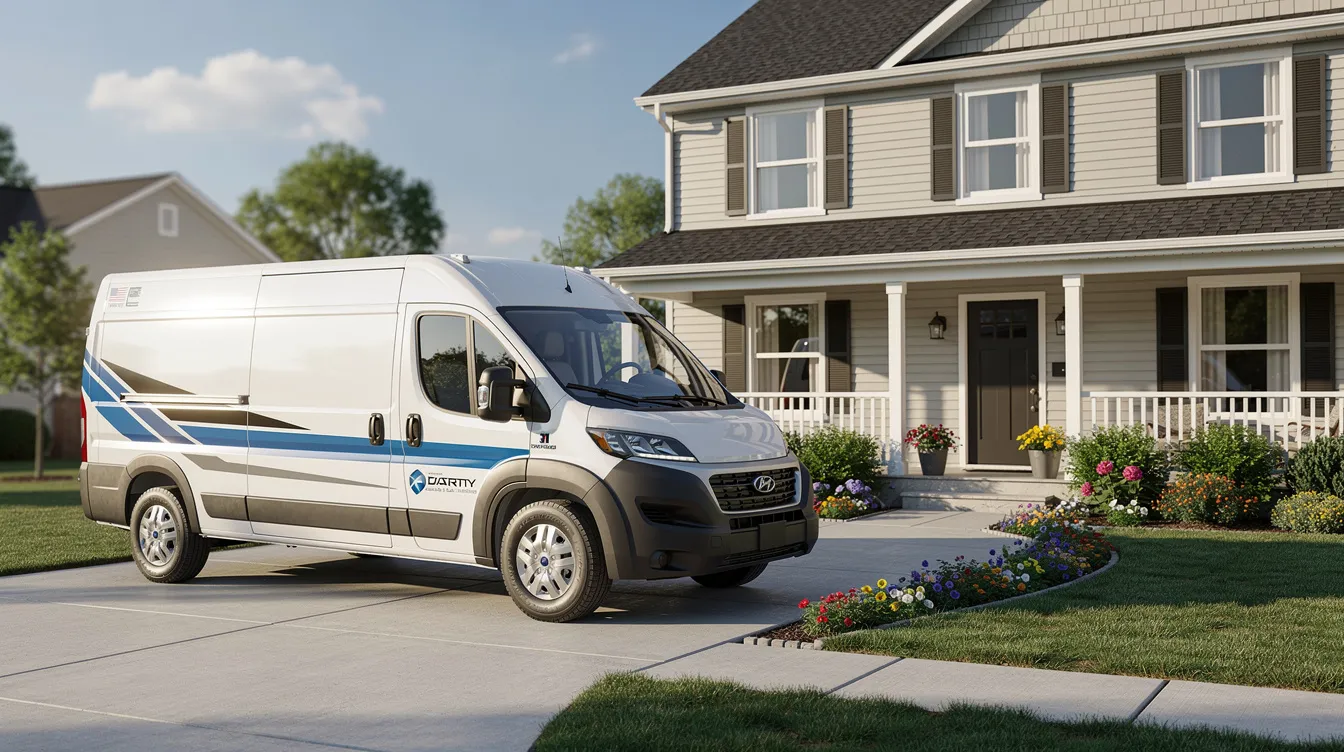
CoolVu is a home-based window tinting and surface enhancement franchise focused on glass and surface solutions: window film, tinting, decorative wall graphics, architectural surface finishes, and smart switchable films for both residential and commercial properties. It is built for entrepreneurs who want a successful business with low overhead, a broad customer base, and the ability to serve clients across multiple market segments.
The ideal CoolVu franchisee has around $50,000 in liquid capital, a willingness to follow a proven system, and the drive to build relationships in their territory, making it a strong candidate for one of the best home-based franchises. CoolVu actively supports veterans, first responders, women, and minority entrepreneurs – groups that bring discipline, resilience, and community connections that translate well into franchise ownership.
CoolVu’s business model allows franchisees to serve residential homeowners looking for energy savings, privacy, and aesthetics alongside B2B clients – retail stores, healthcare facilities, office buildings, and government institutions – that need security film, decorative graphics, and smart glass solutions.
What Sets CoolVu Apart from Other Franchise Opportunities
Most product manufacturers in the window film industry sell materials but do not offer a full-service franchise model. CoolVu combines product application, design consulting, and installation under one trusted brand, creating a successful franchise model that is difficult for product-only companies to replicate.
Key differentiators include protected territories that reduce local competition, ongoing operational support and marketing programs, in-house financing options, and a diversified service mix covering energy efficiency, security, privacy, and decorative solutions that deliver key benefits of franchise ownership. This positions franchisees to capture demand across multiple customer segments rather than relying on a single product line.
CoolVu’s focus on energy efficiency and security solutions aligns with long-term market growth and positions it among the best franchises to buy in 2025. The window film industry is projected to grow at a 7.1% CAGR through 2033, and regulatory pressure for building performance upgrades continues to increase.
How the CoolVu Franchise Process Works
The process to become a CoolVu franchise owner is straightforward. It starts with an initial inquiry and a conversation with CoolVu’s franchise development team to assess qualifications, including liquid capital and financial readiness. From there, you receive and review the franchise disclosure document – taking full advantage of the 14-day review period while considering whether buying a franchise is worth it.
Next come validation calls with existing franchisees, where you can hear CoolVu franchisee testimonials and reviews, followed by a discovery session where you meet the team and see the business model in action. After signing the franchise agreement, you enter extensive training covering technical installation skills for window film and architectural finishes, sales and estimating processes, marketing execution, and day-to-day business operations.
Most new CoolVu franchisees move from signing to active operations within 60 to 120 days. Ongoing support includes marketing campaigns, lead generation tools, access to new products like smart glass solutions, and a peer network of fellow franchise owners, all highlighted in CoolVu franchise reviews. Franchisors may offer operational guidance and marketing assistance throughout the life of the agreement.
FAQs: Franchising for Entrepreneurs
How much liquid capital do I realistically need to start a franchise? It depends on the category. Home-based service franchises often require $50,000 to $75,000 in liquid capital. Restaurant or fast food franchises may require $150,000 to $300,000 or more. Always confirm the specific requirements in the franchisor’s FDD.
What is the difference between franchise fees and royalties? The initial franchise fee is a one-time payment at signing that grants you brand access, training, and territory rights. Franchises often require an initial investment from $5,000 to $100,000 for this fee alone. Royalties are ongoing fees – typically 4.6% to 12.5% of gross sales – paid weekly or monthly throughout the life of the franchise contract.
How long does it typically take for a new franchise to become profitable? Most franchise owners aim to break even within 12 to 24 months, but this varies by industry, location, and how quickly you build a customer base. Service franchises with lower overhead sometimes reach profitability faster than brick-and-mortar concepts.
Can I keep my full-time job while starting a home-based franchise? Possibly during the early planning and training phases, but as you begin serving customers, the time demands increase significantly. Most franchisors expect you to be fully committed once operations begin.
What should I look for in a franchise disclosure document? Focus on Item 7 (total estimated investment), Item 11 (your obligations), Item 17 (territory protections), Item 19 (financial performance representations), and Item 20 (existing and former franchisee contact information). Also review the franchisor’s litigation history carefully.
How does a service franchise like CoolVu compare to a fast food franchise? Service franchises generally cost less to start, have lower fixed overhead, require fewer employees, and carry less real estate risk. Fast food brands offer higher volume potential and stronger consumer brand recognition but come with more operational complexity, higher startup costs ranging from $300,000 to over $2 million, and tighter margins. Franchises have startup costs ranging from $5,000 to $100,000 in many service categories, making them accessible to a wider range of entrepreneurs.
Do franchise agreements restrict what I can do with my business? Yes. Franchise agreements typically last between five and thirty years and include rules about operations, suppliers, employee uniforms, marketing, and brand standards. This structure is what creates consistency across the brand, but it means less independence than running a fully independent business.
Why Choose CoolVu for Your Franchise Journey
CoolVu stands out as a top window film franchise to start for entrepreneurs who want a proven business with manageable risk and real growth potential. The home-based model keeps overhead low. Protected territories give you room to build without worrying about internal competition, backed by an experienced CoolVu franchise leadership team and mission. In-house financing options make entry more accessible.
Energy efficiency, security, and privacy are not passing trends – they are structural shifts in how property owners think about their buildings and key factors in evaluating the best franchises to buy right now. CoolVu franchisees are positioned to make a positive impact in their local community while building a scalable business that serves both residential and commercial clients, illustrating why CoolVu is a top franchise opportunity in 2024. The combination of comprehensive training, ongoing support, and diversified services creates the kind of business structure that supports long-term success.
CoolVu is not just selling window film; it is a compelling example of a business franchise. It is building a network of service-minded entrepreneurs backed by a proven system, strong brand, and the kind of industry tailwinds that support growth for years to come, aligning with many traits of the best franchises to buy into.
Next Steps: How to Explore Franchise Ownership with CoolVu
If you are serious about exploring a franchise for entrepreneurs, start with two things: an honest financial readiness check and a personal fit assessment. Do you have the liquid capital? Are you ready to follow a system and invest the time?
From there, the path is clear: reach out to CoolVu to request more information, review the franchise disclosure document, speak with existing franchisees, and attend a discovery session, using both the detailed guide on how to become a franchise owner with CoolVu and the frequently asked questions about the CoolVu franchise as references. Give yourself 60 to 90 days to complete your due diligence properly.
Contact CoolVu today to discuss available territories, investment details, and whether this window tinting franchise opportunity aligns with your goals. The right franchise does not just give you a business – it gives you a framework to build something lasting.