Table of Contents
Why Hospitality Window Film Is a Standout Business Opportunity in 2026
The hospitality window film business opportunity sits at the intersection of three forces converging right now: record travel demand, rising energy costs, and property owners looking for capital-light upgrades that improve guest comfort without full renovations. If you serve hotels, resorts, restaurants, shopping centers, or entertainment venues, you are working with buildings that rely heavily on glass – and glass is both their greatest aesthetic asset and their biggest operational headache.
Hotels face significant utility bills due to high glass facade areas, and the hospitality window film market is growing due to energy efficiency and glare reduction demands. Post-pandemic travel rebounds pushed global hotel occupancy back to (and in many markets past) 2019 benchmarks by 2024. That rebound authorized real spending on upgrades, but owners want solutions that minimize disruption. Window film can reduce heat gain and improve guest comfort without replacing glass, making it far less invasive than full glazing replacement or exterior shading projects. Installing window film requires minimal disruption to hotel operations compared to window replacement – a fact that makes the conversation with general managers dramatically easier.
What makes this niche especially attractive for entrepreneurs is the business model itself. You can operate from home with low overhead, build recurring B2B relationships with large hospitality groups (which present opportunities for recurring business through multiple property contracts), and layer in higher-margin products like decorative film, security film, and switchable film beyond basic solar tinting. Competition from general contractors can undermine specialized hospitality businesses, but specialists who understand check-in cycles, brand standards, and occupancy patterns command premium pricing that generic tint shops simply cannot match.
Market Size and Growth Outlook Through 2031
The global window films market is projected to reach USD 3.94 billion by 2031, and the window film market is projected to have a compound annual growth rate of 8% by the early 2030s. That is not abstract growth – it is being driven by commercial buildings, especially hotels and retail properties, upgrading existing glass rather than replacing it.
Asia-Pacific holds approximately 46% of the window films market share, but North America’s sunbelt cities (Phoenix, Miami, Dallas, Las Vegas) represent some of the highest per-project revenue potential because cooling costs and guest comfort are top concerns. The Middle East and Africa region shows a projected CAGR of 6.88% through 2031, pushed by tightening building codes and extreme cooling demands. Key drivers of growth include energy codes and efficiency goals related to LEED certification, which are now standard requirements for many new hotel developments and major renovations.
Hotel windows can significantly influence building energy performance, making solar control film the volume leader in hospitality. The smart film market is expected to grow at a CAGR of 11-13% by 2030, creating a premium upsell path for contractors who can install switchable film in luxury suites and boardrooms. It is worth noting that the hospitality industry is sensitive to economic downturns and may freeze spending on upgrades during such times, but the compound annual growth rate across all segments points to a structural shift – not a temporary spike.
Core Window Film Products That Drive Revenue in Hospitality
A profitable hospitality window film business is built on a focused but complete product mix. Window films are categorized into solar control, safety, and decorative films, with switchable (smart) film emerging as a fourth high-margin category. Offering all four lets you design custom packages for each retail or hospitality property, increasing deal size and making you harder to replace on rebids.
Solar control film is the workhorse. Solar control films reduce heat and glare from sunlight, typically rejecting 40–70% of solar heat and up to 99% of harmful UV rays. Solar control films can reduce cooling costs by 15-30%, and they reduce glare, improving guest comfort across hotel rooms, lobbies, and conference rooms. Solar control films represent billions in market potential for hotels globally. Window films provide energy savings and UV protection in hotel settings, and they contribute to building-efficiency improvements that property managers can point to in sustainability reports. At the Voco St David’s hotel in Cardiff, a solar film installation on 1,400 m² of south-facing glass delivered 62% solar rejection and a 50% reduction in AC usage, and properties can further enhance privacy and flexibility with switchable smart glass film.
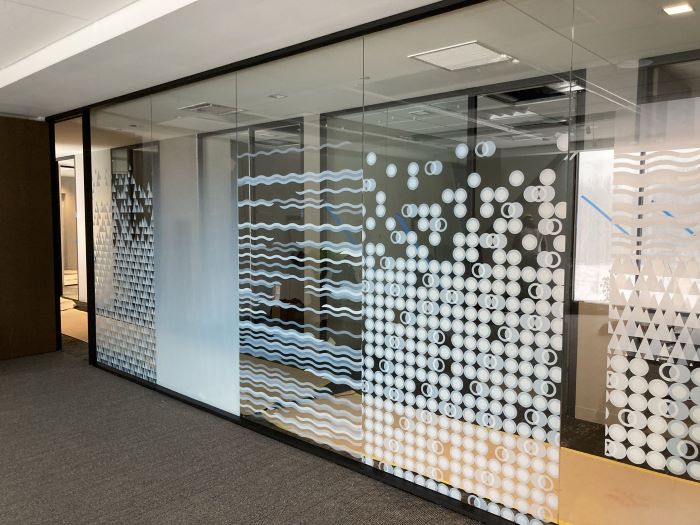
Decorative window films – frosted, patterned finishes, custom branded graphics, and etched-look designs – serve a different purpose. Decorative films improve aesthetics and provide privacy without blocking light. They appear on conference rooms, spa entrances, VIP lounges, and street facing glass in restaurants. Decorative film solutions let properties update their visual appeal and brand identity without the cost of permanent etched glass, and refreshes can happen every few years as design trends shift.
Safety and security films enhance glass strength against shattering. These thicker, multi-ply films combined with anchoring systems help glass walls resist forced entry, windborne debris, and vandalism. Heavy-duty safety films reinforce glass against severe weather and vandalism, which is directly relevant to urban retail stores, ground-floor hotel glass, and shopping centers dealing with smash-and-grab risks.
Switchable film toggles between clear and opaque for instant privacy. Typical smart film installations range from 5 m² to 150 m² per project, covering use cases like executive boardrooms in business hotels, luxury suites with open-plan bathrooms, or VIP event spaces in entertainment venues, and they align well with the growing demand for custom window solutions. The cost per square foot is higher, but margins follow accordingly.
Where the Money Is in Retail and Hospitality Properties
Think of this section as a map of the most profitable segments within retail and hospitality businesses – the properties where glass area, repeat cycles, and willingness to invest create the best revenue conditions.
Hotels and resorts are the anchor. A single 250-room hotel can have 20,000–40,000 square feet of treatable glass surfaces across facades, lobbies, restaurants, pool areas, and corridors. A full-property retrofit can involve tens of thousands of square feet. Luxury hotels prioritize high aesthetic quality and strong warranties, while budget hotels can save up to 10% on cooling costs with window film. Boutique hotels demand customization in window film styles and finishes, making decorative film solutions and custom graphics essential parts of your offering. Enhanced guest comfort can lead to improved online reviews and reduced complaints – a metric every general manager watches closely.
Shopping centers and mixed-use retail developments offer multi-phase work. Anchor tenant storefront windows, food courts, skylights, and interior glass railings each represent separate zones. Retail stores utilize custom graphics for branding and advertising, and combining solar film with decorative film on storefront glass generates multi-tenant contracts. Protecting merchandise from UV exposure and heat control in atriums are consistent selling points.
Restaurants, bars, and nightlife venues need privacy films on street facing glass, glare control during sunset hours, and decorative branding on interior glass partitions. Restaurants use decorative films to enhance ambiance and privacy. Many refresh designs every 3–5 years, creating a built-in repeat revenue cycle.
Entertainment venues – theaters, arenas, event halls – have large glass facades, box office windows, and VIP lounges. These properties value both solar performance and security priorities, plus branding opportunities on their glass line. Focusing on a few property types in a specific metro area helps build dense local referrals, reduces travel time, and creates a reputation that attracts inbound inquiries from hospitality spaces you have not yet approached.
How to Break Into the Hospitality Window Film Market
Winning your first hotel or large retail property is more about relationship-building and risk reduction than aggressive discounting. Commercial window film installations often involve longer sales cycles than residential jobs, and long hotel sales cycles can extend from 3 to 12 months. Understanding this timeline is critical so you do not burn through cash expecting quick closes.
Start by identifying decision-makers: general managers, facilities directors, regional engineering managers, and asset managers. For flagged hotels and national retail chains, brand-level design or sustainability leads may also be involved. Walk-through visits to local hotels and shopping centers – offering complimentary glass assessments – are the most effective first touch. Focus your proposals on real energy savings and guest experience improvements rather than “cheap tint.”
Mockups or small test areas confirm film selection before full installation, and they dramatically reduce perceived risk. Install solar control film in two or three guest rooms or one section of a restaurant so the property owner can feel the difference before committing to an entire property rollout. Leverage hospitality trade associations, local hotel and restaurant associations, BOMA chapters, and chamber of commerce events to meet property leaders and present case studies.
Initial investment for starting a window film business ranges from $50,000 to $200,000 depending on scale, inventory, and whether you join a window tinting business franchise. Proper licensing is essential to avoid fines and contract issues, so verify state and local requirements before your first project. Early on, you can start from home, focusing on sales, property assessments, and project management while subcontracting window film installation to experienced installers until volume justifies hiring in-house crews.
Hospitality Projects Property Assessment: How to Scope Glass Correctly
The hospitality projects property assessment is the backbone of successful proposals. A thorough assessment separates you from contractors who show up with a price sheet and no understanding of the property’s actual glass performance problems.
Follow this process:
- Exterior walk-around: Document glass orientations (south- and west-facing exposures drive the most heat gain), facade types, and clear glass versus tinted or coated existing glass.
- Interior inspection: Walk hotel rooms, lobbies, conference rooms, restaurants, and private areas. Identify overheated corner suites, glare in breakfast rooms, and fading lobby furniture. Quality control includes pre-installation surveys of glass types – tempered, laminated, insulated glass units – because film compatibility varies.
- Measurement and demonstration: Use IR thermometers to show surface temperature differences and light meters to quantify natural light and glare. Bring film samples so property managers can see the difference on the spot. Window films protect interiors from UV fading, extending the lifespan of carpets, artwork, and interior finishes.
- Code and safety review: Check whether safety glazing or security films are required on doors, guardrails, or areas subject to local building codes. This is especially important in high-traffic retail and hospitality spaces with glass partitions near the front door or along public walkways.
- Deliverable: Present assessments as clear visual reports – photos, floorplans with highlighted zones, and proposed film options range per area – so busy hotel and retail decision-makers can quickly understand scope, glass performance improvements, and the right film for each zone.
Operations: Scheduling, Staffing, and Minimizing Guest Disruption
Operational excellence is a major differentiator in the hospitality window film business. Hotels and retailers care deeply about guest experience and uptime, and a contractor who disrupts daily operations will not get a second project – or a referral.
Scheduling: Installation should occur during off-peak hours to minimize disruption. Projects can be scheduled before opening or after closing hours, during low-occupancy seasons, or between check-out and check-in windows. A practical example: one major hotel brand completed approximately 800 windows over 10 days by phasing work between guest checkout at 11 a.m. and check-in at 3 p.m. For restaurants, early morning before business hours or late evening after close works best. Shopping centers often allow work overnight. Seasonal demand fluctuations create revenue gaps in winter months, so use slower periods for project management training, prospecting, and scheduling large rollouts that begin in spring.
Staffing: Start as an owner-operator handling sales and assessments, with one or two trained installers for field work. As you win more hospitality contracts, scale to multiple crews. Installations can involve tens of thousands of square feet of film, so you need reliable labor pipelines.
Protecting the environment: In active hospitality properties, cover carpets and furnishings, enforce strict cleanliness, control noise, and maintain clear daily communication with front-desk staff or store managers. Use a simple project management system – daily room schedules, checklists, punch lists – so properties always know which rooms or storefronts are in progress and which are guest-ready. Phasing a 300-room hotel over six to eight weeks without taking floors out of inventory is standard practice; it requires discipline, not complexity. Avoiding extended closures of revenue-generating spaces is non-negotiable.

Pricing, Margins, and How to Sell ROI to Hospitality Clients
Profitability comes from understanding per-square-foot pricing, film mix, and labor efficiency. Installation services are the primary revenue source for window film businesses, and how you structure proposals determines whether you build a sustainable operation or chase thin margins.
Commercial window film projects are priced by square foot, with different brackets for each film type. Solar control film sits at the volume baseline; decorative film commands higher rates due to precision cuts, alignment, and custom branded graphics; security films carry premium pricing because of material thickness, anchoring, and installation requirements; switchable film is the highest bracket. Add-ons for difficult access (skylights, high exterior facades requiring lifts), after-hours work, and healthcare facilities or office buildings with strict access protocols increase deal size further.
Hotel window film installation yields gross margins of 25-35%, with security and switchable products supporting the upper range. Emergency repair services generate premium-margin work for installers – storm damage, vandalism, or broken-glass calls that need immediate response carry higher rates because of urgency and availability.
Build ROI-based proposals using concrete data:
| Talking Point | Example |
|---|---|
| Cooling cost reduction | Hotels can save up to 10% on cooling costs; solar films can reduce cooling load by 15-30% |
| UV protection | Window films block up to 99% of harmful UV rays, extending furnishing lifespan |
| Payback period | 2–4 years in high-sun markets; under 1 year with utility rebates |
| Guest satisfaction | Fewer heat/glare complaints → better online reviews |
| Furnishing replacement savings | UV blocking film reduces fading on carpets, art, and flooring |
| Maintenance contracts, periodic inspections, and future decorative refreshes turn one-time projects into long-term recurring revenue streams. A comfortable environment that holds up year after year keeps your phone ringing from the same clients. |
Common Mistakes New Hospitality Window Film Contractors Make
This section will save you from the most expensive learning curves in the hospitality window film niche.
Treating hotels like residential jobs. Retail and hospitality properties involve multiple stakeholders – GMs, operations, engineering, procurement, brand teams. Decision cycles stretch months, not days. Underestimating this complexity leads to frustrated clients and delayed payments. A single location restaurant is different from a 400-room hotel with a corporate brand office reviewing every specification.
Technical errors. Choosing the wrong solar control film for insulated glass units in hot climates can cause thermal stress, glass breakage, and seal failure. Installing security film without proper anchoring systems renders it far less effective against forced entry. Always verify glass types and follow manufacturer guidance on film-to-glass compatibility before professional installation begins.
Operational missteps. Poor scheduling that disrupts guests, lack of communication with front desk or store managers, and failure to protect furnishings cause complaints, bill-backs, and lost referrals. Hospitality businesses judge you on how invisible your presence is, not just how well the film performs.
Competing on price alone. Shoppers form opinions quickly. If your only differentiator is being cheapest, you will attract price-sensitive clients and lose to the next low bidder. Emphasize hospitality expertise, responsiveness, and tailored solutions for each property – not a race to the bottom.
Skipping training. Invest early in manufacturer certification, safety standards, and documented processes. Learning on the job at your first full-service hotel or shopping center is a recipe for warranty claims, rework, and reputation damage.
FAQs About Starting a Hospitality Window Film Business
These are the questions we hear most from entrepreneurs evaluating this niche.
How much capital do I need to start a hospitality window film business?
Startup costs for a home-based commercial window film operation typically start around $50,000 for tools, initial film inventory, training, licensing, vehicle setup, and marketing. Initial investment for starting a window film business ranges from $50,000 to $200,000 depending on whether you are launching independently or joining a franchise, and whether you plan to stock large volumes for rapid hotel rollouts from day one.
Do I need prior construction or glazing experience?
While prior construction, glazing, or project management experience helps, many successful owners come from sales, operations, or military backgrounds. Structured training programs cover film options, glass types, and installation techniques. You rely on experienced installers for field execution while you handle assessments, proposals, and client relationships, positioning yourself similarly to owners of top service franchises in the window film industry.
How long before I can land my first hotel or shopping center project?
B2B sales cycles for hospitality can range from a few months to a year. Most new owners start with smaller jobs – restaurants, boutique retail stores, small office buildings – while nurturing longer-term hotel and entertainment venue opportunities. This keeps revenue flowing while you build the case studies and relationships needed to win larger hospitality properties.
What certifications or training matter most for hospitality projects?
Manufacturer-approved training is essential; without certified installer status, warranties on commercial window film may be voided. Understanding safety and security film installation standards (including ANSI requirements for safety glazing) and awareness of local building codes relevant to commercial glass in hospitality spaces are equally important. Blocking natural light unnecessarily or ignoring fire code egress rules are common compliance traps.
Can I run this business from home, or do I need a storefront?
Most commercial-focused window film businesses serving hospitality clients run from a home office with a vehicle, small storage space, and mobile crews, mirroring the structure of a home-based window tinting franchise model. This keeps overhead low and margins healthier. You meet clients at their properties, not at a showroom – which is exactly how hospitality decision-makers prefer to work.
How do I compete with established tint companies and national franchises?
Focus on hospitality-specific expertise: fast local response, flexible scheduling around guest experience needs, superior communication with property teams, and strong case studies showing measurable results. Competing purely on price against generalists is a losing strategy. Your value is understanding how to scope, sell, and execute in active hospitality environments where performance and security priorities differ from residential or automotive work.
Why Choose Our Window Film Franchise Model for Hospitality Work
If you are evaluating whether to build everything from scratch or partner with a specialized franchise, the core question is simple: how fast do you want to be credible in front of a hotel GM or shopping center asset manager? One option is to start a CoolVu window film franchise designed specifically for this market.
Our franchise model provides structured training on solar control, decorative, security, and switchable film products, plus installation techniques tailored to commercial and hospitality projects, operating as a proven franchise business model in a booming industry. Franchisees receive protected territories, lead-generation marketing targeted at retail and hospitality properties, and sales tools built around energy savings and guest comfort messaging – not generic residential pitches.
You benefit from national vendor relationships, negotiated pricing on materials, and access to experienced technical support when scoping complex hospitality projects like high-rise hotels, large shopping centers, or multi-property portfolio deals, similar to the support offered in a home decor franchise focused on window solutions. Ongoing coaching covers B2B selling, proposal writing, and project management so you can confidently approach hotels, shopping centers, restaurants, and entertainment venues from your first year. In-house financing options mean you can get started without traditional bank loan friction.
Next Steps to Launch Your Hospitality Window Film Business
You now have a clear picture of the opportunity: a growing market with strong demand drivers, concrete product categories that solve real problems for hospitality businesses, and a practical playbook for entering the niche. The hospitality window film business opportunity rewards specialists who understand how hotels, restaurants, retail and hospitality businesses operate – not generalists competing on price, and it aligns with broader trends in industries most likely to franchise.
Your action plan from here:
- Research local hotel, restaurant, and shopping center inventory in your target metro area.
- Schedule conversations with property managers to understand their glass performance and energy efficiency pain points.
- Explore training and franchise ownership benefits that accelerate your credibility and reduce your learning curve.
- Build a 6- to 12-month sales road map that starts with smaller hospitality projects and scales toward full-property retrofits.
Ready to take the next step? Request a detailed information packet or schedule a consultation to discuss territory availability, startup costs, training dates, and how to position window films as a high-value solution for hospitality clients in your region. The properties in your market are already dealing with heat, glare, UV exposure, and rising energy bills – they just need a specialist who can solve it.