Table of Contents
A Smarter Approach to Franchise Acquisition
As a seasoned entrepreneur, your approach to due diligence has been honed over years of acquisitions and operational turnarounds. You know how to dissect a P&L statement, project cash flow, and assess market viability. When evaluating a franchise acquisition, however, relying solely on this traditional toolkit can lead to a strategically flawed decision. The nature of the transaction is different. You are not just buying a business model, you are buying into a system and a long-term partnership.
This requires shifting your focus from a standalone financial audit to a holistic evaluation of the franchisor’s capacity to amplify your success. For experienced entrepreneurs, a successful franchise acquisition hinges less on brand recognition and more on the franchisor’s proven system for elevating franchisee performance. The quality of support and continuous training are the ultimate drivers of superior return on investment (ROI).
Beyond the Balance Sheet: Why Franchise Due Diligence Demands a New Approach
Basic due diligence answers the question, “Is this a profitable business?” It involves reviewing the Franchise Disclosure Document (FDD), calling a few franchisees, and building a financial model based on the Item 19. Most prospective owners stop there. Your experience, however, allows you to go much deeper.
Strategic vetting asks a different question, “Why is this business profitable, and can the system consistently replicate that profitability for an operator like me?” This moves your analysis from the “what” to the “how” and “why.” You should use your operational expertise to pressure-test the franchisor’s systems. How robust is their supply chain? How sophisticated is their marketing engine? What is the depth and accessibility of their corporate support team? You are not just validating numbers, you are assessing the resilience and scalability of the engine that produces those numbers.

Herein lies the most common trap for experienced investors: an over-reliance on standalone metrics, particularly a strong Item 19. You see impressive revenue or EBITDA figures and your investor brain calculates potential ROI. This can be a critical error. Those figures represent a historical snapshot, not a guarantee of future performance, and they tell you nothing about the franchisee experience behind them. A strong Item 19 can mask underlying weaknesses, so your due diligence must investigate the quality of the support system that enables the average franchisee to thrive.
An Investor’s Guide to Vetting the Franchise System
A truly strategic franchise acquisition involves looking past the surface-level appeal and dissecting the operational and support systems that will determine your long-term success.
Reading the Franchise Disclosure Document (FDD) Like a Partner
An FDD is more than a legal disclosure. For a strategic investor, it is a detailed dossier on your potential business partner. Read it with an eye for patterns that reveal the health and philosophy of the franchise system.
- Item 2: Business Experience. Do not just scan the names. Investigate the background of the executive team. Do they have deep experience in the industry and a track record of successfully scaling franchise systems? A leadership team composed of operators, not just financiers, is a strong positive indicator.
- Items 3 & 4: Litigation and Bankruptcy. A single lawsuit may not be a red flag, but patterns are. Multiple disputes with franchisees over support, territory rights, or termination can signal a breakdown in the franchisor-franchisee relationship.
- Item 11: Franchisor’s Assistance. This is the heart of the support system. Scrutinize the specifics. How many days of initial training are provided? What does ongoing training look like? Is the technology proprietary and modern? Vague commitments here suggest a hands-off approach, which limits the value you receive.
- Item 20: Outlets and Franchisee Information. Analyze the franchisee turnover rate. A high number of terminations, non-renewals, or transfers sold at a loss is a significant warning sign. It suggests the system is not working for a substantial portion of its owners.
Gauging the Strength of the Franchisor’s Support DNA
A franchisor’s support system is a direct reflection of its leadership’s real-world experience. A system conceived by executives with a general franchising background will look very different from one built by a founder who has spent decades in that specific industry. The latter understands the nuances that analytics alone cannot capture. This lived experience gets encoded into the franchise’s DNA, showing up in the training manuals, operational workflows, and technology stack.
Effective support for a multi-unit franchise owner is about leverage. It means access to strategic benchmarking, high-level counsel from leadership, and systemic efficiencies that simplify management across multiple locations. This commitment to continuous learning is what enables your business to maintain a competitive edge. Look for a franchisor that offers advanced workshops, regular webinars on digital marketing, and annual conventions focused on strategic business planning.
Critical Red Flags in a Franchise Acquisition
As you conduct your franchise due diligence, be aware of warnings that the partnership may not live up to its promises.
- Weak Support Structures. Vague promises of “ongoing support” in the franchise agreement are a red flag. A strong franchisor contractually defines its commitments, specifying the minimum number of on-site visits, the structure of marketing fund spending, and the depth of the initial training program.
- A Stagnant Brand. In today’s market, complacency is a death sentence. A franchise still running the same playbook it did a decade ago is a depreciating asset. Investigate the brand’s history of innovation. A lack of new products, services, or technologies signals a leadership team that is unresponsive to market demands.
- A Restrictive Culture. As an experienced business owner, you are looking for a system that leverages your skills, not a job that micromanages them. A culture that stifles franchisee input is a direct threat to your growth. Look for an active Franchise Advisory Council with genuine influence on brand strategy.

Redefining ROI: From Unit Profitability to Portfolio Enhancement
For a multi-unit operator or portfolio entrepreneur, the calculation for a franchise acquisition should extend beyond the four walls of the new business. The right franchise partnership should act as a force multiplier across your entire business portfolio.
Consider how the new system can enhance your existing operations. A franchise with a superior digital marketing program can provide strategies you can apply to your other ventures. A system with highly efficient scheduling and CRM software could be adapted to improve another service business you own. The goal is to acquire not just a revenue stream, but also intellectual capital and operational efficiencies.
When you vet a franchise through this lens, you are evaluating its potential for:
- Introducing proven and scalable marketing systems.
- Providing access to superior technology and operational platforms.
- Improving your hiring, training, and retention processes.
- Unlocking new cross-promotional opportunities between your businesses.
This portfolio-wide enhancement is the true ROI that an experienced entrepreneur should be seeking. It is a return that a simple P&L analysis will never reveal.
The Final Test: Validating the Partnership with Current Franchisees
The final and most critical step in your due diligence is validation. The franchisor’s claims must be verified by the people living the experience every day, the current franchisees. Approach these conversations with a plan to get past polite generalities and gather actionable intelligence.
When you speak with owners, ask direct, evidence-based questions.
- “Can you share a specific instance where you faced an operational challenge and reached out to corporate for help? Describe the person you spoke with, their response time, and the ultimate resolution.”
- “Beyond the initial training, what does ongoing education look like? How valuable have you found the regional meetings or the national conference for tangible business growth?”
- “When the franchisor introduced the last major software update or marketing initiative, how effective was the communication and training? Did you feel prepared or overwhelmed?”
- “Thinking about the support system, from technology to coaching, where does the franchisor truly excel, and where do you see the most room for improvement?”
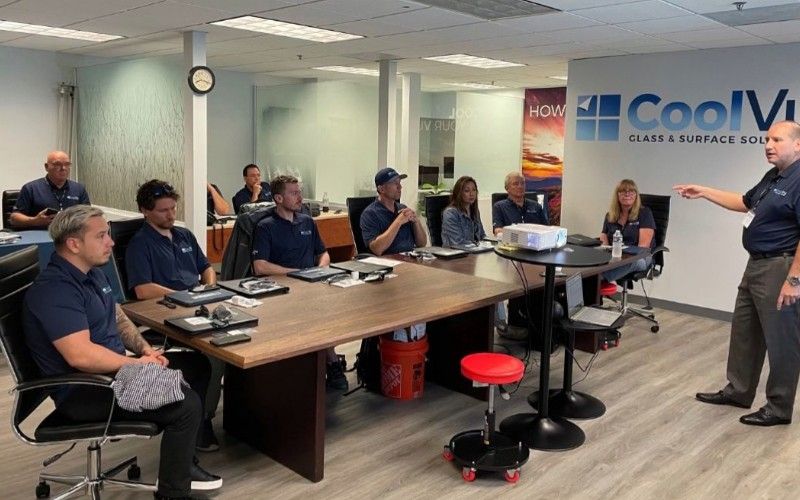
Make a point to speak with a cross-section of owners, including top performers, those in the middle of the pack, and owners in markets similar to yours. This 360-degree view will provide you with an unvarnished look at the system’s true strengths and weaknesses. It will allow you to make your acquisition decision with the clarity and confidence of a seasoned investor choosing a strategic partner, not just a purchase.
To approach your next franchise acquisition with confidence, connect with CoolVu Franchise and explore a proven, scalable system.
Frequently Asked Questions
What’s the biggest mistake experienced investors make when buying a franchise?
The most common mistake is over-relying on traditional financial due diligence, like focusing only on the Item 19 revenue figures. Experienced entrepreneurs sometimes fail to shift their mindset from buying a standalone business to buying into a system. They underestimate the importance of the franchisor’s support structure, training, and culture, which are the true drivers of replicable success and long-term ROI in a franchise model.
How do I look beyond the Item 19 in a Franchise Disclosure Document (FDD)?
To look beyond the Item 19, you must analyze the context behind the numbers. Investigate the franchisee turnover rate in Item 20 to see if the system is sustainable for most owners. Scrutinize Item 11 to understand the specific, contractual commitments the franchisor makes for training and ongoing support. Finally, examine Item 2 to assess the leadership team’s direct industry and franchise-scaling experience. These sections reveal the strength of the system that produces the Item 19 results.
Why is franchisor support more important than brand name for ROI?
For an experienced entrepreneur, a well-known brand name provides an initial advantage, but a robust support system creates sustainable, long-term growth. Superior support acts as a force multiplier, providing advanced training, operational efficiencies, scalable marketing systems, and high-level strategic counsel. This elevates your existing business acumen and allows for more efficient multi-unit franchise opportunities, delivering a higher ROI than a strong brand with a hands-off approach ever could.
What are the key signs of a good franchisor partnership?
A good franchisor partnership is proactive, not reactive. Key signs include a leadership team with deep, in-the-trenches industry experience, a clear pathway for multi-unit growth, and a commitment to continuous innovation. Look for a culture of collaboration, often indicated by an influential Franchise Advisory Council. Most importantly, a true partner measures its own success by the profitability of its franchisees and has data-driven systems in place to support them.
More Interesting Posts: