
Table of Contents
Beyond Popularity: A Strategic Investor’s Guide to Franchise Business Opportunities
As a seasoned entrepreneur, you’ve moved past the fundamental questions of business ownership. You know how to read a P&L, lead a team, and execute a plan. Your search for a new franchise is not about finding a job. It’s a strategic move to diversify your business portfolio and scale your success. Yet, the conventional methods for finding franchise opportunities are often designed for first-time owners, not strategic investors like you.
The endless “Top 100” lists and articles on “hot” trends are built around popularity, not system integrity. They guide you toward what’s visible, not necessarily what’s viable for long-term, scalable wealth creation. To make a truly strategic franchise investment, you must shift your evaluation process from chasing what’s popular to identifying what is powerful.

From Entrepreneur to Strategic Franchise Investor
The leap from running an independent business to investing in a franchise system requires a significant mindset shift. As an entrepreneur, your success was tied to your individual drive and your ability to build something from nothing. You were the system.
As a strategic franchise investor, your primary task is different. You aren’t reinventing the wheel. You are identifying and acquiring the most efficient and well-supported wheel available. Your success is no longer about creating a system from scratch. It is about your ability to discern the quality of a pre-existing system and execute it at the highest level. This means your evaluation criteria must evolve from “Can I run this business?” to “Is this system engineered for scalable success and superior ROI?”
The Hidden Risks of Chasing Trending Brands
Franchises that dominate headlines often seem like the safest bet. They carry brand recognition and an apparent track record of growth. For a strategic investor, however, this popularity can mask significant underlying risks that cap your potential.
Chasing trends often means you are:
- Buying at the Peak: High demand for popular franchises inflates the initial investment and franchise fees, immediately compressing your potential return on investment. You pay a premium for buzz, not for a superior operational model.
- Entering a Saturated Market: By the time a franchise is widely recognized as a top trend, the most lucrative territories are often gone. You may be left with second-tier markets or face intense internal competition from other franchisees.
- Investing in Growth Over Support: Many trending systems are in a state of hyper-growth. The franchisor’s focus can shift from ensuring the profitability of individual units to selling as many new franchises as possible, diluting the quality of support for existing owners.
- Betting on a Fad: Some trends have short lifecycles. The frozen yogurt boom of the 2010s is a classic example. A strategic investment should be in a durable industry, not a concept that may lose consumer interest.
A Deeper Analysis of the Franchise Disclosure Document (FDD)
You know the importance of reviewing the Franchise Disclosure Document. But many entrepreneurs, even experienced ones, make the mistake of going straight to Item 19 to assess financial performance. This is like reading the last page of a book first, you get the ending without understanding the plot that makes it possible.
A strategic analysis of the FDD goes deeper. It decodes the quality and resilience of the franchise system. Instead of just looking at revenue, ask more sophisticated questions:
- Item 2 (Business Experience): Who is on the leadership team? Are they career franchisors who move from concept to concept, or are they industry veterans with deep, hands-on mastery of this specific business? Founder expertise is a powerful indicator of a system’s long-term stability.
- Item 11 (Franchisor’s Assistance): Look past the initial training week. What does ongoing support look like? Is there a clear framework for high-level coaching, marketing support, and technology development? The best systems are designed to help you scale, not just open your doors.
- Items 3 & 4 (Litigation & Bankruptcy): What is the nature of the litigation? A high volume of disputes between the franchisor and its franchisees is a major red flag, signaling a potentially adversarial and unsupportive culture.
- Item 20 (Outlets and Franchisee Information): Scrutinize the franchisee turnover rate. A high number of terminations, non-renewals, or reacquired units suggests systemic issues. This is where you find your list of current and former owners to call, a non-negotiable step in your due diligence.
The Three Pillars of a Truly Scalable Franchise System
If popular lists are misleading and a surface-level FDD review is insufficient, how does a strategic investor identify a superior opportunity? The answer lies in evaluating a franchise on the structural integrity of its business model. The most resilient and profitable franchise investments, the ones that empower experienced owners to achieve new levels of success, are built upon three essential pillars.
Pillar 1: Deep Founder Expertise and Industry Mastery
A franchise system is a reflection of its architect. Many franchises are created by business developers who see a market trend and assemble a concept. They may be experts in franchising, but they are rarely masters of the actual industry. A superior system is born from deep, practical experience. Look for a founder who has spent decades operating the business themselves. This firsthand mastery translates into a more robust and effective system for you. It means the operational playbook has been battle-tested, the marketing strategies are based on real-world results, and the training curriculum anticipates challenges before they arise.
When you speak with leadership, ask pointed questions to reveal their operational depth:
- What were the biggest operational hurdles you faced before franchising?
- How did that experience directly shape a process or tool in the current system?
- Who on your corporate team has direct, hands-on experience in this industry?
Pillar 2: Continuous Support Systems for High-Performers
For an entrepreneur of your caliber, standard franchisee support is not enough. You need a support system designed to help a high-performer become an elite operator. A scalable system invests heavily in continuous, high-level support, including:
- Proactive Strategic Coaching: Access to leadership for discussing market expansion, multi-unit operations, and long-term business strategy.
- Evolving Marketing and Technology: A corporate team that is constantly innovating, testing, and rolling out new tools to keep you ahead of the competition.
- Peer Mastermind Groups: Facilitated opportunities to connect with other top-performing franchisees. These curated groups share best practices and solve high-level challenges in a confidential forum, accelerating your growth curve.
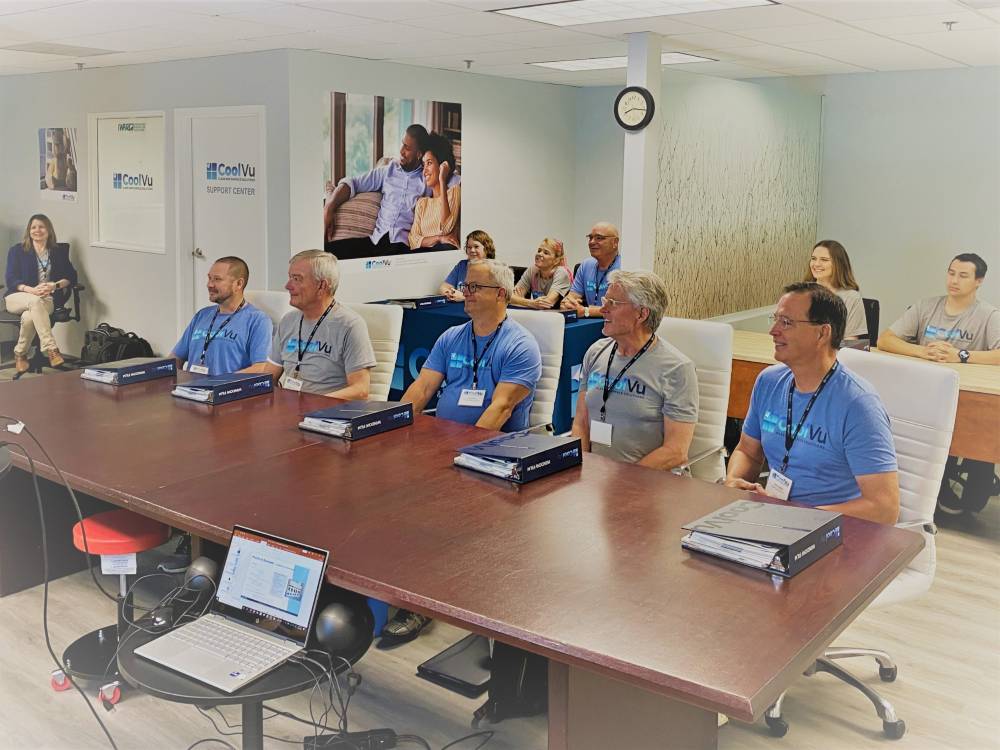
The right franchisor acts less like a compliance officer and more like a vested partner. Their goal is not to keep you in line, but to help you break through performance ceilings.
Pillar 3: A Proven and Repeatable Model for Profitability
Ultimately, your franchise investment must generate a significant return. This pillar ties the first two together. A system built on founder expertise and supported by high-performance coaching should produce a clear, repeatable, and scalable model for profitability. This goes beyond a strong Item 19. It’s about the underlying mechanics of the business model. Analyze the core offering for key indicators of a robust profit engine: high-demand services, diverse revenue streams, strong gross margins, and a scalable customer acquisition model. Look for evidence that other franchisees are not just profitable but are successfully scaling to multiple units. This demonstrates the model’s success is inherent in the system itself.
Deconstructing the Model to Assess True Profitability
A seasoned entrepreneur’s analysis begins where the FDD leaves off. You must deconstruct the business model to evaluate its fundamental strength and capacity for growth. This means digging into the core mechanics that drive profit and enable expansion.
Analyzing Unit Economics for Multi-Unit Potential
Average revenue figures don’t tell the whole story. True scalability hinges on the underlying unit economics. Your analysis should focus on the key levers of profitability. What is the true cost of goods sold, and how does the franchisor’s supply chain protect those margins? What does the labor model look like? A superior system provides clear, verifiable data on these metrics, allowing you to model profitability under various conditions. When evaluating a model for multi-unit ownership, assess the contribution margin of each sale, the customer acquisition cost (CAC) versus lifetime value (LTV), and the potential for operating leverage as revenue grows.
Evaluating Market Demand and Territory Viability
A designated market territory is only as valuable as the demand within it. A forward-looking evaluation requires a deep understanding of market dynamics. Does the franchisor use sophisticated data analytics to define territories, or just a simple radius around a zip code? Look for a system that can quantify both commercial and residential demand. A strategic franchisor provides its partners with the tools and data to not only understand their current market but also to anticipate future opportunities.
The Importance of a Diversified, High-Margin Offering
Relying on a single product or service introduces significant risk. A resilient franchise is built on a diversified portfolio of high-margin offerings. This approach creates multiple revenue streams that buffer your business against market fluctuations. A varied service catalog also increases the average transaction value and lifetime value of each customer. A business that offers architectural window films, decorative surface films, and printable graphics can serve a single commercial client in multiple ways, dramatically increasing revenue from one lead. This diversification is a powerful engine for organic growth.
Putting the System to the Test
Identifying a system with strong fundamentals is the first step. The true test is how those elements translate into real-world performance. For an experienced owner, a superior franchise system isn’t just a playbook, it’s a force multiplier that allows you to achieve results that would be impossible alone.
Imagine you’ve secured a meeting for a large-scale project with a complex architectural design. The client is concerned about glare on curved glass walls. In a superior system, you have a direct line to leadership with decades of specialized experience. You schedule a call, share the drawings, and get expert advice on a specific product and installation technique. This guidance helps you win the lucrative contract and establishes your franchise as the regional expert.
Now, consider scaling. After 18 months, your first unit is exceeding projections and you are ready to expand. A best-in-class franchisor has a refined expansion playbook. The support team assists with site selection analytics, provides a proven recruitment funnel for hiring a general manager, and delivers a targeted marketing campaign for the new territory. This robust support allows you to focus on leadership, enabling you to open your second and third locations systematically and predictably.

Reframing Your Search for the Best Franchise to Own
The pursuit of a new franchise business opportunity is not about finding a business to run. It’s about identifying a superior system that can amplify your existing skills and deliver exceptional returns. The most compelling opportunities are rarely the most hyped, but the most well-engineered.
Your evaluation process deserves a framework that moves beyond brand recognition and focuses on the operational DNA of a franchise. A truly best-in-class opportunity stands firm on three pillars:
- Deep Founder Expertise: The system is built by founders with extensive, hands-on experience in the specific industry, ensuring the model is pressure-tested for the real world.
- Robust, Continuous Support: Support is not hand-holding. It is access to strategic masterminds, ongoing training, and a corporate team that functions as a high-level partner in your growth.
- A Proven and Scalable Model: The business model has a clear, documented path to multi-unit expansion, supported by the right technology, marketing, and operational processes.
The crucial shift is from asking “What is the product?” to “How does the system work?” You are not just buying a brand, you are making a franchise investment in an operational framework. The quality of that framework, not the popularity of the logo, will ultimately determine your return on investment. Use this three-pillar framework as a scorecard for any opportunity you consider. This is the level of due diligence that a high-performance system not only withstands but welcomes.
To explore a franchise business opportunity built for scalable growth and strong returns, connect with CoolVu Franchise today.
Frequently Asked Questions
Why is founder expertise more important than a franchise’s popularity?
Brand popularity can be fleeting and often leads to market saturation and inflated franchise fees. Founder expertise, particularly deep, hands-on experience in the specific industry, ensures the business model, training, and support systems are built from real-world knowledge. This creates a more resilient, efficient, and profitable system for the franchisee, which is a better indicator of long-term success for your franchise investment.
What is the difference between standard franchise support and a system designed for scalability?
Standard support focuses on getting a new franchisee open and operational. A system designed for scalability provides continuous, high-level support for experienced owners. This includes proactive strategic coaching from leadership, peer-to-peer mastermind groups with other top performers, and an innovation pipeline of new marketing tools and services to help you dominate your market and expand into new ones.
How can I evaluate the real profitability of a franchise beyond Item 19 revenue claims?
Look past the top-line revenue and deconstruct the unit economics. Analyze the key drivers of profit: cost of goods sold (COGS), labor models, customer acquisition costs (CAC), and customer lifetime value (LTV). A superior system will be transparent with these metrics and have a model with strong margins and operating leverage, which are essential for generating the capital needed for multi-unit growth.
What makes a franchise model truly scalable for a multi-unit franchisee?
True scalability depends on having proven and repeatable systems. This includes a robust technology stack for managing operations, a centralized marketing engine that drives predictable leads, a refined playbook for launching new territories, and a strong supply chain that protects margins as you grow. A scalable model allows an owner to delegate day-to-day tasks and focus on high-level strategy and leadership across multiple locations.
More Interesting Posts: