Table of Contents
The Strategic Flaw in a Typical “Franchise Business for Sale” Search
Moving Beyond Brand to Core Business Mechanics
The Critical Questions a Seasoned Entrepreneur Should Ask First
The Founder Litmus Test: Does Leadership Experience Translate to Your Profitability?
Evaluating a Leadership Team’s Track Record in Launching Successful Territories
The Strategic Flaw in a Typical “Franchise Business for Sale” Search
For many entrepreneurs, the journey begins with a simple online search: “franchise business for sale.” This query reveals a landscape of familiar logos and appealing product categories. Yet, for a seasoned business owner, this common starting point represents a significant strategic error. It anchors the evaluation process to surface-level attributes, fundamentally misunderstanding where a franchise’s true value and profit potential reside.
When you filter opportunities by brand recognition or industry preference, you inadvertently prioritize the most visible, and often least impactful, elements of a business. A household name might offer built-in consumer trust, but it often comes with significant trade-offs. These can include higher franchise fees, saturated markets with limited territory, and rigid operational constraints that stifle entrepreneurial agility.
The result is a self-imposed ceiling on your potential return on investment. The most profitable franchise investments are rarely the most obvious. They are found in business models with superior economics, efficient customer acquisition engines, and scalable operational systems. Focusing your search on the brand is like judging a car by its paint color instead of the performance of its engine. Your ROI is driven by the engine, not the exterior shine.

Moving Beyond Brand to Core Business Mechanics
An established brand is merely the packaging. The real asset you acquire with a franchise is a complete, pre-engineered business system. For an experienced leader, the critical analysis must move past the logo and delve into the core mechanics that drive day-to-day execution and long-term growth.
These mechanics are the lifeblood of the operation, including lead generation funnels, sales conversion processes, client fulfillment workflows, and financial management tools. A franchise with a sophisticated, well-documented system for these functions offers a distinct advantage. It minimizes the steep learning curve and operational drag that can cripple a new venture. This allows an owner to focus on high-level strategy and expansion rather than constantly fighting fires in the trenches.
There is a fundamental difference between buying a job and buying a business. A job-seeker’s mentality leads one to ask, “Do I like the product?” or “Can I see myself doing this every day?” This perspective values the daily tasks over the underlying asset’s performance.
A seasoned investor, however, operates from a different framework. The primary question is not about personal affinity for the work but about the system’s capacity to generate returns. An investor asks, “Does this business model work?” and “How effectively can I delegate the daily tasks to a team?” This framework correctly identifies the franchise system itself as the product. Your goal is to acquire a well-oiled machine that produces profit and equity, not a new set of daily responsibilities. This shift is crucial for anyone aiming to build scalable wealth, not just a new source of income.
The Critical Questions a Seasoned Entrepreneur Should Ask First
To adopt an investor’s framework, you must reorient your discovery process around a new set of questions. Instead of starting with the brand, begin your evaluation by demanding proof of a superior operating system. The right franchisor will not only welcome this level of scrutiny but will have clear, impressive answers readily available.
Your initial inquiries should include:
- Customer Acquisition: How does the system predictably and cost-effectively generate qualified leads for its franchisees? What is the exact marketing and sales playbook I will be given?
- Operational Efficiency: Can you walk me through the entire operational playbook, from initial training to project completion? How does this system minimize my direct involvement and empower my team?
- Unit Economics: What are the key performance indicators for a territory, and what is the proven path to profitability? How do the unit economics support multi-unit scalability?
- Leadership and Support: What is the founder’s direct experience in this industry, and how is that expertise embedded into the training and ongoing franchisor support systems? Who do I call when I encounter a challenge I can’t solve?
The Founder Litmus Test: Does Leadership Experience Translate to Your Profitability?
A compelling product or a recognizable brand name can create initial interest in a franchise opportunity, but neither can guarantee the success of your specific location. As an experienced operator, you understand that long-term profitability and scalability are not born from a good idea, but from a meticulously engineered system. The ultimate architects of that system are the founders and the leadership team. Their background is not a footnote in the franchise disclosure document, it is arguably the most critical predictor of your future success.
A franchise led by seasoned entrepreneurs offers one invaluable asset: a business model built on a foundation of solved problems. Founders with deep, multi-decade experience in their industry have already made the costly mistakes, tested the inefficient processes, and navigated the market shifts that can cripple a new business.
This hard-won expertise is codified into the very DNA of the franchise system. The operational manuals, marketing playbooks, and support infrastructure are not theoretical. They are the refined outputs of years of trial and error.
For you, the franchisee, this translates directly to a faster ramp-up and a lower likelihood of encountering expensive, “unforeseen” challenges. You are, in effect, buying a map through a minefield from someone who has already crossed it successfully.
Founder vs System Architect
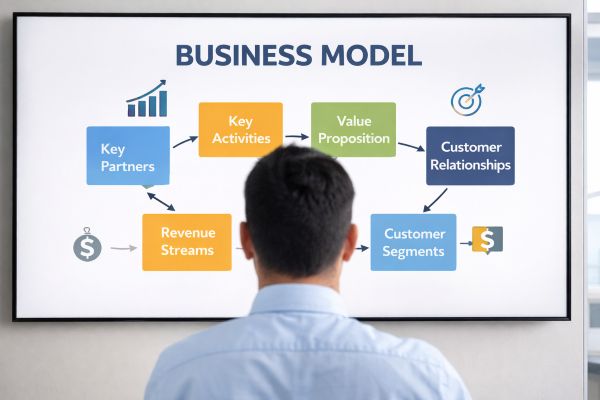
It is vital to distinguish between a founder who is a brilliant product inventor and one who is a true franchise system architect. The former creates an excellent what, while the latter perfects the how.
- The Product Inventor: This founder is often passionate about the core offering, its features, and its quality. While essential, their focus can remain on the product itself, leaving the development of replicable business systems as an afterthought. They may struggle to translate their personal success into a model that others can easily follow.
- The Franchise System Architect: This leader understands that the true “product” of a franchise is the business model itself. Their expertise lies in creating scalable, efficient, and teachable systems for every facet of the operation, from lead generation to service delivery to financial management. They are obsessed with franchisee profitability because they know it is the only sustainable path to growth for the entire network. An investment with this type of leader is an investment in a proven business engine, not just a license to sell a product.
Evaluating a Leadership Team’s Track Record in Launching Successful Territories
A leadership team’s past performance is the most reliable indicator of your future potential. When vetting a franchise, your due diligence must extend to the franchisor’s demonstrated ability to successfully establish new franchisees. Look for concrete evidence.
How many new units have been launched in the past three years? What is the average time from signing the franchise agreement to opening the doors and generating revenue? Most importantly, what is the success rate of these new territories? A strong leadership team will not only be transparent with this data but will be proud of it. They will have a clear, structured onboarding process that addresses everything from initial marketing to staff training, minimizing the burden on the new owner and setting the stage for a powerful launch.
Every business venture carries risk. However, aligning with a founder and leadership team that possess profound franchise experience fundamentally changes the risk profile of your initial investment. Their expertise acts as a powerful buffer against common failure points. A well-architected franchise system, born from decades of experience, anticipates challenges before they arise. It provides proven solutions to common hurdles and offers a refined marketing engine to ensure a steady flow of customers. This strategic foundation de-risks your capital by replacing guesswork with a predictable, field-tested methodology.
A Checklist for Vetting a Franchise’s Sales and Marketing Engine
Even with strong leadership, a franchise cannot thrive without a powerful and efficient engine for attracting and converting customers. For a multi-unit owner, the operational lift required to run this engine is a primary concern. The best franchise opportunities are defined by centralized, sophisticated systems that drive growth for you, allowing you to focus on your business, not just in it.
Analyzing the Centralized Marketing Fund and Its ROI
Nearly every franchise requires contributions to a central marketing fund. A novice investor asks about the percentage of royalty fees, but a strategic investor asks about the return. Demand transparency. A well-managed fund operates not like a tax, but like a high-performance investment.
The franchisor should articulate a clear strategy for the fund, detailing how dollars are allocated across national campaigns, digital advertising, and content creation. They should also provide franchisees with regular, clear reporting on the fund’s performance, showing key metrics like cost per lead and brand search volume. A lack of transparency here is a significant red flag.
Assessing Pre-Built Systems to Minimize Your Operational Lift
The true value of a franchise marketing system lies in how much it reduces your day-to-day workload. You are buying a machine designed to generate opportunity with minimal hands-on tinkering. A mature system should provide a suite of ready-to-deploy assets, including:
- A comprehensive library of professionally designed creative assets.
- Pre-built, automated digital marketing campaigns.
- A sophisticated, search-engine-optimized local website for your territory that you don’t have to build or maintain.
- A clear playbook for local marketing efforts, complete with best practices and materials.
This level of support ensures brand consistency and allows you to launch powerful marketing initiatives without an in-house marketing department.
Evaluating the Sophistication of Lead Generation
All leads are not created equal. A franchisor that simply provides a list of names is creating work, not value. A sophisticated franchisor has invested in building a proprietary, multi-channel lead generation funnel designed to deliver high-intent prospects directly to you.
During your evaluation, ask pointed questions about the lead generation process. Where do the leads come from? How are they qualified before they are passed to you?
The goal is to determine whether the franchisor provides a steady stream of prospects who are actively seeking a solution and are already familiar with the brand, dramatically shortening your sales cycle.

Understanding the Provided Sales and CRM Tools
Generating a lead is only the first step. A top-tier franchise provides the tools and training to effectively manage and convert those leads. At the heart of this is the Customer Relationship Management (CRM) system.
The CRM should be more than a digital rolodex. It should be fully customized for the franchise’s specific sales process. It should automate follow-ups, track every customer interaction, provide clear reporting on your sales pipeline, and integrate seamlessly with lead generation sources. Alongside the tool, there must be a proven sales methodology, backed by comprehensive initial and ongoing training.
Evaluating Scalability: How to Spot a Best-in-Class Opportunity
For the experienced entrepreneur, the initial success of a single franchise unit is merely the first data point. The true measure of a premier investment opportunity lies in its scalability. A franchise that can be replicated methodically across multiple territories, without a proportional increase in owner effort, is a strategic asset capable of generating enterprise-level wealth.
This evaluation moves beyond the storefront and into the architectural framework of the franchise system. A truly scalable model is defined by its operational design, legal structure, and financial model. It is engineered from the ground up for expansion, allowing an owner to transition from operator to executive. The following analysis provides a framework for how to evaluate a franchise on these critical attributes.
Defining Your Territory Rights and Expansion Potential
The franchise agreement is the definitive map of your future growth. An agreement that limits expansion can turn a promising venture into a frustrating dead end. You must scrutinize this document for clauses that enable, rather than restrict, long-term scalability.
Pay close attention to the definition of your territory rights. An exclusive territory is the gold standard, guaranteeing that the franchisor will not place another unit within your designated area. Beyond the initial grant, the most valuable agreements build in a pathway for growth. Look for language detailing your “right of first refusal” on adjacent territories. This provision gives you the first opportunity to purchase new territories as they become available, allowing you to build a contiguous, operationally efficient enterprise.
Analyzing the Business Model for Multi-Unit Growth
A scalable business model is one where the system does the heavy lifting. If a franchise requires your constant, hands-on presence to function, you have bought a job, not an investment. The key indicator of a scalable model is its degree of systematization. A franchise designed for growth will have sophisticated, well-documented processes for every critical business function. This allows you to train and empower a general manager to run the day-to-day operations, freeing you to focus on high-level strategy.
Evaluating for Long-Term Portfolio Diversification
An astute investor thinks of a franchise as a component within a broader investment portfolio. The right opportunity should not only generate strong returns but also add diversification that can hedge against volatility in other asset classes.
To assess this potential, evaluate the resilience of its core market. Does the service solve a persistent customer need? Businesses that offer tangible benefits like energy savings or enhanced property value tend to exhibit more stable demand across different economic cycles. A well-systematized, service-based franchise often has a lower correlation to public market fluctuations and can provide a valuable, non-correlated return stream to your business portfolio. Its value is driven by operational excellence and local market execution, not the daily sentiment of Wall Street.
Projecting Scalable Profitability Beyond the FDD
The Franchise Disclosure Document, particularly Item 19, provides a crucial snapshot of unit-level financial performance. For the multi-unit investor, this is only the beginning of the analysis.
The FDD rarely illustrates the powerful financial efficiencies that can be unlocked through multi-territory ownership.
To project scalable profitability, you must model the economic advantages of consolidation. As you acquire additional territories, you can leverage shared resources to drive down costs and amplify margins. Consider the potential for operational leverage in key areas like shared overhead, labor efficiency, and increased purchasing power. The most reliable way to validate these projections is to speak directly with existing multi-unit owners within the franchise system. Their real-world experience provides the most accurate testament to the system’s true scalability.

Conclusion: Adopting a New Framework for Profitable Franchise Investments
The traditional approach to evaluating a franchise business for sale overvalues brand recognition. For the seasoned entrepreneur, this focus is misplaced. True long-term profitability and scalability are not born from a well-known logo, but from the operational engine that powers the business. Adopting a new framework centered on systems, support, and leadership is the only reliable path to making a sound, strategic investment.
The Three Pillars That Matter
Your evaluation of any franchise should rest on a critical assessment of three foundational pillars. These elements determine how quickly you can achieve operational independence, how efficiently you can grow, and how resilient your business will be.
- Sophisticated, Integrated Systems: A premier franchise provides a proven, turnkey business model. This includes a fully integrated technology stack for marketing, sales, and customer management that generates leads, nurtures them, and streamlines execution with minimal friction.
- Comprehensive, Lifecycle Support: The franchisor’s commitment is most tangible in its support structure. This begins with an onboarding process designed for rapid integration and continues through the entire lifecycle of your business with proactive training and dedicated coaching.
- Proven, Accessible Leadership: The founder’s vision and firsthand industry experience are the bedrock of the entire franchise model. An accessible leadership team that actively engages with its franchisees demonstrates a culture of partnership and continuous improvement.
With this framework, your due diligence must evolve. Move beyond surface-level questions. Shift from asking “How popular is your brand?” to “Can you demonstrate your lead generation and sales conversion funnel?” This refined line of questioning will give you a clear, unvarnished view of the operational realities and the true potential for scalability.
Ultimately, a franchisor confident in its systems will be transparent. They will welcome deep operational questions and be eager to show you the engine that drives their franchisees’ success. This level of transparency is the final and most critical indicator of a franchise built not just for success, but for your success.
To move beyond a typical franchise business for sale search, connect with CoolVu Franchise and explore a system built for scalable growth.
Frequently Asked Questions
Why is a franchise’s system more important than its brand name?
For an experienced entrepreneur, a strong brand name offers diminishing returns compared to a sophisticated operational system. A powerful system for marketing, sales, and operations directly reduces your workload, accelerates your path to profitability, and enables multi-unit scalability. It’s the engine that drives your return on investment, whereas a brand is just the exterior.
What should I look for in a franchise’s marketing and sales support?
Look for a franchisor that provides a complete, centralized system designed to minimize your operational burden. This includes a proprietary lead generation funnel that delivers qualified prospects, a fully customized CRM to manage customer relationships, automated marketing campaigns, and a comprehensive library of ready-to-use creative assets. The goal is a system that works for you, not one that creates more work for you.
How do I evaluate a franchise for multi-unit scalability?
Scalability is found in the franchise’s design. First, review the franchise agreement for exclusive territory rights and a “right of first refusal” on adjacent areas. Second, ensure the business model is system-dependent, not owner-dependent, allowing you to delegate daily operations to a manager. Finally, model the financial efficiencies of shared overhead and resources across multiple territories to project a realistic, scalable return on investment.
What makes founder experience so critical when choosing a franchise?
Founders with deep, firsthand industry and franchising experience have already solved the complex problems that can derail a new business. Their expertise is embedded into the franchise’s operational systems, training programs, and support structure. This de-risks your initial investment by providing you with a proven, field-tested methodology for success, saving you from costly trial and error.
More Interesting Posts: