
Table of Contents
Window tinting represents one of the most accessible high-margin opportunities in the automotive aftermarket industry today. The short answer: yes, a window tint business can be highly profitable, with professional tinting services typically operating at 70–85% gross profit margins when executed with proper planning, quality materials, and efficient operations.
This guide covers the complete profitability analysis for entrepreneurs considering entry into the window tint industry, including realistic startup costs, revenue projections, market demand factors, and the operational challenges that separate thriving tint shops from struggling ones. Whether you’re evaluating this as a new venture or an existing business owner looking to add tinting services, you’ll find actionable data to inform your decision.
The timing matters significantly. The global window film market is projected to reach approximately $16 billion by 2026, driven by increasing vehicle sales, energy efficiency regulations, and growing consumer awareness of UV protection benefits. In North America alone, automotive window tinting accounts for approximately 52% of total film market share.
By the end of this analysis, you will understand:
- Realistic profit margins and revenue potential across different business models
- Exact startup investment requirements from mobile operations to premium shops
- Market demand drivers that create sustainable customer flow
- Common operational challenges and proven solutions to maintain profitability
- Strategic next steps to validate opportunity in your specific market
Understanding Window Tinting Business Fundamentals
A window tinting business involves the professional installation of specialized films on vehicle and building windows to reduce heat, block UV rays, enhance privacy, and improve aesthetics. The business model flexibility and relatively low material costs compared to job pricing create attractive profit potential for operators who master the craft and build consistent demand.
Service Categories and Revenue Streams
The most successful tint shops diversify across multiple service categories rather than depending solely on car tinting.
Automotive tinting remains the bread-and-butter revenue stream for most operations. This includes passenger vehicles, luxury cars requiring precision work, and fleet services for commercial vehicle operators. A mobile window tint business that can tint an average of 3 cars per day, five days a week, has a potential annual revenue of over $250,000, while tinting 5 cars a day can increase that potential to over $450,000.
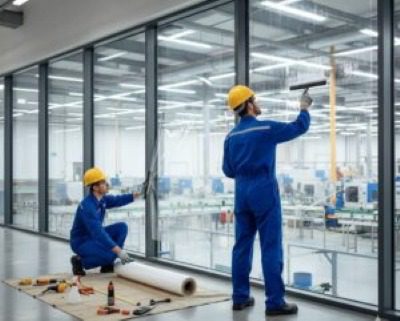
Commercial and residential window film installations offer higher per-job revenue with less frequent work. Office buildings, retail stores, and homeowners seeking energy cost reductions represent growing market segments, especially for operators who focus on window tinting for businesses. Commercial jobs typically price at $3-$8 per square foot, with larger projects generating substantial revenue per contract.
Specialty films create premium upsell opportunities. Security films, decorative privacy options, and paint protection film (PPF) installations allow shops to increase the average ticket size significantly. High-income opportunities exist in bundling tint with other services like paint protection film (PPF) or ceramic coatings, creating comprehensive protection packages that customers value.
The connection to profitability is direct: diversified service offerings protect against seasonal fluctuations and allow you to capture more revenue from each customer relationship.
Business Model Options
Your choice of operating model fundamentally affects startup costs, revenue ceilings, and day-to-day operations.
Mobile tinting operations require the lowest initial investment and offer schedule flexibility. Without shop rent and minimal equipment requirements, mobile operators can start lean and test market demand before committing significant capital. The tradeoff involves weather dependence, limited daily capacity, and potential challenges with visibility and professional credibility.
Fixed location shops require higher upfront investment but enable greater production capacity, premium service positioning, and year-round reliability regardless of weather. Multiple bays allow hiring additional installers, scaling revenue beyond what a single operator can produce.
Franchise versus independent ownership presents another decision point. Franchises provide brand recognition, established supplier relationships, and training systems, but royalty fees reduce profit margins and limit operational flexibility. Resources that explain how to start a window tinting business in a structured way can help you evaluate whether that franchise support is worth the tradeoff. Independent operations retain complete control over pricing, film selection, and business direction while requiring you to build reputation from scratch.
Understanding these model differences becomes essential when evaluating market positioning and calculating realistic profitability projections for your situation.
Market Demand and Growth Potential
Building on these business fundamentals, the window tint industry shows strong demand indicators across multiple market segments that support long-term viability.
Automotive Market Drivers
The automotive aftermarket continues expanding, with the U.S. market generating approximately $2.8 billion in window tinting service revenue in 2023—representing 5.2% growth from the previous year, which aligns with broader analyses on window tinting business profitability.
Rising vehicle sales create continuous demand. With global production reaching approximately 75.9 million passenger cars in 2023, the pool of potential customers grows annually. New vehicle owners frequently seek tinting within months of purchase for heat reduction, UV protection, and aesthetic enhancement.
Consumer awareness of UV and infrared damage to vehicle interiors drives purchasing decisions beyond simple aesthetics. Using high-quality professional window films is essential for ensuring durability and effectiveness in window tinting. Customers increasingly understand that high-quality window films can block heat effectively and are preferred by customers looking for long-lasting solutions—not just the darkest tint available.
Electric vehicle growth adds another demand factor. Reducing heat load in EVs helps preserve battery range and reduces air conditioning strain, making quality ceramic films particularly attractive to this expanding customer segment.
Commercial and Residential Markets
Commercial window film adoption accelerates as building owners face energy efficiency regulations and pursue green building certifications. LEED certification requirements specifically drive demand for solar control films that reduce cooling loads in glass-heavy structures.
The residential market remains somewhat underpenetrated compared to automotive, representing growth opportunity for shops willing to develop this segment. Homeowners in sunny climates increasingly recognize the energy cost savings and UV protection benefits that custom window solutions and quality window film provide.
Commercial accounts offer particular value: consistent work, larger job values, and less price sensitivity compared to individual automotive customers seeking the cheapest option.
Seasonal and Geographic Factors
Geographic location significantly impacts business planning. Warm, sunny states like California, Florida, Arizona, and Texas see year-round demand, while northern climates experience seasonal patterns with peak capacity utilization of approximately 65% during May through September.
Urban markets typically offer higher customer density but also more competition from established tint shops. Rural areas may have less competition but require broader service areas and marketing reach.
Importantly, tinting laws vary drastically by state and are measured by Visible Light Transmission (VLT). Installing non-compliant tint can lead to fines and legal liability—both for you and your customers. Understanding and communicating local regulations becomes part of professional service.
These market indicators support the conclusion that demand exists across segments, though success requires strategic positioning within your specific market.

Startup Investment and Revenue Analysis
With market opportunity established, the critical question becomes: what does it actually cost to start, and what can you realistically expect to earn?
Initial Investment Requirements
Startup costs vary dramatically based on your chosen business model and scale ambitions.
Mobile operation startup ($1,500-$5,000): At minimum, this includes essential tools ($300-$600), initial film inventory ($200-$500), training ($500-$2,000), and business basics like license and insurance ($100-$400). A comfortable mobile startup runs $2,000-$3,500, keeping you lean while testing market demand.
Fixed location setup ($35,000-$75,000): This includes lease deposits, shop buildout, multiple tint bays, proper lighting for quality control, full equipment sets, larger film inventory, and adequate signage. You’ll also need working capital for the first six months while building customer flow.
Premium multi-bay shop ($100,000-$200,000): Larger operations with multiple installers, vehicle fleet for mobile options, comprehensive inventory across film types, and professional training systems require substantially more capital. One industry estimate suggests approximately $82,500 in equipment and logistics plus seven months of working capital before break-even at this scale.
Most new tint shops form a Limited Liability Company (LLC) to protect personal assets and benefit from pass-through taxation. Additionally, new tint shop owners should secure a state business license or permit, often from the Secretary of State, and a seller’s permit to collect sales tax, whether they launch from scratch or buy a window tinting business that’s already in operation.
Revenue and Profit Potential Comparison
| Business Model | Initial Investment | Monthly Revenue Potential | Gross Margin | Break-Even Timeline |
|---|---|---|---|---|
| Solo Mobile Operator | $1,500-$5,000 | $10,000-$20,000 | 70-85% | 3-6 months |
| Single-Bay Fixed Shop | $35,000-$75,000 | $15,000-$35,000 | 65-75% | 8-14 months |
| Multi-Bay Premium Shop | $100,000-$200,000 | $40,000-$80,000+ | 60-70% | 14-24 months |
| The revenue ceiling depends heavily on capacity, pricing strategy, and service mix. Solo operators hit a natural limit based on personal production capacity, while shops with multiple installers can scale significantly higher. |
Unit Economics and Profitability Metrics
Understanding job-level economics reveals why window tinting attracts entrepreneurs.
Average ticket values range from $200-$500 for standard automotive jobs to $500-$800+ for luxury vehicles or premium ceramic films. Commercial work prices at $3-$8 per square foot, with typical office projects generating $1,500-$5,000+ per job. Offering a tiered pricing model, such as ‘good, better, best’, can guide customers in their choices and increase the average ticket size for services provided.
Material costs remain remarkably low. Film cost per sedan typically runs $20-30, with SUVs and trucks slightly higher. This creates substantial markup potential when jobs sell for $300-$500.
Daily capacity for a skilled installer reaches 3-5 vehicles depending on complexity and shop efficiency. It is important for new tint business owners to develop a workload schedule to determine how many installations they can handle in a day, as this metric ultimately affects profit margins.
Annual revenue potential ranges from $144,000 (10 vehicles weekly at $300 average) to $288,000+ (20 vehicles weekly) for solo operators, with established multi-installer shops reaching $500,000-$800,000 annually.
A tint business becomes profitable when it can deliver consistent quality, keep bays productive, and build reliable demand, with working capital being a common failure point for profitability. Adequate cash reserves prevent the common mistake of undercapitalization during the customer-building phase.
Common Business Challenges and Solutions
Strong profit margins don’t guarantee success. Several operational challenges consistently determine which tint shops thrive and which struggle to survive.
High Competition and Price Pressure
Many markets contain numerous existing tint shops competing aggressively on price. Customers often compare quotes based solely on cost rather than film quality or installation skill.
Solution: Focus on quality differentiation and premium service packages rather than competing on price alone. Choosing quality materials in window tinting helps maintain a company’s reputation and reduces the likelihood of issues such as peeling or discoloration. Build your reputation on lasting results, warranty backing, and professional service—customers willing to pay for quality exist in every market.
Seasonal Revenue Fluctuations
Shops in northern climates face significant demand drops during winter months, creating cash flow challenges and underutilized capacity.
Solution: Develop commercial accounts that provide year-round work and offer winter services like paint protection film, ceramic coatings, or decorative films that aren’t weather-dependent. Fleet contracts with local businesses create consistent revenue regardless of season, and many owners build resilience by focusing on window tinting for businesses that value ongoing service relationships.
Customer Acquisition and Marketing Costs
Many shop owners underestimate the effort required to build steady customer flow. Without marketing investment, even quality work fails to generate sufficient business.
Solution: Build referral partnerships with car dealerships and auto body shops. To start a window tinting business successfully, gauge local demand by visiting car dealerships and auto body shops to inquire about their tinting needs. Building a local presence is crucial for a window tinting business, starting with a complete Google Business Profile and aiming for 5-10 positive customer reviews to enhance visibility. Using social media platforms like Instagram to showcase before-and-after photos and videos can effectively attract local customers and build trust.
Quality Control and Rework Issues
The biggest “profit killer” in the tinting industry is rework, which includes fixing bubbles, dust, or wrinkles. Every callback erases profit from the original job and damages reputation.
Solution: Invest in proper training—skill in tinting typically takes three to six months of daily practice to develop efficiently. Use quality films consistently and implement inspection checklists before customers leave. Environmental factors such as dust, wind, and temperature can compromise tint installation quality, so control your work environment rigorously.
Cash Flow Management
Inconsistent revenue and unexpected expenses strain businesses operating with thin cash reserves. Many otherwise viable shops fail due to cash flow mismanagement during slow periods.
Solution: Require deposits on large commercial jobs, use efficient payment processing to minimize delays, and maintain adequate working capital reserves covering 3-6 months of operating expenses. Plan for the seasonal patterns your market experiences.
Understanding these challenges before launch allows you to create systems that prevent them from undermining your profitability.

Conclusion and Next Steps
Window tinting represents a viable business opportunity with strong profit potential when properly executed. The combination of low material costs, high markup potential, growing market demand, and relatively accessible startup requirements creates attractive conditions for entrepreneurs willing to master the craft and build operational systems.
Success requires more than simply knowing how to apply film. Quality control, customer acquisition, cash flow management, and strategic service diversification separate profitable operations from struggling shops.
Immediate actionable steps:
- Conduct local market research—visit competitors, identify service gaps, and understand pricing in your area
- Calculate your specific startup costs based on chosen business model
- Verify local licensing requirements and tinting regulations for your state
- Evaluate training options to build foundational skill before opening
Advanced planning steps:
- Develop a complete business plan including realistic revenue projections and expense forecasts
- Secure adequate financing covering startup costs plus 6 months working capital
- Establish relationships with quality film suppliers and compare pricing tiers
- Create marketing systems for customer acquisition from day one
Related areas worth exploring include a proven franchise business model in a booming industry if brand support appeals to you, equipment selection guides for optimizing your workspace, and employee training programs if you plan to scale beyond solo operation.
Frequently Asked Questions
How much can I make with a window tinting business?
A mobile window tint business that can tint an average of 3 cars per day has a potential annual revenue of over $250,000, while tinting 5 cars a day can increase that potential to over $450,000. Established fixed-location shops with multiple installers commonly reach $500,000-$800,000 in annual revenue. Professional tinting services typically operate at 70–85% gross profit margins, meaning a significant portion of revenue converts to profit before overhead expenses.
What are the biggest startup costs for window tinting?
For mobile operations, the primary costs include tools ($300-$600), film inventory ($200-$500), training ($500-$2,000), and business basics like license and insurance ($100-$400). Fixed locations add lease deposits, shop buildout, equipment, and working capital—ranging from $35,000-$200,000 depending on scale and location.
Is the window tinting market saturated?
Saturation varies significantly by geography. Urban areas in warm climates typically have more competition but also higher demand. Smaller markets may be underserved. Quality-focused operations serving premium customers often find opportunity regardless of competitor count—many shops compete purely on price with inconsistent results.
How long does it take to become profitable?
Mobile operations with low overhead can reach profitability within 3-6 months. Fixed-location shops typically require 8-14 months, while larger multi-bay operations may take 14-24 months depending on market size and marketing effectiveness. Working capital adequacy significantly affects this timeline.
Do I need special licensing for window tinting?
Requirements vary by state and locality. Generally, you’ll need a business license, seller’s permit to collect sales tax, and liability insurance. Some jurisdictions require specific permits for automotive or construction-related work. Most new tint shops form an LLC to protect personal assets.
Should I start mobile or with a fixed location?
Mobile operations offer lower startup costs, flexibility, and the ability to test market demand before committing significant capital. Fixed locations provide weather independence, higher capacity, premium positioning, and easier scaling. Many successful shop owners started mobile, built a customer base, then transitioned to a fixed location.
What’s the difference between franchise and independent operation?
Franchises provide brand recognition, supplier relationships, training systems, and operational playbooks—but require ongoing royalty payments that reduce profit margins and limit flexibility in film selection and pricing. Guides that outline the top things to consider in a window tinting franchise can clarify whether that tradeoff fits your goals. Independent operations retain complete control and higher per-job margins but must build reputation and systems without support.
How do I compete with established tinting shops?
Differentiate through quality rather than price. Using high-quality professional window films is essential for ensuring durability and effectiveness. Build referral relationships with car dealerships and body shops. Maintain strong online presence with positive reviews. Offer premium services like ceramic films or bundled packages with PPF and ceramic coatings that competitors may not provide. Consistent quality and professional service build reputation faster than discounting.