Table of Contents
From Business Builder to Strategic Investor: Rethinking Starting a Franchise
As a seasoned entrepreneur, you operate on a different plane. You’ve already navigated the treacherous early days of building a business from the ground up. You know how to read a P&L, manage a team, and create value. The question is no longer “Can I run a business?” but rather, “Which business is the most intelligent application of my capital and, more importantly, my time?”
For a first-time owner, buying a franchise is about acquiring a business education and a safety net. For you, the calculus is entirely different. You aren’t buying a job or learning fundamental skills.
You are making a strategic acquisition to expand your portfolio, and your evaluation must be more sophisticated. The focus shifts from a product’s appeal to the operational elegance of the system behind it.
A new venture must be a force multiplier for your expertise, not a time-consuming project that pulls you back into the weeds of startup logistics.

The High Opportunity Cost of Operational Drag
Your most finite resource is your focus. Every hour you spend sourcing vendors, wrestling with disjointed software, or creating basic marketing collateral is an hour you cannot spend on high-level strategy for your new venture or your existing portfolio. This is operational drag, and its cost is immense.
Operational drag is the friction caused by an incomplete or fragmented business system. It’s the death-by-a-thousand-cuts of figuring out payroll, finding a reputable vehicle wrapper, or trying to make a CRM talk to your scheduling software. For an entrepreneur managing multiple interests, this drag doesn’t just slow down the new business. It dilutes your effectiveness across the board, representing a significant and often uncalculated opportunity cost.
From Building from Scratch to Implementing a Proven Model
Your first business was likely an exercise in building from scratch. You wore every hat and forged a path where none existed. That experience is invaluable, but repeating it is inefficient. The strategic play now is not to build again, but to implement.
This is the critical mindset shift. You are moving from the role of architect to that of a general contractor executing a masterful blueprint. By choosing a franchise with a meticulously engineered and fully integrated system, you bypass the costly and time-consuming process of invention. You leverage years of trial and error that someone else has already funded, allowing you to focus your energy on execution and growth.
The Two Paths to Starting a Franchise
When you acquire a franchise, you are essentially choosing one of two launch paths. One is riddled with hidden work and unforeseen complexities. The other is a clear, paved road designed for acceleration.
The Hard Way: Reinventing the Wheel
Many franchise systems, even successful ones, provide the “what” but not the “how.” They give you the brand, the product, and a 500-page operations manual, but leave the critical task of weaving it all together to you. This is the hard way.
This path is characterized by a fragmented launch where you are left to:
- Source and integrate technology. You get a list of recommended software, but the burden of making them work together falls on you.
- Develop local marketing assets. You receive brand guidelines but must find designers and printers to create your own local campaigns.
- Establish a supply chain. You are responsible for finding vendors for everything from uniforms to vehicle wraps, often without national account pricing.
- Build operational workflows. The manual tells you what to do, but you have to build the day-to-day processes for your team from the ground up.

This approach forces you to become a startup founder all over again, spending your first 90 days on administrative setup instead of generating revenue.
The System Way: A Blueprint for Accelerated ROI
The intelligent alternative is to select a franchise that has invested heavily in creating a cohesive, turnkey launch system. This is the system way, designed to transform your role from a system-builder to a business-driver from day one.
A superior system provides a fully integrated blueprint for your business. It includes a pre-configured technology stack, professionally designed marketing campaigns ready for deployment, and access to a national network of vetted suppliers with pre-negotiated rates. The focus is on providing a clear, step-by-step roadmap that guides you through a rapid launch, enabling you to focus on sales and customer acquisition immediately. A franchise built on a cohesive system is a scalable asset from the moment you sign the franchise agreement.
Your Franchise Startup Checklist: Vetting a Franchisor’s Support
For a portfolio-minded entrepreneur, the decision to add an asset, not a job, is paramount. A job requires your constant presence, while an asset is a system that generates income with strategic oversight. The difference is the quality of the franchisor’s support. This checklist is designed to help you look beyond the sales pitch and evaluate the infrastructure that will determine your speed to profitability when evaluating franchise opportunities.
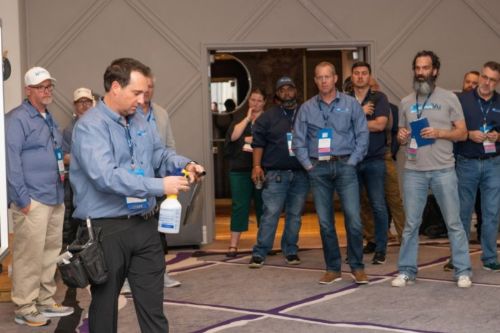
1. Depth of the Onboarding Program
A stack of papers or a series of generic videos titled ‘franchisee training’ should be a major red flag. A truly robust onboarding program is an active, guided system designed for execution, not just education. It moves beyond technical skills, like how to install a product, and focuses on true business integration.
Ask Yourself: Does the training provide a week-by-week roadmap from signing to opening? Does it include hands-on application with the actual software and sales tools? Is it designed to build operational muscle memory, or just transfer information?
2. Sophistication of Marketing and Sales Systems
Generating a consistent flow of qualified leads is the lifeblood of any new business. A franchisor’s approach to this is a clear indicator of their commitment to your success. A supportive franchisor provides a turnkey marketing and sales system designed for immediate impact, not just a brand guide and a list of approved vendors.
Ask Yourself: Does the franchisor provide a sophisticated digital infrastructure that generates leads for you at launch? Is there a proven sales process with scripts, presentation materials, and a pre-configured CRM to help you close deals efficiently?
3. Quality of the Technology Infrastructure
A fragmented tech stack is a recipe for wasted time and costly errors. When vetting a franchise, scrutinize its core technology platform. A premier franchisor will have invested in a unified or deeply integrated software suite that manages the entire customer lifecycle, from initial inquiry to final payment.
Ask Yourself: Is there a single source of truth that streamlines operations, or will I be forced to piece together disparate software? Does the technology eliminate administrative drag and provide clear, real-time visibility into business performance?
4. Structure for Post-Launch Mentorship
Your need for strategic support doesn’t end after the first 90 days. As you move from launching to optimizing, basic operational questions give way to high-level challenges. A forward-thinking franchisor provides a framework for ongoing performance coaching, helping you analyze financial data, benchmark performance, and identify strategic levers for growth.
Ask Yourself: Is there a clear process for getting high-level strategic support? Does the franchisor provide access to experienced mentors who can help me refine my business plan and scale effectively?
5. Questions for Current Franchisees
The ultimate test of a support system is the experience of those already in it. When you make validation calls after reviewing the Franchise Disclosure Document (FDD), focus on questions that reveal the true impact of the franchisor’s systems on an owner’s time and return on investment.
- How much time passed between training and consistently hitting your revenue targets?
- What percentage of your week is spent on revenue-generating activities versus administration?
- How quickly did the franchisor’s systems begin generating qualified leads for your business?
- When you face a strategic challenge, what does the process for getting support look like?
Conclusion: Your Experience Is an Edge, Choose a System That Respects It
As a seasoned entrepreneur, your experience is your most valuable asset. Any new venture must be structured to leverage it, not bury it in operational minutiae. The focus must shift from the product on the shelf to the system that gets it to market. A well-designed franchise system offers a sophisticated, repeatable process for rapid launch and scalable growth, respecting your time by eliminating friction and guesswork.
The real return on investment comes from a franchise that has perfected its launch and operational execution. This provides the fastest and most predictable path to profitability, freeing you to focus on high-level strategy and your next opportunity. If your goal is to add a high-yield asset to your portfolio without becoming mired in day-to-day operations, your next step is to investigate franchises that lead with the strength of their systems. It’s time to find an opportunity that values your experience as much as you do.
To approach starting a franchise with a proven system designed for scalability, efficiency, and long-term growth, connect with CoolVu Franchise to explore the opportunity.
Frequently Asked Questions
Why is the launch system more important than the product for an experienced entrepreneur?
For an experienced entrepreneur, time is the most valuable asset. A great product with a poor system forces you to spend months on administrative setup, vendor sourcing, and process creation, which is a significant opportunity cost. A great system, however, accelerates your speed-to-revenue, protects your time for high-level strategy, and makes the business a scalable asset rather than another demanding job.
How does a strong franchisee training program impact my return on investment (ROI)?
A strong franchisee training and onboarding program has a direct impact on your ROI. By providing a clear, step-by-step launch plan, pre-configured technology, and market-tested sales processes, it dramatically shortens your ramp-up period. This allows you to start generating revenue faster, reduces initial cash burn on trial-and-error marketing, and gets your business to break-even and profitability sooner, maximizing your overall return.
What are the biggest red flags when evaluating franchise opportunities?
Key red flags for a seasoned investor include a fragmented support system. Be wary of franchisors that provide a thick manual but no integrated software, offer brand guidelines but no ready-to-launch marketing campaigns, or lack a clear, structured onboarding program. If the franchisor expects you to build the operational bridges between sales, marketing, and operations, it’s a sign that your time will be spent on setup, not strategy.
Besides the Franchise Disclosure Document (FDD), what’s the best way to vet a franchisor’s support?
The best way to vet franchisor support is to speak directly with current franchisees. Move beyond generic questions and ask specifically about their launch experience. Inquire about the time it took to become profitable, how much of their week is spent on administration versus sales, and how responsive and effective the corporate support team is when they face a strategic challenge. Their real-world experiences will reveal the true quality of the system.
More Interesting Posts: