
Table of Contents
Step 1: Initial Research and Strategic Discovery
With a clear understanding of your personal goals and the strategic advantages of a proven franchise system, you are ready to take the first practical step. This initial research and discovery phase is not about making a commitment. It is a methodical process of information gathering and mutual evaluation designed to lay a solid foundation for your decision. For a seasoned business owner, this phase should feel familiar, it is the primary due diligence that separates a speculative venture from a calculated investment.
Identifying Industries Aligned with Your Skills and Market Demand
Start your search with a strategic filter, not an emotional one. While passion for a product can motivate you, you build sustainable business success by aligning your core competencies with genuine market needs. Instead of asking, “What do I love to do?,” ask a more powerful question: “Where can my skills create the most value?”
An experienced leader’s most valuable assets are often transferable skills like project management, team building, sales strategy, and financial oversight.
Look for service-based franchise models in growth sectors that require these very competencies. Industries like home and commercial services often present a compelling case, as they cater to evergreen needs, can be less susceptible to economic fluctuations, and often feature lower overhead compared to traditional retail.
The key is to find a model where your leadership can directly impact scalability and profitability, rather than one that requires you to become a technician yourself.

How to Effectively Research Franchise Concepts and Their Leadership
Once you have identified a few promising industries, the focus shifts to evaluating the specific franchise concepts within them. This requires looking past polished marketing and digging into the substance of the organization. A mature franchisor will welcome this scrutiny.
Your initial research should be broad and systematic. Scour the company’s website, read their press releases, and analyze their social media presence to understand their brand voice and customer engagement. Pay special attention to the leadership team. Who are they? What is their track record within the industry and, just as importantly, within franchising itself? A founder with deep operational experience who has successfully built and supported a franchise network brings a level of credibility that is difficult to replicate. This analysis helps you build a qualitative picture of the brand’s stability, vision, and operational philosophy.
The First Conversation: What to Expect from Your Initial Call
Making the first call to a franchisor can feel like a significant hurdle, but it is simply the next logical step in your data-gathering process. You should view this not as a sales call, but as a structured, two-way interview. A reputable franchisor is just as invested in finding the right partner as you are. They are not looking to sell a franchise to just anyone, they are looking to award one to a candidate with the highest potential for success within their system.
Prepare to discuss your professional background, financial position, and long-term goals. In turn, you should come prepared with your own questions. This is your first opportunity to get a direct feel for the company’s culture and support structure.
- What does your franchisee onboarding and training process look like?
- How do you support your franchisees with marketing and lead generation?
- What is the culture of your franchisee community?
- What are the key attributes of your most successful franchise owners?
The quality of their answers, and the quality of their questions for you, will speak volumes about the organization.
The Role of a Franchise Development Expert
In a well-managed franchise system, your initial conversations will be with a Franchise Development Expert or director. It is critical to understand their role. This individual is not a traditional salesperson compensated to close a deal at all costs. They are a gatekeeper for the brand and an educational guide for you.
Their primary function is to facilitate the discovery process, ensuring you get the precise information you need to make an informed decision. They will walk you through the business model, explain the support systems, and connect you with the resources necessary to complete your due diligence. For the experienced entrepreneur concerned about process, this person is your single point of contact, streamlining a complex journey into a series of manageable steps. A great franchise development professional’s goal is not to sell you, but to help you discover whether a true, mutually beneficial partnership is possible.
Step 2: Executing Critical Due Diligence with an Investor’s Mindset
Once you have a shortlist of franchises that align with your personal and financial goals, the real work begins. For a seasoned business owner, this phase is a structured, efficient system of due diligence. Think of it as the rigorous vetting you would apply to any significant investment. Your goal is to move beyond marketing materials to verify the franchisor’s claims, assess the operational reality, and confirm that the system is truly built for franchisee success.
Building Your Comprehensive Franchise Due Diligence Checklist
A systematic approach is essential. Before you dive into conversations and documents, create a comprehensive checklist that will serve as your scorecard for each opportunity. This ensures you evaluate every franchise by the same objective standards, allowing for a clear, side-by-side comparison.
Your checklist should be a living document that you refine as you learn more. It acts as your roadmap, ensuring no critical area is overlooked. Key categories to include are:
- Financial Health: The franchisor’s stability, initial investment range, and ongoing fee structures.
- Training and Support: The depth and quality of initial and ongoing training, marketing support, and operational guidance.
- System and Operations: The efficiency of the business model, proprietary technology, and supply chain.
- Culture and Leadership: The company’s values, the accessibility of the leadership team, and the satisfaction of existing franchisees.
- Legal and Compliance: Key terms in the Franchise Disclosure Document (FDD), territory rights, and renewal conditions.
The Power of Validation: Conducting Insightful Calls with Existing Franchisees
The single most valuable source of information in the franchise ownership process is the network of existing franchisees. The franchisor is required to provide you with a list of current and former owners. Do not hesitate to use it. Speaking with these individuals provides an unfiltered view into the day-to-day realities of running the business.
Prepare for these conversations by drafting thoughtful, open-ended questions. Your goal is to move beyond a simple “Are you happy?” to uncover the specifics of their experience. Consider asking:
- How does your financial performance compare to the expectations you had when you started?
- Describe the quality and responsiveness of the franchisor’s support team. When you have a problem, how quickly is it resolved?
- What was the most challenging aspect of your first year, and what support did you receive to overcome it?
- If you could go back, what would you do differently during your own due diligence process?
- Does the franchisor actively listen to and implement feedback from franchisees?
Listen carefully to both what is said and what is not. A pattern of similar feedback across multiple conversations is a powerful indicator of the system’s true strengths and weaknesses.
Attending a “Discovery Day”: Your In-Person Assessment of Culture and Operations
Discovery Day is your invitation to visit the corporate headquarters and see the operation from the inside. It is a critical opportunity for mutual evaluation. While the franchisor is assessing if you are a good fit for their brand, you are conducting your final, in-person assessment of their culture, leadership, and operational infrastructure.
Use this time to observe the dynamics between the corporate team. Do they seem collaborative and supportive? Are they passionate and knowledgeable about the business?
This is your chance to meet the key personnel who will be providing your training and support, giving you a tangible sense of the team you would be joining. A well-run Discovery Day should leave you feeling energized and confident, with a clear understanding of the company’s vision and how you fit into it.

Evaluating the Franchisor’s Leadership and the Depth of Their Experience
A franchise system is only as strong as the leadership guiding it. A proven business model can falter under weak management, while a visionary leadership team can navigate challenges and drive long-term growth. Your due diligence must include a thorough evaluation of the executive team’s background.
Look for a blend of industry-specific expertise and franchising experience. Do the founders and key executives have a demonstrated track record of success in this sector? Do they understand the unique dynamics of the franchisor-franchisee relationship? A leadership team that has “been there and done that” is better equipped to build robust systems, provide relevant support, and make strategic decisions that benefit the entire network.
Step 3: Decoding the Franchise Disclosure Document (FDD)
The Franchise Disclosure Document, or FDD, is the cornerstone of your due diligence. This comprehensive legal document is required by federal law and provides a detailed overview of the franchise opportunity. While it can seem intimidating, its purpose is to protect you by ensuring complete transparency. Viewing the FDD not as a hurdle, but as a blueprint, is key to making an informed decision.
An Overview of the 23 Items in the FDD
The FDD is organized into 23 distinct sections, called “Items,” each disclosing a specific piece of information. Together, they paint a complete picture of the franchisor and your potential rights and obligations.
You can think of the Items as being grouped into several key themes:
- The People and Their History (Items 1-4): This section details the franchisor’s history, the business experience of its leadership team, and any past litigation or bankruptcy.
- The Costs (Items 5-8): Here you’ll find a breakdown of all potential costs, including the initial franchise fee, the estimated total initial investment, and all ongoing fees.
- Your Obligations and Restrictions (Items 9, 11, 15-17): These items outline your obligations as a franchisee, the franchisor’s support obligations, and restrictions on what you can sell and how you can operate.
- Financial Performance and the System (Items 12, 19, 20): This covers your territory rights, provides any financial performance representations, and lists statistics about the number of franchised and corporate-owned outlets.

Focusing on the Financials: Understanding Item 19
Item 19, the Financial Performance Representation, is often the most anticipated section of the FDD. If a franchisor makes any claims about franchisee sales or profits, they must be substantiated here. It is important to note, however, that franchisors are not required to provide an Item 19.
If an Item 19 is provided, analyze it carefully. Understand what data is being presented, such as gross sales, net profits, or other metrics. Pay attention to the cohort of franchisees included in the data and the time period it covers. Use this information as a benchmark, but validate it with your own financial modeling and conversations with existing franchisees. An Item 19 is a data point, not a guarantee of your own success.
Analyzing Key Legal Obligations: The Franchise Agreement, Royalties, and Fees
The FDD contains the actual franchise agreement you will be required to sign. This legally binding contract governs your relationship with the franchisor for the entire term of the agreement. Pay close attention to key financial clauses, including:
- Royalty Fees: Typically a percentage of your gross sales paid to the franchisor on a recurring basis.
- Marketing or Advertising Fees: Contributions to a common fund used for national or regional brand-building efforts.
- Other Fees: Potential costs related to technology, software, training, or local marketing requirements.
Understanding these obligations is critical for accurately projecting your business’s cash flow and profitability. Ensure you have a clear picture of every fee you will be expected to pay before you sign any agreement.
The Importance of Engaging a Franchise Attorney
While you can and should review the FDD yourself, it is not a substitute for professional legal counsel. Engaging an attorney who specializes in franchise law is a non-negotiable step in the due diligence process. This is not an expense, it is a critical investment in protecting your future.
A qualified franchise attorney can help you identify any unusual clauses in the franchise agreement, explain your rights and obligations in plain English, and ensure you fully understand the long-term legal and financial commitments you are making. Their expertise provides an essential final check, giving you the confidence to move forward with a full understanding of the partnership you are about to enter.
Step 4: Securing Capital and Finalizing Your Business Plan
With your due diligence complete and your confidence in the franchise model solidified, the journey shifts from validation to execution. This is the stage where the abstract potential of your new venture is translated into a concrete financial and operational roadmap. For a seasoned entrepreneur, this phase is a critical exercise in strategic planning, made vastly more efficient by a franchisor’s established framework.
Calculating Your Total Initial Investment and Required Working Capital
The first step in securing capital is knowing precisely how much you need. A transparent franchisor removes the guesswork by providing a detailed breakdown of estimated initial costs in Item 7 of the FDD. This range typically covers everything from the initial franchise fee and training expenses to equipment and initial inventory.
Beyond this initial outlay is the equally critical figure of working capital. This is the operational fuel your business will run on for the first several months before it achieves consistent positive cash flow. A premier franchisor will help you develop a realistic projection for this figure, drawing on performance data from hundreds of other locations. This guidance helps ensure you are capitalized not just to open, but to operate confidently through the crucial launch phase.
Exploring Your Franchise Funding Options
Once you have your total investment number, you can explore funding avenues. Because franchising has a higher success rate than independent startups, lenders often view these opportunities favorably. Several common paths are available:
- SBA Loans: Backed by the U.S. Small Business Administration, these loans offer favorable terms and lower down payment requirements. Franchisors with a strong track record are often listed on the SBA Franchise Directory, which can streamline the approval process significantly.
- Rollover for Business Startups (ROBS): This strategy allows you to use eligible retirement funds, such as a 401(k), to invest in your business without incurring taxes or early withdrawal penalties. A franchisor can connect you with specialized firms that facilitate this complex process.
- Third-Party and Franchisor-Referred Lending: Reputable franchisors cultivate relationships with lenders who understand their specific business model. These introductions can be invaluable, saving you the time of educating a new lender from scratch.

Crafting a Compelling Business Plan for Lenders and Yourself
A business plan is more than a document for lenders, it is your personal blueprint for success. Instead of starting with a blank page, a top-tier franchisor provides a robust template that already contains the core of the plan. This includes the proven business model, target market analysis, marketing strategies, and operational systems.
Your role is to infuse this template with local market research and your personal financial details. You will customize the plan to reflect the unique demographics, competition, and opportunities within your designated territory. This collaborative approach transforms a daunting task into a manageable exercise, allowing you to build a compelling case for lenders while creating a practical guide for your own management.
How a Top-Tier Franchisor Provides Financial Planning Support
Ultimately, a franchisor’s role in this stage is that of a strategic financial guide. They have seen what works and what does not. They provide the vetted financial performance data, the realistic cost projections, and the introductions to lending partners who are already confident in the brand. This structured support system de-risks the entire financial planning process, allowing you to focus your energy on executing a well-funded and meticulously planned launch.
Step 5: From Agreement to Grand Opening – The Launch Sequence
Securing your funding and finalizing your business plan builds the foundation. Now, the focus shifts to bringing your business to life. This launch sequence is a carefully choreographed series of events where the franchisor’s system moves from a theoretical concept to a tangible, operational reality.
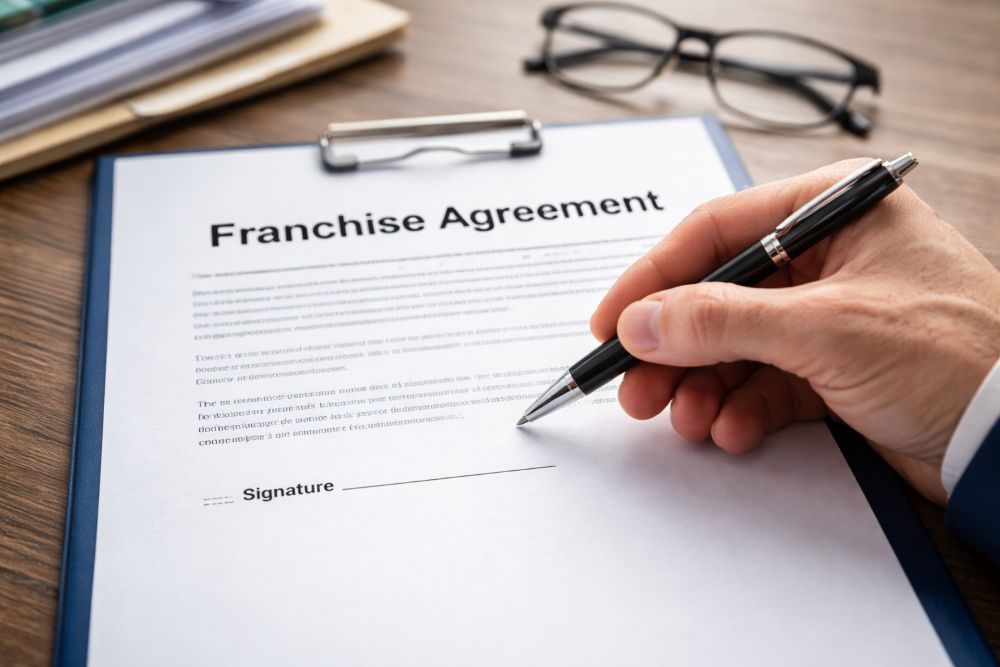
The Final Review: Signing the Franchise Agreement with Confidence
The franchise agreement is the legally binding document that formalizes your partnership. Before signing, it is a non-negotiable best practice to have the document reviewed by a qualified franchise attorney.
This is not a sign of distrust but the final step in professional due diligence. An attorney will help you understand every clause, obligation, and right, ensuring you are entering the long-term relationship with total clarity.
Your confidence at this moment comes from knowing you have completed every step of the vetting process.
The Critical Onboarding Phase: What a Comprehensive Training Program Involves
Signing the agreement triggers the most critical knowledge transfer in the entire process: franchisee training. A world-class onboarding program goes far beyond product specifications. It is a total immersion into the business system, designed to make you an expert in execution, regardless of your prior industry experience.
A truly comprehensive program will include:
- Business and Financial Management: Training on the franchisor’s financial dashboards, key performance indicators (KPIs), and a methodology for managing profitability.
- Sales and Marketing Systems: Deep-dive instruction on the proprietary sales process, lead generation strategies, and how to use the provided marketing technology.
- Technical and Installation Proficiency: Hands-on training for all core products and services, ensuring you and your initial team can deliver work that meets brand standards from day one.
- Operational and Software Training: Mastery of the software used for scheduling, invoicing, and managing day-to-day operations to ensure maximum efficiency.
Leveraging Franchisor Expertise for Pre-Opening Setup
Even in a service-based business, you still need a base of operations. The franchisor provides guidance on what is most effective and cost-efficient for your launch, whether it is a small commercial space or a designated home office. Their expertise helps you avoid common mistakes and ensures your initial setup is optimized for your market.
This pre-opening support extends to a detailed checklist that includes everything from ordering initial inventory to setting up business bank accounts and wrapping your company vehicle. Following this proven checklist ensures nothing falls through the cracks, creating a smooth and organized ramp-up to your official opening.
Executing a Robust Sales and Marketing Plan for a Strong Launch
You do not have to invent a marketing plan. A key component of a franchise system is a pre-built, grand-opening marketing strategy designed to generate immediate momentum. Your franchisor will provide a detailed 90-day plan complete with digital ad campaigns, social media content, and local marketing tactics.
This turnkey launch plan is engineered to fill your sales pipeline from the very first week. By leveraging professionally designed assets and a data-driven strategy, you can focus on executing the sales process you just learned in training. This systematic approach to generating your first customers is one of the most significant advantages a franchise system offers, transforming your grand opening from a hopeful beginning into a strategic business launch.
Why Your Franchisor’s System Is Your Most Important Asset
For any experienced entrepreneur, the allure of a new venture is often balanced by a healthy skepticism of operational complexity. The decision to invest in a franchise is not about buying a job or taking on a new set of burdens. It is a strategic choice to acquire a fully developed operational framework, a proven roadmap designed to mitigate risk and accelerate growth. Your success as a franchisee will be defined by the quality and depth of the system you are joining. This system is your single most important asset, the engine that powers your business from day one.
The Difference Between a Business-in-a-Box and a True Growth Partnership
Many franchises are marketed as a “business-in-a-box,” a term that implies a complete but static solution. You receive a logo, a manual, and a list of suppliers, but are often left to navigate market changes and operational challenges alone. This model can quickly become an operational burden rather than a strategic advantage.
A true growth partnership operates on a fundamentally different principle. It is a dynamic, living ecosystem where the franchisor is deeply invested in your ongoing success. This partnership provides not just the initial playbook, but the continuous coaching, collaborative support, and evolving strategies needed to win in the long term. A true partner actively works to reduce your operational load by constantly refining the system on your behalf.

How a Proven System Accelerates Your Path to Profitability
Starting a business from scratch involves a significant and costly period of trial and error. A proven franchise system allows you to bypass this expensive learning curve entirely. From the moment you launch, you are implementing strategies that have already been tested, measured, and optimized across a national network. This immediately positions you to operate with an efficiency that would take an independent owner years to achieve.
- Marketing and Lead Generation: A mature system provides access to refined marketing campaigns, a recognized brand, and lead generation funnels that are already converting.
- Sales and Quoting: You gain access to standardized pricing models and quoting software that ensure profitability and professionalism.
- Operational Efficiency: The step-by-step processes for service delivery, customer management, and project execution are already defined.
- Supply Chain Leverage: A strong franchisor has established national relationships with suppliers, securing preferential pricing and reliable access to materials.
The Value of Ongoing Support: Continuous Training, Marketing, and Operational Guidance
The value of a franchise system is not a one-time transaction. Its true power is realized through the continuous support that fuels your growth long after your grand opening. This support structure acts as your outsourced C-suite. You gain access to dedicated experts in key business functions without the six-figure salaries. Continuous training keeps your team sharp, a corporate marketing team builds national brand equity, and a network of fellow franchisees provides an invaluable safety net.
Leveraging Founder Experience and a Culture of Innovation for Long-Term Success
A system is only as strong as the vision and experience of those who built it. When a franchise is founded by individuals with deep, real-world industry experience, that knowledge is embedded into the DNA of the business model. This institutional wisdom saves you from repeating common industry mistakes and provides a foundation of trust.
Beyond its origin, the best systems are distinguished by a culture of innovation. A static business model is a depreciating asset. A forward-thinking franchisor is constantly testing new technologies and refining the model to stay ahead of the curve. Following these steps for how to become a franchisee and partnering with such a company ensures that your business will not only be relevant on day one, but will continue to be a competitive leader for years to come.
To fully understand how to become a franchisee and build a scalable, system-driven business, connect with CoolVu Franchise and explore the opportunity.
Frequently Asked Questions
Do I need experience in a specific industry to become a franchisee?
No, you typically do not. A premier franchisor provides comprehensive training and a proven system designed to make you an expert in their business model. They look for candidates with strong transferable skills like leadership, management, and sales, not necessarily direct industry experience. Your ability to follow the system is more important than your background.
What is the most important part of the franchise ownership process?
The most critical part is a thorough and systematic due diligence process. This includes carefully reviewing the Franchise Disclosure Document (FDD), conducting validation calls with existing franchisees, and attending a Discovery Day. This vetting process ensures you are partnering with a franchisor that offers robust support and a culture aligned with your goals.
What is a Franchise Disclosure Document (FDD) and why is it important?
The FDD is a legal document required by federal law that provides comprehensive, transparent information about the franchise opportunity. It details everything from the franchisor’s history and leadership to the total estimated initial investment, ongoing royalty fees, and your legal obligations. Reviewing it with a specialized franchise attorney is a non-negotiable step to protect your investment.
How much does it cost to buy a franchise?
The cost varies widely depending on the brand and industry. The FDD’s Item 7 provides a detailed estimate of the initial investment, which includes the one-time franchise fee plus other startup costs like equipment, inventory, and marketing. You must also account for working capital, which are the funds needed to cover expenses for the first several months of operation.
More Interesting Posts: