Table of Contents
A Strategic Approach to Franchise Investment
As an experienced investor, you know the initial franchise fee and build-out costs are just the opening bid. The long-term economic engine of the business drives true profitability, not the price of entry. For your next venture, you must elevate your analysis from a startup checklist to private equity-style due diligence. This means you must scrutinize the underlying mechanics that generate sustainable, scalable cash flow, often hidden deep within the franchisor’s model.
Deconstructing the Franchise Disclosure Document for Deeper Insights
The Franchise Disclosure Document (FDD) is your single most valuable intelligence report, but only if you read it like a strategist. While a novice focuses on the Item 19 Financial Performance Representation, your examination must go deeper to uncover the operational health and long-term viability of the system.
You are looking for patterns that reveal the franchisor’s true commitment to franchisee success. Pay special attention to:
- Item 3: Litigation. Are lawsuits with franchisees centered on support and performance obligations? This can signal a systemic failure to deliver on promises.
- Item 11: Franchisor’s Assistance. Look beyond the initial training schedule. Is there a clear framework for ongoing professional development, advanced sales training, and leadership coaching for multi-unit owners? A world-class franchisor invests in helping you evolve from an operator to an executive.
- Item 20: Outlets and Franchisee Information. This is where you can calculate the real churn rate. Do not just look at the number of terminations. Analyze transfers and non-renewals. A high number of franchisees failing to renew their agreement after the initial term is a significant red flag, suggesting the long-term economics may not be sustainable.

Analyzing Unit-Level Economics and Sustainable ROI
The Item 19 snapshot is a useful start, but your financial analysis must go further. Your goal is to construct a pro forma that reflects reality, not just revenue. This requires a shift in focus from top-line sales to the key drivers of margin and net operating income.
When speaking with existing franchisees, push beyond the question of “How much do you make?”. Instead, seek to understand the unit-level economics. Ask about gross margins on core products and services, customer acquisition costs, and employee productivity metrics. A strong franchise system has well-defined key performance indicators (KPIs) and can provide benchmarks for top performers.
Your ultimate goal is to understand the potential for owner-independent profit. This is the profit the business generates as a standalone asset, after all operating expenses, including a market-rate salary for a general manager. This figure represents your true return on investment (ROI) and is the most critical indicator of the business’s capacity to scale without your direct, daily involvement.
The Hidden Costs of Poor Systems: Evaluating Operational Efficiency
Operational drag is the silent killer of scalability. A franchise opportunity may look brilliant on paper, but if its day-to-day operations rely on disjointed or outdated systems, you will never achieve your growth targets. The cost is not just in dollars, but in the time and energy siphoned away from strategic growth activities.
Evaluate the franchisor’s technology and operational stack with a critical eye.
- Customer Relationship Management (CRM): Is the provided CRM a powerful, integrated tool that automates lead nurturing and provides clear visibility into your sales pipeline, or is it a glorified digital address book?
- Quoting and Scheduling: How streamlined is the process from initial customer contact to a finalized quote and a scheduled job? Clunky, manual processes create bottlenecks that prevent your team from serving more customers.
- Supply Chain and Inventory: Does the franchisor leverage its scale to secure favorable pricing and logistics, or do you manage vendors and inventory on your own?
A best-in-class franchise provides a seamless operational playbook designed for duplication. When you open your second or third territory, you should be replicating a proven system, not reinventing your own processes.
How Royalties and Fees Impact Your Scaled Profitability
It is essential to reframe your thinking on royalties and fees. A lower royalty is not always better. The critical question is not “How much does it cost?” but “What is the return on my investment in the system?”
A 5% royalty paid to a franchisor that provides minimal support is an expense. An 8% royalty paid to a franchisor that delivers a steady stream of qualified leads, continuous system-wide innovation, and robust coaching is a high-return investment. Analyze the fee structure in the context of the value delivered.
Examine how the fee structure aligns with your goal of scaling. Does the royalty rate decrease as your revenue surpasses certain thresholds? A franchisor that offers tiered royalties demonstrates a true partnership mentality, as it incentivizes and rewards your growth. A flat-rate royalty on all revenue, regardless of volume, can become a punitive tax on your success, diminishing your marginal profit as you scale. Scrutinize the ad fund contributions and technology fees with the same rigor, always demanding to see the connection between the fee paid and the value received.
The Founder Factor: Why Deep Industry Experience Outweighs a Glossy Brochure
As a seasoned entrepreneur, you understand that a business is more than a brand. It is a complex system of operations, marketing, finance, and human capital. A glossy franchise brochure presents a polished outcome, but the resilience and profitability of that system are direct reflections of its architect. The founder’s DNA is imprinted on every process, every decision, and every competitive advantage the model offers.
Your due diligence must extend beyond the Franchise Disclosure Document and into the history and character of the leadership team. You are not simply buying a license. You are investing in a partnership and betting on the founder’s expertise to navigate the market shifts of tomorrow.
How to Vet Franchisor Leadership and Their Track Record
Vetting a founder’s background requires looking for evidence of mastery, not just management. A long tenure in the franchise industry is commendable, but deep, operational experience within the specific market sector is what creates a sustainable edge. Your investigation should aim to answer a few critical questions:
- Did the founder build and operate the core business first? Look for proof that they successfully ran their own locations, refined the model with their own capital, and solved real-world operational challenges before deciding to franchise.
- Are they a recognized expert in the field? Search for industry-specific contributions like patents, published articles, or speaking roles at trade conferences. This indicates a commitment to advancing the industry, not just expanding a network.
- What is their track record of innovation? Has the founder historically been ahead of the curve in adopting new technologies or service methods? A history of proactive innovation is the best predictor of future relevance.
This level of scrutiny separates a business leader from a franchise salesperson. One builds a model designed for franchisee profitability, the other builds a model designed for rapid unit sales.
The Difference Between Franchise Development and True Market Expertise
A common pitfall is mistaking franchise development prowess for genuine market expertise. Many franchise systems are scaled by executives who are experts in selling franchises. They understand the legal frameworks and marketing funnels required to grow a network quickly. While a valuable skill, it is not the same as mastering the underlying business.
True market expertise is born from years of working within the industry itself. It’s an intimate understanding of customer needs, supply chain logistics, product life cycles, and competitive pressures. A founder with this background builds a franchise model from the inside out. They have already encountered and solved the problems you will face, and their system is designed to preemptively address them. A franchise built on development experience may look good on paper but can be brittle in practice. A franchise built on market expertise provides a durable, competitive framework engineered for long-term success.
Gauging the Vision for Long-Term Innovation and Market Dominance
Your investment’s future value is directly tied to the founder’s vision. A static business model is a depreciating asset. You need a leadership team that is perpetually focused on what’s next. During your validation calls with the franchisor, push past the standard talking points.
Ask about the company’s R&D budget and processes. Inquire about their five-year roadmap for technology, product sourcing, and service expansion. A visionary founder will speak with clarity and passion about how they plan to maintain a dominant market position, protect franchisees from new competitive threats, and create new revenue streams. Their vision should be centered on increasing the enterprise value of each franchise unit, not just the network as a whole.
How Decades of Experience De-Risk Your Investment
Consider the tangible outputs of a founder with decades of in-the-trenches experience. This is not a theoretical advantage. It materializes in a business model that is both sophisticated and elegantly simple to execute.
Years of trial and error result in a streamlined operational playbook that has eliminated inefficiencies. The supply chain is not a list of vendors but a network of strategic partnerships, ensuring access to superior products at preferential pricing. Marketing strategies have been tested and refined with millions of dollars in ad spend, leading to a lead generation engine that is predictable and cost-effective. This accumulated wisdom de-risks your entry into a new market and significantly shortens your path to profitability.
Assessing the Support System: From Onboarding to Ongoing Masterminds
An exceptional founder’s experience naturally culminates in a superior franchise support system. For an experienced operator like yourself, support is not a crutch, it is a strategic accelerant. You are not looking for someone to teach you how to read a P&L statement. You are looking for a system that can multiply your own capabilities and accelerate your mastery of a new market.
The quality of a support system is a direct measure of the franchisor’s commitment to your success. It’s the difference between a transactional sale and a transformative partnership.
Is the Initial Training Designed for a Seasoned Entrepreneur?
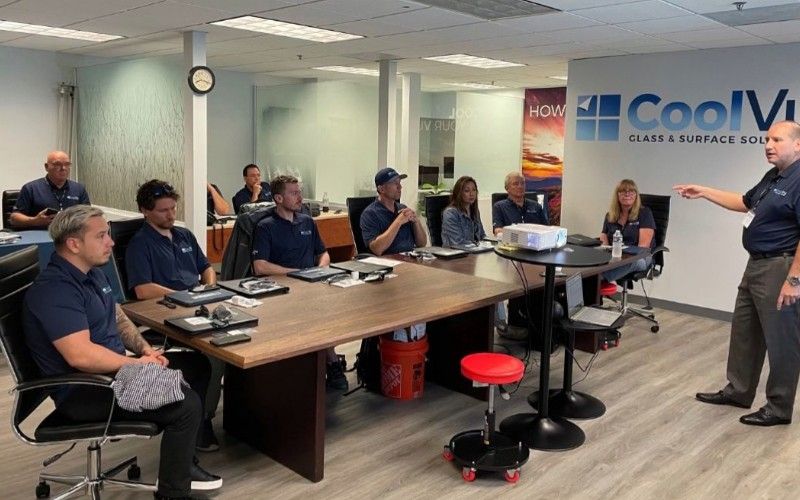
Generic, one-size-fits-all training is a red flag. As an established business owner, you require a program that respects your existing expertise while efficiently closing knowledge gaps. The best initial training programs function as executive-level immersions, not basic business primers.
They focus intensely on the proprietary aspects of the model, including the specific products, the proven sales methodology, the operational software, and the unique value proposition. The curriculum should be rigorous and practical, dedicating more time to hands-on application and advanced strategy than to fundamental business concepts you mastered years ago. It should feel less like a classroom and more like a high-level strategy session designed to get you operating at peak performance from day one.
The Critical Role of Continuous Learning and Collaboration
Initial training is just the beginning. The long-term value of a franchise system is found in its commitment to ongoing education and the power of its network. A premier franchisor understands that the collective intelligence of its franchisees is its most valuable asset.
Look for structured programs that facilitate this exchange of knowledge.
- Regular Mastermind Groups: These provide a forum for high-performing owners to share best practices, troubleshoot complex challenges, and push the entire system forward.
- Ongoing Educational Modules: The franchisor should consistently release new training on emerging technologies, new products, and advanced marketing tactics.
- Annual Conventions and Regional Meetings: These events should be less about corporate cheerleading and more about substantive, peer-led workshops and strategic planning sessions.
A culture of continuous learning and collaboration ensures that the entire network adapts and improves together, creating a formidable competitive moat.
Analyzing the Marketing and Technology Stack for a Competitive Edge
In today’s market, your ability to outmaneuver competitors is heavily dependent on your technology. A franchisor’s marketing and technology stack is a critical component of the support system. A disjointed collection of third-party software is inefficient and indicates a lack of strategic investment.
A superior system offers a fully integrated, proprietary platform designed specifically for the business model. This centralized technology frees you to focus on high-value activities like sales and team leadership, rather than wrestling with administrative tasks. When you evaluate the tech stack, confirm it includes a powerful lead generation engine, an intuitive CRM, automated marketing tools, and a streamlined system for quoting, scheduling, and project management.
How a Proven System Reduces Your Risk
Every element of the founder’s experience and support system works to reduce your risk and increase your probability of success. A proven system, validated by hundreds of successful launches over many years, provides a predictable path.
The franchisor has already navigated the learning curve, absorbed the costs of early mistakes, and refined the model using an enormous data set of franchisee performance. This history of success creates a reliable blueprint. You enter a new industry with confidence, backed by a model tested across diverse markets and economic conditions, significantly reducing the uncertainty inherent in any new business venture.
The Scalability Test: Does the Model Support Your Multi-Unit Ambitions?
For the experienced entrepreneur, purchasing a single franchise unit is rarely the end game. The real objective is to secure a platform for scalable growth and build a model you can replicate efficiently across multiple territories to create a regional or national footprint.. A franchise that excels for a single-unit, owner-operator may completely break down when managed from a portfolio perspective. This scalability test is therefore not a secondary consideration. It is the primary filter through which you must evaluate any of the franchise opportunities for sale.
Is the Business Model Architected for a Multi-Unit Franchisee?
A critical distinction exists between a franchise that allows for multi-unit ownership and one that is architected for it. The former often treats expansion as an afterthought, leaving the franchisee to reinvent management systems. The latter builds scalability into its DNA from the beginning.
Look for franchise systems that offer specific infrastructure designed for portfolio owners. This can include tiered royalty structures that become more favorable as you add units, dedicated corporate support staff for multi-unit operators, and integrated technology platforms that allow for centralized reporting and marketing across all locations. A model architected for scale anticipates your needs, providing a clear roadmap and the tools required to execute a multi-territory strategy.
Examining Territory Protection and Expansion Rights
The franchise agreement is your primary source for truth. Within it, the sections on market territory are paramount for any investor with expansion plans. Vague or poorly defined territories are a significant red flag, creating the potential for future market cannibalization.
Seek an agreement that offers a clearly defined, protected territory. More importantly, analyze the language around expansion rights. Does the agreement provide a right of first refusal for adjacent, unassigned territories? This provision is a powerful indicator that the franchisor values and prioritizes the growth of its proven operators. It transforms your relationship from a simple licensee to a strategic expansion partner.

Assessing the Operational Simplicity Required for Scaling
Complexity is the enemy of scale. The more variables, specialized labor, and fixed overhead a business model requires, the more difficult it is to replicate successfully. As a portfolio investor, your goal is to oversee a collection of high-performing assets, not to be mired in the day-to-day operational weeds of any single one.
An ideal model for scaling possesses distinct characteristics:
- Low Staffing Requirements: Businesses that can be run effectively with a small, well-trained team are easier to manage remotely.
- Minimal Physical Footprint: A model that doesn’t rely on expensive, long-term retail leases reduces fixed costs and increases operational flexibility.
- Standardized and Teachable Processes: The core service or product delivery should be systematic and straightforward to teach, ensuring quality and consistency across all units.
- Low Inventory and Spoilage: Businesses that carry minimal physical inventory reduce working capital requirements and eliminate losses from unsalable goods.
When you assess a franchise against these criteria, you gain a clear picture of how basic operations versus strategic growth will consume your time and capital.
Building a Financial Model for Your Business Portfolio
Your financial analysis must extend beyond the single-unit projections in the FDD. An experienced investor evaluates a new venture based on its contribution to their entire business portfolio. You need to model how this franchise fits with your existing businesses and financial goals.
Create a multi-year pro forma that maps out the capital investment and expected returns for a multi-unit expansion plan. Model the cash flow for one, three, and five units over a five-year period. This exercise clarifies the total capital required, projects the timeline to profitability for the entire network, and helps you understand how the business will perform under a centralized management structure. It shifts the question from “Can this one unit be profitable?” to “What is the enterprise value I can build by scaling this system to five territories?”.
A Strategic Framework to Buy a Franchise
Having vetted an opportunity for its mechanical ability to scale, you must apply a more strategic lens. The long-term success of your investment hinges less on the product itself and more on the quality of the partnership and the sustainability of the business model. For the discerning entrepreneur, this evaluation can be distilled into four critical, non-negotiable questions.
1. Does the Leadership Have Verifiable, Decades-Long Industry Experience?
Many franchise systems are created by finance professionals or marketers who identify a trending industry but lack deep, operational knowledge. They are skilled at selling franchises, but they have never personally managed the day-to-day challenges their franchisees will face. This is a fundamental weakness. A best-in-class franchise is led by verifiable industry veterans who have spent decades in the trenches. This experience manifests in a superior business model, more effective training, and a support system that can proactively solve real-world problems.
2. Is the Support System Built for Continuous Improvement?
Initial training is standard. What truly separates elite franchisors is their commitment to your ongoing success. A system designed for high-performing entrepreneurs provides a framework for continuous improvement long after your doors have opened. Look beyond the help desk and online portal. Inquire about the structure of ongoing support. Does the franchisor facilitate regional meetings and national conventions focused on strategy? Most importantly, do they cultivate a culture of peer-to-peer collaboration through structured mastermind groups?
3. Does the Model Inherently Support Multi-Unit Growth?
This question serves as a final, decisive filter. Based on your review of the operational model, territory rights, and required infrastructure, is it fundamentally clear that this business was designed to be a multi-unit enterprise? If the model requires the owner to be the primary salesperson and technician, it is not scalable. If expansion rights are ambiguous, it is not scalable. If the operational complexity is high and the fixed costs are burdensome, it is not scalable. For a portfolio investor, any answer other than a definitive “yes” should be an immediate disqualifier.
4. Are the Unit Economics and Profitability Sustainable?
Strong Item 19 figures are attractive, but they represent a snapshot in time. Your investment horizon is measured in years, even decades. Therefore, you must assess the long-term sustainability of the franchise’s profitability. Is the industry itself growing, or is it a temporary fad? Does the franchisor have a clear roadmap for R&D to introduce new products and services that will keep you competitive? A resilient model will feature multiple revenue streams that insulate your business from market shifts. Your due diligence must confirm that the profit potential you see today is built on a foundation that can endure for years to come.
Conclusion: Securing a High-Performance Asset for Your Portfolio
As an experienced entrepreneur, your evaluation when you buy a franchise transcends the surface-level metrics that satisfy a first-time business owner. The goal is not merely to find a profitable business, but to identify and acquire a high-performance asset that enhances your portfolio, scales efficiently, and generates predictable, top-tier returns.
A strategic review should always confirm the presence of these critical elements:
- Deep Founder and Leadership Experience: The system must be led by founders with extensive, practical experience in the core business.
- A Proven and Dynamic Business Model: The model should have a clear track record of profitability and demonstrate the capacity to evolve.
- Comprehensive, Scalable Support Systems: The support infrastructure must be designed to facilitate multi-unit expansion with resources for leadership development and advanced training.
- Exceptional Unit-Level Economics: The financial model must be fundamentally sound, offering strong potential for high margins and a swift return on investment.
This approach represents the shift from buying a job to investing in a scalable system. You are investing in a process that can operate and grow without your direct, day-to-day involvement. A system built for scale is designed to replicate success through people and processes. The training develops leaders, not just technicians. The marketing engine is built to capture market share across a region. The support team functions as a strategic partner, helping you plan and execute a multi-unit growth strategy.
With this strategic framework, your due diligence becomes more focused. The objective is to validate the franchisor’s claims about their leadership depth and support infrastructure. A truly ‘best-in-class’ franchise will not only welcome this level of scrutiny but will have compelling, verifiable answers that demonstrate a deep commitment to building a scalable and enduring enterprise alongside their franchise partners.
To see how to buy a franchise with a proven, scalable system, connect with CoolVu Franchise and explore the opportunity further.
Frequently Asked Questions
What’s more important than the initial franchise fee when you buy a franchise?
For an experienced investor, the most important factors are the long-term scalability of the business model and the depth of the franchisor’s leadership experience. A low entry cost is irrelevant if the business cannot grow efficiently or lacks a support system to sustain long-term profitability. Focus on the potential for owner-independent profit and the quality of the strategic partnership.
How do I evaluate a franchisor’s leadership team?
Look for verifiable, decades-long experience within the specific industry, not just in franchising. The best leaders have built and operated the core business themselves before franchising it. Search for evidence of their expertise, such as patents, industry publications, or a history of innovation. This practical experience is the foundation of a resilient business model.
What should I look for in a Franchise Disclosure Document (FDD) as an experienced investor?
Go beyond the Item 19 financial performance snapshot. Analyze Item 3 (Litigation) for patterns of disputes with franchisees over support. Scrutinize Item 11 (Franchisor’s Assistance) for evidence of ongoing, executive-level training and coaching. Finally, use Item 20 (Outlets and Franchisee Information) to calculate the real franchisee churn rate, including non-renewals, which can indicate issues with long-term viability.
Why are the best franchises to own designed for scalability?
The best franchises to own for a portfolio-minded entrepreneur are built for multi-unit growth from day one. A scalable model features operational simplicity, low staffing needs, minimal fixed overhead, and clearly defined expansion rights. This allows you to replicate your success across multiple territories without being bogged down in the daily operations of a single location, enabling you to build significant enterprise value.
More Interesting Posts: