Table of Contents
Beyond the Playbook: Why Most Franchise Businesses for Sale Disappoint Seasoned Owners
For the experienced entrepreneur, the search for a new franchise is a strategic capital allocation decision, not a search for a new job. Yet the vast marketplace of franchise opportunities is overwhelmingly geared toward the first-time owner. This creates a landscape of seemingly safe, “proven” models that, upon closer inspection, fail to meet the sophisticated requirements of a portfolio investor seeking a true force multiplier.
Moving Past the Entry-Level Franchise
Many franchise systems are engineered for simplicity and replication above all else. They provide a step-by-step playbook designed to guide an individual with minimal business experience toward baseline profitability. While commendable, this entry-level framework often prioritizes rigid adherence over strategic autonomy, a trade-off that stifles the very expertise a seasoned owner brings to the table.
An experienced operator does not need a system that dictates every minor operational detail. Instead, they require a model with a strong, scalable foundation that allows them to apply their knowledge in management, marketing, and finance to achieve superior results. The critical question shifts from, “Can I run this business?” to, “Can this business model achieve an ROI that justifies its place in my portfolio?”

The Dilution Trap of Low-Margin, High-Competition Opportunities
Adding a new business unit should enhance the overall value and performance of an investment portfolio. However, many common franchise categories, such as quick-service restaurants or retail cleaning services, operate in hyper-competitive markets with notoriously thin margins. These businesses can easily become a portfolio dilution trap.
They demand significant management bandwidth and capital to generate modest returns, pulling focus and resources away from more profitable ventures. For a portfolio owner, the opportunity cost is immense. Every hour spent managing a high-effort, low-return unit is an hour not spent optimizing higher-performing assets or scaling a business with more significant upside. A great franchise adds leverage, it does not just add another line item on the P&L.
Identifying Franchises That Lack Innovation
The term “proven system” is a cornerstone of franchise marketing, but for a strategic investor, it warrants deep scrutiny. A system proven in 2010 may be stagnant in today’s market. True excellence lies in a framework that is both proven and perpetually evolving.
Franchises that lack a forward-thinking culture often exhibit clear warning signs. They may rely on outdated marketing tactics, show little investment in research and development, or be slow to adopt new technologies that could enhance efficiency and customer experience. A stagnant model offers a predictable but limited future. A dynamic one, however, offers a platform for sustained growth and market leadership.
Evaluating Franchise Opportunities: Key Metrics for Scalability and ROI
A sophisticated franchise evaluation moves beyond the initial investment and build-out costs. For the portfolio owner, the true test of an opportunity lies in its scalability, its long-term return potential, and its ability to integrate efficiently into a larger business ecosystem. This requires a deeper analytical dive into the core metrics that define a high-performance franchise.
Deconstructing the Franchise Disclosure Document (FDD)
An experienced investor reads a Franchise Disclosure Document (FDD) as a strategic intelligence document, not a static report. The analysis must go far beyond a cursory glance at the Item 19 Financial Performance Representation. The crucial work involves deconstructing the numbers to understand the underlying drivers of profitability.
Key questions to investigate include:
- What is the delta between top-quartile and median-quartile performers, and what operational factors create that gap?
- What are the primary variable and fixed costs, and how do they scale as revenue increases?
- Are the reported earnings before or after key expenses like royalties, marketing funds, and owner salaries?
Analyzing these details reveals the true unit-level profitability and helps project a more realistic return on investment.
Analyzing Unit Economics for Multi-Unit Franchise Opportunities
A single successful unit is a good start, but a model that delivers compounding returns with each additional unit is a great investment. Analyzing the unit economics for a multi-unit scenario is non-negotiable for a portfolio-minded owner.
The model must demonstrate clear economies of scale. Assess how expansion impacts key cost centers. Can a single general manager oversee a territory with three units, effectively lowering management overhead per unit? Does multi-unit ownership unlock procurement discounts or more efficient marketing spend? A franchise engineered for scalability will have a clear, demonstrable path to increased profitability as the owner’s territory grows. If the economics of the fifth unit look identical to the first, the model lacks the leverage required for exponential growth.
Assessing Territory Rights and Market Saturation
The long-term value of a franchise is inextricably linked to its market potential. This begins with a thorough analysis of territory rights. A small, poorly defined, or unprotected territory severely limits future growth.
An ideal opportunity offers a large, exclusive territory with clear rights of first refusal on adjacent areas, providing a runway for a multi-year expansion strategy.
Equally important is an objective assessment of market saturation. Is the industry already dominated by established players competing on price, or does the franchise offer a unique value proposition in a less-crowded space? A forward-looking analysis considers not just the current competitive landscape but also the potential for new entrants over the next decade.

The Support You Actually Need: A Force Multiplier for Growth
For the seasoned entrepreneur, “franchisor support” often triggers healthy skepticism. Many systems offer what amounts to a basic operational manual and a help desk, leaving the heavy lifting of strategic growth entirely on the owner. A truly great franchise understands that an experienced operator is not looking for hand-holding, but for a force multiplier. The support system must be engineered to accelerate a business’s ascent to market leadership and maximize portfolio value.
Differentiating Between Basic Training and Strategic Support
Any competent franchise can teach a new owner the fundamentals. This is basic training: how to perform the service, use the software, and order inventory. It is necessary but insufficient for building a scalable enterprise. Strategic support transcends the operational. It is the ongoing, high-level guidance that helps an owner navigate complex growth decisions.
- Basic Training teaches you to price a standard residential window tinting job.
- Strategic Support provides the data models, bidding strategies, and expert consultation needed to win a multi-million dollar commercial contract for an entire building portfolio.
- Basic Training shows you how to hire your first technician.
- Strategic Support delivers a proven framework for building a multi-tiered team, including general managers and sales staff, complete with compensation models and performance benchmarks.
The former gets your doors open. The latter provides the blueprint for dominating a market.
The Power of a Sophisticated Lead Generation Engine
In the digital age, marketing support cannot be a passive library of ad templates. To deliver superior returns, a franchise must provide a sophisticated, performance-driven marketing and lead generation engine. An experienced owner understands that predictable lead flow is the lifeblood of any service business.
A top-tier franchisor focuses relentlessly on measurable customer acquisition. This involves a centralized team of experts managing complex digital campaigns, optimizing for cost-per-lead, and funneling qualified prospects directly to franchisees. This system allows you to focus on sales conversion and operational excellence, not on becoming a digital marketing expert. The critical question is not, “Do you help with marketing?” but, “Can you show me the data on your system’s average customer acquisition cost and lead-to-close ratio?”
Evaluating Technology for Streamlined Operations
An experienced portfolio owner knows that operational drag is the silent killer of profitability. A great franchise invests in a unified technology stack that serves as the central nervous system for the entire operation, integrating CRM, scheduling, invoicing, and accounting.
This platform must provide a seamless flow of information from the initial lead to the final payment. More importantly, it must offer robust reporting. For a multi-unit owner, the ability to view a consolidated dashboard of key performance indicators across all locations is non-negotiable. This allows for real-time performance analysis and strategic resource allocation without manual data consolidation.
Why Founder Expertise Is Your Untapped Asset
When analyzing a franchise, it is easy to fixate on brand recognition. For the discerning investor, a far more telling indicator of long-term value is the depth of experience within the franchisor’s leadership team, especially that of the founder. A founder’s DNA is imprinted on every aspect of the business, from the operational model to its capacity for future growth.
Deep Industry Expertise Beats Brand Recognition
In specialized service industries, brand recognition is earned through consistent, high-quality execution. A leadership team with deep, hands-on industry expertise is the ultimate competitive advantage. This is profoundly different from a model where executives with general business backgrounds try to franchise a concept they have never personally operated.
An industry-veteran founder understands the nuances of the business in a way no outsider can. They know which products deliver the best performance and margin, which installation techniques save time without sacrificing quality, and how to counter the sales tactics of competitors. As a portfolio owner, you are not just buying a brand, you are buying a curated library of industry knowledge.
How Founder Experience Shapes a Resilient, Profitable Franchise
A founder who has spent decades in the trenches has already made and learned from the costly mistakes you want to avoid. They have survived economic downturns, navigated supply chain disruptions, and adapted to technological shifts. This lived experience is forged into the franchise model, creating a system that is inherently more resilient and profitable. This manifests in several critical areas:
- Refined Unit Economics: The financial models are based on years of actual operating data, not just optimistic projections.
- Optimized Workflows: The operational playbook has been stress-tested and refined over thousands of jobs, ensuring maximum efficiency.
- Vetted Supplier Relationships: Long-standing relationships provide franchisees with preferential pricing and reliable access to the best products.
Essentially, a founder’s experience allows them to build the business model they wish they had when they started, and you become the beneficiary of that hard-won wisdom.
Aligning with a Leadership Team That Understands Your Goals
Perhaps the most critical factor is aligning with a leadership team that understands the ambitions of a multi-unit portfolio owner.
A franchisor accustomed only to single-unit operators may lack the systems and strategic vision to help you build an empire.
A leadership team that “gets it” will have already built the infrastructure for scale. Their franchise agreement will include clear terms for area development.
Their support team will be structured to consult with general managers, not just owner-operators. They will speak your language, focusing on enterprise-level metrics like EBITDA, IRR, and portfolio-wide operational efficiency.
When you find a founder and a leadership team that think like portfolio investors, you have found a true strategic partner.
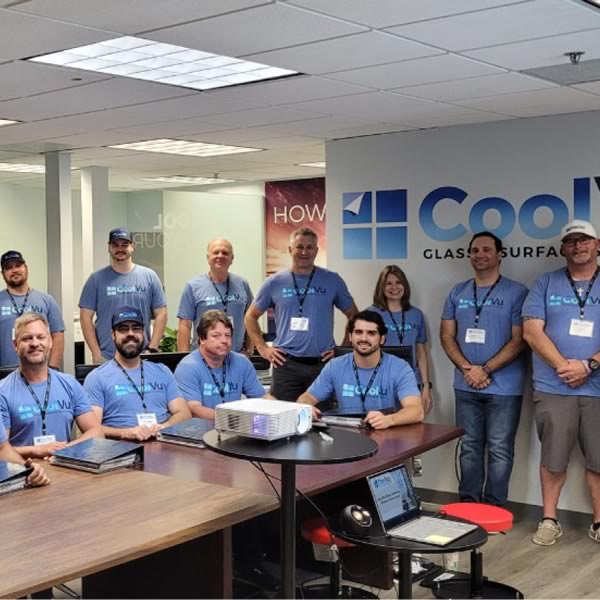
Why CoolVu Is the Strategic Choice for Your Portfolio Growth
While many franchises offer a viable business model, a select few are architected for strategic portfolio expansion. For the experienced entrepreneur, the goal is to acquire an asset that delivers superior returns, operational leverage, and scalable growth. CoolVu is engineered from the ground up to meet these exacting criteria, transitioning from a good business opportunity into a great strategic investment.
The CoolVu Model: Engineered for High Returns and Efficiency
An astute portfolio owner evaluates a business on its fundamental structure. The CoolVu model is intentionally asset-light, a stark contrast to capital-intensive franchises that require significant real estate and perishable inventory. This lean operational framework directly translates into a more favorable financial profile.
The business focuses on high-margin services, not high-volume product sales. It invests primarily in skilled labor and marketing, both of which you can scale and control. By minimizing the fixed overhead of a traditional brick-and-mortar footprint, you can deploy capital more strategically toward market penetration. This approach creates a faster path to profitability and increases cash flow potential.
A Diversified and In-Demand Service Offering
Market concentration is a risk. CoolVu mitigates this through a comprehensive suite of solutions that addresses pressing needs for commercial and residential property owners. This built-in diversification creates numerous, independent pathways to revenue.
The core service categories include:
- Architectural Window Films: Enhancing glass with solar control films to reduce energy costs, safety and security films to protect assets, and decorative films for aesthetic upgrades.
- Printed Graphics and Signage: Transforming glass and walls into marketing assets with custom-printed graphics, logos, and large-scale murals for commercial clients.
- Architectural Surface Films: A rapidly growing category for refinishing existing surfaces like walls, doors, and countertops, offering a cost-effective and sustainable alternative to full-scale renovation.
This multi-faceted offering allows an owner to cross-sell services, increasing the lifetime value of each customer and providing insulation from market shifts. A slowdown in new construction might be offset by a surge in energy-efficiency retrofits, ensuring a consistent demand for your services.
A Support System Built for Experienced Operators
Many franchise support systems target beginners. CoolVu recognizes this distinction and structures its support as a strategic partnership for growth, not a remedial course in business ownership. The founder’s decades of direct experience in the window film industry shape a system that removes common pitfalls from the process.
This support empowers sophisticated operators to scale effectively. It includes high-level coaching on multi-territory expansion, fleet management, and building enterprise-level sales teams. The corporate team manages complex national marketing campaigns, delivering qualified leads directly to franchisees and freeing you to focus on high-leverage activities like closing major accounts and leading your organization.
Conclusion: Key Takeaways for the Sophisticated Franchise Investor
The landscape of franchise businesses for sale is vast, but for the discerning portfolio owner, the path to superior returns is narrow and well-defined. It requires moving beyond surface-level metrics and evaluating opportunities through the lens of strategic integration and long-term scalability. The choice is not merely about adding another revenue stream but about selecting a force multiplier for your entire enterprise.
A truly superior franchise opportunity, and one of the best franchise opportunities for an experienced owner, will consistently demonstrate:
- A high-margin, diversified service model.
- A validated and streamlined operational system.
- Robust, expert-led support and training.
- A scalable framework with protected territory rights.
- Strong unit economics and a compelling return on investment potential.
For the seasoned investor, brand familiarity can often mask market saturation and capped financial potential. A strategic fit, by contrast, prioritizes the franchise’s role within your portfolio, focusing on models engineered for scalability. This means a model where adding a second or third territory creates exponential, not just linear, returns.
Ultimately, the most critical differentiator is the quality of leadership. An expert-led franchisor provides more than a brand. They provide strategic foresight, continuous innovation, and a support network that functions as an extension of your own team. This level of partnership is what elevates a franchise from a simple operational unit to a dynamic engine of growth for your entire business portfolio.
To move beyond typical franchise businesses for sale, connect with CoolVu Franchise and explore a system built for scalable growth.
Frequently Asked Questions
What makes a franchise a good fit for an experienced portfolio owner?
A suitable franchise for a portfolio owner delivers scalability and supports high-level strategic growth, not just basic operations. It features a high-margin, asset-light model, uses a sophisticated lead generation engine, and provides a franchisor support system that enables multi-unit expansion rather than just day-to-day management.
How is evaluating a franchise different for an experienced entrepreneur?
An experienced entrepreneur looks beyond the initial franchise fee and basic playbook. They conduct a deeper analysis of the Franchise Disclosure Document (FDD) to understand true ROI potential, scrutinize unit economics for multi-unit scalability, and assess the franchisor’s leadership for deep industry expertise. The goal is to find a strategic asset that adds leverage to their portfolio, not just another business to manage.
Do I need experience in the window film industry to own a CoolVu franchise?
No, you do not. CoolVu is designed for experienced business owners and entrepreneurs who understand management, sales, and operations. The franchise provides comprehensive training on all technical aspects, products, and installation processes. Your business acumen is the primary asset you bring, and CoolVu provides the specialized industry knowledge and systems to make you successful.
Why is an “asset-light” business model like CoolVu’s considered a profitable franchise to own?
An asset-light model minimizes the large capital expenditures typically associated with franchises, such as expensive real estate, extensive build-outs, and perishable inventory. This reduces fixed overhead, lowers financial risk, and allows capital to be deployed more strategically into marketing and talent. The result is a faster path to profitability and a higher potential for cash flow and return on investment.
What kind of support does CoolVu offer for multi-unit franchise opportunities?
CoolVu’s support system is built for operators focused on growth. This includes strategic coaching on managing multiple territories, building and structuring larger teams with general managers, and developing enterprise-level sales strategies. The franchisor also provides clear development rights and a technology stack that allows you to manage all your locations from a single, consolidated dashboard, ensuring operational efficiency as you scale.
More Interesting Posts: